Factors associated with persistent post-COVID-19 condition and functional limitation four years after SARS-CoV-2 infection
🚨Four years on, 77% of people with post-COVID symptoms still had them, and reinfection didn't explain it.
➡️Interesting German study(2020-2024),
-Four years after early-pandemic SARSCoV2 infection, post-COVID-19 condition (PCC) remained common in this plasma-donor cohort,
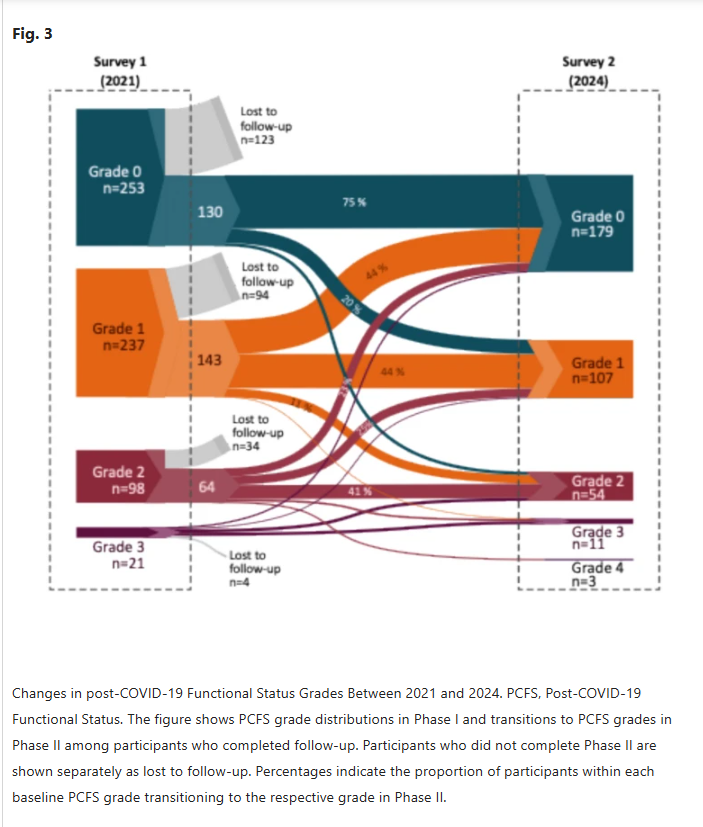
Of 992 adults surveyed roughly 16 months later (2021), 61.4% met PCC criteria (at least one symptom lasting beyond three months),
Of 568 re-surveyed at about 48 months (2024), 58.6% still met criteria,
Among those who had PCC in 2021 and were followed, 77.4% continued to meet criteria in 2024,
➡️Multivariable models linked older age, acute fatigue, palpitations, depressive symptoms, and concentration or memory difficulties with PCC at both time points. Female sex was associated only at four years,
➡️Persistent PCC was tied to acute concentration difficulties, depressive symptoms, and older age,
➡️Functional limitation (Post-COVID Functional Status ≥2) tracked with ongoing fatigue, concentration problems, resting dyspnoea, and depressive symptoms,
➡️Reinfection: By 2024, about 79% of participants said they had caught SARSCoV2 at least once more after their first infection. Those extra infections were not linked to still having post-COVID symptoms,
➡️None were vaccinated before the index infection. 58% had received at least one dose by the 2021 survey,
➡️The study did not test whether vaccination altered PCC risk, though it notes other work suggesting a lower risk,
➡️These patterns come from self-report in volunteers who sought plasma donation after mostly non-hospitalized infections in 2020–early 2021, so they do not represent population level.
‼️So, nearly four in five people who still had post-COVID symptoms more than a year after infection continued to meet criteria almost four years later, with fatigue, cognitive difficulty, and depressive symptoms most strongly linked to lasting functional limits.
Most post-COVID research stops at one to two years and often mixes hospitalized and non-hospitalized patients. This cohort tracks the same adults from the first pandemic wave out to roughly four years and links early symptoms to later persistence and functional limits!!!
IMPORTANT: This study clearly shifts the problem from a“lingering recovery” to a multi-year condition concentrated in identifiable subgroups, and it weakens the idea that later infections alone account for the burden.
#AvoidSars2 #AvoidReinfections
https://t.co/iEVzBHWLSA
🧠 Long Covid is in your head and the most senstive scans show it 👇
7-tesla MRI uncovers long-term effects of severe COVID-19
Damage to the brainstem -- the brain's 'control center' -- is behind long-lasting physical and psychiatric effects of severe COVID-19 infection," the group noted in a statement released by the university.
#LongCOVID fatigue may have a measurable brain-blood-flow signature.
➡️ A new MRI study from Karolinska Institutet compared 22 people with Long COVID with persistent fatigue with 19 healthy controls.
➡️ They found lower cerebral blood flow, particularly in regions involved in attention, sensory processing and cognitive control; lower perfusion was also associated with slower reaction times. 1/
18 young, previously healthy people. Mild COVID, nobody hospitalized. Six months later, they're still dealing with brain fog, worse sleep, anxiety, low mood. On a test of inhibitory control they did just as well as controls.
But their EEG told a different story about how their brains got there🧵
Working thread of published research on COVID 19. Every claim links to a real study. Published, peer-reviewed research from journals like Nature, The Lancet, BMJ, and Nature Medicine. Not speculation, this is what the mainstream science says. Please take it seriously.
#LongCOVID may be driven by an immune system that fails to fully “switch off.”
➡️ This new narrative review brings together evidence linking persistent cytokine inflammation, complement activation, endothelial injury and thromboinflammation with the multisystem features of LongCOVID.
➡️ It also highlights emerging blood biomarkers and experimental approaches targeting these pathways. 1/
5 years ago this week I got a COVID shot in the military. 1818 days of being sick. 1393 days in a wheelchair. 300 days on oxygen. More than 130k out of pocket on medical bills. 50 ER visits. 2 ambulance trips.
Here is a video 3 weeks before the shot
Please don’t compare somebody’s chronic condition to the week you were really sick once.
The symptoms might sound similar.
But dealing with those symptoms week after week, month after month and year after year is a completely different experience.
At 6-12 months after SARS2 infection, viral antigen showed up in the blood of 31% of people with long COVID. In people who'd fully recovered 20.8%. In people never infected 5.4%.
It tracks having been infected. Not being ill.🧵
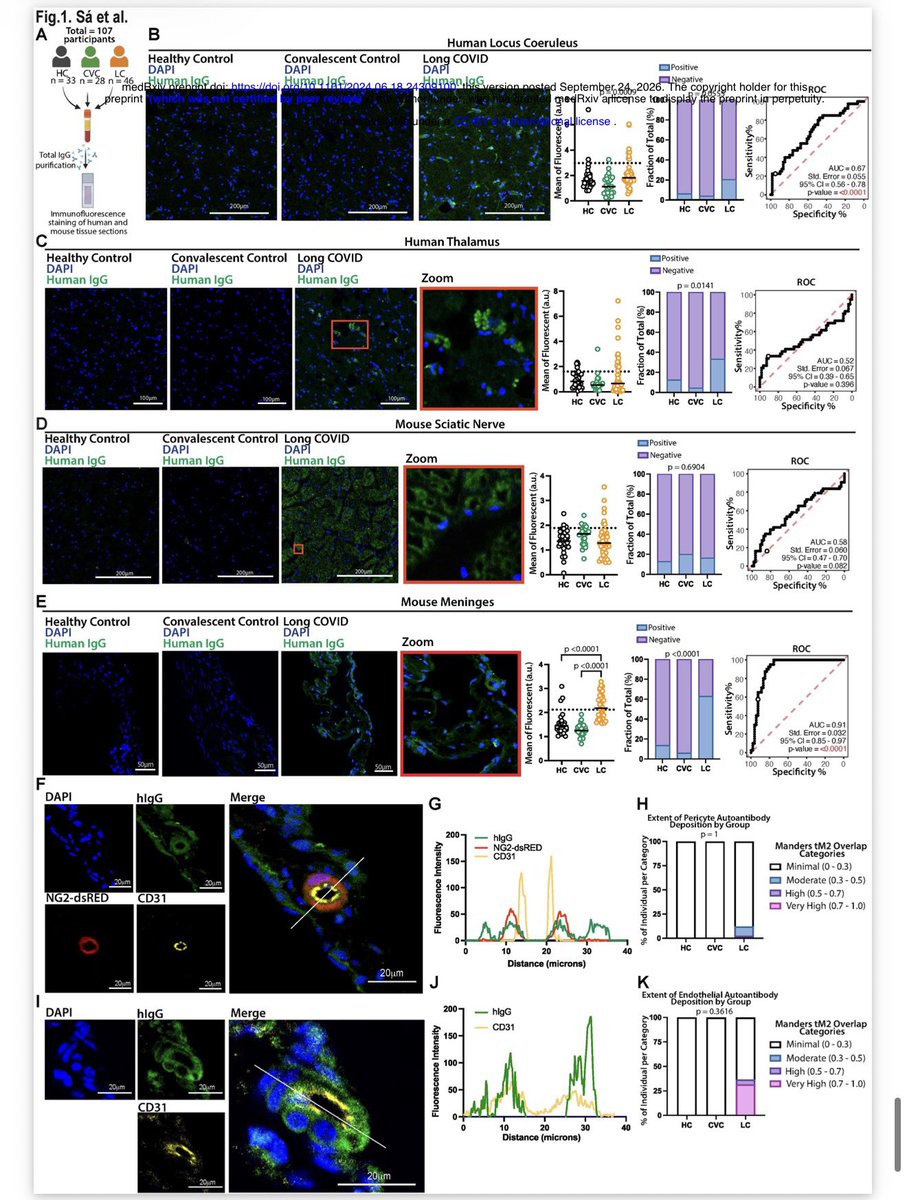
Could some #LongCOVID symptoms be driven by antibodies that turn against the nervous system?
➡️ Researchers found autoantibodies targeting proteins in the central and peripheral nervous systems in a subgroup of people with LongCOVID, particularly those with neurocognitive symptoms.
➡️ Remarkably, their IgG antibodies reacted with human brain regions and peripheral nerves, and some antibody levels correlated with neurological symptoms. 1/
🚨🚨🚨Six consultations for Long COVID in the last two weeks - four of which are severe - developed in the last three to six months. I challenge the narrative that new cases are on the decline.
#LongCOVID may not have a single biological signature—it may be a tangled web of overlapping changes.
➡️ In 312 people studied ~8 months after infection, LongCOVID was linked to subtle shifts across immune, endothelial and viral markers, rather than a single distinct biomarker pattern.
➡️ The strongest immune signal involved IL-1RA/IL-1β, while P-selectin suggested endothelial involvement; EBV reactivation-related responses were also different in LongCOVID. 1/
RECOVER-TLC has published a list of 82 blood biomarkers to be measured in its Long COVID treatment trials.
It's not a diagnostic test, and it won't change anything in the clinic for now. But it's worth looking at what's on the list, and especially what isn't🧵
Almost like we had a gain of function designed virus, that causes immense vascular damage, infect almost everyone alive multiple times and still continues to do so.
There will never a better time for disease patients than what is about to happen in the next few years.
If you have Long COVID or ME/CFS and are struggling, I urge you to hold on for the next few years. They will not be the same as the last decades.
At @amaticahealth will be sure to position LC & ME to benefit from all the BIO x AI advancements that are coming.
Who is most vulnerable to #LongCOVID?
➡️ A Brazilian study of 1,350 people found that 54% developed post-COVID-19 symptoms lasting >12 weeks. Risk was particularly high among women, middle-aged/older adults, those with chronic lung or mental-health conditions, and especially people who had been hospitalized. 1/
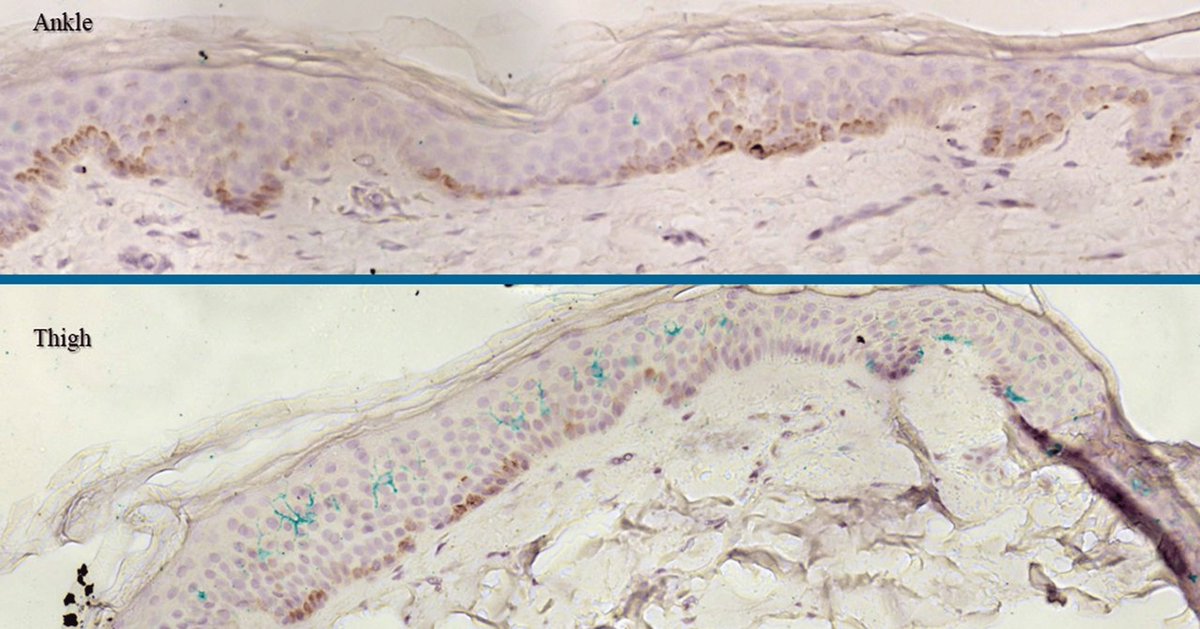
Can damaged small nerve fibres actually regenerate in post-Covid 19 vaccination syndrome?
➡️ A striking case report describes a woman with small-fibre neuropathy (SFN) following #BNT162b2 vaccination whose symptoms improved after 8 cycles of #IVIG, accompanied by a remarkable rise in intraepidermal nerve fibre density (IENFD)—from 6→9 fibres/mm at the ankle and 6→8 at the thigh. 1/
SARS-CoV-2 ORF7a: a mitochondrial saboteur!
➡️ A striking study shows that the viral accessory protein ORF7a hijacks host metabolism, impairing mitochondrial respiration, increasing ROS and disrupting glucose/lipid metabolism. It boosts PDK4, suppresses pyruvate oxidation—and, remarkably, also damages complex I and respiratory supercomplex assembly.
👉 The virus isn’t just using the cell’s machinery—it appears to be rewiring and destabilizing the mitochondria themselves.
https://t.co/2bEvdo3Byl