Wish I believed he would actually be persecuted for his crimes, but this is as least a solid display of a man most interested in his own advancement (and protection) to the detriment of others.
🚨STOP SCROLLING: Everyone Should Bear Witness To This Savage TAKEDOWN of Dr. Fauci by Senator Josh Hawley.
Watch as he DECIMATES Fauci and makes him SQUIRM in his seat.
This is how all of our Representatives and Senators in Congress should act.
Total MASTERCLASS
Cool your potatoes. Seriously.
Chris Kresser on JRE dropped a wild tip: bake or boil a potato, let it cool, and the resistant starch forms. It won’t spike your blood sugar like a hot one does.
Even better, the potato diet. Eat plain potatoes (cooled) for days and people drop half a pound a day on average. Spontaneous calorie drop + gut microbiome feast.
Cooling cooked potatoes creates resistant starch, which acts like fiber, it resists digestion in the small intestine, feeds beneficial gut bacteria, and lowers the glycemic response, helping with blood sugar control and satiety.
Simple, old-school hack that actually works.
Jo Nagai was raising swallowtail butterflies at his home in Kobe, Japan, when he noticed something odd. The ones he had looked after as caterpillars seemed to recognize him. Wild butterflies fled. His didn't.
He was in second grade. He wrote a four-page letter to Dr. Martha Weiss, an entomologist at Georgetown University who had studied whether moths could retain memories through metamorphosis. He asked if she could help him design a version of her experiment for butterflies.
She said yes.
Using a muscle therapy device, Jo trained caterpillars to associate the scent of lavender with a mild vibration. When the caterpillars became butterflies, 70 per cent of them still avoided the lavender. Their brains had been completely rebuilt during metamorphosis. The memory survived anyway.
Then he bred them.
The offspring, which had never been trained, also avoided lavender. So did their grandchildren. Without ever experiencing the vibration, two generations of butterflies inherited an aversion to a scent their grandmother had been taught to fear.
Jo documented it all in a 33-page research paper and presented his findings at the International Congress of Entomology in Kobe in 2024. He was 10.
A second grader wrote a letter to a Georgetown professor, and together they found evidence that butterflies can pass memories down through generations.
-Wilderness Whisper
🚨#BREAKING: A 28-year-old confirms he has spent the last 10 YEARS of his life interviewing World War II combat veterans to keep their stories alive...
...in fact, for the last 10 years, he has interviewed World War 2 veterans EVERY SINGLE DAY
He started as a teenager, ditching school to ride his BIKE to the local retirement home, walking up to the front desk and asking to, "meet some World War II heroes."
His name is Rishi Sharma.
He's crossed all 50 states and half the world.
He's slept in his car and lived on gas-station food to afford it.
He asks these men for hours of their memories, and then he hands the entire recording to their families...
...FOR FREE
So that 200 years from now, a great-great-grandchild will know not just their hero's name, but how he laughed, how he cried, and what he sacrificed.
Rishi has no military family, his parents immigrated here from India.
He does it out of pure gratitude.
In his words:
"My parents were given the opportunity to immigrate and raise a family because of veterans like these. It's a debt of love I'll spend my entire life trying to repay..."
As one 100-year-old Marine who stormed Iwo Jima told him, remembering the flag going up:
"The hair on my arms still stands up when I think about how beautiful it was."
THAT is America.
250 years of ordinary people doing extraordinary things...
God bless our veterans. 🇺🇸🇺🇸
To the Americans:
I've travelled all over the world. I've familiarized myself with many places, and met many people. And I'm a Canadian, although I’m privileged to reside once again in the States.
And here's something I've noticed, and it’s a key element of America's continuing greatness:
You bloody Americans value success, and you believe in its existence.
This is something that doesn't really happen anywhere else in the world. Even in other free democracies—the United Kingdom; Finland, Sweden, and Norway; Australia, New Zealand and Canada; Germany, France, and the Netherlands (great countries all)—a counterproductive cynicism too often reigns.
Success is equated with exploitation.
Ambition is looked upon with contempt.
This happens sometimes in the United States too—particularly among the miserable progressives, who confuse their resentment, ingratitude and unearned skepticism with wisdom.
But in your great country, by and large, striving is admired and success celebrated.
This means that more people strive and succeed in the US than anywhere else. And it's increasingly obvious. You remain stunningly more innovative and productive than any people anywhere else on the planet.
And so I say, as all should who are fortunate enough to live in the western world, let alone America:
Thank God for the United States.
Thank God for the wisdom of its founders.
Thank God for its faith in the free market and in the natural rights of man.
Happy birthday, you damn Yankees and Southerners.
Long may your admirable country dominate the world.
Long may your freedom and hope provide an example to those suffering everywhere at the hands of their malevolent states.
May your two and a half centuries of unparallelled success be just the beginning.
Your country is the light of the world, and the city on the hill.
Thank God for the USA.
Happy 250th.
Dr. Jordan B. Peterson
You've probably heard this before, but it's always worth repeating. Something extremely cool about the "Star-spangled Banner," the American national anthem, is that it asks a question, and it's the question at the heart of everything in the American worldview.
"Oh, say, can you see
By the dawn's early light
What so proudly we hailed
At the twilight's last gleaming..."
So the anthem begins with a question and a scene. One man, a patriot, is asking another man, another patriot, "can you see it?" at sunrise after a long, dangerous night.
The "it" in question is going to be revealed to be the flag, our "star-spangled banner," which they had last fully recognized and honored as the sun set, daylight failed, and night crept over them the evening before.
Can you see it? Say! Can you see it?!
IS IT STILL THERE?!
"Whose broad stripes and bright stars
Through the perilous fight
O'er the ramparts we watched
Were so gallantly streaming..."
Here we find that the "it" is in fact the flag, our star-spangled banner, and we learn why the question is being asked.
The flag is described as having flown and streamed gallantly over ramparts of war through a perilous fight. All could have been lost. The flag, and even the fledgling country for which it stands, one nation under God and indivisible.
Say! Can you see it? Now that the light is back?
IS IT STILL THERE?!
"--And the rockets' red glare,
The bombs bursting in air,
Gave proof through the night
That our flag was still there!--"
They could see it through the battle in the light of the rockets and bombs that threatened them, here and there in quick glimpses. But it was still there throughout! But now? At dawn?
Say! Can you see?
IS IT STILL THERE?!
"Oh, say, does that star-spangled banner yet wave
O'er the land of the free
And the home of the brave?"
The urgency is palpable with every refrain. They have to know. It's the first thing they must know as the sun begins to light the sky, even before it rises.
IS IT STILL THERE?!
Say! Say!! Can you see? Can you see it?!
At the heart of every American beats the fundamental truth and reality that what we have here is precious, that it's worth fighting for, to the death if necessary, and that it's fragile. That at any moment it can be lost. That we have to remember to look for it because last night might have been the night in which it failed.
Every day, every year, every generation.
The American fight for freedom, to live in self-governance within ordered liberty, is ongoing and never-ending. The price of the land of the free is that it must be the home of the brave. We have to defend it, defend it, and defend it again, against all enemies foreign and domestic, because what we have is amazing, rare, fragile, and worth every cent of treasure, every drop of blood, and every risk to our sacred honor to protect it.
Our anthem is not a declaration. It is not a proclamation. It is not a statement.
It is a question.
Every time we sing our wholly unique national anthem, we as American ask the question again. IS IT STILL THERE?! Are we still America? Does that star-spangled banner yet wave?
Because it's a question, the answer is not known. It is not a guarantee. It cannot be taken for granted and isn't. And what an honor to ask and take up our part in the story, in the American Experiment, in the greatest country the world has ever known.
For tonight, the last night of our first 250 years, as the sun gave way to twilight's last gleaming and darkness overtook our land once again, the answer was still yes. We can see it even tonight in the red glare of rockets, with small bombs bursting in air, fill the sky with the noble tribute of fireworks once again.
And we all ask ourselves, will it still be flying at dawn?
This is what it means to be an American.
Happy 250th, America! Now for many happy returns!
🇺🇸🇺🇸🇺🇸🇺🇸🇺🇸🇺🇸🇺🇸🇺🇸🇺🇸🇺🇸🇺🇸🇺🇸🇺🇸
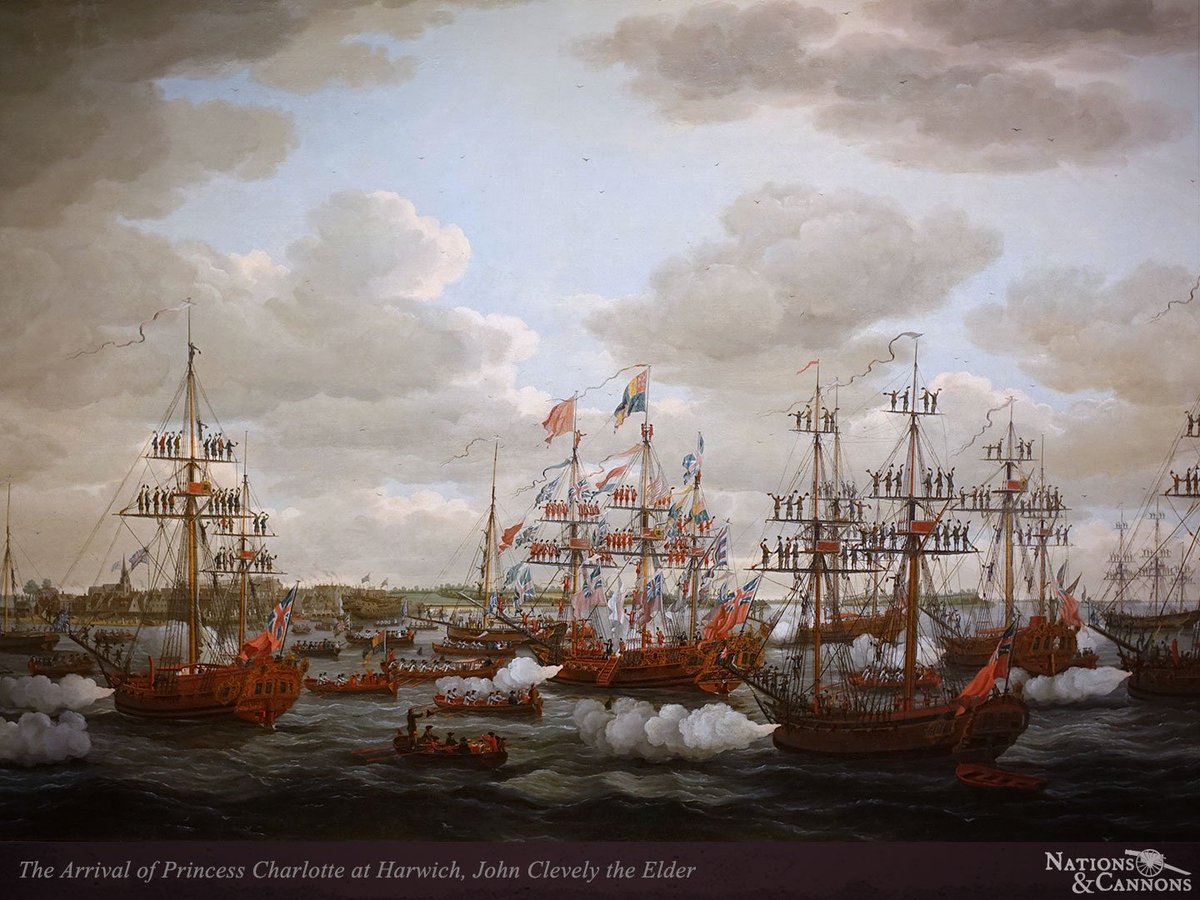
250 years ago today, on June 29, 1776, New Yorkers looked out at the water and saw a nightmare on the horizon. The British fleet had arrived, and so many ships filled the bay that witnesses said the masts looked like "a forest of pine trees" growing out of the sea. The timing could not have been more brutal.
This was the empire's answer to the rebellion, and it was overwhelming. The first wave of around 45 warships and transports dropped anchor off Sandy Hook and Staten Island carrying General William Howe and roughly 10,000 troops. Within days it kept growing. Then his brother Admiral Richard Howe arrived with more. It would eventually swell into one of the largest seaborne invasion forces of the entire 18th century, hundreds of ships and tens of thousands of professional soldiers and German mercenaries, aimed at one city.
Now sit with the timing. While that forest of masts was filling the harbor, delegates down in Philadelphia were in the final days of debating whether to declare independence. They voted for it on July 2 and signed off on the wording on July 4. So at the exact moment America was being born on paper, the most powerful military on earth was already anchored off its coast, getting ready to strangle it in the cradle.
The people of New York understood exactly what they were seeing. Alarm bells rang, panic spread through the streets, and soldiers sprinted to their posts to stare at a force they had almost no hope of matching. Washington's army was outnumbered, outgunned, and about to get badly beaten in the battles for New York that followed.
That's the part that gets lost in the fireworks every Fourth of July. Independence wasn't declared from a position of strength. It was declared with an enemy armada already sitting on the doorstep, knowing full well what was coming. They signed their names anyway.