“In rabbinical school, I learned that according to ancient Jewish holy texts, saving a single life is the same as saving a whole world, because each of us contains distinctive cities of relationships, irreplaceable geographies of passions, and deep oceans of memories.” #Ceasefire
I don't think anyone will survive in the Gaza Strip in the end. Israel continues the massacre. This bombing is 500 meters away from my tent in Deir al-Balah.
The captain of Iran’s National Team, Mehdi Taremi, calls out FIFA and the U.S.:
“This is a disaster World Cup. We can’t stay in the country and have to travel every time we play without any recovery. Now we can’t stay in Seattle and have to return to Tijuana. This is not fair.”
READ THIS - Gaza Genocide
In one example investigated by the Commission, between 20 and 21 December 2023, in Sheikh Radwan, Israeli soldiers threw four hand grenades inside a house with 30 family members without any warning, severely injuring a five-year-old boy who suffered from multiple injuries including abdominal evisceration.
The Israeli security forces then forcibly entered the house, shot and killed eight family members, including the parents, and ordered the survivors to evacuate to a nearby school.
The Israeli security forces did not provide any medical assistance to the injured or assist with their evacuation. The boy was carried from the house to the school with severe injuries. He lost consciousness at the school, while he was treated by a doctor who reinserted his exposed intestines by using diapers and taped his stomach. He was taken to the Al-Shifa Hospital where he underwent surgery alone.
Later, the boy was medically evacuated out of Gaza and underwent eight surgeries, while three more were still needed, as of December 2025. The boy has been left with a permanent disability in one of his legs and has to use a wheelchair.
The boy and his surviving six-year-old brother suffer from severe mental harm and behavioural change as a result of this incident, in particular since they witnessed the brutal shooting of their parents by the Israeli security forces, including their pregnant mother shot in the abdomen and breasts and father in the head (see para. 244 in the Section (V). Mental harm against Palestinian children by Israel).
The Commission finds that Israeli soldiers of the 162nd Division, specifically the 401st Brigade and Shayetet 13, were operating in the area at the time of this incident.
Gaza’s once-vibrant surf community was nearly wiped out by Israel’s genocidal war on the enclave.
But amid the destruction, one group of resilient Palestinian surfers continue to chase waves despite the ever-present threat of becoming an Israeli military target.
In Gaza, Palestinians are staging their own makeshift ‘World Cup’ amid the ruins of Israel’s war. With stadiums destroyed, players compete barefoot on rubble-strewn pitches as crowds gather for a rare escape from daily suffering.
Al Jazeera’s Caley Callahan reports.
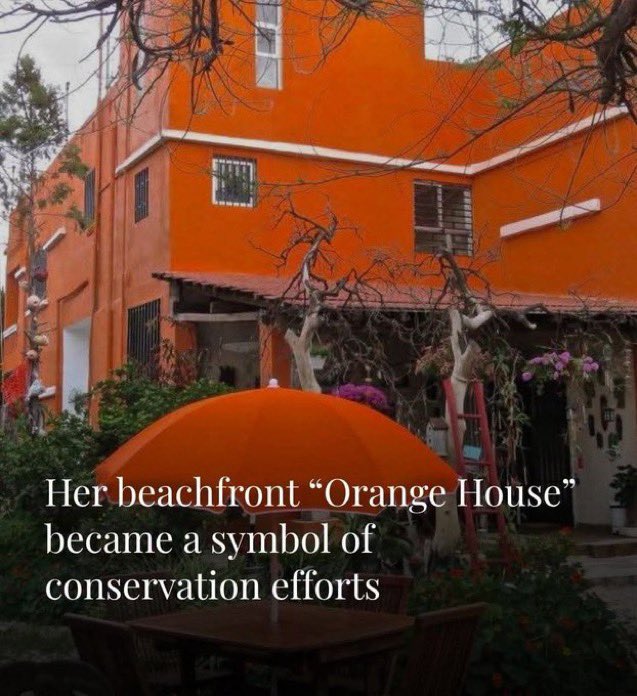
“They knew exactly who Mona Khalil was.
They knew the bright orange house in Mansouri, south Lebanon. They knew it was not a military site, not a command center, not a battlefield position. It was one of the most recognizable symbols of environmental conservation on Lebanon's southern coast; a sanctuary dedicated to protecting endangered sea turtles and preserving life.”
Marwa Osman writes about Israel’s deliberate targeting of a prominent environmental activist in Lebanon. ⬇️
As everyone gets excited for US Men's Soccer, keep in mind that they have never won a World Cup and still get celebrated as the default US soccer team while the women's team has won 4 cups and barely gets recognition on a national stage.
Mediocre men will always outshine outstanding women, as long as the patriarchy controls everything.
A Japanese immunologist spent 20 years proving that the chemicals trees release into the air walk into your bloodstream, hunt down your stress hormones, and arm your immune system in ways no therapist or pharmaceutical has ever matched, and most of the data has been sitting in Japanese medical journals for two decades waiting to be translated.
His name is Qing Li.
He is a clinical professor at Nippon Medical School in Tokyo and the president of the Japanese Society of Forest Medicine. The Japanese government has been funding his research since 2004, and the body of work he has produced is the reason forest bathing is now an officially prescribed clinical therapy in Japan and Korea.
The story actually starts in 1982, when the Japanese Ministry of Agriculture, Forestry and Fisheries coined the term shinrin-yoku to describe the practice of slow, mindful walking in a forest. They did it for a practical reason.
Japan was urbanizing fast, stress-related illness was climbing, and the country had thousands of square kilometers of forest sitting unused. The idea was to give people a reason to walk into the trees... They had no idea what was actually happening to the human body during those walks until Qing Li ran the first proper experiment in 2005.
He took twelve healthy adult men on a three-day, two-night trip to a forest park. They walked for a few hours each day. Nothing strenuous. No prescribed routes or breathing exercises. They simply walked slowly through the trees, breathing the air, looking at the forest.
Li drew blood and urine samples before the trip, on the second day, on the third day, on day seven after returning home, and again on day thirty.
The numbers that came back from the lab were not what anyone expected.
The activity of a specific type of immune cell called the natural killer cell, which is the cell your body uses to hunt down cancer cells and virus-infected cells before they can spread, had jumped by roughly 50 percent during the forest trip. The actual number of natural killer cells circulating in the bloodstream had increased significantly.
Three different anti-cancer proteins that those cells produce, called perforin, granzymes, and granulysin, had all risen sharply. And the effect did not disappear when the men went home. The immune boost was still measurable on day seven and was still partially present on day thirty.
Two hours a day in a forest had upgraded the immune system for a full month.
Li ran the same experiment with women a year later and found nearly identical results. Then he ran it with a control group who took a three-day trip through an urban area with the same amount of walking, the same hotel quality, and the same diet.
The urban group showed no measurable change in natural killer cell activity at all. The forest was doing the work, not the vacation.
The mechanism turned out to be a class of airborne molecules called phytoncides. Trees produce these compounds to defend themselves against insects, bacteria, and fungi. Pine, cedar, oak, and cypress trees release them in particularly large amounts, especially in warmer weather and after rainfall.
When you walk through a forest, you are inhaling those molecules into your lungs and absorbing them through your skin, and once inside your body they appear to directly stimulate the production and activity of the very immune cells Li was measuring in his lab.
Roughly 50 percent of the health benefit of a forest walk, according to Li's data, comes from the chemistry of the air itself. The other half comes from what the forest is doing to your nervous system.
This is where it stops being only about the immune system and starts being about stress.
A separate Japanese research team measured cortisol, the body's main stress hormone, in 84 participants across 35 different forest sites. They drew samples before and after a 30-minute walk in each forest and compared them to control walks in matched urban environments. The cortisol levels of the people who walked in the forest were lower than the cortisol levels of the people who walked in the city by a significant margin. Their heart rates were lower. Their blood pressure was lower.
The activity of their parasympathetic nervous system, which is the part responsible for rest and recovery, had gone up. The activity of their sympathetic nervous system, which is the part that drives fight or flight, had gone down.
Then a researcher at the University of Michigan named MaryCarol Hunter ran the cleanest version of this experiment ever done. She recruited participants from a city and told them to take a nature pill three times a week for eight weeks.
They were free to choose the time, the place, and the duration of the nature experience, as long as it was outside, in daylight, and free of phones, conversations, and aerobic exercise. They sent her saliva samples before and after each session so she could measure cortisol changes accurately and rule out the normal daily drop in stress hormones that happens to everyone.
The result was that participants experienced a 21.3 percent drop in cortisol per hour spent in nature, with the biggest payoff happening between minutes 20 and 30 of the walk.
After that, the cortisol kept dropping, but more slowly. The threshold dose for measurable stress relief was just 20 minutes outside in something that looked and felt like nature.
What none of this means is that nature is a substitute for therapy or for medication when someone genuinely needs them. Therapy treats different things than a walk does, and Li himself has been careful in interviews to call forest bathing a complementary intervention rather than a replacement for clinical care.
But what the research has settled is that the human body has a physiological response to being among trees that operates on the same biological systems modern medicine is trying to reach with drugs and clinical protocols, and that response is fast, measurable, and free.
The strangest part of Li's work is the implication he keeps repeating in interviews. The average person now spends more than 90 percent of their life indoors. Their cortisol stays elevated. Their natural killer cells stay sluggish.
Their parasympathetic nervous system rarely gets a chance to take over. The system that was tuned by millions of years of life under a canopy of trees is being asked to run permanently inside a box made of drywall and screens.
Your body has not forgotten what it is supposed to do in a forest. It is waiting for you to walk into one.
Very sad to learn that Mona Khalil died after weeks in the ICU following an Israeli strike that levelled her home in Mansouri. She was a very well-known environmental activist and dedicated her life to saving endangered turtles. She stayed in the south despite Israeli strikes because of her love for the land.
She was a civilian, a renowned figure but Israel targeted her house.
CNN profiled her in 2017 here: https://t.co/ZaMRnuS4zf
“I live every day to the fullest and don’t worry about tomorrow,” she told the newspaper.
Heavy bombardment is happening right now in northern Gaza, no more than 100 meters away from me. Who can extinguish this terror in our children's hearts at this hour of the night? It seems that the images of torn bodies will never end and will never leave our minds.
While the world watches the FIFA World Cup, Palestinians in Gaza built their own.
"Our own World Cup starts on land that is destroyed, devastated, full of hardship and wounds. We have players with amputations. Many players have lost their legs."
🚨BREAKING: Israel Commits A Beach Massacre In Gaza
It just bombed four civilians while they were on the beach in Khan Younis, all of them were immediately killed.
Heartbreaking beyond words.
Imagine the life of a famous European or Western football player like this. FIFA would now intervene to make them live high on the hog.
I am really heartbroken and devastated for Palestinian athletes.
A horrific crime took place yesterday in Gaza, and the world barely heard about it.
Israeli soldiers detained a child and his father while they were checking on their home.
Today, the father was released bearing signs of torture.
The child was returned as a body.
Tortured. Killed.
This crime must not be buried in silence.
A real catastrophe is unfolding before our eyes in Gaza City, yet it feels as though no one cares. The world seems unaware of what is happening here, or perhaps it has simply stopped paying attention.
Today, I walked a long distance to the only drinking water station serving our area. When I arrived, I was shocked to find that it had completely stopped operating. The reason was not a technical failure, but the lack of fuel and engine oil needed to keep the desalination plant running.
Imagine a facility that provided clean water to more than 20,000 people living in displacement camps suddenly shutting down. This is happening as summer begins and the heat grows more intense with each passing day. Thousands of families are now left without access to safe drinking water.
And the tragedy does not end there. Dozens of bakeries have also stopped operating or drastically reduced production because they can no longer obtain the fuel and lubricants needed to run their equipment. Every day I stand in long lines under the scorching sun for two or three hours, and many times I return to my tent empty-handed, unable to find a single loaf of bread for my family.
The situation here is becoming more desperate with every passing day. No aid, no water, no bread, no homes, and increasingly it feels as though our lives have no value in the eyes of the world. What we are experiencing is no longer just a humanitarian crisisit is a disaster that is worsening by the hour.
Sometimes I feel as though I am writing these words into a void, as if our voices can no longer reach anyone. But the reality is that the situation here has spiraled completely out of control, and people are being left alone to face hunger, thirst, and unbearable heat.
Is anyone listening to us? Does anyone truly understand the scale of this catastrophe before it is too late?
Com este vídeo para a Copa do Mundo da FIFA, a Seleção Nacional do Irã presta uma homenagem solene e cheia de alma às 168 crianças de Minab — um gesto que ecoa como sabedoria antiga: honrar os inocentes é escrever a verdadeira vitória antes mesmo do apito final.