27 sightings of yellow-legged Asian hornets have been confirmed in England by 5.6.26.
3 new last week reported in Kent & East Sussex
Please remain vigilant and report all sightings using the Asian Hornet Watch app
Details:
https://t.co/Zp5dlv2JxT
https://t.co/SwvbPAwJRL
“Gathering best practices together in a way that others can adopt and adapt them for their own use is a measure of success”
FIP CEO Catherine Duggan describes how the mentorship network works to advance pharmacy practice @FIP_org@DrCDuggan
“Gathering best practices together in a way that others can adopt and adapt them for their own use is a measure of success”
FIP CEO Catherine Duggan describes how the mentorship network works to advance pharmacy practice @FIP_org@DrCDuggan
“70 -75% of the global profession is women and yet we don't see women at the top”
CEO Catherine Duggan talks about FIP’s role in supporting and championing women in science and education @FIP_org@DrCDuggan
“70 -75% of the global profession is women and yet we don't see women at the top”
CEO Catherine Duggan talks about FIP’s role in supporting and championing women in science and education @FIP_org@DrCDuggan
“Our vision is for a world where everyone has access to safe, affordable, and effective medicines”
FIP CEO Catherine Duggan describes the wide-ranging 5-year strategic plan @FIP_org@DrCDuggan
"Our footprint represents around five and a half million pharmacists, pharmaceutical scientists and pharmacy educators"
CEO Catherine Duggan describes how FIP works to advance pharmacy worldwide and support global health @FIP_org@DrCDuggan
“Our vision is for a world where everyone has access to safe, affordable, and effective medicines”
FIP CEO Catherine Duggan describes the wide-ranging 5-year strategic plan @FIP_org@DrCDuggan
"Our footprint represents around five and a half million pharmacists, pharmaceutical scientists and pharmacy educators"
CEO Catherine Duggan describes how FIP works to advance pharmacy worldwide and support global health @FIP_org@DrCDuggan
“Pharmacy needs to step up and step into the space created”
CEO Catherine Duggan describes how FIP can “lean in” and support the work of WHO in the face of recent funding cuts @FIP_org@DrCDuggan
Our footprint represents around five and a half million pharmacists, pharmaceutical scientists and pharmacy educators"
CEO Catherine Duggan describes how FIP works to advance pharmacy worldwide and support global health @FIP_org@DrCDuggan
"Our footprint represents around five and a half million pharmacists, pharmaceutical scientists and pharmacy educators"
CEO Catherine Duggan describes how FIP works to advance pharmacy worldwide and support global health @FIP_org@DrCDuggan
Wool can make a comeback.
Not by competing with polyester on price.
By competing with polyester on everything else.
Wool is naturally fire-resistant: it chars rather than melts, and does not sustain combustion easily. This is why firefighters' proximity suits historically used wool and why wool upholstery is still specified in commercial aviation.
Wool is naturally antimicrobial. The lanolin and the protein structure of the fibre inhibit bacterial growth. A wool garment worn multiple times between washes does not smell the way a synthetic does. This is why Merino base layers exist and why endurance athletes pay significant money for them.
Wool is biodegradable. Entirely, completely, within years rather than centuries.
Wool is a carbon store. The protein structure locks up atmospheric carbon sequestered by the grass the sheep ate.
Wool regulates temperature in both directions: the crimp structure traps air as insulation in cold and wicks moisture in heat. No synthetic fibre does this across the full range.
Wool is renewable. It grows back.
The British wool industry is not dead.
It is undervalued and under-marketed and competing with a product that is only cheaper because nobody is pricing in the plastic in the ocean and the microfibre in the food chain and the petroleum extraction at the start of the supply chain.
Price those in.
Price the plastic honestly.
Suddenly the sheep in the Cumbrian field is producing something that costs 30 pence a kilo and saves the water system.
The sheep has always been the better option.
The sheep has been waiting patiently for the accounting to catch up.
As spring arrives, gardeners are being urged to plant five specific plants before April to help bees and pollinators thrive in the crucial early season period
https://t.co/5cjTxKfaMC
“Estrogen is often thought of only in terms of reproductive health, but it plays a much broader role in how the body functions,”
Analysis shows how oestrogen affects regulation of blood pressure and predicts effectiveness of ARBs @anita_layton
“Estrogen is often thought of only in terms of reproductive health, but it plays a much broader role in how the body functions,”
Analysis shows how oestrogen affects regulation of blood pressure and predicts effectiveness of ARBs
From the replies:
"When a solar panel farms turns into a toxic waste farm
...
Idiots create these solar farms as if bad weather never happens. Solar is unreliable, unscalable, unaffordable, and fragile.
...
the land is now a toxic waste site, the land can't be use for grazing (animals will eat shards of glass) and the land can't be farmed, as during harvest bits of glass will be stirred up with the dust.
...
These damaged panels will potentially be leeching cadmium, lead and PFAS into the ground water. Under typical service where the cells remain encapsulated there is little heavy metals and chemicals compounds that are shed by the panels. The dangers are when the encapsulated cells are shattered in which the heavy metals are released."
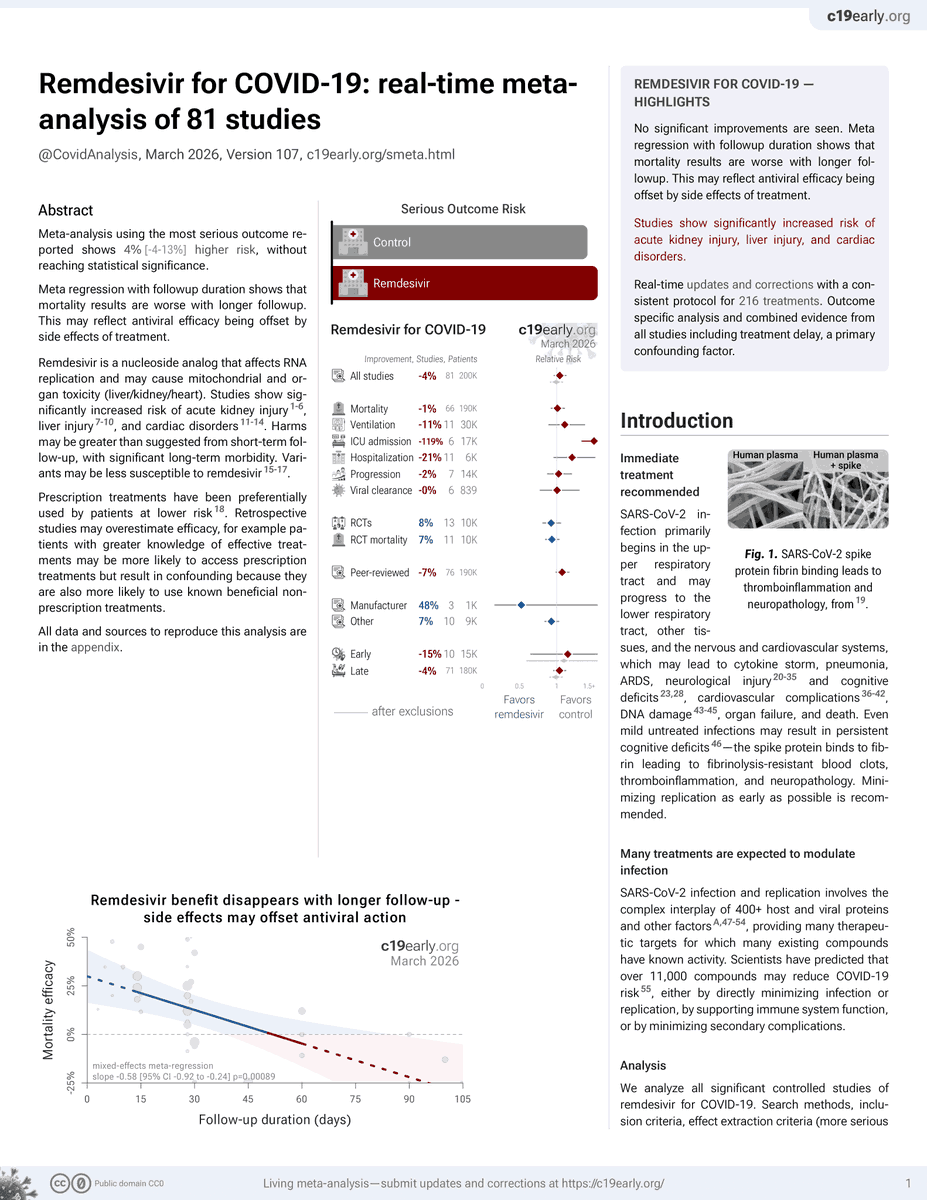
Clinical studies confirm higher risk of serious outcomes with remdesivir. Remdesivir is a nucleoside analog that affects RNA replication and may cause mitochondrial and organ toxicity. Studies show increased risk of acute kidney injury, liver injury, and cardiac disorders.
Meta-regression over follow-up duration shows increased mortality with longer follow-up, p = 0.0009 - antiviral effects may be outweighed by serious side effects.
Meta-analysis of studies to date shows increased risk, however most studies only report short-term follow-up. The true toll may be worse with longer-term morbidity and mortality. Details: https://t.co/Xtn8j1lboy
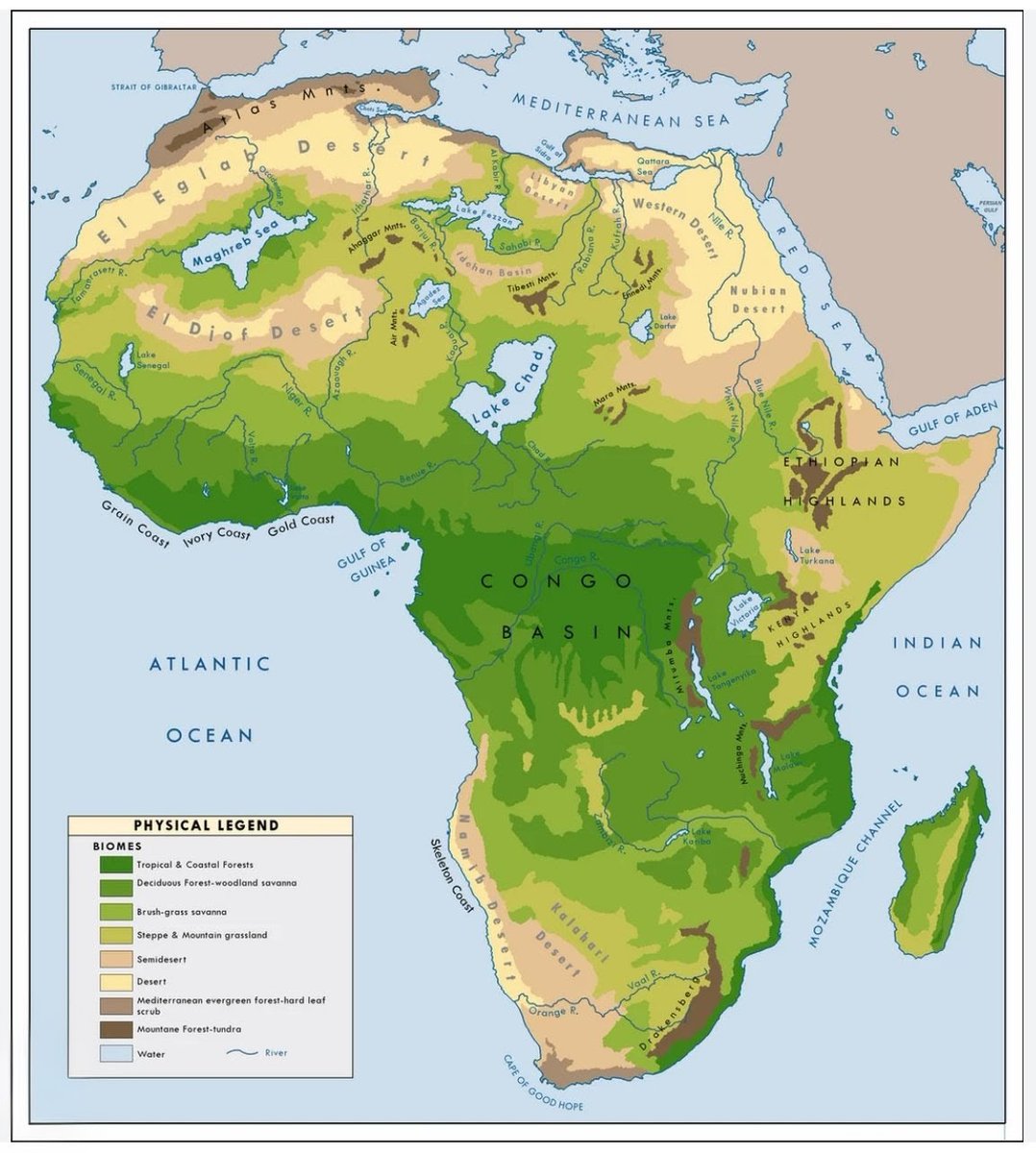
More than 1.8 billion individual trees have been mapped in the Sahara Desert and the Sahel.
This demonstrates the physical reality behind a greening surge across large land areas of the world, identified by NASA satellite studies. These areas were all previously regarded as bare soil or grassland.
This greening narrative counters long term warnings of desertification throughout Africa and the Middle East. For decades this was the theme of most conversations surrounding global warming and climate change. We were told the desert is winning and the world faced a Code Red for Humanity.
But according to the landmark study supported by NASA, researchers used artificial intelligence and high-resolution satellites to count every single tree in a 1.3 million km² area of the West African Sahara and Sahel.
The area studied is 1.3 million km² in Western Sahara/Sahel). The total count was 1,837,565,501 trees at roughly 13.4 trees per hectare, even in hyper-arid zones.
If we missed 1.8 billion trees in just one corner of the Sahara, what else is the Code Red narrative failing to see?
Source: Martin Brandt (University of Copenhagen) & NASA Goddard Space Flight Center.