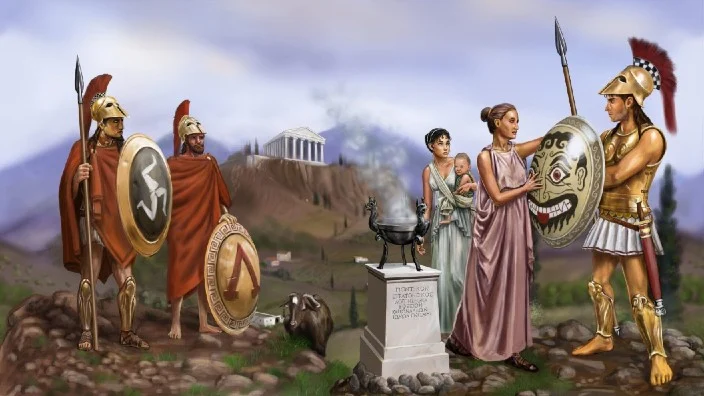
Sparta had one job. Produce the best soldiers who ever lived. Everything else in daily life bent around that single goal, and it was brutal.
It started at birth. According to the ancient accounts, a newborn was brought before a council of elders who decided if it looked strong enough to be worth raising. This part is debated by historians, but the Spartans themselves believed weakness could not be tolerated.
At age 7, boys were taken from their mothers. Just taken, and moved into state barracks to begin the agoge, the most famous training system in history. From then on the state raised you, not your family.
They were kept cold, barefoot and hungry on purpose. Their beds were reeds they had to rip from the riverbank with their bare hands. They were deliberately underfed, and here is the twist. They were expected to steal extra food to survive. But if you got caught stealing, you were beaten savagely. Not for stealing. For being clumsy enough to get caught.
The food was legendary for being awful. The famous dish was a black broth made of pork, blood, salt and vinegar. A visitor from another city tried it once and said he finally understood why Spartans did not fear death.
They trained boys to speak in short, cutting one liners. We still call it laconic today, from Laconia, the region around Sparta. When an enemy king warned them "If I invade, I will raze your city to the ground," the Spartans sent back a single word reply. "If."
Grown men did not really live at home either. Even married men ate every night at a communal mess hall with their unit, sharing the same rough food, because your loyalty was supposed to be to your brothers in arms first and your household second. Young husbands actually had to sneak out to visit their own wives.
Money was designed to be useless. Instead of gold and silver, Spartans used heavy iron bars so bulky you needed a cart to move any real amount. The whole point was to make wealth and bribery pointless, so no one could get rich or soft.
And the strangest part to outsiders. Spartan women were the freest in all of Greece. While other Greek women were shut indoors, Spartan girls were fed well, educated, and made to run, wrestle and throw the javelin, because Spartans believed strong mothers produced strong sons. Women could own property, and eventually owned a huge share of Spartan land. They were famous for speaking their minds to men, which shocked the rest of Greece.
But the whole system sat on a dark foundation. The Spartans were vastly outnumbered by the helots, a population of enslaved people who did all the farming so that citizens could train for war full time and never work. To keep them terrified and controlled, Sparta every year formally declared war on its own helots, so that killing one was never a crime. Young Spartans were even sent out in secret death squads to hunt and kill the strongest helots as a rite of passage.
So daily life in Sparta was not really living in the way we mean it. It was one long, cold, hungry preparation for battle, held up by fear on every side. It built the most feared army in the ancient world, and almost nothing else. They wrote no philosophy, built no great temples, left no art. When Sparta finally fell, it left behind no ruins worth the name, just the story.
Which is why a historian joked that if you judged the two cities only by their remains, no one would ever believe Sparta had been half as powerful as the legends say.
@Bennu@Vintuitive So - this is "wnjs" or better known as "Unas" (the one with the Pyramid Texts and the very first decorated burial chamber). Please excuse me, my Translation skills have become weaker... I have to refresh them.
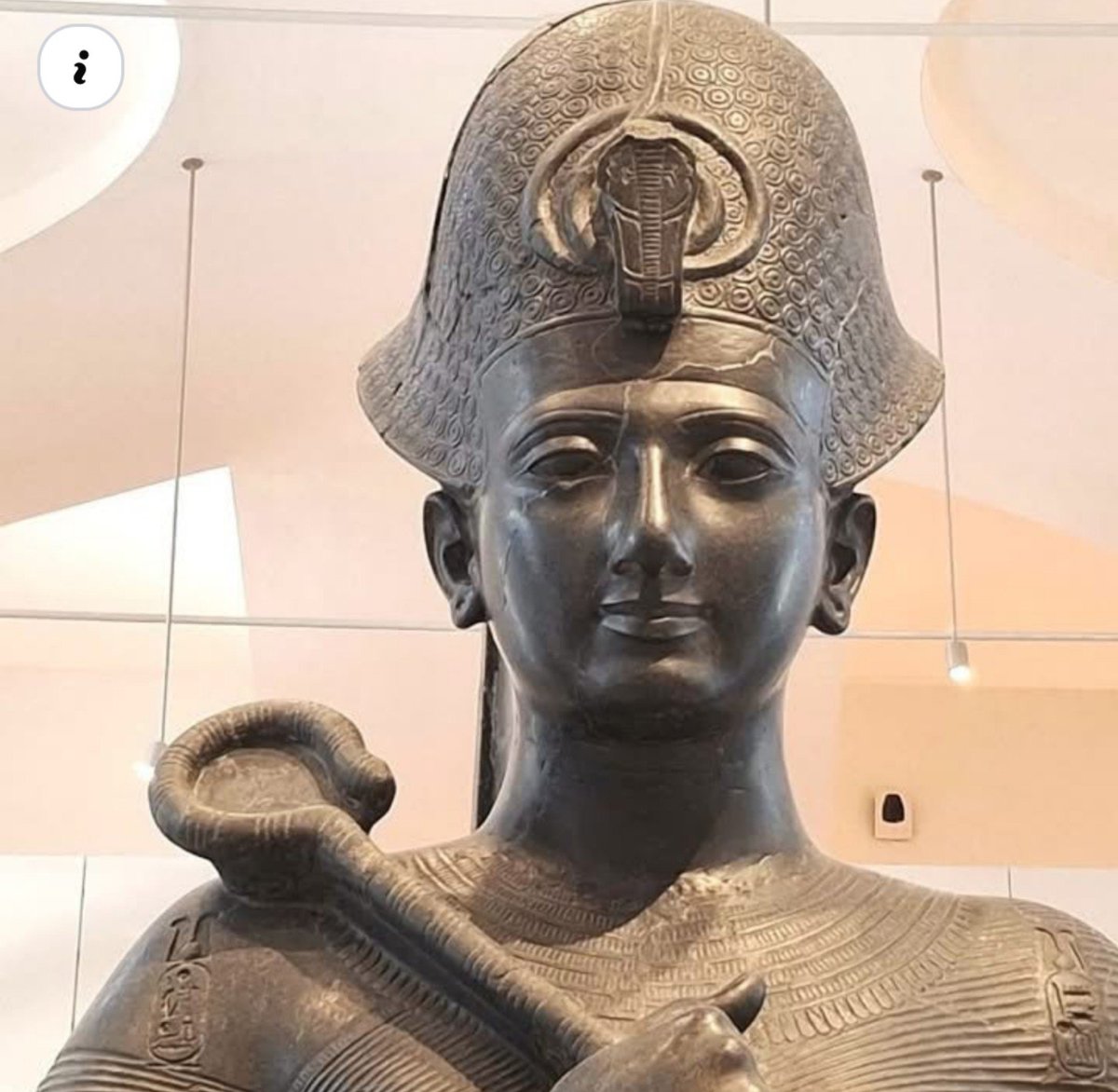
A very beautiful statue of Ramses II with Khepresh ! I know this statue from the Abguss-Sammlung (Collection of Plaster Copies) at Archäologisches Institut, Georg-August-Universität Göttingen. :-)
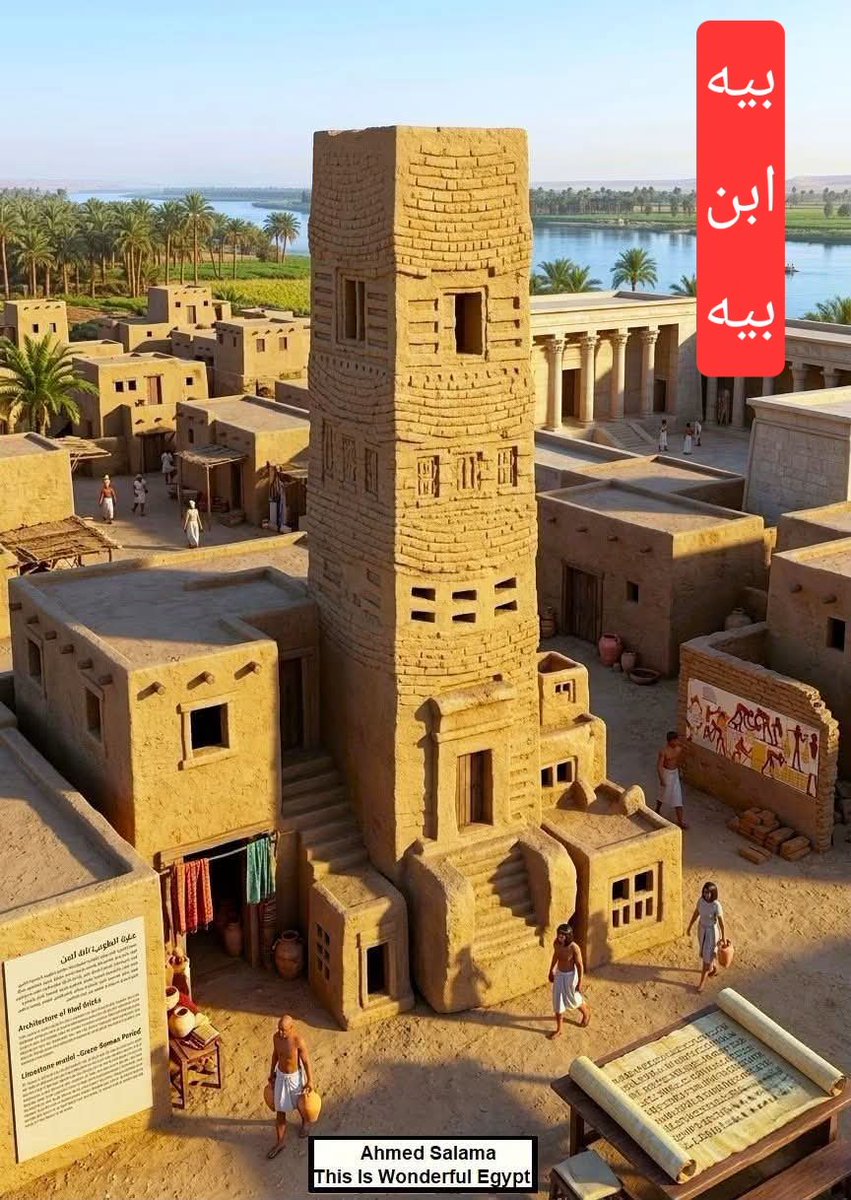
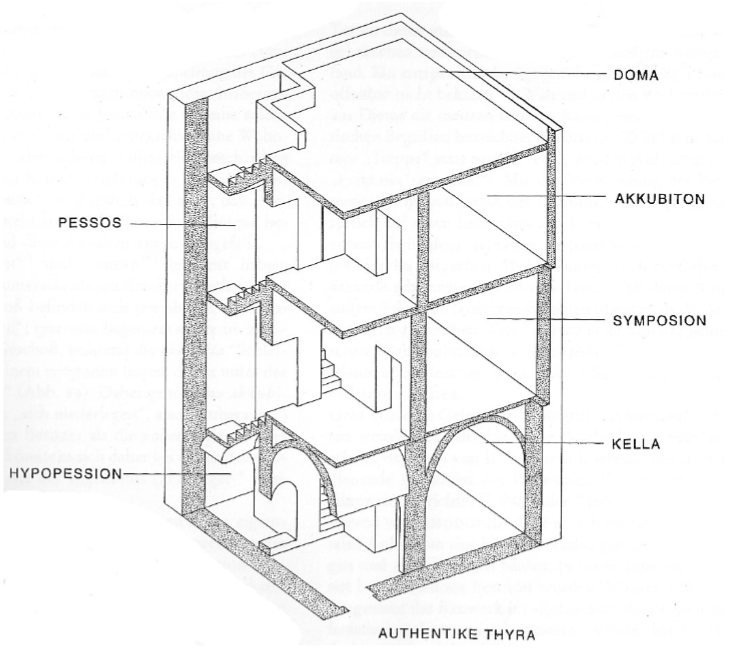
It's a reconstruction based on the information coming from a preserved Model (!) of an hellenistic / imperial Tower House. I can help you to find the soure, if you want: It's JdE 56352
عمارة 6 أدوار فى مصر القديمة أيوه حقيقى والنموذج الأصلى المصغر بنفس الشكل موجود فى ا��متحف القومى للحضارة المصرية- التقدم العمرانى فى مصر القديمة وصل إلى درجة لا يتخيلها الكثير-الصورة الأصلية للماكيت فى أول تعليق
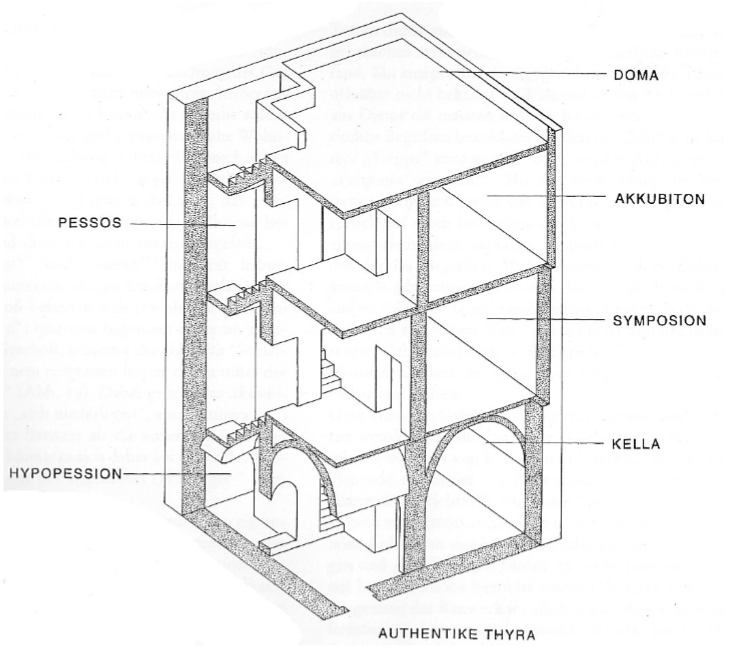
On the ground level the rooms (Storage Rooms) are without windows or just have smaller ones. They're more public. Upper rooms become less public. The middle floor is semi-public when it comes to invite guests. The Akkubiton is a private flat. The roof terrace is shared by All.
My professor said the tunnel from the bottom of the staircase (under the stair) was used for a pompa in which the body of the deceased was carried inside to it's resting place. I think it can't be entered today because of ground water. Is it also connected to the entrance shaft ?
@AmalGenedy My professor said the tunnel from the bottom of the staircase (under the stair) was used for a pompa in which the body of the deceased was carried inside to it's resting place. I think it can't be entered today because of ground water. Is it also connected to the entrance shaft ?
@ElroubyFefe Thank you very very much for your interesting and amazing posting. Ancient Daily Life (Ancient Cultural History) is so absolutely interesting, especially if it allows some comparisons with the Daily Life of the modern time. :-)
@ElroubyFefe Ohh my gosh ! Can you explain how this oven works. I saw some very very old (!) reconstructions years ago in which the bread was put outside on the oven's wall. So the bread hangs outside on the Oven and it's getting baken there. Normally I would expect it to be somewhere inside.
@TmanMhmwd6220 On ground level the rooms (Storage Rooms) are without windows or just have smaller ones. They're more public. The upper rooms become less public. The middle floor is semi-public when it comes to invite guests. The Akkubiton is a private flat. The roof terrace is shared by All.
@TmanMhmwd6220 See:
M. Lehmann, Die materielle Kultur der Spät- und Ptolemäerzeit im Delta Ägyptens am Beispiel von Tell el-Dab'a. Dissertation zur Erlangung des Grades eines Doktors der Philosophie am
Fachbereich Geschichts- und Kulturwissenschaften der Freien Universität Berlin, Berlin 2018.