Richard Feynman stood at a Cornell blackboard in 1964 and explained the problem every AI lab is fighting in 2026. The BBC filmed it. Almost nobody watches it.
The lecture is about why nature only answers in mathematics. Every team forcing language models to reason is hitting the wall he mapped 62 years ago.
He was 46. The Nobel Prize came 11 months later. The footage survived on film reels and now sits free on YouTube with fewer views than a keyboard unboxing.
Watch the blackboard section near the middle. He takes 1 of Kepler's laws and rebuilds it from nothing, with notation a 12-year-old can follow.
No slides. No jargon. 1 piece of chalk.
An ML engineer I know paused it 4 times and made his whole team watch it before standup.
You're 62 years late. The lecture is still free.
David Goggins dropped a truth bomb that will rewire how you see your entire life:
Even billionaires pull him aside after talks and quietly admit:
“I have everything money can buy… but I still feel like something’s missing.”
His response is ice-cold and life-changing:
“You’re missing the version of yourself that only shows up when you voluntarily walk through hell.
The one you meet when you stop making excuses and start making yourself unbreakable.”
In this electric 3:18 clip, Goggins lays it out plain and simple:
Real peace isn’t bought.
It’s forged.
In the dark mornings.
In the moments you want to quit but don’t.
In the relentless decision to keep expanding your mind, body, and soul when everything screams stop.
That’s where the emptiness ends.
That’s where you stop living at 40% and finally step into 100%.
That’s where you become the rare human who never has to ask, “Is this all there is?”
No shortcuts. No hacks. Just you choosing to become the hardest, strongest, most alive version of yourself—every single day.
Watch this clip. Let it hit you. Then go do the hard thing you’ve been avoiding.
The version of you that’s waiting on the other side is worth it.
Elon Musk was asked by a room full of Stanford students what single trait separates people who change the world from people who don't. Everyone expected him to say intelligence. Or work ethic. Or vision.
He said pain tolerance.
The room wasn't sure if he was joking. He wasn't. He explained that intelligence is common. Ambition is common. Even good ideas are relatively common. What is genuinely rare is the ability to absorb punishment day after day, year after year, and keep building anyway.
He said most people he's met who are smarter than him quit after the first real failure. Not because they weren't talented. Because the pain of failure exceeded their tolerance for it. They found something easier and redirected their intelligence there.
He said the entire history of SpaceX is just a story about absorbing explosions, literally and financially, and refusing to interpret them as signals to stop.
Nobody writes that on a motivational poster. Nobody puts "pain tolerance" on their LinkedIn profile. But it's the actual filter. Not who can dream the biggest. Who can bleed the longest.
Although historians struggle to explain it, there was a solid five-year period during the 80s where the most desirable look a woman could achieve was “About to blow a truck driver at a Motel 6 for $20 and half a pack of cigarettes.”
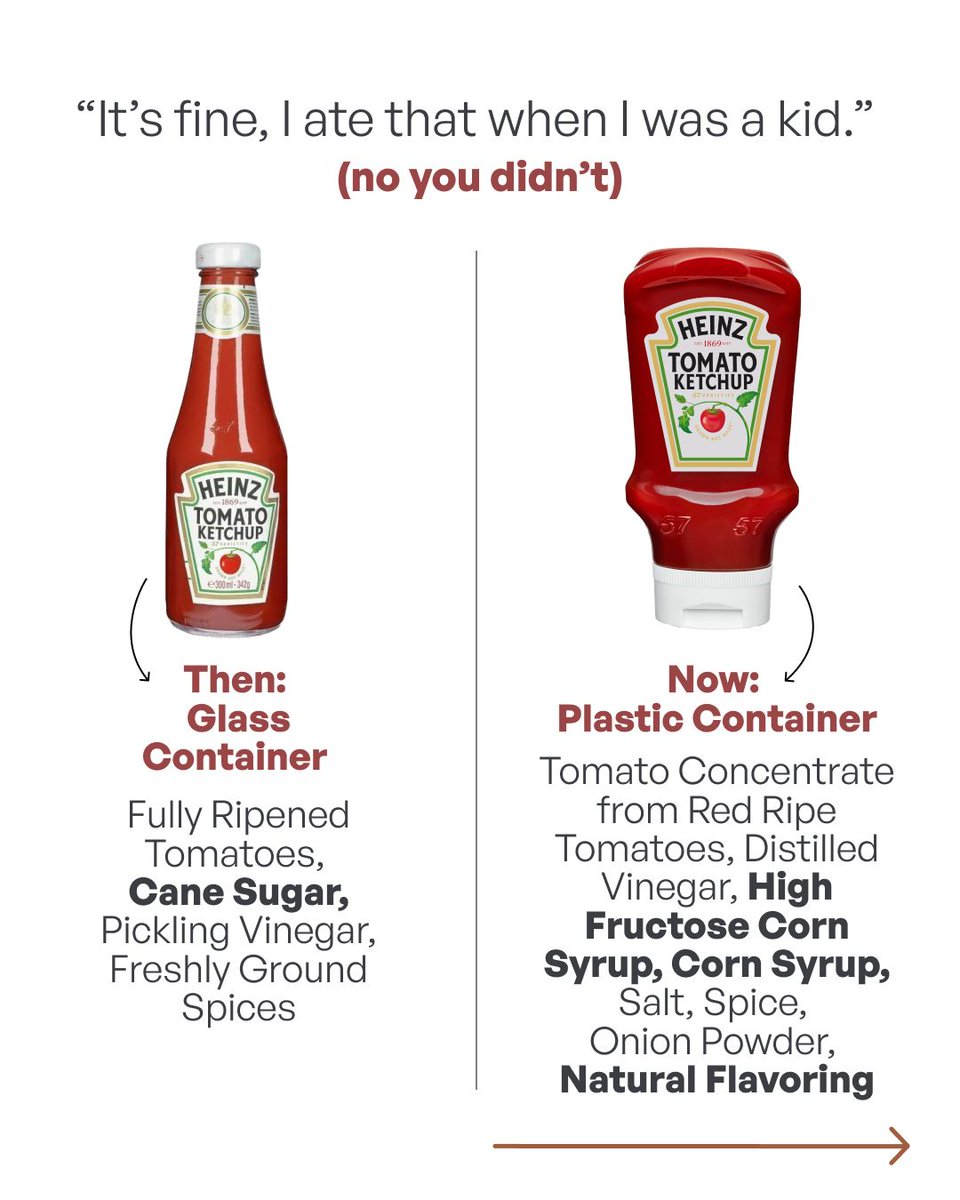
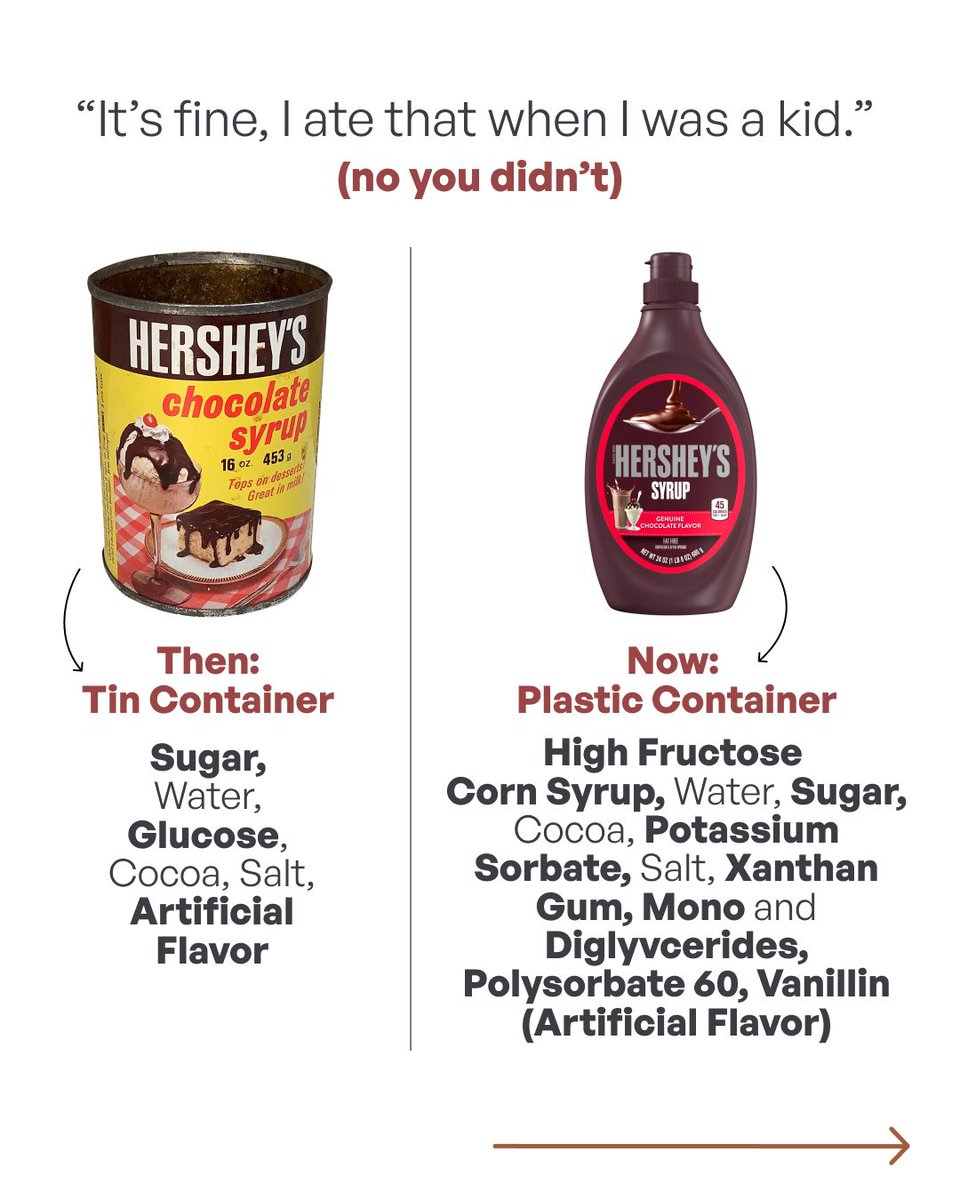
Most people say, “I ate that growing up, and I turned out fine.”
But here’s the thing...
The food you grew up eating often isn’t the same food on grocery store shelves today.
Over the last several decades, many everyday foods have quietly changed. Simple ingredient lists have been replaced with cheaper sweeteners, emulsifiers, preservatives, artificial flavors, and other ultra-processed ingredients designed to maximize shelf life—not your health.
Food isn’t just fuel. It’s information that influences your metabolism, your gut microbiome, your hormones, your immune system, and even your brain.
Reading labels is one of the simplest—and most powerful—steps you can take to protect your health.