𝗖𝗛𝗜𝗡𝗔 𝗪𝗔𝗦 𝗡𝗢𝗧 𝗘𝗔𝗦𝗬 𝗧𝗢 𝗟𝗢𝗩𝗘 𝟯𝟬 𝗬𝗘𝗔𝗥𝗦 𝗔𝗚𝗢. 𝗧𝗢𝗗𝗔𝗬 𝗜𝗧'𝗦 𝗘𝗔𝗦𝗬.
I landed in China in 1995.
𝗜 𝘄𝗮𝗻𝘁 𝘁𝗼 𝗯𝗲 𝗵𝗼𝗻𝗲𝘀𝘁 𝗮𝗯𝗼𝘂𝘁 𝗶𝘁. 𝗜𝘁 𝘄𝗮𝘀 𝗻𝗼𝘁 𝗿𝗼𝘀𝘆 𝗮𝘁 𝗮𝗹𝗹.
Pollution was really bad. Some days you could taste the air.
Hygiene was a big problem. Public toilets you avoided if you could. Getting sick from food or water happened to everyone sooner or later.
Outside the cities it was real poverty. 𝗜 𝗿𝗲𝗺𝗲𝗺𝗯𝗲𝗿 𝘀𝗺𝗮𝗹𝗹 𝘃𝗶𝗹𝗹𝗮𝗴𝗲𝘀 𝘄𝗶𝘁𝗵 𝘇𝗲𝗿𝗼 𝗲𝗹𝗲𝗰𝘁𝗿𝗶𝗰𝗶𝘁𝘆 𝗮𝗻𝗱 𝗽𝗲𝗼𝗽𝗹𝗲 𝘄𝗮𝗹𝗸𝗶𝗻𝗴 𝗯𝗮𝗿𝗲𝗳𝗼𝗼𝘁 𝗼𝗻 𝗱𝗶𝗿𝘁 𝗿𝗼𝗮𝗱𝘀. That stays with you.
Foreigners were rare. 𝗜 𝗼𝗻𝗰𝗲 𝘀𝗽𝗲𝗻𝘁 𝘀𝗶𝘅 𝗺𝗼𝗻𝘁𝗵𝘀 𝗶𝗻 𝘀𝗼𝘂𝘁𝗵𝗲𝗿𝗻 𝗖𝗵𝗶𝗻𝗮 𝘄𝗶𝘁𝗵𝗼𝘂𝘁 𝗺𝗲𝗲𝘁𝗶𝗻𝗴 𝗮 𝘀𝗶𝗻𝗴𝗹𝗲 𝗼𝘁𝗵𝗲𝗿 𝗳𝗼𝗿𝗲𝗶𝗴𝗻𝗲𝗿. You became the attraction. For many, you were the first foreigner they had ever seen.
Backpacking was a real adventure. No fast trains, hardly any highways. Crossing the country meant long-distance buses on bad roads, sometimes for days.
Foreigners had to stay in designated hotels. 𝗔𝗻𝗱 𝘆𝗲𝘀, 𝘁𝗵𝗲𝗿𝗲 𝘄𝗮𝘀 𝗱𝗼𝘂𝗯𝗹𝗲 𝗽𝗿𝗶𝗰𝗶𝗻𝗴. 𝗢𝗻𝗲 𝗽𝗿𝗶𝗰𝗲 𝗳𝗼𝗿 𝗖𝗵𝗶𝗻𝗲𝘀𝗲, 𝗮𝗻𝗼𝘁𝗵𝗲𝗿 𝗳𝗼𝗿 𝗳𝗼𝗿𝗲𝗶𝗴𝗻𝗲𝗿𝘀. Same seat, same room, pay more because of your face/purchasing power.
Bus terminals and train stations were crowded and not safe. Pickpockets were normal.
English was extremely rare. 𝗡𝗼 𝗶𝗻𝘁𝗲𝗿𝗻𝗲𝘁, 𝗻𝗼 𝘀𝗼𝗰𝗶𝗮𝗹 𝗺𝗲𝗱𝗶𝗮, 𝗻𝗼 𝗽𝗵𝗼𝗻𝗲 𝗺𝗮𝗽𝘀, 𝗻𝗼 𝘁𝗿𝗮𝗻𝘀𝗹𝗮𝘁𝗶𝗼𝗻 𝗮𝗽𝗽. A paper guidebook, a dictionary, and a lot of pointing. Every day was a struggle.
So most foreigners did a year or two and went home.
𝗧𝗵𝗲 𝗼𝗻𝗲𝘀 𝘄𝗵𝗼 𝘀𝘁𝗮𝘆𝗲𝗱 𝘄𝗲𝗿𝗲 𝘁𝗵𝗲 𝗵𝗮𝗿𝗱-𝗰𝗼𝗿𝗲 𝗖𝗵𝗶𝗻𝗮 𝗹𝗼𝘃𝗲𝗿𝘀. Not for comfort, there wasn't any. We stayed because you could feel something was happening.
𝗡𝗢𝗪?
Now I cross the country on a high-speed train at 300 km/h. On time, clean, booked on my phone in a minute. Same price as everyone else.
Pickpockets? I can't remember the last time I heard of one.
Blue sky is normal again. The rivers I avoided have parks along them now.
𝗧𝗵𝗼𝘀𝗲 𝘃𝗶𝗹𝗹𝗮𝗴𝗲𝘀? 𝗘𝗹𝗲𝗰𝘁𝗿𝗶𝗰𝗶𝘁𝘆, 𝗽𝗮𝘃𝗲𝗱 𝗿𝗼𝗮𝗱𝘀, 𝗶𝗻𝘁𝗲𝗿𝗻𝗲𝘁. 𝗧𝗵𝗲 𝗸𝗶𝗱𝘀 𝘄𝗵𝗼 𝘄𝗮𝗹𝗸𝗲𝗱 𝗯𝗮𝗿𝗲𝗳𝗼𝗼𝘁 𝗻𝗼𝘄 𝘀𝗲𝗹𝗹 𝘀𝘁𝘂𝗳𝗳 𝗼𝗻𝗹𝗶𝗻𝗲 𝗳𝗿𝗼𝗺 𝘁𝗵𝗲𝗶𝗿 𝗽𝗵𝗼𝗻𝗲𝘀.
And a foreigner on the street? Nobody turns their head anymore.
I pay for everything with my phone. I walk home at 2am and feel completely safe. 𝗜𝘁'𝘀 𝗽𝗿𝗼𝗯𝗮𝗯𝗹𝘆 𝗼𝗻𝗲 𝗼𝗳 𝘁𝗵𝗲 𝗲𝗮𝘀𝗶𝗲𝘀𝘁 𝗰𝗼𝘂𝗻𝘁𝗿𝗶𝗲𝘀 𝗶𝗻 𝘁𝗵𝗲 𝘄𝗼𝗿𝗹𝗱 𝘁𝗼 𝘁𝗿𝗮𝘃𝗲𝗹 𝗶𝗻 𝘁𝗼𝗱𝗮𝘆.
𝗧𝗛𝗘 𝗡𝗘𝗪 "𝗖𝗛𝗜𝗡𝗔 𝗘𝗫𝗣𝗘𝗥𝗧𝗦"
Now I see new "self-proclaimed China experts" online, doing road trips in a nice SUV.
I'm not downplaying them. 𝗧𝗵𝗲𝘆'𝗿𝗲 𝘀𝗵𝗼𝘄𝗶𝗻𝗴 𝗺𝗶𝗹𝗹𝗶𝗼𝗻𝘀 𝗮𝗯𝗿𝗼𝗮𝗱 𝘁𝗵𝗲 𝗿𝗲𝗮𝗹 𝗖𝗵𝗶𝗻𝗮 𝗼𝗳 𝘁𝗼𝗱𝗮𝘆, 𝗻𝗼𝘁 𝘁𝗵𝗲 𝘃𝗲𝗿𝘀𝗶𝗼𝗻 𝗯𝗶𝗮𝘀𝗲𝗱 𝗪𝗲𝘀𝘁𝗲𝗿𝗻 𝗺𝗲𝗱𝗶𝗮 𝗵𝗮𝘀 𝗯𝗲𝗲𝗻 𝘀𝗲𝗹𝗹𝗶𝗻𝗴 𝗳𝗼𝗿 𝗱𝗲𝗰𝗮𝗱𝗲𝘀.
But it's the easy version. They see the result, not the struggle that built it.
Both stories matter. Theirs shows what China is now. Ours shows how far it came.
𝗪𝗛𝗔𝗧 𝗖𝗛𝗔𝗡𝗚𝗘𝗗?
Not the people.
𝗪𝗵𝗮𝘁 𝗰𝗵𝗮𝗻𝗴𝗲𝗱 𝗶𝘀 𝘁𝗵𝗶𝗿𝘁𝘆 𝘆𝗲𝗮𝗿𝘀 𝗼𝗳 𝗯𝘂𝗶𝗹𝗱𝗶𝗻𝗴. Railways, roads, power, sanitation. Hundreds of millions out of poverty. With concrete, steel and very long days.
I watched it happen.
𝗧𝗛𝗘 𝗙𝗨𝗡𝗡𝗬 𝗣𝗔𝗥𝗧
In the 90s the Western press called China dirty, poor and backward.
𝗡𝗼𝘄 𝗶𝘁'𝘀 𝗰𝗹𝗲𝗮𝗻, 𝘀𝗮𝗳𝗲 𝗮𝗻𝗱 𝗺𝗼𝗱𝗲𝗿𝗻, 𝗮𝗻𝗱 𝘁𝗵𝗲𝘆 𝗰𝗮𝗹𝗹 𝗶𝘁 𝗮 𝘁𝗵𝗿𝗲𝗮𝘁.
Back then you had to be a hard-core China lover to stay.
𝗧𝗼𝗱𝗮𝘆 𝘆𝗼𝘂 𝗷𝘂𝘀𝘁 𝗻𝗲𝗲𝗱 𝘁𝗼 𝗰𝗼𝗺𝗲 𝗮𝗻𝗱 𝘀𝗲𝗲 𝗶𝘁 𝗼𝗻𝗰𝗲.
This is a very common mistake, even among investors: the belief that a country's economic performance must mean positive stock market returns.
The truth is that there's **zero** correlation between GDP growth and stock market returns. I'm not exaggerating: Morningstar actually analyzed the historical data for 41 countries (https://t.co/TO8cjqkHJx) and found that, if anything, the relationship runs the other way: faster GDP growth meant slightly worse stock market returns.
So if your thinking is "country X has a great economy these days, let's invest in their ETF", you might as well burn your money - that's not how these things work.
China is of course the most extreme illustration of this: its GDP has grown more than 45-fold since 1992 but if you'd invested $100 in the MSCI China stock index back then, you'd have only $72 left today (before dividends).
There's some logic to it, if you think about it: for an economy to grow, money has to keep pouring into new factories, new firms and new capacity - money that would otherwise end up as profits, which are what drive share prices. Great for the economy and consumers, not so good for the shareholders who foot the bill.
Of course, this also generates problems of its own, as is the case in China: if the stock market doesn't make people any richer, households park their savings elsewhere, overwhelmingly in real estate - China's property bubble didn't come out of nowhere. And now that real estate is a bad investment too, China has to deal with capital flight: the Chinese looking at investments abroad for ways to get returns.
Which is why, over the medium run, there's reason to think the Chinese stock market may finally be worth investing in: the government is fighting capital flight with new rules (like a new 20% tax on offshore trusts) but they also need to give the Chinese a good reason to keep their savings at home, and with property "being for living in, not speculation", the stock market is the most credible candidate left.
@RnaudBertrand With copper, China often stockpiles it when prices are low and stops buying it when prices are high, their reduced demand then causes prices to fall again
I figured a similar thing might've happened here
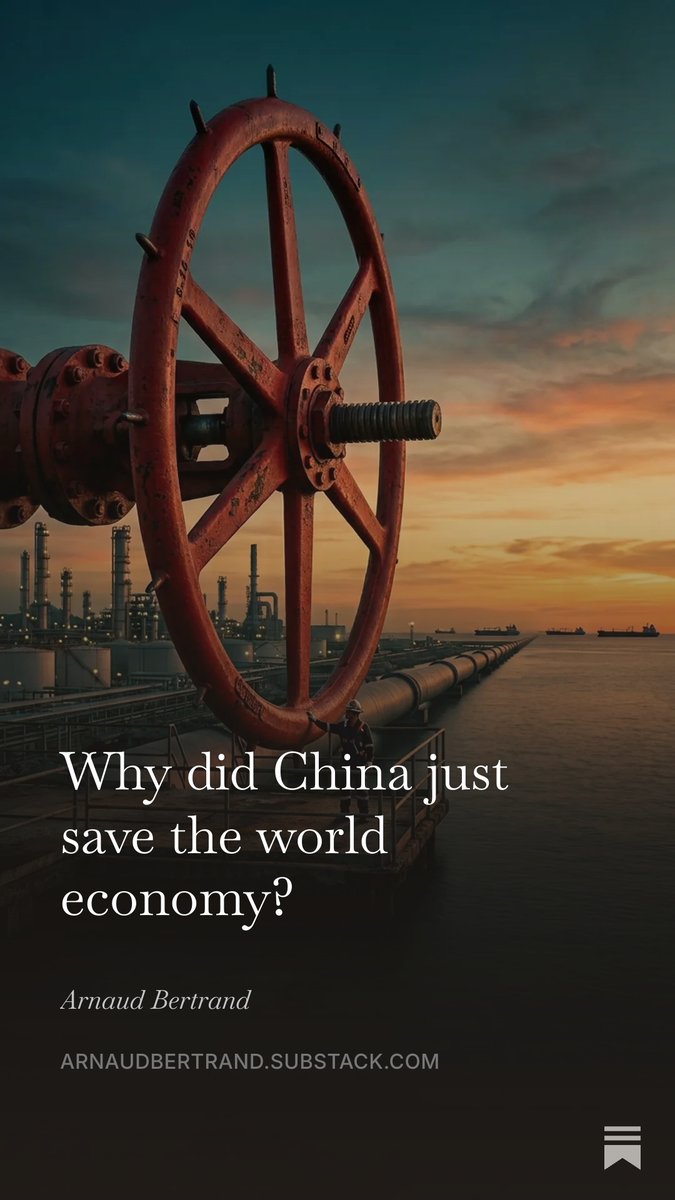
This is one of the biggest geopolitical mysteries of the year: why did China just save the world economy?
Because, make no mistake, it absolutely did. Analysts are pretty much unanimous on this: had China not dramatically - and I mean dramatically - reduced its oil imports this year, the price of crude oil would have gone through the roof and dragged the global economy down with it.
For proof, read how Javier Blas from Bloomberg - widely recognized as one of the world’s top energy analysts - explains what China did to Jake Sullivan and Jon Finer on their podcast “The Long Game” (https://t.co/bBD8yFFUdC).
As Blas puts it, China went “from 11, 12 million barrels a day to less than 6 million barrels a day” of seaborne crude imports, and that “freed a lot of oil for other countries, particularly in Asia.” India, Japan, Korea and Southeast Asia “could buy the barrels that China was not buying.”
To be clear, China wasn’t the only factor - surging US exports and the IEA’s emergency release helped too - but it was by far the biggest: JPMorgan reckons China accounted for about 74% of the fall in global crude trade (https://t.co/JCmFXYJcfh).
So it's no exaggeration to say that it is China, first and foremost, that saved the world economy this year.
If you remember the early days of the Iran war, none of this is what was predicted. In fact some US think tankers, such as the (always horrendous) Zineb Riboua from the Hudson Institute, were even cheering the war as being “all about China… the opening act in the larger contest against China,” the moment the US would crack “the central pillar of a regional order that Beijing has assembled” (https://t.co/RaCE05TcMp).
Seven months on, what actually happened is that not only did China come out of the war unscathed economically, and strengthened strategically, it also ended up shielding the world economy, America’s included, from the fallout of the very war that was supposed to be its undoing.
Breaking news: if you do something that’s supposed to be a “blow” to someone else - some sort of 3D chess move to gain the upper hand - and they end up having to rescue you from the fallout, maybe it wasn’t such a brilliant strategic move after all.
So how did China pull it off? And, more intriguingly, why did it choose to rescue countries, including the US, from a war that Washington’s own hawks were openly selling as a strike against China itself?
And why do this when it effectively dampened Iran's leverage considerably, even though they're supposed to be China's "ally" (which, as we'll see, is false)?
This is the topic of my latest article. I went very deep researching all the Chinese sources I could find on this, looking at the exact legal mechanisms, and at what officials, oil refiners and state media actually said.
The answer turns out to be far stranger than I expected: no-one in Beijing actually ever ordered an import cut. China, effectively, seems to have saved the world economy incidentally, as a by-product of its own domestic policy to protect Chinese consumers.
Which is the real story here: China has become so large and so important it can just rescue the world economy as a mere side effect.
In fact what I discovered, hilariously, is that the Chinese were just as surprised as anyone else: it’s only weeks after Western media started crediting China with saving the world economy that Chinese media picked up the story. And even then, CCTV’s first take in July (https://t.co/xLPyaJeZnT) presented it as something 外媒称 (wàiméi chēng, “foreign media claim”) 🤣
Almost like a giant suddenly waking up to its own powers. Because, that's the thing: intentions fade, consequences stay. Intentional or not, as Igor Sechin, the head of Rosneft, Russia’s largest oil company, put it (https://t.co/ckinOaHzJ7), the consequence is that it's now China, not OPEC, who calls the shots on global energy markets.
The valve of global oil pricing is now in Shandong, not in Zhongdong anymore (Zhongdong, 中东, is the Middle East in Chinese).
Full article here, with how China’s 20-year strategic nightmare, the “Malacca dilemma”, has now effectively become its leverage over the rest of the world: https://t.co/HsxPLJp45X
فكرة مثيرة ولكنها مش جديدة
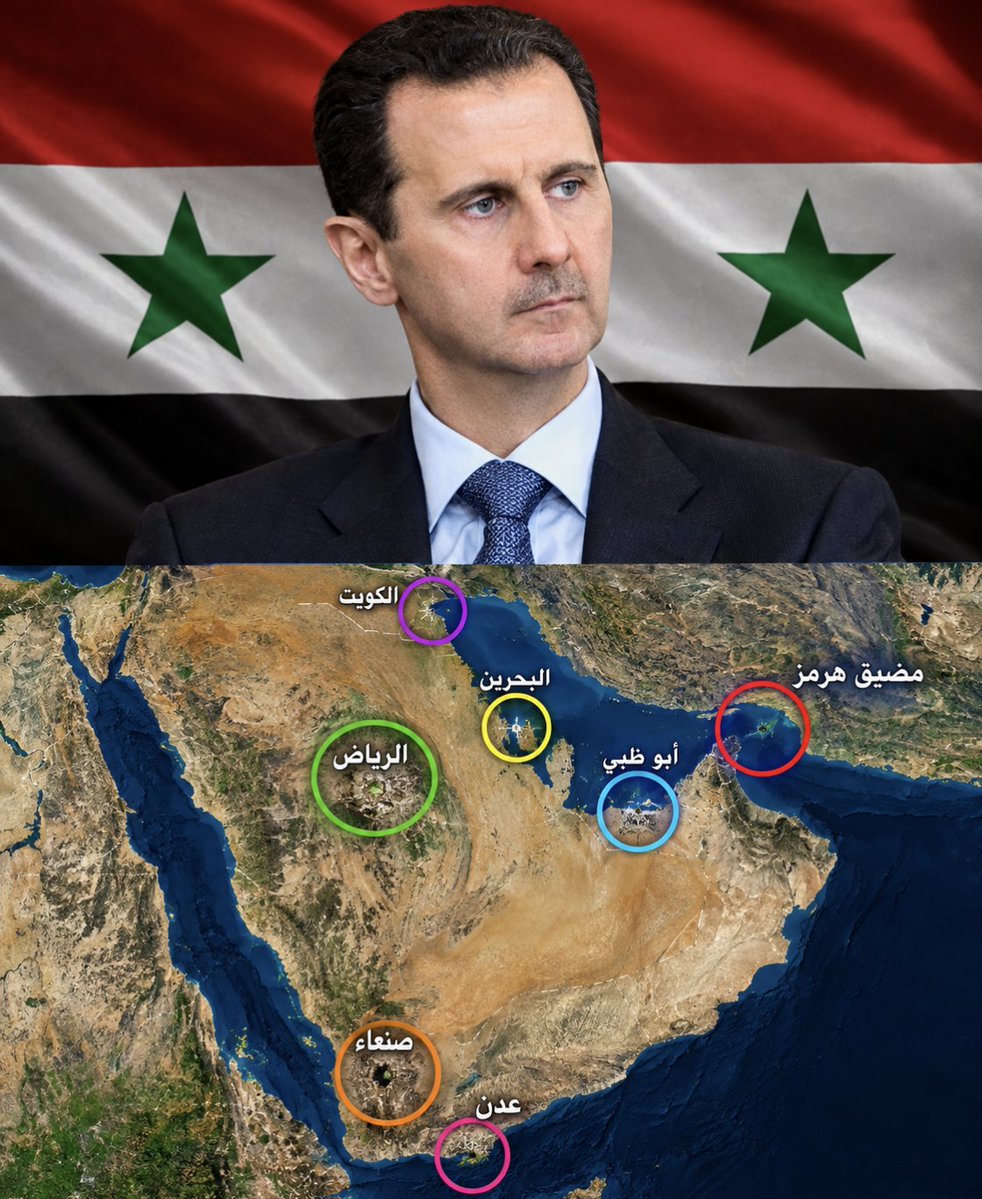
مش ملاحظين حضراتكم إن الأمن القومي للخليج تهدد بشكل خطير لأول مرة في تاريخهم منذ إنشاء الدول العربية بعد سقوط بشار الأسد؟
الأسد سقط من هنا والحرب في الخليج اشتعلت من هنا
الأسد سقط فورا لقينا فيه نار في العواصم العربية كلها في الكويت والدوحة والبحرين وأبوظبي والرياض كله بيولع..
الفكرة أن أيام بشار الأسد كان هناك من ينصح دول الخليج _ وأنا منهم _ بأن نظام الأسد هو الذي يمنع نشوب حرب كبيرة بين إيران وإسرائيل.
جزء أساسي من أسباب دعم #ايران لبشار الأسد هو منع الاعتداء الإسرائيلي عليهم
وإن نتنياهو ما كانش يقدر يضرب ايران طول ما بشار الأسد موجود، لأنه عارف إن القوات الإيرانية في سوريا هترد من أقرب نقطة.. والمجال الجوي السوري مش مفتوح وإن الدفاع الجوي السوري هيسقط الطائرات الإسرائيلية وهي في طريقها لإيران ..
كل ده انتهى عند سقوط الأسد وسيطرة الجولاني والقاعدة
أصبح المجال الجوي السوري مفتوح ومفيش قوات إيرانية في سوريا، إضافة لوجود ترامب نفسه المتحمس للاعتداء على إيران فالأجواء إذن صارت مواتية للحرب في الخليج.
من هنا تهدد الأمن القومي للخليج بنظام أحجار الدومينو، سقط الأسد، سقط الحاجز للحرب بين إيران وإسرائيل، صارت المعركة مفتوحه للرد على القواعد الامريكية في الخليج وتدميرها..
كنت أقول وقتها أن الأسد مصلحة خليجية، وأن سعي دول الخليج لإسقاط الأسد هو مصلحة اسرائيلية بالمقام الأول ، وسوف يجلب عليها نقمة إيران ، إضافة أنهم لن يربحوا شيء من إسقاط الأسد ، لان سوريا الجولاني هي سوريا تركية وليست عربية، ونظام أردوغان وحزب العدالة هو المتحكم الأول في القرار السوري.
أنا مكنتش من أنصار الأسد ، كنت بنتقده، لكن في نفس الوقت كان يذهب تحليلي لضرورة وجوده للأمن القومي العربي الذي اخترق بشكل كبير بعد سقوطه، والسياسة المصرية كانت تذهب لنفس النتيجة وكانت تنصح بأن سوريا مركز مهم يقوم عليه الأمن القومي العربي، وسقوطها يعني تهديد جماعي للدول العربية.
إيه رأي حضراتكم؟ بس خلي بالك قبل الإجابة اسال نفسك بماذا تفسر اندلاع الحرب في دول الخليج وتهديدها بشكل كبير بعد سقوط هذا الرجل؟.. أوعى تقول لي صدفة ان السياسة لا تعرف الصدف
Image Made With Ai
This is a really funny Xi video, which I've never seen before. I just added subtitles in English to it 👇
He explains the art of giving gifts to foreign leaders. The South Korea anecdote is particularly hilarious: he explains that when China had to find a gift for President Park Geun-hye, they went through her autobiography, where she wrote that if she’d ever had a first love (she was unmarried), he would be Zhao Zilong, a legendary general from the Three Kingdoms. So they had Fan Zeng, one of China’s most famous painters, paint her crush 😂
Xi can’t resist adding that Zhao Zilong happens to come from Zhengding, the county he ran in the 1980s, which makes him "very proud too."
Xi’s actual point is that good diplomacy is personal and that you need to do deep research on the people you’re dealing with: reading their biographies, knowing their taste, their history, etc. It signals respect and, as he puts it, is "a very, very effective way of reaching people’s hearts."
This is genuinely incredible: Huawei survived the most aggressive assault against a single company in modern history and is coming out the other side with the U.S. licensing its technology.
And ironically in the exact domains - 5G, AI, compute, networking - that the U.S. tried to cut Huawei out of.
@FaySue6@bubalov@RnaudBertrand Yes China is much more superior in fighter jets, and other military aircrafts than Russia but turns out the civilian and the military niche are very different
@FaySue6@bubalov@RnaudBertrand Yes COMAC uses GE engines for C919 for licenseing in EU and North America but the truth is Russia has a more mature civilian airline engine manufacturing industry than China. China simply doesn't care about investing into this right now...
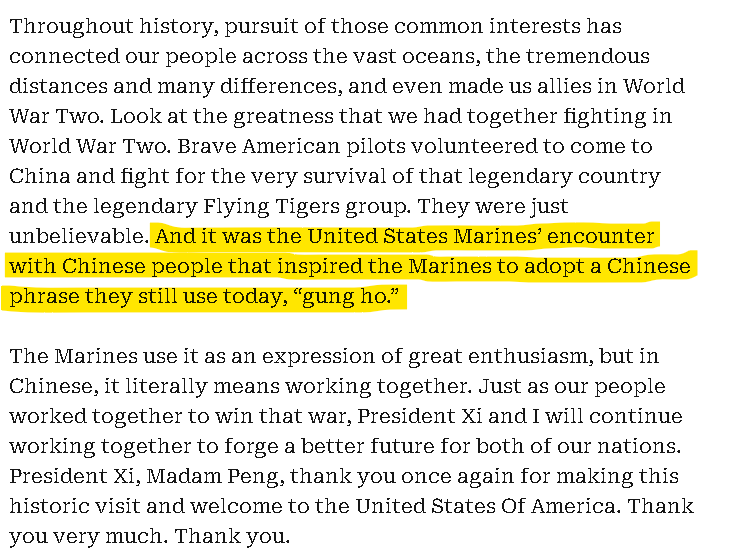
Really interesting that Trump mentioned the Chinese origin of the term "gung ho" during his remarks at Xi's arrival ceremony 👇 (https://t.co/NB5ydHmC2T)
What he didn't mention, however, is the most fascinating fact: it directly comes from an organizational concept that the US Marines borrowed from the Communist Army during WW2.
See, during WW2, the Communists were at a big disadvantage versus both the Japanese and Chiang Kai-shek's Nationalists: fewer weapons, less money, no foreign backing to speak of.
Yet they kept proving extraordinarily capable, scoring many victories, and an American Marine officer named Evans Carlson (https://t.co/MTNtQZDskj) decided to embed himself with the Eighth Route Army (the Communist forces under Zhu De) in order to understand why.
What he found - which deeply impressed him - was a completely different organizational culture to traditional armed forces: almost no hierarchy, officers sharing the same food and hardships as the men, open discussion of objectives, and discipline based on conviction rather than rank.
In short, the Communists' secret weapon was cohesion - the way they worked together - and Carlson came away convinced it was the model for how fighting units should be run.
He didn't quite know how to call this organizational concept so he borrowed a term from a Chinese cooperative movement he'd come across during his travels (the Chinese Industrial Cooperatives: https://t.co/abEo7GCetn), known by the abbreviation 工合 (gōnghé) which literally means "work together". It captured exactly what he'd seen in the Eighth Route Army.
Back in the Marines he took command of the 2nd Marine Raider Battalion ("Carlson's Raiders") in 1942, and he adopted "Gung Ho" as the unit's motto and applied the Eighth Route Army model.
He held "Gung Ho meetings" where rank was set aside and men could speak freely and criticise, officers had no special privileges, and everyone was expected to understand why they were fighting. The Raiders became famous for the Makin Island raid (August 1942) and the "Long Patrol" on Guadalcanal (late 1942).
Carlson's Marine unit became so legendary that Hollywood made the 1943 film Gung Ho! about them (https://t.co/GeSCG9Sk3I!), which is largely how the phrase spread into general American English.
So there you have it, many ironies here, first among which is the fact that the US Marines learned to let their men speak freely and criticize their leaders by... watching the Chinese Communists 😊
Delcy Rodríguez is a fanatical devotee of a deranged Indian pedophilic sex-cult founded by Sathya Sai Baba. Here are photos of her in India worshipping at his altar. This pedophile sex-cult has a division in Israel, and was spread there and to the West by Zionist Jews. Chavez hated Delcy and expelled her from the top leadership of the Bolivarian movement. Nicolas Maduro is also a devotee, inducted into the cult by his wife after it had already become public that its founder was a pedophile mass rapist. After he succeeded Chavez he brought his fellow cult-member Delcy back into the leadership, and now she is the Mossad-CIA appointed Dear Leader of the country, after the fake kidnapping of Maduro who keeps publishing messages via his family/son about how awesome everything is and laundering the slogans her regime is using. All of this is in violation of the Venezuelan constitution which requires an election in the absence of the democratically elected president, but that is just a piece of paper no one in the Mossad-CIA regime gives a shit about.
If you look on YouTube for Sathya Sai Baba, you will find a documentary on his pedophilic nature titled "The Secret Swami Satya Sai Baba", and also videos of him doing magic tricks with jewelry to his deranged cult following, which he claimed he had the power to create out of thin air.
I only recently discovered this, and I don't know how these deranged lunatic cult freaks were able to rise to the top of the Chavismo movement, but the fact that they did explains everything that happened in the past year and after Chavez' passing.
Maduro is in on it. The kidnapping is fake. There was no kidnapping. The entire thing was a propaganda spectacle planned in advance with the top of the Venezuelan regime. That is why there was no resistance at all and the Israeli-US empire was able to sell it as an epic based power move.
Maduro's son is now using clips of his father and his account with a prison photo using the same slogan the Delcy regime is using to justify the total rape of Venezuela, "Venezuela is reborn", stealing all its oil and handing it over to the genocidal Zionist Jewish supremacist Kushner-Witkoff empire.
Maduro's son is also a converted Zionist himself, already saying in the days after the fake kidnapping spectacle that Venezuela should re-establish relations with Israel, and he's since been a key player in spreading Zionist evangelical Christianity to indoctrinate Venezuelans into the death-cult's Jewish supremacist ideology (the Venezuelan puppet regime now routinely promotes Zionist Christians from the US and Israel).
Now here's the problem for the standard narrative about a fake kidnapping operation that showed just how epic and based and powerful the Kushner/Witkoff empire is: Maduro is still alive. He's not dead. He is fully capable of giving public statements. He can disavow everything that is happening now. Yet he hasn't done that. In fact, his son and the rest of the Delcy puppet regime are so confident that he won't do it, that they use clips of him and his own account and photos of him in prison that miraculously they have access to, to gleefully launder their permanent enslavement to the Kushner/Witkoff empire.
What was Maduro doing in the months leading up to that bullshit spectacle "kidnapping" hoax?
He was openly dancing out in the streets, in public, on stages.
After there had been multiple assassination attempts on him when he was out in public doing the same thing, most famously the drone strike attempt.
Why was he so confidently dancing and doing the wrestler heel act without any worry in the world as the US moved its navy close to Venezuela and threatened to bomb and destroy it and kill him?
Because he was playing his part. It was all fake. It was a hoax.
The "deal" he proposed to the US months before that hoax kidnapping had been accepted, but the Kushner/Witkoff Trump regime as well as the new puppet regime in Venezuela they were about to enslave needed a story, an alibi, and, most crucially, they needed a propaganda spectacle showcasing the supposedly overwhelming power and superiority of the Kushner/Witkoff empire ahead of the planned Iran war.
So they concocted this entire hoax for that purpose.
If it hadn't been a hoax, Maduro would be dead right now because he would have to be permanently silenced, and other leading members of the Venezuelan government would have been eliminated too.
Notice how there was no fake bullshit "kidnapping" of Khamenei. They murdered him, because there is no such thing as an epic based 100 dimensional chess operation of flying helicopters over Caracas and evading all military counter-reaction and magically being able to kidnap a president without incurring a single loss or even a single bullet fired in your direction. That's not real. You would have to be a fucking moron to think that's real, in other words, the entire US-Western media and political class.
Instead, all you had was a fake kidnapping of him and of course also his wife because he can't be left alone while they're doing a fake bullshit trial before they release him either at the end of his term or sometime after.
The only real aspect of it was the Cuban personal guards being mass murdered, but this was likely not done by the US, this was done by the Venezuelan puppet regime itself. They betrayed them. They turned on them and murdered them as they did not suspect it with a bullet to the head. I'm sure the Cubans know this but have not said it yet publicly, but sooner or later it will come out what those depraved degenerate scum did.
@jojjeols@Reuters@DominoTheoryMag I am sure not even you dumbfuck nigga belives that concentration camps shit in https://t.co/MeE1jQwhgY least invent something new already,that narative was trendy in like 2018