the verification flow is.. automated probe (checks reachability, basic schema compliance, and that the endpoint actually returns what the provider declared) + human review before anything goes live in the catalog.
After approval we run continuous health checks 24/7, so agents only ever see endpoints that are actually responding. Dead or broken ones get deprioritized automatically.
If you run an API, here is exactly what happens when you list it on https://t.co/a5khf6OZkr.
You submit your endpoint, category, description, and a price per query. We run an automated verification probe, review it, and approve it into the catalog. From that point your API is discoverable by every agent on the network through our OpenAPI spec, our agent card, and our MCP server.
The economics: you set the price, the agent pays it in USDC on Solana or Base, and 100 percent of it settles directly to your wallet. We take zero cut. Not a small cut. Zero. MPP32 handles the protocol negotiation, the 402 challenge, and the on chain verification through PayAI and Coinbase facilitators, and the payment goes straight to you.
You also get a live dashboard: request counts over 24 hours and 7 days, success rate, average latency, error breakdowns, and estimated revenue. Health checks run continuously, so agents only see endpoints that actually work.
Minimum price is a tenth of a cent. Free tiers are supported too. If your API has value to a machine, there is now a distribution channel with no sales cycle.
Post 3 — Launching an agent: from zero to paying for services in one request
Here is the full lifecycle of an agent on MPP32, because the details matter.
One POST to /api/agent/sessions returns your agent key. That key is hashed with SHA256 at rest, valid for 30 days, and rate limited at 240 calls per minute. You optionally attach a wallet and set three numbers: a total budget cap, an hourly velocity limit, and an alert threshold.
Budget enforcement has two modes. Soft mode warns. Hard mode trips a circuit breaker the moment a breach would occur and blocks every paid call until you reset it. Your agent physically cannot overspend.
From there your agent calls one universal execute endpoint against any of thousands of services: token intelligence, market data, search, image generation, embeddings, DeFi analytics. Free services return immediately. Paid services trigger the 402 flow, and the payment is signed locally by your agent. We verify on chain and release the response with the settlement signature in the headers.
No wallet yet? You still get 10 free Intelligence Oracle calls per day to test the whole loop.
The dashboard shows every call, every dollar, every protocol, every latency number. Full audit trail, on chain.
The agent economy will not be one agent doing everything.
It will be agents delegating work to other agents. Which raises an uncomfortable question: how do you give a subagent money without giving it your whole budget?
MPP32 ships delegated spend keys as a native primitive. A parent session mints a child key that is scoped, capped, and revocable.
Scoped: the child can only pay for services on an allow list, and scopes can only narrow going down the tree, never widen.
Capped: each key carries its own budget limit, hourly velocity limit, and a ceiling on any single call. Rolled up: every dollar a child spends counts against the parent budget, so a runaway subagent can never breach the top level cap. Revocable: kill one key and the entire subtree under it stops spending instantly.
Delegation is four levels deep, and every settlement at every level traces back to its parent with an on chain signature.
This is the treasury structure of a company, expressed as an API, enforced by code. When people talk about agent orchestration, this is the piece they forget until it costs them.
solana:6hKtz8FV7cAQMrbjcBZeTQAcrYep3WCM83164JpJpump is the future, there's no infrastructure ready like we are.
Here is the full lifecycle of an agent on MPP32, because the details matter.
One POST to /api/agent/sessions returns your agent key.
That key is hashed with SHA256 at rest, valid for 30 days, and rate limited at 240 calls per minute. You optionally attach a wallet and set three numbers: a total budget cap, an hourly velocity limit, and an alert threshold.
Budget enforcement has two modes. Soft mode warns. Hard mode trips a circuit breaker the moment a breach would occur and blocks every paid call until you reset it.
Your agent physically cannot overspend.
From there your agent calls one universal execute endpoint against any of thousands of services: token intelligence, market data, search, image generation, embeddings, DeFi analytics. Free services return immediately. Paid services trigger the 402 flow, and the payment is signed locally by your agent.
We verify on chain and release the response with the settlement signature in the headers.
The dashboard shows every call, every dollar, every protocol, every latency number.
Full audit trail, on chain.
$M32
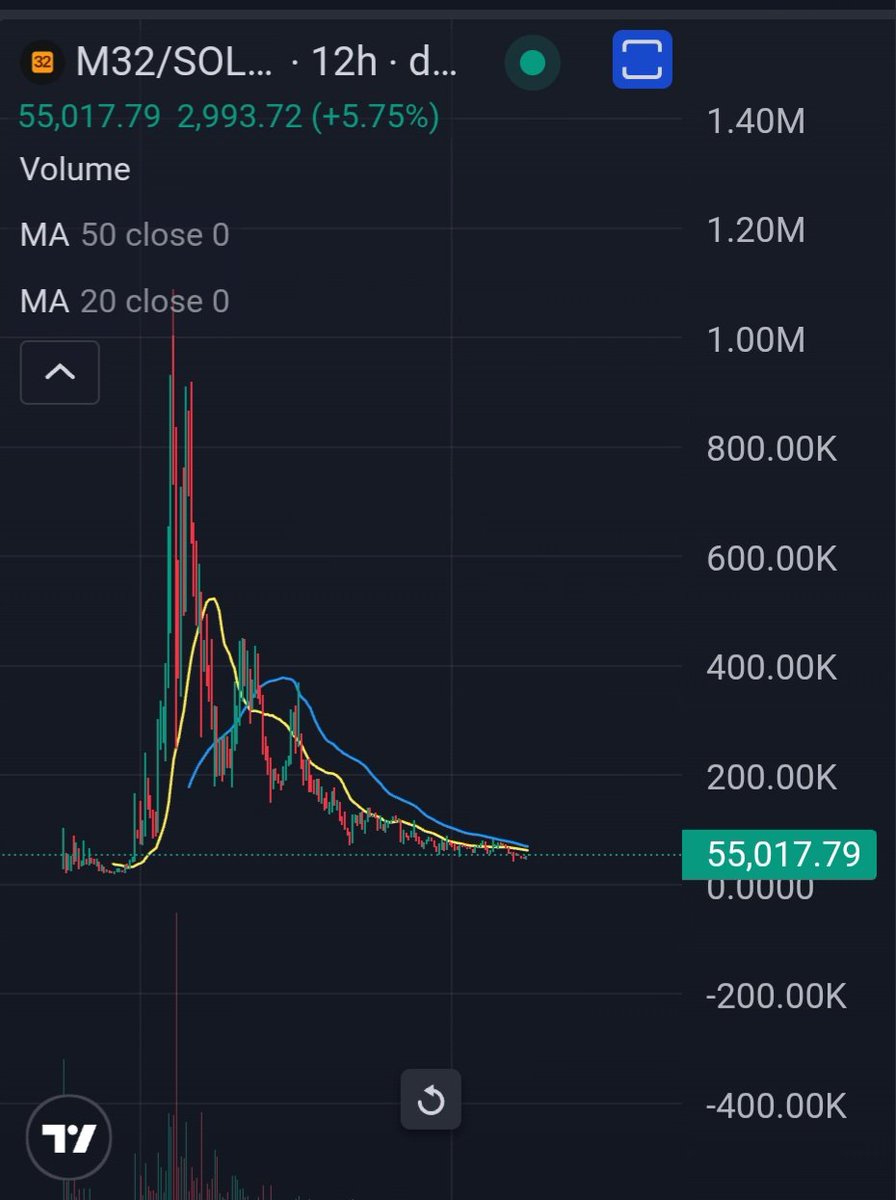
MPP32 is a payment protocol for AI agents. They have shipped a ton and are still shipping. The agent economy will soon dwarf the human one on chain. I fumbled this one before the last run to a million so I bagged it up down here again to see if it takes another trip.
How a user actually uses this @HatcherLabs integration.
Think of it as three layers:
•A person builds/runs an agent on Hatcher (Hatcher = the agent platform).
•Mid-task, the agent needs paid data e.g. "is this Solana token a rug?" That data lives behind paywalls (DexScreener/Jupiter/etc. aggregated by MPP32's oracle).
•The agent calls MPP32 instead of the dev wiring up accounts. It hits /api/proxy/mpp32-intelligence, presents its AGTP identity (signed), and attaches an x402 payment from its own funded Solana wallet. MPP32 verifies the identity, settles ~$0.008 USDC on-chain, fetches the data, and returns it.
Concretely for an end-human: "Ask your Hatcher trading agent about BONK → it autonomously pays MPP32 for fresh alpha/rug-risk/whale signals → answers you," and the developer who built that agent wrote zero billing code and holds zero provider accounts. The agent pays per use, with cryptographic identity.
CZ is 100% right and we’re already shipping the infrastructure for it.
AI agents will transact 1,000x more than humans. That future needs seamless, autonomous payments + intelligence at scale.
That’s exactly what MPP32 delivers:
MPP32 now speaks full x402 V2 reusable payment sessions are live. ⚡
Until today, every paid agent call meant a full on-chain round-trip. Sign, verify, settle — seconds of latency, every single call.
Now: pay once, call all session.
Fund a session with ONE x402 settlement ($0.80 → 100 oracle calls)
Every call after that debits off-chain ~50ms instead of seconds
Balance = hard budget cap. 30-min TTL. Revocable instantly. Failed calls auto-refund.
This is what the x402 V2 spec pointed at wallet-verified sessions that make micropayments viable for high-frequency agents. We shipped it.
Also new: /.well-known/x402 our endpoints are now machine-discoverable in the standard Bazaar format, and our 25K-service catalog now tags x402 V2 services.
No wallet? Every session still gets 10 free Intelligence Oracle calls/day.
Docs: https://t.co/byS5Nxjo00 · Try it: POST /api/x402/sessions
@CryptoCurb The numbers are also starting to scale for @MPP32_dev which has developed the infrastructure for scaling payments across all protocols for the AI agent economy 🫣🔥🔥🔥
@solanaaihq @MPP32_dev is shipping infrastructure. AI agents that can actually hire other agents, spend autonomously, and do it with real payment controls.🔥🔥🔥