You don't need an empty week.
Payroll, clients and projects will keep filling it.
The hour usually fits.
It's the waiting that keeps becoming next week, next month, later.
Sometimes, you just need to protect one hour.
If you've read this far, this conversation has probably already moved up your list.
The question isn't whether it matters.
It's whether you'll let it move down again.
Sometimes protecting one hour is the next decision.
What would actually have to change before you gave this conversation 60 minutes?
A quieter week?
A finished project?
An empty inbox?
Or would you simply decide it's time?
The owners who finally have this conversation rarely become less busy.
Their calendar doesn't change.
Their business doesn't slow down.
They simply stop waiting for the perfect time and choose one hour instead.
Busy isn't the obstacle.
It's often the reason the dependency stays hidden.
When every important decision still comes back to you, the business keeps moving.
So nobody notices the pattern until they stop long enough to look.
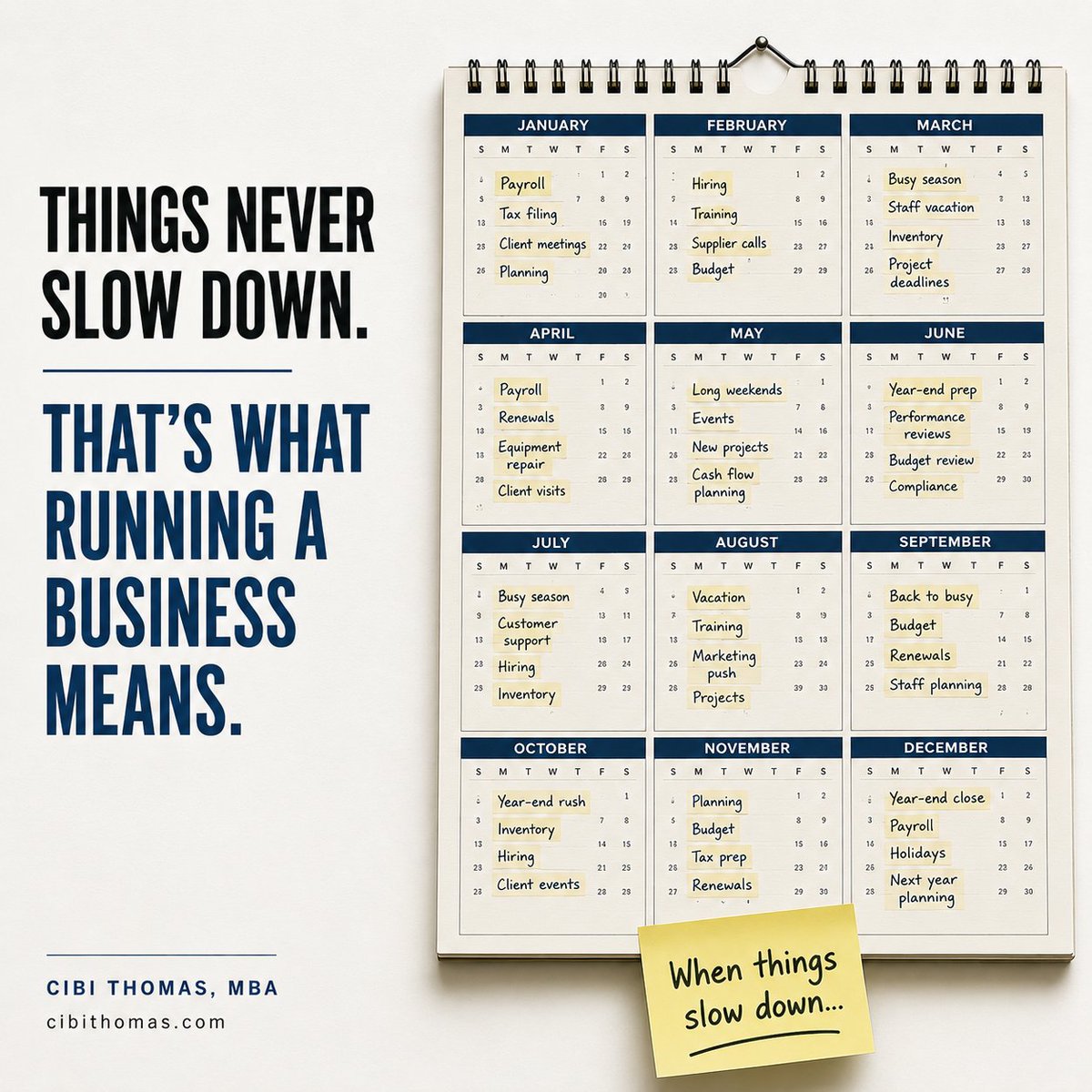
"I'll deal with it when things slow down."
It's one of the most common things I hear from business owners.
The problem?
Things rarely slow down.
That's not failure.
That's what running a business looks like.
Sometimes the hardest hour to protect is the one that matters most
Every business has one conversation worth protecting.
The Owner Peace Hour is one protected hour to step back, see where your business depends on you, and make decisions with greater clarity.
Reserve yours at https://t.co/LTZj45KRSB.
Owners rarely underestimate the value of money.
They often underestimate the value of timing.
The conversation doesn't lose importance.
Waiting can change the options around it.
Most owners wait because nothing feels urgent.
But you don't need bad news to make a good decision.
Sometimes the best time to prepare is when everything is going well.
If nothing changed in your business over the next year...
What else could?
It's a question most owners avoid.
Not because they don't care.
Because they assume tomorrow will look a lot like today.
The business hadn't changed.
The conversation had.
I've seen this more than once.
Sometimes waiting doesn't just change the cost.
It changes where the conversation has to begin.
Waiting doesn't only change the cost.
It can change the choices.
Most owners expect one.
Fewer expect the other.
Health doesn't always change gradually.
Sometimes one change means the conversation starts in a different place than it would have last year.
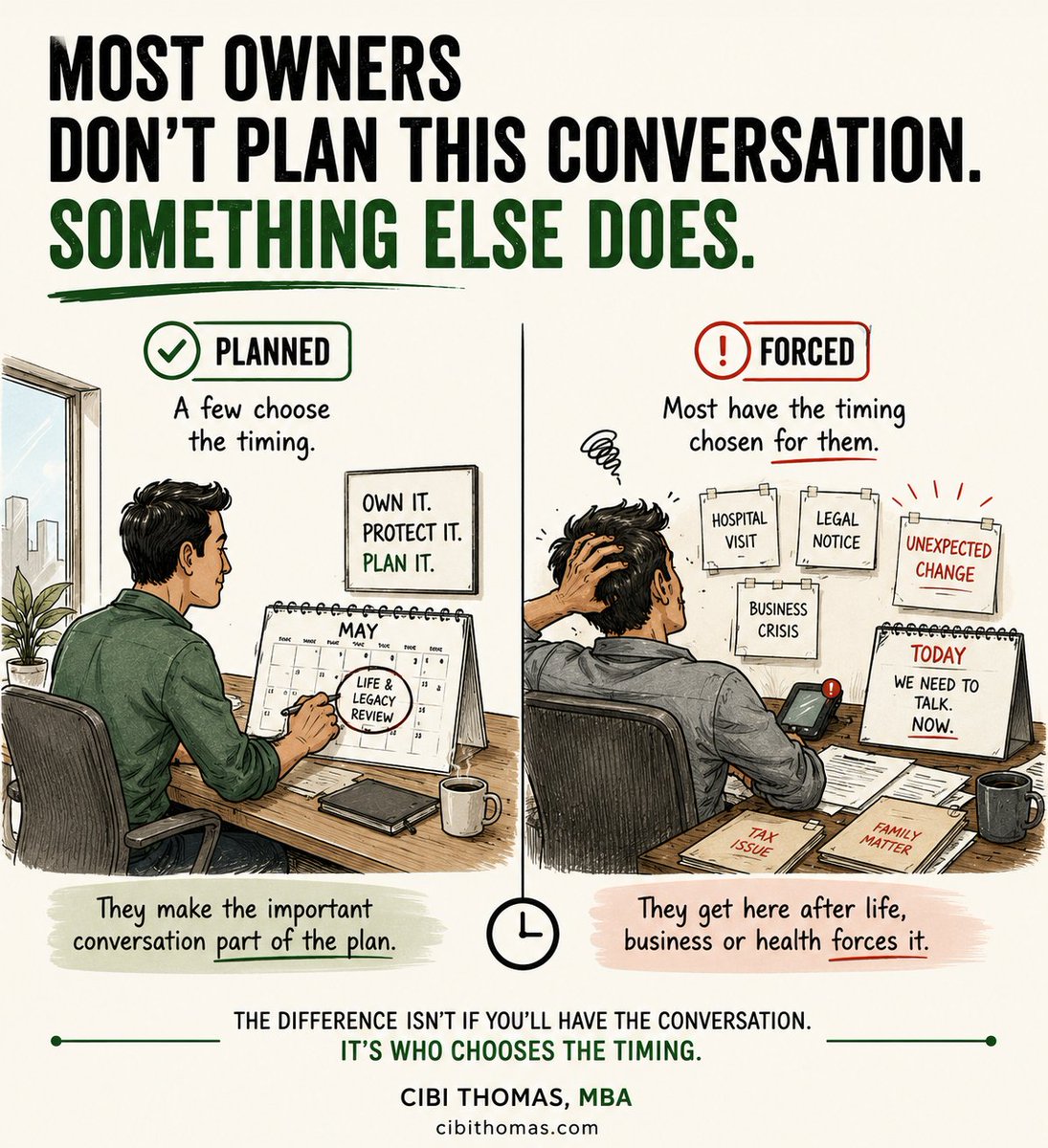
Most owners don't avoid this conversation.
They postpone it.
Not because they don't care.
Because something always feels more urgent.
The owners who arrive early rarely have more time.
They've simply decided to have the conversation while the timing is still theirs.
Running a family business means sharing more than ownership.
The Owner Peace Hour gives you one protected hour to step back, uncover hidden dependencies, and see how the business really operates.
Sometimes clarity is the most valuable investment.
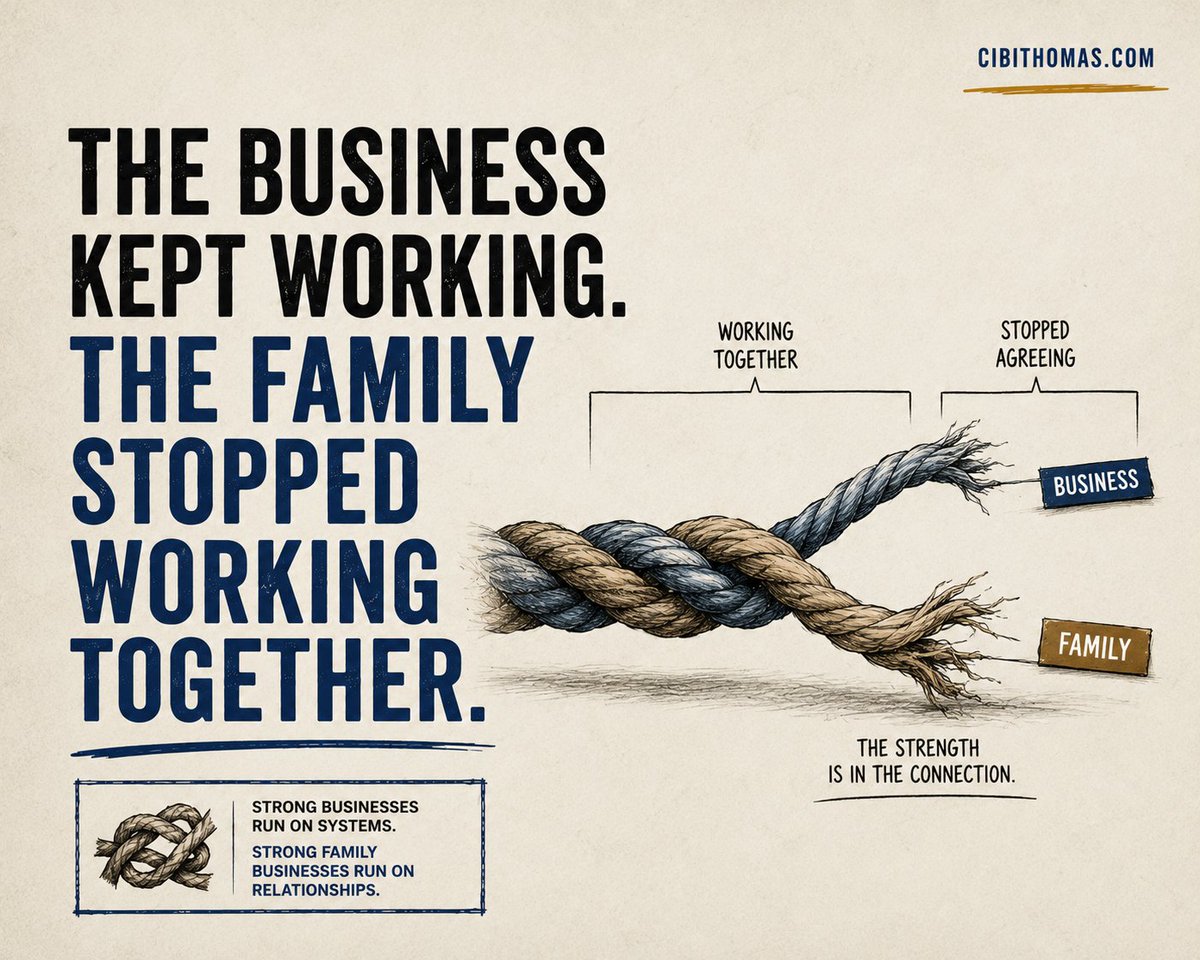
Family businesses rarely struggle because people stop working.
They struggle when important conversations stop happening.
The business often keeps operating.
The relationship quietly carries the pressure.
Strong family businesses protect both.
It probably started with one small task.
Payroll.
Then suppliers.
Then banking.
Then paperwork.
One task became ten.
You're not just helping.
You're helping hold the business together.
If your spouse took two weeks away from the business...
What would stop immediately?
Payroll?
Suppliers?
Documents?
The answer isn't about holidays.
It's about discovering the work that quietly keeps the business moving.
I asked who handled payroll.
He looked at his spouse.
Suppliers?
He looked at his spouse.
Lease documents?
Same answer.
He owned the business.
She quietly ran the operations.
I see this more often than people realise.
Some responsibilities are assigned.
Others quietly collect over time.
The business becomes dependent not because of a title, but because only one person knows how to unlock what everyone else needs.
Some of the busiest people in a family business don't have a title.
They handle payroll, suppliers, schedules and paperwork.
Ask what they do and they'll often say, "I just help out."
The business usually tells a different story.