What's going on in Paraguay?
Imagine the largest bank in Paraguay, used by over 60% of the country’s adults, suddenly collapsing. The owners allegedly took millions out of the bank by loaning the money to their own companies. Now the bank says it doesn’t have enough money to repay everyone who deposited their savings. Millions of customers are affected, public pension funds are exposed, and the scandal has triggered a political crisis involving the country’s president.
Days like today remind me that being a financial advisor is sometimes more like being a therapist.
When you’re helping families navigate their first $1–2 million in wealth, market volatility isn’t just numbers on a screen. It’s years of hard work, sacrifice, and a vision for their family’s future.
But when you work with families in the $5–10 million range, you start to understand how many of them built that wealth in the first place.
They had their bases covered. Emergency reserves, adequate liquidity, diversified portfolios, and a long-term plan. They weren’t forced to sell when markets fell. In fact, they often had the liquidity and confidence to buy when others were panicking.
A few reminders:
If you’re diversified across asset classes, sectors, and geographies, and have a long enough time horizon, pullbacks can create opportunities.
Liquidity is everything. Have an emergency fund and enough reserves to cover essential expenses without being forced to liquidate investments during a downturn.
Warren Buffett famously said: “Only when the tide goes out do you discover who’s been swimming naked.” If today’s market exposed weaknesses in your financial plan, go back to the drawing board.
If your goal is generational wealth, don’t let a few bad trading days derail a decades-long plan. If your investment thesis remains intact, stay disciplined. If it doesn’t, reassess your exposure rather than making emotional decisions.
Be intentional about taxes. If repositioning makes sense, tax-loss harvesting may help offset current or future capital gains. Consider a deliberate strategy over the next four days, four weeks, or by December 31.
The biggest lesson I’ve seen working with wealth across different levels:
The wealthy aren’t necessarily better at predicting market downturns. They’re better positioned to survive them and take advantage of them.
Wealth isn’t just about what you own. It’s about having the liquidity, discipline, and financial structure to never be forced into a bad decision.
Not investment or tax advice. Consult your financial and tax professionals. $spy $qqq $dow
Friendly reminder: the current stock picker at $BRKA / $BRKB, Ted Weschler, was the managing partner of Peninsula Capital Advisors, a hedge fund he founded in 1999. By the time the $2B fund closed in 2011, it had returned an incredible 1,236%.
He also famously grew his Roth IRA from $70,385 to $131 million.
After doing more research and attending the Berkshire shareholder meeting last year and getting to witness what was Papa Warren’s final event as CEO, it really hit me that the market is underpricing what Greg Abel and Ted Weschler are capable of over the next decade. Mark my words.
We should trust Warren’s judgment, I believe it will pay off for long-term holders. I’ll continue to DCA. #NFA
Added more $TTWO at $199.
GTA VI won't be a launch, it'll be a decade long cash engine, like GTA V was. Analysts see 40-45M units in year one, I lean high end. Global fanbase, teens to 60s, $79.99 price, 13 years of pent-up demand.
Wouldn't be surprised if we see it hit $400+ in the next 3-5 years.
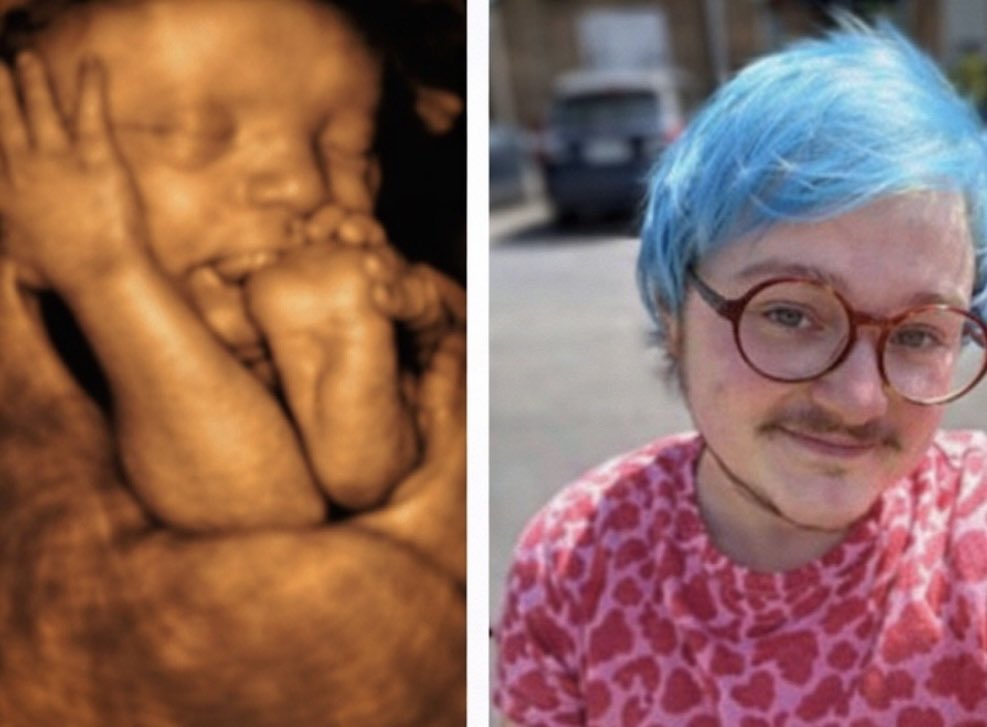
Imagine how massive the propaganda must have been to convince young people that the one on the left “isn’t a child” and the one on the right “is a woman.”
Bought some $TTWO at $203.
$TTWO is one of the most interesting setups heading into GTA VI:
• GTA VI launches Nov. 19, 2026 🚀
• $8.0–8.2B FY27 net bookings guidance
• GTA Online has proven the recurring revenue model
• The real opportunity is years of GTA Online spending after launch
• Plus NBA 2K, Zynga & other franchises provide diversification
The game is the catalyst. The recurring ecosystem is the thesis.