Cigartainment® isn’t just cigars — it’s a full experience. Joe brings the stories, laughter & genuine connections.
Jorge delivers the perfect long ashes with expert rolling.
Elaine adds her warm Cuban-style touch. We turn your event into the night everyone remembers with premium custom-labeled cigars. Long Ashes, Baby! 🔥Corporate • Golf • Weddings • Private Parties Text Joe: 404-441-4438
https://t.co/fY5eqIBYTf#Cigartainment #LongAshesBaby #EventExperience
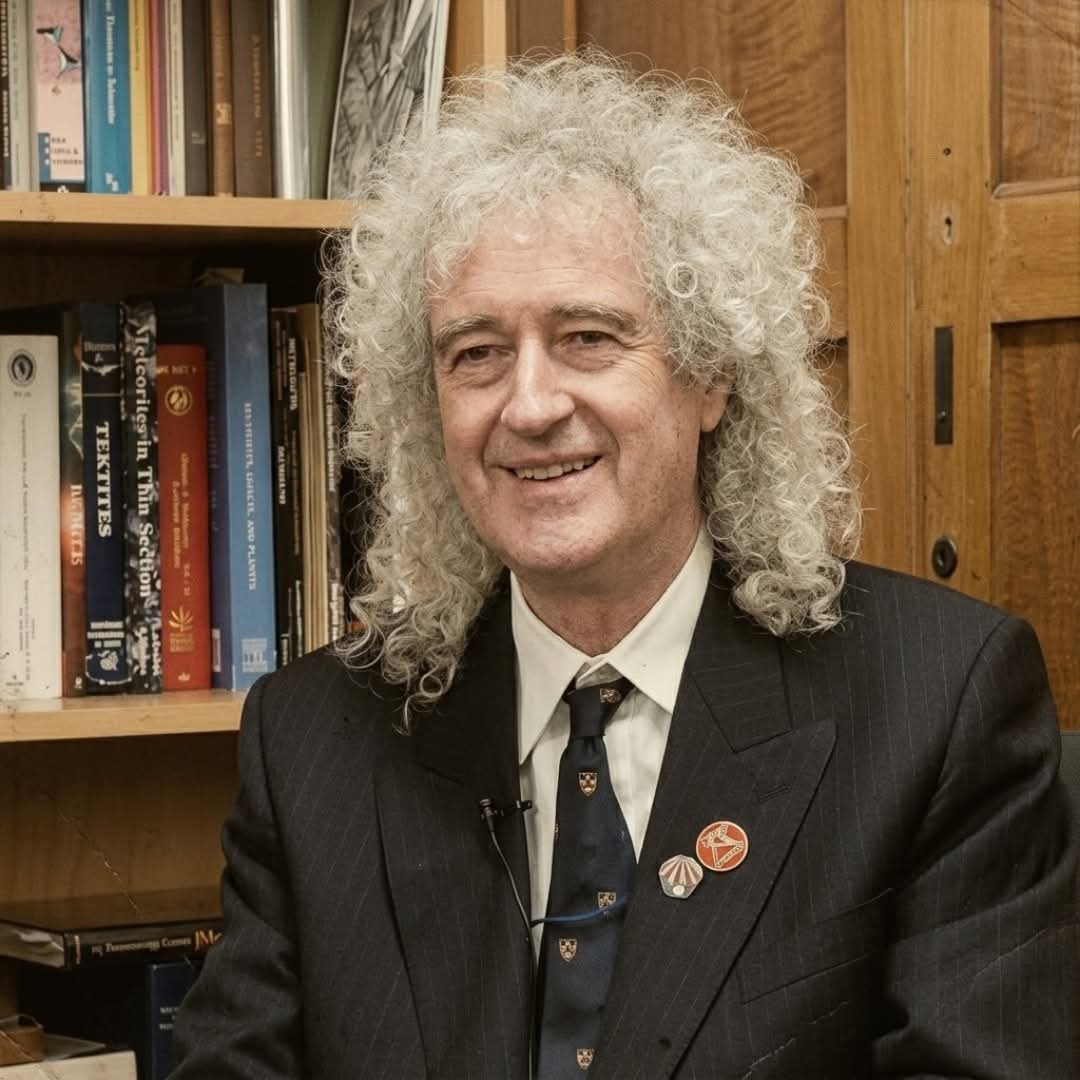
Brian May's PhD thesis sat in the loft of his Surrey home for 33 years. In 2006 — he put everything in his life on hold for a full year, went back to Imperial College, and finished it. His professor said he had a mountain to climb reviewing 30 years of scientific work. Brian May climbed it anyway. The most extraordinary act of academic commitment in rock history.
In 1970 — Brian May began a PhD in astrophysics at Imperial College London.
He supplemented his grant with income from part-time teaching and playing in bands with Roger Taylor. Soon they were joined by Freddie Mercury and John Deacon. Queen was formed.
For four years — Brian tried to do both.
His doctoral thesis on interplanetary dust was taking shape. But the grant was running out. And music was beginning to take over his life.
In 1974 — before leaving — he co-authored two research papers based on his work at the Teide Observatory in Tenerife, Spain.
Then he made a decision.
He abandoned his thesis — or more exactly, as he put it himself — he put it on the back burner. And the rest is history.
The 48,000-word thesis — Radial Velocities in the Zodiacal Dust Cloud — was stored in the loft of his home in Surrey.
It stayed there for 33 years.
Then in 2006 — something changed.
Brian told Time magazine — "Suddenly my subject became very in-demand again. I started talking about astronomy again to people who said — 'Why don't you still do it?' I put everything — and I mean everything — on hold for a year. And they put me in a little office in Imperial College and I got down to it."
His professor was honest about what awaited him.
Professor Rowan-Robinson said — "Brian brought along print outs of what he had written in 1974. It was then that I realised Brian was going to have a mountain to climb — reviewing 30 years of work."
Brian May climbed it.
He re-registered for his PhD in 2006. Less than a year later — he submitted it successfully.
In 2007 — Brian Harold May was awarded his PhD in astrophysics from Imperial College London.
Thirty-three years after he first abandoned it.
For a band called Queen.
He sacrificed his academic career to play rock and roll.
Then sacrificed a year of his rock career to finish what he had started.
Some people simply cannot leave things undone.
𝐑𝐄𝐓𝐈𝐑𝐄𝐃 𝐍𝐄𝐖𝐒 𝐀𝐍𝐂𝐇𝐎𝐑 𝐁𝐈𝐋𝐋 𝐒𝐇𝐀𝐑𝐏𝐄 𝐈𝐍𝐓𝐄𝐑𝐕𝐈𝐄𝐖𝐄𝐃 𝐄𝐕𝐄𝐑𝐘 𝐏𝐑𝐄𝐒𝐈𝐃𝐄𝐍𝐓 𝐒𝐈𝐍𝐂𝐄 𝐅𝐎𝐑𝐃 — 𝐓𝐑𝐔𝐌𝐏 𝐖𝐀𝐒 𝐓𝐇𝐄 𝐁𝐄𝐒𝐓
“𝘞𝘪𝘭𝘭𝘪𝘢𝘮, 𝘺𝘰𝘶 𝘨𝘰𝘵 𝘢 𝘨𝘳𝘦𝘢𝘵 𝘥𝘢𝘥𝘥𝘺 — 𝘣𝘶𝘵 𝘐 𝘨𝘰𝘵 𝘴𝘰𝘮𝘦 𝘯𝘦𝘸𝘴 𝘧𝘰𝘳 𝘺𝘰𝘶.” Donald Trump looked straight into Bill Sharpe’s camera at the end of their interview and pointed his finger right at the lens: “𝘠𝘰𝘶’𝘳𝘦 𝘧𝘪𝘳𝘦𝘥.”
Sharpe is a retired news anchor who sat across from every modern American president going back to Gerald Ford. 𝐇𝐞 𝐬𝐚𝐲𝐬 𝐓𝐫𝐮𝐦𝐩 𝐰𝐚𝐬 𝐡𝐢𝐬 𝐛𝐞𝐬𝐭 𝐢𝐧𝐭𝐞𝐫𝐯𝐢𝐞𝐰 𝐨𝐟 𝐭𝐡𝐞𝐦 𝐚𝐥𝐥 — and the reason has nothing to do with policy.
Before the cameras rolled, Sharpe had told Trump about his son William, a special-needs boy whose favorite phrase in the world was “𝘠𝘰𝘶’𝘳𝘦 𝘧𝘪𝘳𝘦𝘥” from Trump’s old TV show. Trump said nothing. Filed it away.
At the very end of the interview, the future president remembered, turned to the lens, and delivered the line. 𝐒𝐡𝐚𝐫𝐩𝐞 𝐛𝐮𝐫𝐬𝐭 𝐨𝐮𝐭 𝐥𝐚𝐮𝐠𝐡𝐢𝐧𝐠. He showed the clip to William. The boy laughed and laughed. That moment became one of the anchor’s favorite memories from a career spanning every modern presidency.
Reagan was funny. 𝐎𝐛𝐚𝐦𝐚 𝐰𝐚𝐬 𝐬𝐭𝐚𝐧𝐝𝐨𝐟𝐟𝐢𝐬𝐡 — “𝘸𝘩𝘰 𝘪𝘴 𝘵𝘩𝘪𝘴 𝘨𝘶𝘺 𝘢𝘯𝘥 𝘸𝘩𝘢𝘵’𝘴 𝘩𝘦 𝘢𝘴𝘬𝘪𝘯𝘨 𝘮𝘦?” — though Michelle was warm. Trump, who had spent years as a television star, read the room and did something none of the others did: he remembered a father’s offhand story about his son and turned it into something William will never forget.
𝐓𝐡𝐚𝐭’𝐬 𝐭𝐡𝐞 𝐫𝐞𝐚𝐥 𝐓𝐫𝐮𝐦𝐩 𝐭𝐡𝐞 𝐦𝐞𝐝𝐢𝐚 𝐰𝐢𝐥𝐥 𝐧𝐞𝐯𝐞𝐫 𝐬𝐡𝐨𝐰 𝐲𝐨𝐮.
𝐏𝐈𝐎𝐍𝐄𝐄𝐑𝐒 𝐖𝐈𝐍!
14 runs. 14 hits. 8 stolen bases.🔥
Pioneers move on and will take on the loser of Frostburg State / Charleston on Friday at noon!
#GoPioneers | @TheMountainEast
🚨 HOLY SMOKES: Rep. Tim Burchett just ripped the mask off Washington’s insider-trading machine.
He says D.C. isn’t just a “swamp.”
It’s a sewer where career politicians get rich while taxpayers get drained.
And then he dropped the line that should make everyone stop:
“Everybody wants to knock Pelosi; she’s not even in the TOP 10.”
Read that again.
If Pelosi isn’t even top 10… how deep does this go?
Congress should not be a personal stock market for politicians.
Ban congressional stock trading.
Audit the worst offenders.
Expose the whole sewer.
💥Senator Katie Britt just said what millions of Americans are thinking: EVERY illegal alien gets deported.
Ilhan Omar hits back with “that’s not what Americans want”
So let’s settle this right now, America…
Do YOU want them ALL gone?
A. YES
B. NO
🚨The United States of America will withdraw over 100,000 U.S. troops from Europe and halt its annual defense spending of trillions of dollars.
Do you support Rubio on this?
A. Yes B. No
🚨BREAKING: Elon Musk has been nominated for a Nobel Peace Prize for protecting Free Speech.
Simple poll. Please be honest! As of today, how much do you still trust this man?
A. 100 % B. 75%
C. 50% D. 25%
E. 0%
MAKE THIS GO VIRAL ON 𝕏. LET’S GO 👏
⚖️🚨 THE 10-MINUTE MANIFESTO: Truth on the Washington Hilton Plot
Victor Davis Hanson just exposed it: 10 mins before rushing the WH Correspondents’ Dinner checkpoint, Cole Tomas Allen sent a 1,000-word manifesto to family.
Rules of engagement: The plan to target Trump officials high-to-low. An apology to his family, signed by the “Friendly Federal Assassin”
The manifesto didn’t come out of nowhere. It came from the toxic “Hitler” echo chamber.
Words have consequences.
This wasn’t chaos. It was choice. A premeditated plan — fueled by the daily chorus of Third Reich ballads by the mainstream media.
Dems want to pretend the whole event was a night of make believe.
The knapsack arsenal and the coordinating timestamp don’t lie.
Glad to hear you say that Bill. My wife & I followed your reporting in the border & now in DC. Fox has real journalists as anchors: Trace, Bret, John, and more. You fit right in as the heir apparent to these giants. Keep up the good work!
ماذا نسمي مثل هؤلاء الأشخاص⁉️
👇
رئيسة كرواتيا التي خطبت في شعبها قائلة :
لن نقترض من البنك الدولي ولو متنا جوعا.
_ قامت ببيع (الطائرة الرئاسية) الخاصة
_ و بيع عدد ( 35 ) سيارة نوع (مرسيدس) لنقل الوزراء
_ و أودعت عوائدها لخزانة الدولة
" و رفضت بيع وتخصيص مؤسسات القطاع العام الاستراتيجية
_وخفضت راتبها الى( 30% ) ليتساوى مع متوسط مرتبات عامة الناس
_ و ألغت الضرائب على محدودي الدخل
_ و حاربت الفساد في كل دوائر الدولة
" وألغت العلاوات والحوافز للوزراء والسلك الدبلوماسي في الدولة
_ و قلصت (سفارات /وقنصليات/ وممثليات ) بلادها في الخارج للحد من الاسراف وتوفير العملة الصعبة
_ و عندما تسافر في مهامها الخارجية تحجز في رحلات الطائرات العادية ؟
Officially 𝐂𝐥𝐢𝐧𝐜𝐡𝐞𝐝.
We have clinched our spot into the @TheMountainEast Tournament after our sweep of WVWC!
This marks the second time in three seasons and the first time in program history we’ve punched our ticket prior to the last weekend!
#GoPioneers
En 1988, une jeune actrice se présenta à une audition pour un nouveau drame d'ABC sur la guerre du Vietnam — et repartit sans le rôle.
Les producteurs ne trouvaient pas qu'elle avait le bon physique. Le rôle demandait une fille du Midwest, catholique, du Kansas — un certain type de douceur typiquement américaine. Dana Delany, selon leur première impression, ne l'avait pas. Le rôle se jouait entre elle et une autre actrice. L'issue était incertaine.
Puis, presque par accident, tout changea.
Elle avait récemment coupé ses longs cheveux en un carré court. Quand elle revint pour un autre entretien — différente, sans artifice, débarrassée de la version d'elle-même qu'elle avait présentée — les producteurs virent quelque chose qu'ils n'avaient pas remarqué auparavant. Une femme qui semblait avoir déjà traversé des épreuves. Qui n'avait pas besoin de la guerre pour la briser. Qui savait déjà quelque chose sur le fait de porter un fardeau en silence.
Ils lui donnèrent le rôle.
La série s'appelait China Beach. Elle était différente de tout ce que la télévision avait tenté — un drame sur la guerre du Vietnam raconté entièrement à travers les yeux des femmes qui l'avaient vécue. Pas des soldats. Des infirmières. Des travailleuses de la Croix-Rouge. Des femmes qui avaient choisi d'y aller, et passé des années à essayer de comprendre pourquoi.
Dana Delany incarnait Colleen McMurphy : une fille catholique du Kansas qui était partie faire le bien, et découvrit que la bonté, dans une zone de guerre, est la chose la plus difficile au monde à préserver. Pendant quatre saisons, les téléspectateurs la regardèrent tenir les mains d'hommes mourants, absorber des blessures invisibles, et continuer à se présenter — non par héroïsme, mais par conviction que cela comptait.
La série ne domina jamais les audiences. ABC la déplaça dans la grille horaire, faillit l'annuler plus d'une fois. Un groupe dévoué de fans fit campagne publiquement pour la maintenir à l'antenne. Les critiques l'adoraient. Les téléspectateurs qui la découvraient l'aimaient profondément.
Puis elle se termina discrètement.
China Beach obtint 29 nominations aux Emmy. Delany remporta le prix de la Meilleure Actrice Principale dans une Série Dramatique en 1989 — et de nouveau en 1992, plus d'un an après la diffusion du dernier épisode. Sa partenaire Marg Helgenberger gagna dans la catégorie Actrice dans un Second Rôle. La série avait disparu, et elle était encore récompensée.
Après sa fin, Hollywood ne savait pas trop quoi faire d'elle. Elle travailla régulièrement — Tombstone, Desperate Housewives, Body of Proof — toujours à la poursuite du travail, jamais des projecteurs.
Mais l'héritage qui resta avec elle venait d'ailleurs entièrement.
Des années après la fin de la série, des vétérans du Vietnam commencèrent à la contacter. Des hommes qui n'avaient jamais parlé de la guerre — ni à leurs épouses, ni à leurs enfants — lui dirent que China Beach avait ouvert une porte qu'ils ne savaient pas comment ouvrir eux-mêmes. Que leurs familles comprenaient enfin quelque chose, grâce à une série sur des infirmières, qu'aucun documentaire ou livre d'histoire n'avait réussi à expliquer. Delany se rapprocha de beaucoup des vraies femmes qui avaient servi, et finit par faire partie de l'effort qui mena à l'érection du Mémorial des Femmes du Vietnam à Washington, D.C.
Elle dit un jour du personnage qu'elle avait failli ne pas pouvoir jouer : « McMurphy fait tellement partie de qui je suis. »
Et peut-être est-ce cela qui l'a fait durer.
Pas une femme jouant une héroïne. Une femme jouant quelqu'un de réel — le genre de personne qui entre dans l'endroit le plus terrible imaginable, non pour qu'on s'en souvienne, mais simplement parce que quelqu'un avait besoin d'elle là-bas.
Il y a un mot pour cela.
Ce n'est pas glamour.
I almost threw a punch in the checkout line last Tuesday—not because I’m violent, but because at 74 years old, I finally woke up.
I’m a retired mechanic from outside Detroit. I live alone in a house that smells like dust and silence. My wife, Ellen, passed away six years ago. My kids? They’re busy in New York and Atlanta, chasing careers and raising grandkids I mostly see on FaceTime.
Recently, I realized I had become invisible. Just “that old guy” blocking the aisle with his cart, counting pennies because Social Security doesn’t stretch as far as it used to.
Every Friday, I go to the big superstore on the edge of town. It’s the highlight of my week—which tells you everything you need to know about my life.
That’s where I met Mateo.
He was the cashier at Lane 4. Young—maybe 22. He had an eyebrow piercing and tattoos running down his arms, sleeves of ink disappearing under his blue vest. To a lot of folks from my generation, he looked like trouble.
His English carried a heavy accent. He’d say, “Did you find everything okay, sir?” and most people wouldn’t even look up from their phones. They’d just shove their credit card into the machine.
I watched people treat him like furniture.
A woman in a fancy coat huffed, “Can’t you go faster?”
A man muttered, “Learn the language or go home.”
Mateo never flinched. He just kept scanning, smiling, and saying, “Have a blessed day.”
Three weeks ago, I was standing behind a young mother. She looked exhausted—dark circles under her eyes, a baby crying in the cart. She was buying store-brand diapers and two jugs of milk.
When she swiped her card, the machine buzzed.
Declined.
She turned red. “I… let me put the milk back,” she stammered, holding back tears. “I get paid on Monday.”
Before I could reach for my wallet, Mateo was already moving.
He didn’t make a scene. He didn’t announce it. He simply pulled a crumpled ten-dollar bill from his pocket, scanned it, and handed her the receipt.
“It is covered, miss,” he said quietly. “Go feed the baby.”
She stared at him, shocked, whispered thank you, and hurried out. The next customer immediately started complaining about the wait.
But I saw.
That night, I sat in my recliner staring at the wall. Here was this kid—working for minimum wage, getting treated like dirt—giving away his own money to a stranger.
Meanwhile, I’d spent the last five years feeling sorry for myself.
The next Friday, I wrote a note on a napkin. When I got to his register, I slid it over. It said:
“You are a good man. I saw what you did.”
Mateo read it. He looked up, and for the first time, his professional mask slipped. His eyes filled with tears.
“Thank you, Mr. Frank,” he whispered.
We started talking.
I learned he works two jobs and takes online night classes to become a paramedic.
“I want to save lives,” he told me. “My parents sacrificed everything to get me here. I cannot waste it.”
Then came last Tuesday.
The store was packed. Tensions were high—these days, everyone seems on edge. A large man in a baseball cap slammed his items onto the belt.
Mateo made a small mistake. He had to void an item. It took an extra thirty seconds.
The man exploded.
“Are you stupid?” he shouted, loud enough for three lines to hear. “This is America. Why do they hire people who can’t even run a register? Go back to where you came from!”
The air went still.
People stared at the floor. The cashier next to us looked terrified.
Mateo just stared at the scanner, his hands trembling slightly.
My heart pounded. My whole life, I’ve been the “keep your head down” type. Don’t make waves. Mind your business.
But this was my business.
I stepped forward. My joints ached, but I stood as tall as my 5'9" frame would allow.
“Hey!” I barked. My voice cracked—then steadied.
The man turned. “What?”
“He works harder in one shift than you probably do all week,” I said, pointing at Mateo. “He’s studying to save lives. He helped a mother buy diapers when she had nothing. What have you done today besides yell at a kid?”
The man’s face turned red. “Mind your business, old man.”
“Decency is everyone’s business,” I said. “You want to be tough? Be tough enough to show some respect.”
The line fell silent.
Then a woman behind me started clapping. Slowly.
Another person nodded. “He’s right,” someone muttered.
The man grabbed his bags and stormed off, still muttering under his breath.
I looked at Mateo.
He wasn’t trembling anymore. He stood straighter, shoulders back. He met my eyes and nodded.
A quiet understanding passed between us—between a 74-year-old retiree and a 22-year-old trying to build a future.
I walked to my car shaking.
I cried in the parking lot—not out of sadness, but because for the first time in years, I felt alive.
I felt like a human being again.
Yesterday, Mateo handed me my receipt. On the back, in neat handwriting, he had written:
“My father is far away. Today, you were like a father to me.”
I’m sharing this because we are living in angry times. We are told to hate each other. We are told to pick sides.
But here’s what I learned in that checkout line:
You don’t have to fix the world.
You don’t have to solve every problem.
Sometimes, all you have to do is change the air in the room.
Be the one who speaks up.
Be the one who sees the person behind the name tag.
Because at the end of the day, we’re all just walking each other home.
Make sure you’re good company.
Remember Dan Price...that CEO who took a pay cut so he could pay all his employees a minimum annual wage of $70,000? Here’s what happened next:
“Six years later after the decision that others said would destroy his business, Dan reports that revenue has tripled, the customer base has doubled, 70% of his employees have paid down debt, many bought homes for the first time, 401(k) contributions grew by 155% and turnover dropped in half. His business is now a Harvard Business School case study.”
In his own words:
“6 years ago today I raised my company's min annual salary to $70k. Fox News called me a socialist whose employees would be on bread lines.
Since then our revenue tripled, we're a Harvard Business School case study & our employees had a 10x boom in homes bought.
Always invest in people.”
Courtesy of Craig Henley
Walz in jail? What a JOKE. No body goes to jail. All I’ve ever heard from Rep JJ is this one did that and the other did, too.
Name me one person who is in jail because of Rep JJ’s threats.
Tim Walz might have just landed himself in prison.
He just got exposed for RESTARTING taxpayer payments to Somali fraudsters tied to ‘Feeding Our Future’
This is so damning…
Jim Jordan: “Why didn’t you tell the truth about why you restarted the payments?”
WALZ: “The agency believed the court required them to make those payments.”
JORDAN: “That was false. The court says the judge never ordered you to resume Feeding Our Future payments. So the court’s lying?!”
WALZ: “I can’t tell you!”
JORDAN: “Somebody’s lying! Either you’re lying or the court’s lying. Which one?”
WALZ: “I just know what the attorneys said.”
JORDAN: “Are you hiding behind the court? Is this about politics?!”
Insane @Jim_Jordan