Just finished Jonathan St B. T. Evans' Thinking and Reasoning. Definitely the best I've read from Oxford's Very Short Introduction series. Highly recommend it for anyone interested in philosophy, psychology, and cognitive science.
Anthropic pays $750,000+ a year for engineers who can build LLM architectures from scratch. Stanford taught the entire thing in 1 hour lecture & released it for free.
Bookmark & watch this today before someone takes it down ...
this is insane. i genuinely don't understand why ambitious people aren't shown this lecture before their careers start consuming their entire lives.
clayton christensen spent his career studying why successful companies collapse. in his final class, he asked students to apply the theory to themselves: if you keep allocating your time the same way, what life are you actually building?
he had already seen the answer in his own harvard mba class. everyone looked successful at the fifth reunion; by the 10th, 15th, 20th, and 25th, many were unhappy, divorced, and living far from their children.
work shows you the score immediately. close a sale, ship a product, finish a presentation, earn a promotion, get paid.
an hour with your child may produce nothing you can measure today; it may take 20 years to understand what that hour built. so the next free hour goes back to work, one rational decision at a time.
this is how people build lives they never planned: through hundreds of right decisions that lead in the wrong direction, day after day.
money, titles, and headcount are easy to count. christensen believed a life should be measured by the people who became better because you were there.
he died in 2020.
one question remains: if someone saw only where your time, energy, and attention went this year, what would they think actually mattered to you?
the full 19-minute lecture is in the video below.
Zamzam Water Is Not Safe to Drink... A Claim That Science Failed to Support
In 1971, an Egyptian physician reportedly sent a letter to members of the European press claiming that Zamzam water was unfit for human consumption. He argued that because the area around the Sacred Mosque lies at a relatively low elevation, wastewater could seep into the famous well through underground drainage channels.
As the story spread through newspapers, many Muslims became deeply concerned.
When the report reached King Faisal of Saudi Arabia, He ordered an immediate scientific investigation. Determined to establish the facts rather than rely on speculation, He instructed the Ministry of Agriculture and Water Resources to collect samples of Zamzam water and have them analyzed by reputable laboratories in Europe.
The task was entrusted to the Jeddah Power and Desalination Authority, where engineer Mohiuddin Ahmed, a specialist in water treatment and desalination, was selected to lead the investigation. According to His own account, He had never even seen the Zamzam Well before undertaking this mission.
Upon arriving in Makkah, He was escorted to the well. To His surprise, the centuries-old source that had served millions of pilgrims was relatively small approximately 18 feet long and 14 feet wide. After measuring the well, He asked an assistant to enter the water to estimate its depth. Standing upright, the water reached the man's shoulders, and He was about 5 feet 8 inches tall.
The investigation then turned to the source of the water itself. The assistant carefully searched the bottom of the well, walking from one side to the other without submerging His head, looking for visible pipes, openings or channels. Nothing could be found.
Mohiuddin Ahmed then devised another method. The well's pump was used to remove water rapidly in the hope that a falling water level would expose the entry point. At first, nothing unusual appeared. Undeterred, He repeated the process while asking the assistant to remain still and observe the ground beneath Him.
Moments later, the assistant excitedly signaled that He had discovered something remarkable. The sand beneath His feet appeared to be moving as fresh water continuously emerged from below. As He explored different areas of the well, He found the same phenomenon everywhere. Water was naturally filtering upward through the underground layers from all directions at a balanced rate, explaining why the water level remained consistently stable.
After completing His observations, Mohiuddin Ahmed collected water samples for laboratory analysis in Europe. Before leaving Makkah, He also inquired about nearby wells and was informed that many had dried up over time, while Zamzam continued to flow uninterrupted.
When the laboratory reports were returned, they concluded that Zamzam water met drinking water standards. The analysis also found naturally occurring minerals, including higher levels of calcium and magnesium than are commonly found in ordinary water, along with fluoride, which is known for its role in supporting oral health and helping reduce bacterial growth.
According to this account, these findings contradicted the earlier allegations and the Saudi authorities publicly rejected the claim through the European press.
the lorentz force law is one of the cleanest ways to understand how charged particles move through electric and magnetic fields. an electric field pushes a charge along the direction of the field. a magnetic field does something stranger. it does not push along the direction of motion. it pushes sideways, perpendicular to both the particle’s velocity and the magnetic field. that one detail explains why charged particles curve, spiral, orbit, and get trapped inside electromagnetic systems.
this is why the law shows up everywhere. motors, particle accelerators, plasma physics, mass spectrometers, antennas, fusion devices, cathode ray tubes, and even the earth’s magnetosphere all depend on this interaction. the electric part changes the particle’s energy. the magnetic part changes the direction of motion. together, they describe how charges respond to the electromagnetic structure around them.
the deeper idea is that fields are not passive backgrounds. they shape motion. a charged particle does not just move through empty space. it moves through invisible geometry created by electric and magnetic fields. once you understand the lorentz force, electromagnetism stops being abstract. you start seeing why currents produce forces, why motors rotate, why particles spiral in magnetic fields, and why modern electrical engineering is built on controlling charged motion.
If Muslims understood this, and understood the philosophical ground upon which they themselves stand, many of the insecurities driving our civilizational overcorrections would start to dissolve.
Only then does the question of the way forward become a meaningful one
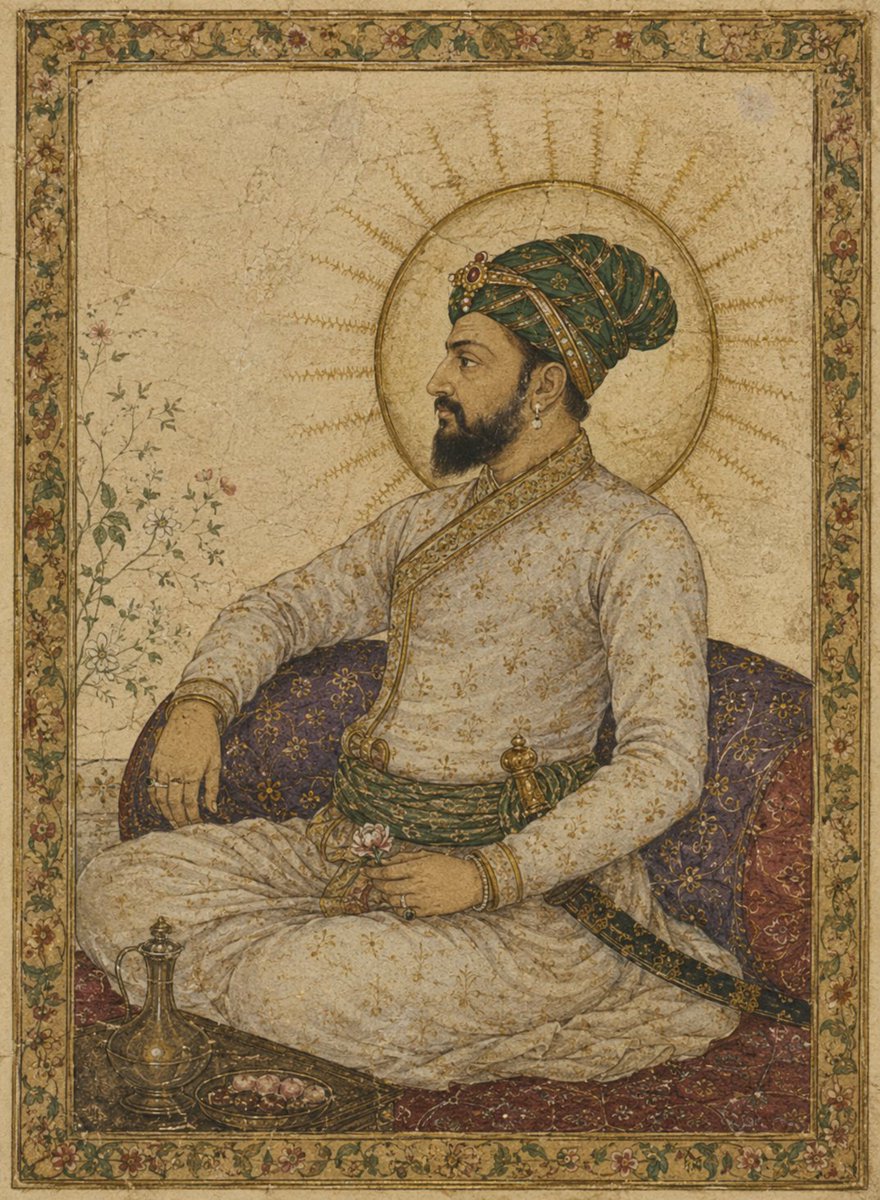
Imad-ud-Din Rayhan: The Hindustani Muslim Who Became the First Indigenous Statesman to Rise as the De Facto Ruler of the Delhi Sultanate and Challenge the Turkic Aristocracy. 🧵
This guy bought a $400 Mac mini and walked into a coffee shop with $2,100 for installing an AI agent that never touches the internet.
I had to rewatch this because the pitch is almost too simple. He shows up, plugs in the Mac mini, installs a local AI agent running entirely through Ollama, done in under an hour. Zero cloud dependency, no API bills, no monthly charges bleeding the client dry. The coffee shop owner gets a private AI system that keeps working even if the WiFi dies, and he walks out with $2,100 for an install that takes less time than a long lunch.
The hardware cost him $400. One deployment and the machine's already paid for five times over. Then he locks in a monthly retainer for support, somewhere around $100-150, which means every client after the first is close to pure margin stacking on top of recurring revenue.
Most people hear "AI business" and think they need to build a SaaS platform or learn to code or raise funding from someone. This skips all of that and goes straight to walking into coffee shops with a Mac mini under one arm.
Not a company that scales to a billion dollars, obviously, but a solo operator clearing a few thousand a month from local installs while everyone else is still arguing about which LLM is best on Twitter.
This is wild.
The mad scientist who predicted the AI boom decades ago down to the exact year it happened just broke the internet again...
He says the next wave of A.I. is starting right now and will forever change humanity's fate:
before you build the real system, build the model.
• aircraft.
• factories.
• robots.
• traffic.
• economies.
• battlefields.
all are too expensive, dangerous, or slow to experiment with directly.
principles of modeling and simulation by john a. sokolowski & catherine m. banks shows how engineers use models to explore reality before committing to it.
a model is not reality.
it is a simplified representation that preserves the behaviors you care about.
good models let you:
• test hypotheses
• compare designs
• predict outcomes
• find bottlenecks
• understand complex interactions
every model is wrong. but some are useful.
the best engineers don’t guess what will happen. they simulate it first.
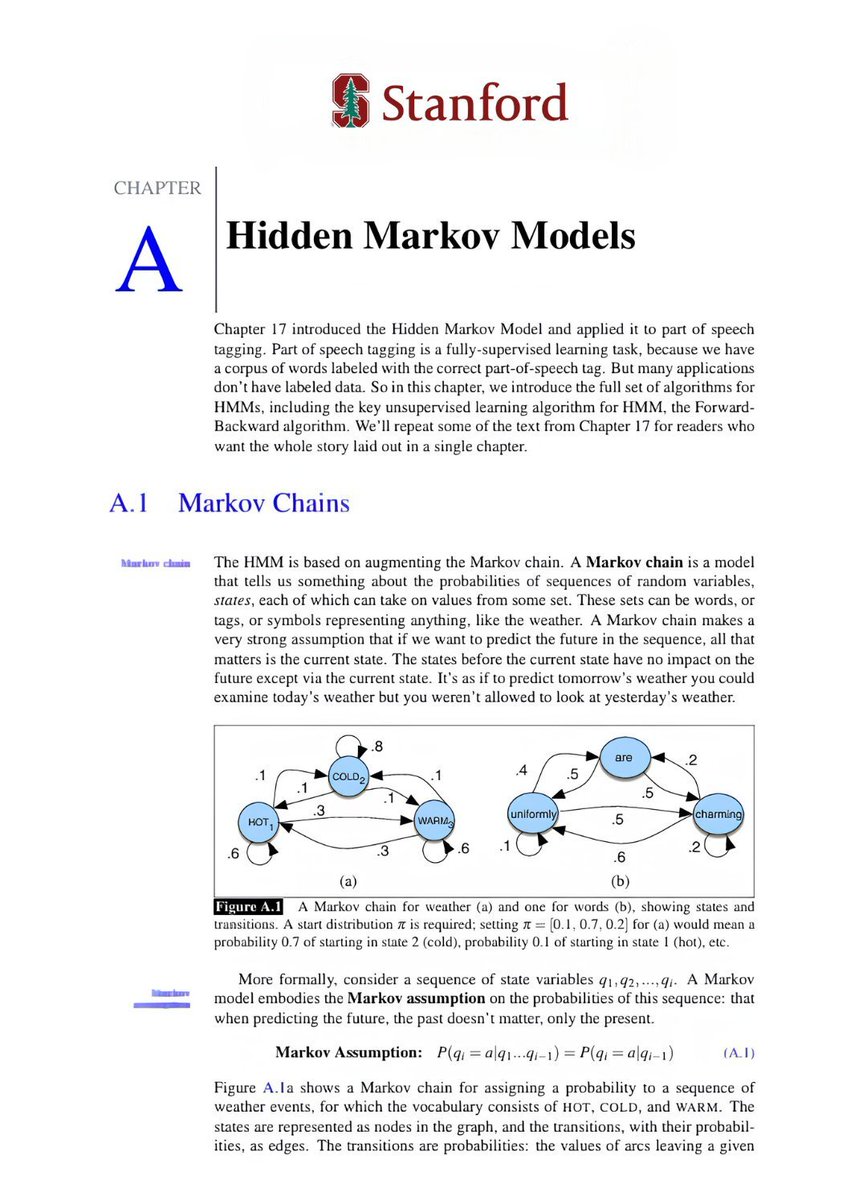
this Stanford framework is f*cking insane
the entire hedge fund secret just got compressed into a 17 page PDF.
Stanford released the complete Hidden Markov Model framework that quants at firms like Jane Street and Two Sigma are known to run, and put it out for free.
the crazy part is this isn't a summary, it's the actual mechanics behind models these desks guard internally.
most people think this stuff stays locked behind institutional walls.
this one hands you the framework directly.
bookmark and read before someone takes it down.
You passed physics in school. A former NASA fellow says that means nothing. You memorized the formulas and never understood a single one.
His proof is the most famous equation on Earth. F equals ma. You have written it a hundred times. And he says you have been reading it backwards your whole life.
It should be a equals F over m. Not force equals mass times acceleration, but acceleration is caused by a force. One is a string of symbols to memorize. The other tells you what actually happens in the universe: push something, it moves. Cause, then effect.
Flip that one idea and equations you hated in school start to breathe. V equals IR becomes current is driven by voltage. Even E equals mc squared stops being trivia and becomes the sentence that told Einstein what mass really is.
The comments are full of people admitting the same quiet thing. Aced physics in high school. Got to university. Realized they never understood any of it. One writes that in his country, the moment you try to actually understand physics, your grades drop, because school only rewards cramming.
You were not taught physics. You were taught to pass a test and forget it. This is the video that shows the difference.
A Mālikī Lesson in Uṣūl al-Fiqh for Ibn Ḥazm.
Shaykh Muḥammad ʿAwwāmah states:
“Among the imāms of the Sādat al-Mālikiyyah and their famous figures is al-Imām Abū al-Walīd Sulaymān ibn Khalaf al-Bājī [d. 474 AH], may Allāh have mercy on him, the commentator on al-Muwaṭṭaʾ in al-Muntaqā. He was among the most famous of those who engaged in debates with Ibn Ḥazm al-Ẓāhirī. Abū al-Walīd [al-Bājī] had a brother named Ibrāhīm ibn Khalaf al-Bājī, and it appears that he was his younger brother.
And on one day, as mentioned in Fatāwā al-Burzūlī, Ibn Ḥazm met him and said to him: “What have you read [studied] to your brother?”
He replied: “I read a great deal upon him.”
Ibn Ḥazm then said to him: “Shall I condense knowledge for you, so that he has you read what will benefit you in the near time, within a year or less?”
Ibrāhīm al-Bājī replied: “If this were correct, he would have done [it].”
Ibn Ḥazm said to him: “Someone other than him can benefit you in that within a year”, meaning Ibn Ḥazm himself.
Ibrāhīm al-Bājī said: “I would like that.”
He said: “Or in a month?”
He replied: “That is more desirable to me.”
He said: “Or in a week, or all at once?”
Ibrāhīm said: “That is more desirable to me than anything!”
Ibn Ḥazm then said: “If a legal issue comes to you, present it to the Book of Allāh. If you find it there, [act upon it]. Otherwise, present it to the Sunnah. If you find it there, [act upon it]. Otherwise, present it to the matters of consensus. If you find it there, [act upon it]. Otherwise, the default ruling is permissibility, so do it!”
“I said to him, the speaker being Ibrāhīm al-Bājī: What you have directed me to requires a long lifespan and immense knowledge, for it necessitates knowledge of the Book, knowing its abrogating and abrogated verses, its interpreted meanings and its apparent meanings, its explicit texts, its absolute and its general expressions… and other such rulings. It also requires memorization of the aḥādīth and knowledge of their soundness and weakness, their connected and disconnected chains, their muʿḍal narrations, their interpretations, and the chronology of what came earlier and later among them… and other such matters. It further requires knowledge of the issues of consensus and tracing them across all regions of the Islamic world, and few are those who can encompass all of this. And it is well known that these matters are ones into which disagreement frequently enters, so decisively judging them is difficult.””
There's an entire criminal industry built around removing pollen from honey.
Why?
Because honey is one of the few foods on Earth that never spoils.
Archaeologists have opened sealed jars in Egyptian tombs after more than 3,000 years and found the honey inside still edible. No refrigeration. No preservatives. No packaging technology. Just a substance so hostile to decay that time itself can't break it down.
The reason connects directly to what's happening in that jar when the bubbles and pollen drift upward.
Honey is a supersaturated sugar solution holding only around 17 to 18 percent water. That tiny water content is the whole story. Bacteria and microbes need available water to survive, and honey is so dense with sugar that it physically pulls moisture out of any cell that touches it through osmosis. A bacterium landing in honey doesn't get infected by it. It gets dehydrated to death. On top of that, bees add an enzyme called glucose oxidase that slowly releases tiny amounts of hydrogen peroxide, and the whole substance sits at an acidic pH around 3.9. It's a chemical fortress disguised as breakfast.
Now look at what that density does to the clarification itself.
Honey is roughly 1.4 times heavier than water and absurdly viscous. When wax flecks, air bubbles, and pollen grains rise to the surface, that's not a small thing happening in a thin liquid. Those particles are clawing their way up through a medium so thick it barely flows. They rise because they're lighter than the honey around them, and the honey is so resistant to mixing that once they reach the top, they stay there in a clean layer the beekeeper can simply skim. The same property that makes honey immortal is the property that lets it filter itself. Density does the work that machinery would otherwise have to do.
This is why traditional beekeepers prize settling over forced filtration, and the distinction matters more than most people realize.
When honey clarifies naturally by rising and settling, the pollen comes up gently and can be skimmed without destroying the rest of what's in there. The honey keeps its enzymes, its aromatic compounds, its trace minerals, the living fingerprint of the flowers the bees actually visited. Heat it and force it through industrial micro-filters and you strip all of that out to make it look glassy and uniform on a supermarket shelf.
That stripping has a darker consequence almost nobody talks about.
Pollen is the only way to identify where honey actually came from. Every region's flowers leave a distinct pollen signature, and a trained melissopalynologist can look at the pollen in a jar and tell you the country, sometimes the very valley, it was harvested in. When commercial processors ultra-filter honey to remove every trace of pollen, they're not just changing the texture. They're erasing the honey's birth certificate.
This created an entire shadow industry called honey laundering. Cheap, often adulterated honey from countries facing import tariffs gets ultra-filtered until it's untraceable, then re-labeled as originating somewhere else entirely and sold at a premium. The pollen removal isn't a quality decision. It's an evidence-destroying one. Investigations have found that a startling share of honey on grocery shelves has had its pollen completely removed, which means there is no way to verify it's honey at all, or where it came from.
So the humble act of letting a jar sit while the bubbles rise is quietly the most honest thing that can happen to honey. The slow upward drift of pollen is the honey telling the truth about itself. Filtration, done violently, is how that truth gets deleted.
There's one more layer that makes this almost poetic.
Every gram of that honey represents bees visiting somewhere around 1,500 flowers, and a single worker bee will produce about one twelfth of a teaspoon in her entire lifetime. The pollen rising to the surface is the physical residue of millions of those flower visits. When you skim it gently and keep the honey whole, you're preserving a record of an ecosystem. When you blast it through a filter to make it pretty, you throw that record away.
A spoonful of raw honey isn't just sugar.
It's a sealed, self-preserving, self-clarifying archive of a landscape, written in pollen, built by insects, and capable of outlasting empires.
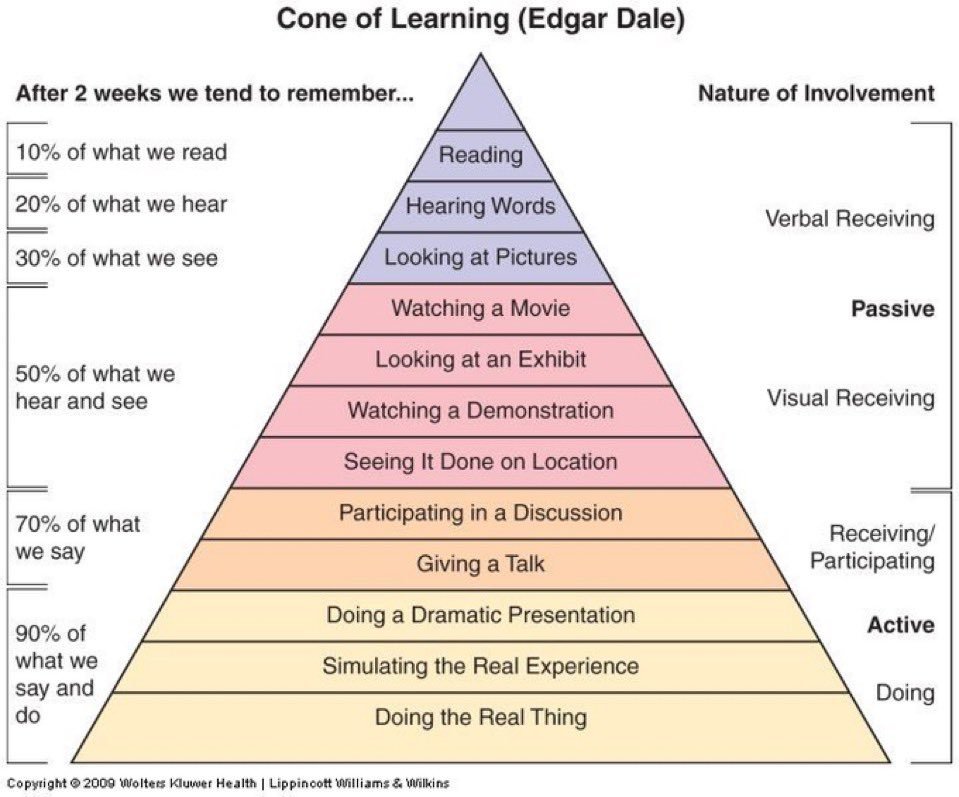
If you want to become insanely competent by remembering everything you read, use sensory learning:
Verbal - Read it
Social - Tell it to a friend
Auditory - Listen to the book
Kinaesthetic - Apply in the real world
Hypnagogic - Visualise the concepts as you fall asleep
Visual - Create symbols that reminds you of concepts
You activate more areas of the brain, recruit more neural pathways, so the information sinks deeper into your unconscious mind.
Transform's reading into memories, ideas into reflex's of explanation.
build a hardware home lab.
it’s one of the highest roi investments you can make as an engineer.
fill it with things you can break, measure, repair, and improve.
start with:
• a soldering station
• a bench power supply
• a digital multimeter
• an oscilloscope
• logic analyser
• esp32 and stm32 boards
• raspberry pi or mini pc
• sensors, motors, encoders and servos
• breadboards and jumper wires
• a 3d printer
• a basic set of hand tools
then build projects.
not kits.
projects that force you to debug.
• motors that don’t spin.
• i2c buses that won’t respond.
• power rails that sag.
• noisy sensor readings.
• random resets.
every failure teaches you something no textbook can.
over time your home lab becomes more than a room.
it becomes your own engineering playground.
the place where software meets hardware,
and ideas become reality.




![ProAdil_27's tweet photo. A Mālikī Lesson in Uṣūl al-Fiqh for Ibn Ḥazm.
Shaykh Muḥammad ʿAwwāmah states:
“Among the imāms of the Sādat al-Mālikiyyah and their famous figures is al-Imām Abū al-Walīd Sulaymān ibn Khalaf al-Bājī [d. 474 AH], may Allāh have mercy on him, the commentator on al-Muwaṭṭaʾ in al-Muntaqā. He was among the most famous of those who engaged in debates with Ibn Ḥazm al-Ẓāhirī. Abū al-Walīd [al-Bājī] had a brother named Ibrāhīm ibn Khalaf al-Bājī, and it appears that he was his younger brother.
And on one day, as mentioned in Fatāwā al-Burzūlī, Ibn Ḥazm met him and said to him: “What have you read [studied] to your brother?”
He replied: “I read a great deal upon him.”
Ibn Ḥazm then said to him: “Shall I condense knowledge for you, so that he has you read what will benefit you in the near time, within a year or less?”
Ibrāhīm al-Bājī replied: “If this were correct, he would have done [it].”
Ibn Ḥazm said to him: “Someone other than him can benefit you in that within a year”, meaning Ibn Ḥazm himself.
Ibrāhīm al-Bājī said: “I would like that.”
He said: “Or in a month?”
He replied: “That is more desirable to me.”
He said: “Or in a week, or all at once?”
Ibrāhīm said: “That is more desirable to me than anything!”
Ibn Ḥazm then said: “If a legal issue comes to you, present it to the Book of Allāh. If you find it there, [act upon it]. Otherwise, present it to the Sunnah. If you find it there, [act upon it]. Otherwise, present it to the matters of consensus. If you find it there, [act upon it]. Otherwise, the default ruling is permissibility, so do it!”
“I said to him, the speaker being Ibrāhīm al-Bājī: What you have directed me to requires a long lifespan and immense knowledge, for it necessitates knowledge of the Book, knowing its abrogating and abrogated verses, its interpreted meanings and its apparent meanings, its explicit texts, its absolute and its general expressions… and other such rulings. It also requires memorization of the aḥādīth and knowledge of their soundness and weakness, their connected and disconnected chains, their muʿḍal narrations, their interpretations, and the chronology of what came earlier and later among them… and other such matters. It further requires knowledge of the issues of consensus and tracing them across all regions of the Islamic world, and few are those who can encompass all of this. And it is well known that these matters are ones into which disagreement frequently enters, so decisively judging them is difficult.””](https://pbs.twimg.com/media/G-eSS1-bIAAfSMT.jpg)








![ProAdil_27's tweet photo. A Mālikī Lesson in Uṣūl al-Fiqh for Ibn Ḥazm.
Shaykh Muḥammad ʿAwwāmah states:
“Among the imāms of the Sādat al-Mālikiyyah and their famous figures is al-Imām Abū al-Walīd Sulaymān ibn Khalaf al-Bājī [d. 474 AH], may Allāh have mercy on him, the commentator on al-Muwaṭṭaʾ in al-Muntaqā. He was among the most famous of those who engaged in debates with Ibn Ḥazm al-Ẓāhirī. Abū al-Walīd [al-Bājī] had a brother named Ibrāhīm ibn Khalaf al-Bājī, and it appears that he was his younger brother.
And on one day, as mentioned in Fatāwā al-Burzūlī, Ibn Ḥazm met him and said to him: “What have you read [studied] to your brother?”
He replied: “I read a great deal upon him.”
Ibn Ḥazm then said to him: “Shall I condense knowledge for you, so that he has you read what will benefit you in the near time, within a year or less?”
Ibrāhīm al-Bājī replied: “If this were correct, he would have done [it].”
Ibn Ḥazm said to him: “Someone other than him can benefit you in that within a year”, meaning Ibn Ḥazm himself.
Ibrāhīm al-Bājī said: “I would like that.”
He said: “Or in a month?”
He replied: “That is more desirable to me.”
He said: “Or in a week, or all at once?”
Ibrāhīm said: “That is more desirable to me than anything!”
Ibn Ḥazm then said: “If a legal issue comes to you, present it to the Book of Allāh. If you find it there, [act upon it]. Otherwise, present it to the Sunnah. If you find it there, [act upon it]. Otherwise, present it to the matters of consensus. If you find it there, [act upon it]. Otherwise, the default ruling is permissibility, so do it!”
“I said to him, the speaker being Ibrāhīm al-Bājī: What you have directed me to requires a long lifespan and immense knowledge, for it necessitates knowledge of the Book, knowing its abrogating and abrogated verses, its interpreted meanings and its apparent meanings, its explicit texts, its absolute and its general expressions… and other such rulings. It also requires memorization of the aḥādīth and knowledge of their soundness and weakness, their connected and disconnected chains, their muʿḍal narrations, their interpretations, and the chronology of what came earlier and later among them… and other such matters. It further requires knowledge of the issues of consensus and tracing them across all regions of the Islamic world, and few are those who can encompass all of this. And it is well known that these matters are ones into which disagreement frequently enters, so decisively judging them is difficult.””](https://pbs.twimg.com/media/G-eSS8KbQAA7KdA.jpg)