Horse filming day for our project applying artificial vision on phenotyping horse functionality.
Thanks a lot to #hierrodelbocado yeguada for receiving us :)
Our lab has been accredited in Program Trebol! We’re now doing science in a much more environmentally friendly way: cutting waste, saving energy and water, better disposal practices, and inspiring our whole community to do the same. #ProgramTrebol#SustainableScience#GreenLab
Great day learning how new technologies are shaping the future of equine reproduction, especially relevant for the generation of the clones I’m studying 🐴 @CitogenomicsLAB
Nuestro grupo de investigación está buscando un técnico JOVEN en ciencia de datos para unirse al grupo por los próximos dos años
Deadline es 23 de febrero
Info Aca
https://t.co/YeJZuD2yLH
Referencia de la plaza: SDP-AGR158
Se agradece difusión
An interesting article on cloned horses, showing the pros and cons of the technique.
A lot of questions remain unanswered in my humble opinion.
Thanks to @KnowableMag for letting me share my thoughts and experience on this topic
https://t.co/3YWkguoUqT
@MERAGEM@VeterinariaUCO
El programa #RamónyCajal celebra 25 años.
Desde su lanzamiento en el año 2000, ha jugado un papel decisivo en la construcción de una comunidad científica más sólida e internacional.
No te pierdas el 📹del evento celebrado en el @Icomem_Oficial
👇
📹https://t.co/Ff1z4eSnZr
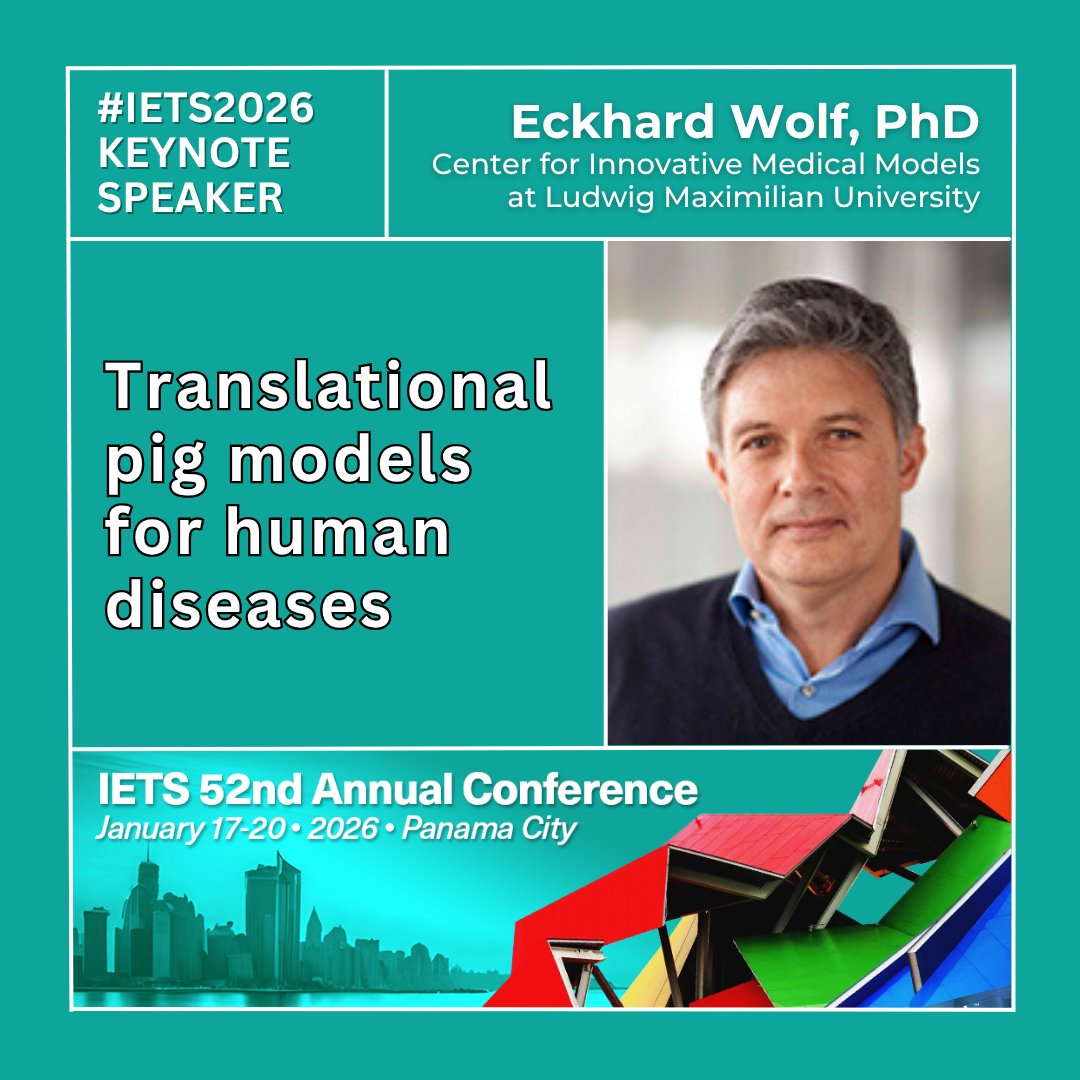
Join us at #IETS2026 to hear from our main program keynote speaker, Eckhard Wolf, PhD (@LMU_Muenchen) 🎉.
Title: “Translational pig models for human diseases” 🐷🔬
Register by Dec 15 📆 to take advantage of early bird pricing & secure your spot!
🔗 https://t.co/EQNvHCDtC5
Authors: Chiraz Ziadi, Rosa M. Morales, M. Ángeles Vargas-Pérez (@MetAlaValPro), Gabriel A. Calvo-Rubio, Sebastián Demyda-Peyrás (@DemydaPeyrasLab), and Antonio Molina.
Read it open access 👉 https://t.co/n8gL4JXPXK
#Genomics#Cattle#Fertility#GWAS#AnimalBreeding
New paper!!
Our latest study explores how the same genomic regions can influence both male and female fertility in #beefcattle.
We used advanced multivariate single-step GWAS in the Retinta breed — a cattle breed adapted to the Iberian dehesa.
👉 https://t.co/n8gL4JXPXK
This work was led by the @MERAGEM research group and the @VeterinariaUCO,
in close collaboration with the @Raza_Retinta Breeders Association (ACRE) — who provided decades of performance and pedigree data.
👏 #sciencewithbreeders