A vintage 1930 advertisement promoting the sleek, aerodynamically engineered cars of the future.
The earliest automobiles were little more than horse-drawn carriages fitted with engines. Their tall passenger compartments, exposed wheels, upright windshields, running boards, and boxy front ends generated significant aerodynamic drag. At the relatively low speeds of the early 1900s, this was not a major issue. However, as engines became more powerful and road networks improved, air resistance increasingly limited both speed and efficiency.
During the 1920s and 1930s, engineers began applying lessons from aviation and conducting wind-tunnel testing to better understand how air moved around vehicles. Their research revealed that sharp edges, exposed parts, and abrupt rear sections created turbulence that greatly increased drag. As a result, designers started rounding bodywork, integrating fenders into the overall shape, sloping windshields, enclosing rear wheels, and tapering the rear of the vehicle to allow air to flow more smoothly.
Some of the streamliners developed during this period were remarkably advanced. One of the best examples was the Tatra 77, introduced in 1934. Depending on the measurement method used, its drag coefficient has been estimated at roughly 0.21 to 0.36—an impressive achievement that remained competitive with many vehicles built decades later.
This week, the Linux kernel project finally created a formal, project-wide policy explicitly allowing AI-assisted code contributions, as long as developers obey strict new disclosure requirements.
Torvalds’ view, which gives this policy its main philosophical shape, is pretty direct: AI is just another tool. Developers submitting garbage code are not going to be fixed by more documentation, so the kernel should hold people accountable instead of trying to control the software they use on their local machines.
It is a practical and reasonable line to take, especially compared with the panic in other parts of the open-source scene.
You are the one on the hook now. If Claude introduces for example, a race condition in the block layer and you approve it, the patch carries your tag, not the model’s.
The Signed-off-by line is the certification for the Developer Certificate of Origin, and the latest policy makes it explicit that only humans can legally add it. AI agents "MUST NOT"
The open-source community is currently getting overwhelmed by what people are calling "AI slop."
e.g. the creator of cURL closed bug bounties after a flood of hallucinated code, tldraw began automatically closing external PRs to defend itself, and projects such as Node.js and OCaml have seen huge, >10,000-line AI-generated patches
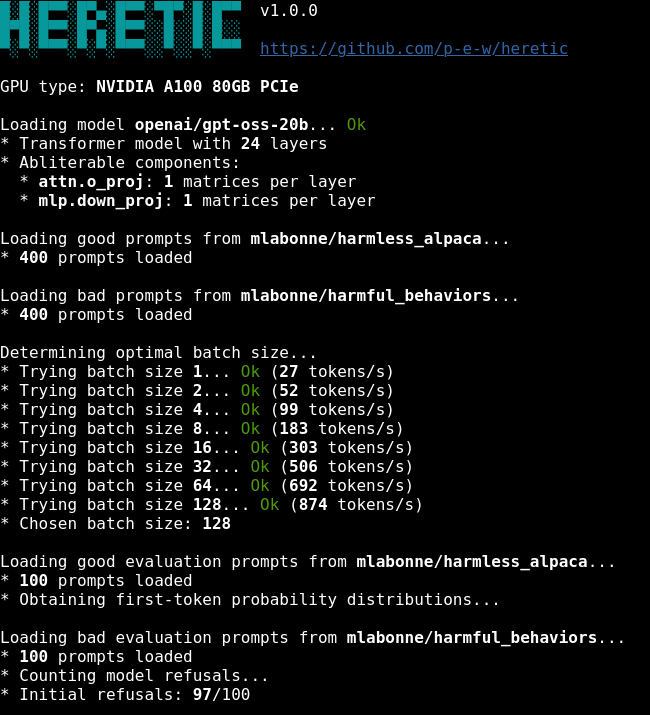
someone built a tool that REMOVES LLM CENSORSHIP in 45 minutes with a SINGLE command
its called HERETIC
here is how it works and why everyone is talking about it
“Android users are poor”
Anyway, This is my Apple ecosystem. It’s my secondary one, with my Samsung ecosystem being my primary (Galaxy Book5 Pro, Watch Ultra, Z Fold7, Ring…)
It’s 2025 and some people still think having an Android = poor? Time to move on from that
An Apple user just replied to me saying: “I’m struggling to find a Linux distro that’s as advanced as macOS.”
Brother in Christ…
You’re not looking for “advanced.”
You’re looking for hand-holding.
macOS is “advanced” the same way a Tesla in Valet Mode is “fast”, it’s artificially limited so you don’t hurt yourself.
Linux gives you the entire engine bay, a toolbox, and the keys to the dam factory.
You can:
- Run a full desktop on 15-year-old hardware
- Rice it until it looks like a Cyberpunk anime
- Have updates that don’t randomly delete your files
- Actually own your computer
But sure, keep paying $4000 for a laptop with 8 GB soldered RAM and a butterfly keyboard graveyard in its past.
Linux users aren’t struggling to match macOS.
We passed it a decade ago and never looked back.
From the first spawn to the final score, your support means everything. Thank you for spending time with us in the Halo universe.
From our table to yours, Happy Thanksgiving 🦃