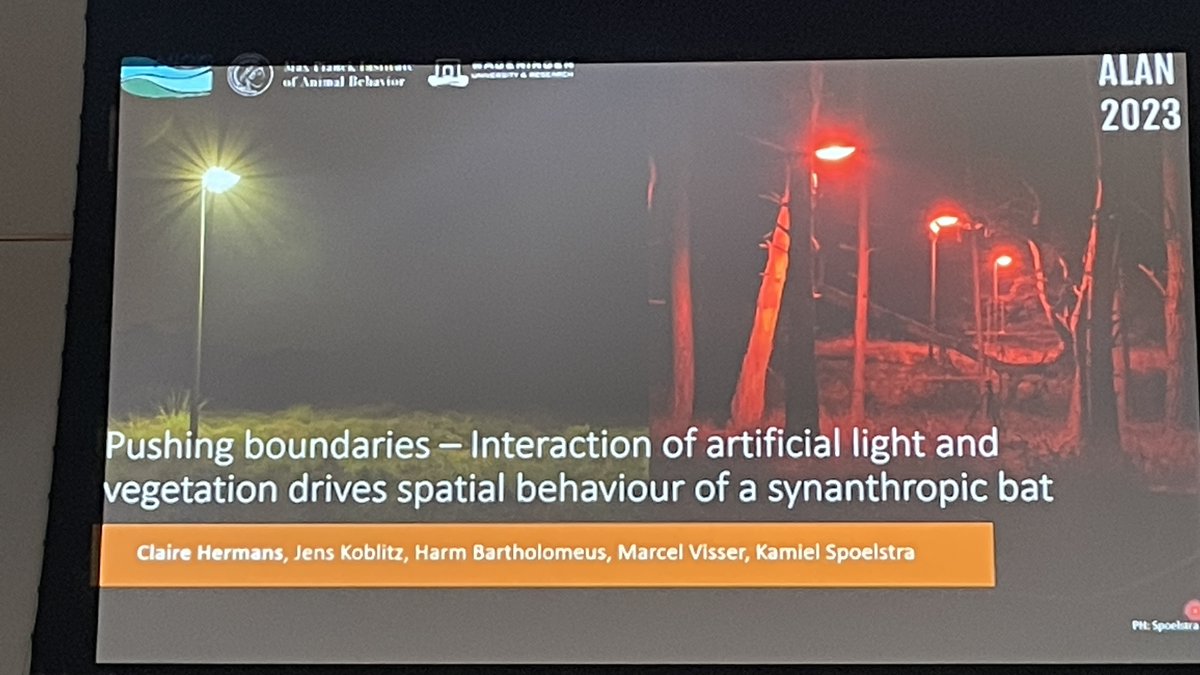
ALAN facilitated all-night foraging in bats especially near white light, but these effects were attenuated near red light. This opens the possibility of using spectral composition as a mitigation measure.
📢Check out another chapter of my PhD thesis in @STOTEN_journal! We show that ALAN💡disrupts natural activity patterns, with both insects🦋 and bats🦇 being more active throughout the night.
https://t.co/nA5QkHrrL8
Now the PhD defence is fast approaching!🎓 @m_e_visser @niooknaw
Ben jij geïnteresseerd in de effecten van nachtelijk kunstlicht op het temporeel en ruimtelijk gedrag van amfibieën? We zoeken een PhD student met veldwerkkwaliteiten en affiniteit automatische dataverzameling en statistiek! https://t.co/Yi8rYiG3tD
#vacature#Wageningen
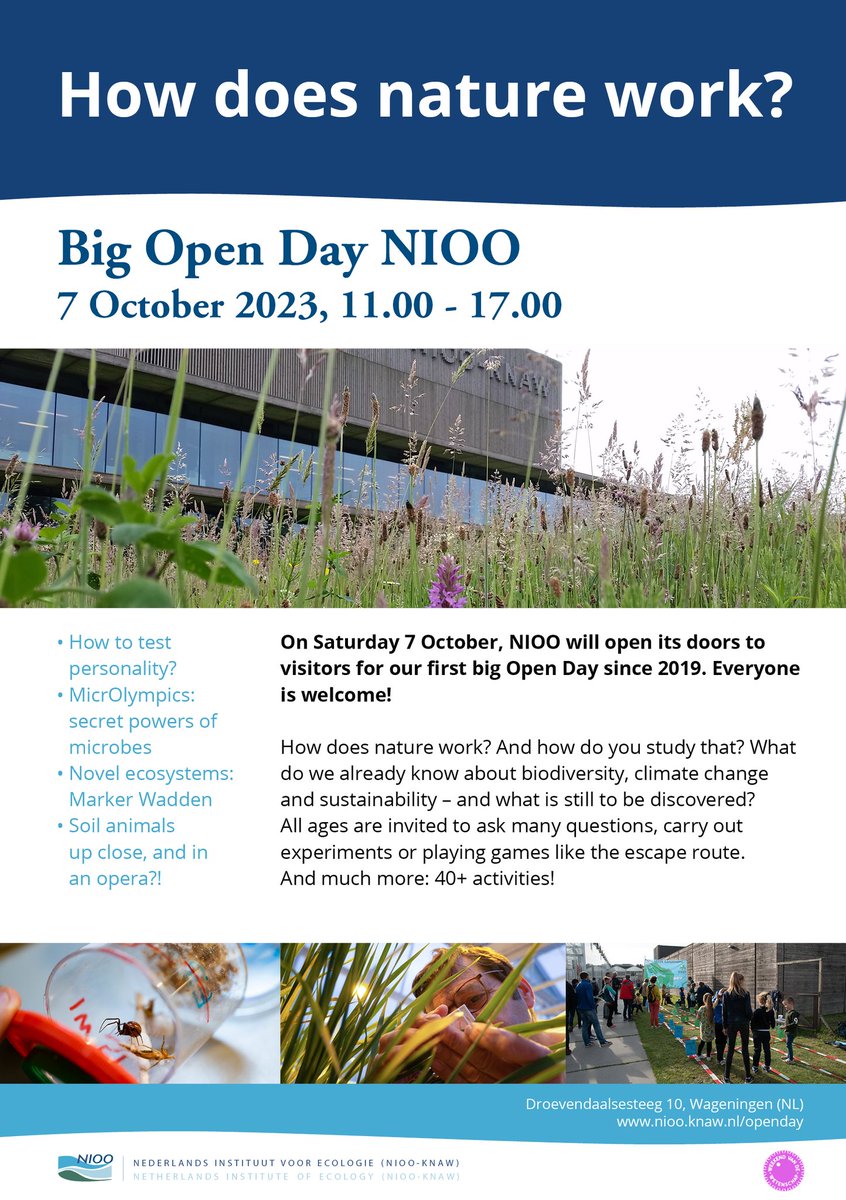
Very welcome at our big Open Day on Saturday 7 October!
How does nature work?
And how do you investigate that...
40+ activities to engage in!
Hotspot of the National Science Weekend in the Netherlands!
https://t.co/yM0de7pNpJ @Wetenschap_NL #WvdW2023#Wageningen
Announcing fully-funded PhD positions on our new "Bioacoustic AI" project: https://t.co/DfotwLl64C Apply now for a #PhD studying animal sounds (#bioacoustics), #deeplearning, #acoustic signals, and #ecology! 2 open to apply now, 8 more coming soon. (Pls share)
Had such a great time in Calgary for my first #ALAN2023 conference! 💡 So many diverse and inspiring talks and so happy to meet such great people! Time now to go back to the Netherlands ✈️
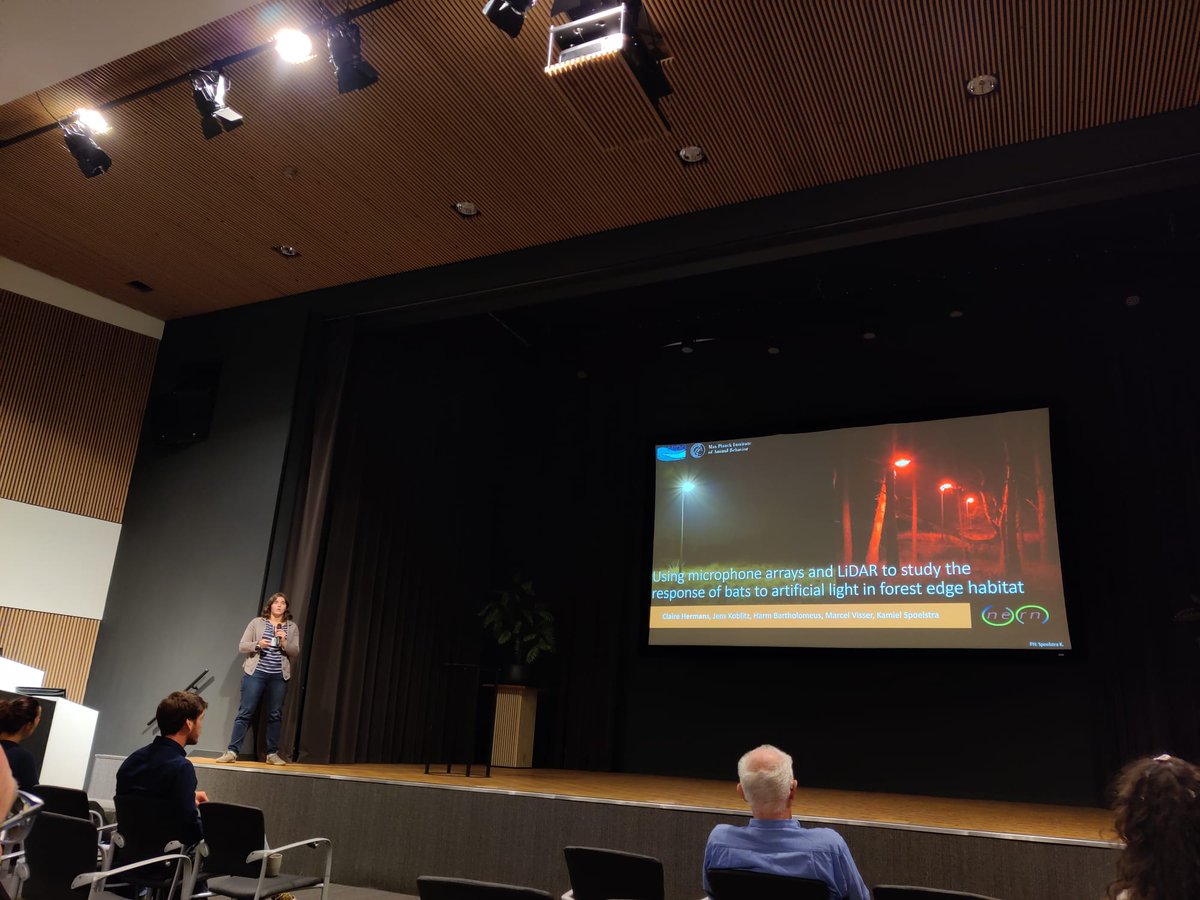
Claire Hermans (Netherlands Institute of Ecology) used a combination of acoustic tracking of bats and LiDAR scans of the environment to reconstruct the foraging behavior of bats exposed to different experimental light treatments in the field. #ALAN2023
After presenting the Light on Landscape project at the @NWOFunding#Teknowlogy last week with @KamielSpoelstra , well arrived in Edinburgh to present my PhD project at the @SEBiology#SEBconference. See you there if you want to know more about the effect of artificial 💡 on 🦇!
Both methods provide data with very fine scale resolution. Combining the two methods may provide a powerful tool to answer unsolved questions on bat behaviour.
Very happy to share my first paper as first author, which is part of my PhD at @niooknaw@AnimalEcol_NIOO with @KamielSpoelstra and @m_e_visser on the effect of light pollution on bat behaviour 🦇💡Check out ⬇️ for more details
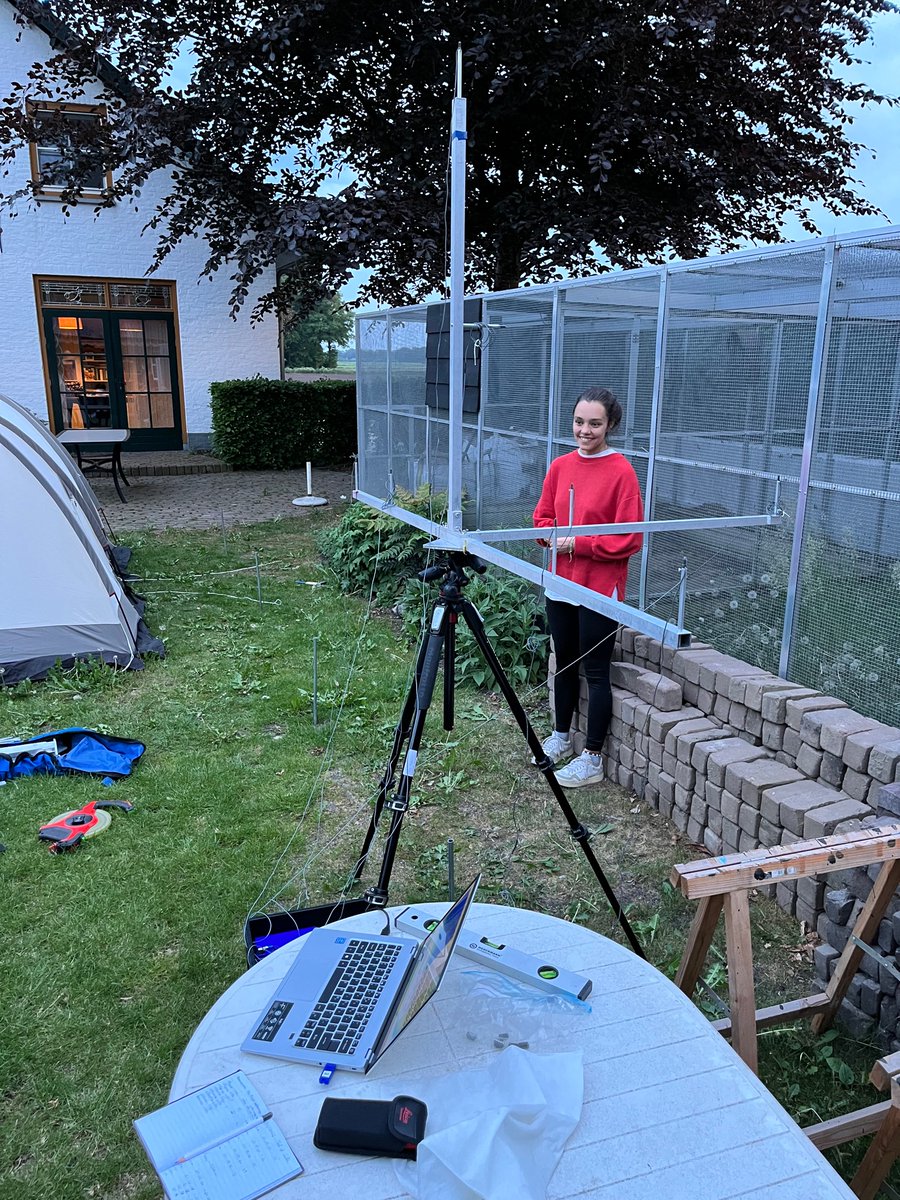
Afg. week meegewerkt aan valideren van microfooninstallatie met 8 hoogfrequente microfoontjes die 3D beeld kan maken van vluchtbewegingen van vleermuizen 🦇
Hopen dat opnames voldoende zijn zodat @ClaireHermans (PhD @niooknaw) haar onderzoek kan afronden en publiceren.
Dat was een lekker donkere #NachtvandeNacht!
Heel goed voor dier & mens. Dank @nachtvandenacht!
Voor wie zich wil laten verlichten door kennis over de effecten van kunstlicht op de natuur: https://t.co/q3N2Ig5WVt
Van onze onderzoekers @KamielSpoelstra
@m_e_visser @ClaireHermans
Vacancy for a PhD position. In this project, you'll study spatial and temporal aspects of bat foraging activity and success along urban gradients in several cities in the Netherlands. Starting date: Nov / Dec 2021 https://t.co/RzQjrKrZGN #vacancy#PhDposition
Jens C. Koblitz wraps up the new materials & methods session at #EBRS2021. Using microphone arrays and LiDAR to study the effects of artificial lights on bats
Did I just encounter a zebra?! No way, too exotic in times of pandemic... Just having a lunch walk during the nice virtual #NAEM2021 meeting! @NERN_network
@avalonceleste@SICB_ Really cool talk, thanks for sharing your research! I see that we have kind of the similar experimental setup along the forest edge ;)