Alzheimer’s may be linked to gum bacteria, new research shows.
Scientists have repeatedly found Porphyromonas gingivalis—the chief bacterium that causes periodontitis—inside the brains of people who died with Alzheimer’s.
When researchers deliberately infected mice with this oral bacterium, the animals rapidly developed key Alzheimer’s pathology, including the buildup of amyloid-beta plaques.
Perhaps most alarming, the bacteria’s toxic enzymes have been detected in the brains of people showing early Alzheimer’s changes years before memory loss or other symptoms appear, suggesting the infection may quietly initiate damage long in advance.
These discoveries have sparked serious interest in new treatment approaches. An experimental drug called COR388 (from the company Cortexyme) has already succeeded in lowering both bacterial load and amyloid-beta levels in preclinical models. Although large human trials are still needed, the evidence is mounting that at least some cases of Alzheimer’s may have an infectious trigger rather than being purely degenerative.
[Dominy, S. S., et al. "Porphyromonas gingivalis in Alzheimer’s disease brains: Evidence for disease causation and treatment with small-molecule inhibitors", Science Advances, 5(1), eaau3333]
Outdated CPR training is putting women’s lives at risk.
Women who suffer cardiac arrest outside hospital are significantly less likely to survive than men, and one overlooked reason is that CPR training almost never accounts for female anatomy.
A Duke University analysis across 47 U.S. states found women are 14% less likely to receive bystander CPR. In the UK, the gap is similar: only 68% of women get CPR from bystanders compared to 73% of men, with many people citing fear of inappropriate touching or concern about injuring a woman’s chest.
The problem is compounded by the tools we train on. A global survey revealed that roughly 95% of CPR manikins are designed with flat chests; only one widely available model includes visible breasts. As a result, most trainees never practice the slight technique adjustments needed for women and often hesitate in real emergencies.
Research published in the Journal of Emergency Medical Services offers hope: when trainees used manikins equipped with realistic silicone breasts, they were almost twice as likely to feel confident performing chest compressions on a woman.
Experts say updating training manikins to represent both male and female anatomy could eliminate hesitation, close the gender survival gap, and save thousands of lives.
🔷 EXCLUSIVA ABC 🔷
❗️ Oncólogos denuncian presiones para no recetar fármacos caros contra el cáncer y ahorrar costes.
🔎 Investigación de @juanfmiranda y @ANAISANCHEZR, adjuntos al director de ABC https://t.co/vWxnP510L6
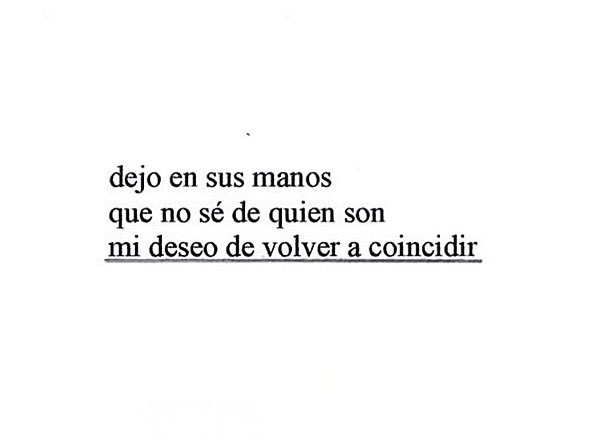
este concepto….. creer en Algo q nos hará volver a coincidir. aferrarse a pequeñas cosas y atribuirles un mismo significado… el de volverse a encontrar
Ya desde la cama despido el día compartiendo un descubrimiento interesante y apropiado, se trata de la original mirada cenital de la pintora británica Frances Featherstone.
👇🏻Hilo corto.
La Guardia Civil continua garantizando la #seguridad en zonas afectadas por la #DANA, realizando servicios para evitar posibles pillajes en zonas comerciales.
#Colabora 📞062 #SeguridadCiudadana
"La terapia ayuda, pero la salud mental es una responsabilidad colectiva, social y que no puede ocurrir únicamente entre cuatro paredes". En esta carta a la directora, la lectora Marta Fernández habla sobre salud mental https://t.co/IMtLH7iJGM













![Rainmaker1973's tweet photo. Alzheimer’s may be linked to gum bacteria, new research shows.
Scientists have repeatedly found Porphyromonas gingivalis—the chief bacterium that causes periodontitis—inside the brains of people who died with Alzheimer’s.
When researchers deliberately infected mice with this oral bacterium, the animals rapidly developed key Alzheimer’s pathology, including the buildup of amyloid-beta plaques.
Perhaps most alarming, the bacteria’s toxic enzymes have been detected in the brains of people showing early Alzheimer’s changes years before memory loss or other symptoms appear, suggesting the infection may quietly initiate damage long in advance.
These discoveries have sparked serious interest in new treatment approaches. An experimental drug called COR388 (from the company Cortexyme) has already succeeded in lowering both bacterial load and amyloid-beta levels in preclinical models. Although large human trials are still needed, the evidence is mounting that at least some cases of Alzheimer’s may have an infectious trigger rather than being purely degenerative.
[Dominy, S. S., et al. "Porphyromonas gingivalis in Alzheimer’s disease brains: Evidence for disease causation and treatment with small-molecule inhibitors", Science Advances, 5(1), eaau3333]](https://pbs.twimg.com/media/G7gRtMsXwAEtO_x.png)