@TheMvmtMechanic@Retlouping I also posit that the available subjective is more suggestive of a MSK issue such as iliac apophysitis?
(I understand that you're not saying definitively that you think this case study is a nerve irritation, only that one should rule it out.)
@TheMvmtMechanic@Retlouping How would you diff between a spondy and an ilioinguinal nerve problem that was presenting just with pain? Wouldn't engaging the abs also potentially be a symptom modifier for spondy? (Assuming cervical posture did not affect sx)
@TheMvmtMechanic@Retlouping I see how the cervical slump would be a relevant component (though I wonder how commonly these abdominal nerves would be irritated enough to be provoked this way?)
Also- the extension could also a confounding test as a spondy could masquerade as well. Esp without parasthesia
@TheMvmtMechanic@Retlouping Btw I'm not an expert asking a rhetorical question - I genuinely don't know how to tension test/ apply distal tension to this nerve group, other than side bending
@TheMvmtMechanic@Retlouping What would the distal component be for "ilio" nerves? Prone hip ext? Confounding clinical exam is similar tension with provocative positions to both the MSK structures as well as neurological in that area? If the only symptom is pain...diff those will be tough?
@GregLehman@JaredPowell12@PeteOSullivanPT From a recent interview with Pete re: CFT, something I've adopted is starting the evaluation/subjective with "tell me your story". This will reveal a lot and usually result in more patient centered care. It's the patients narrative after all and we are only a character in it.
@GregLehman@JaredPowell12@PeteOSullivanPT M experience is that most (PT) patients are "dualistic" with interpreting what we say. Words with purely physical associations are more readily accepted as they are coming with the expectation to discuss physical impairments.
@GregLehman@JaredPowell12@PeteOSullivanPT Agreed. For this reason, I think it could be totally appropriate to get to a place where you could use "catastrophizing" or "overly fearful". Even the word "hypersensitivity" could be misconstrued if the patient doesn't trust you beyond a place of medical authority.
@thomas_jesson Sounds good.. and if it counts - I am on team "book" - so if you decided to put these future posts to print - you'd sell at least one copy.
@thomas_jesson Tom, this sounds great. What is the "founding" option? Sorry if this was addressed in the audio - I only had time to read the text. Enjoyed your book and looking forward to your next project
@JaredPowell12@GregLehman@PeteOSullivanPT I think also that people simply don't like being told how they feel. I don't. Isn't it our responsibility, and more appropriate, to allow space for the patient to tell us how they feel first?
@PainSci Clinically thinking, it just makes good sense to seek alliance with your patient, on their terms, and work from there. The line between honest and direct/ nocebo maybe be less blurry if we get to know the person in front of us.
Will a Full-Body MRI Scan Help You or Hurt You? https://t.co/7zuEELstrJ by @DhruvKhullar
An infuriating & exploitive trend!
No evidence of benefit & many possible harms, including overdiagnosis, cost (to patient & system), anxiety, iatrogenic injuries, etc.
Sum: nope.
@novicephysio@PainSci If you can provide me some high quality/ high powered research to support your thinking - I would welcome them. Otherwise, I think on the basis of these differences, respectfully, we're probably done with this thread.
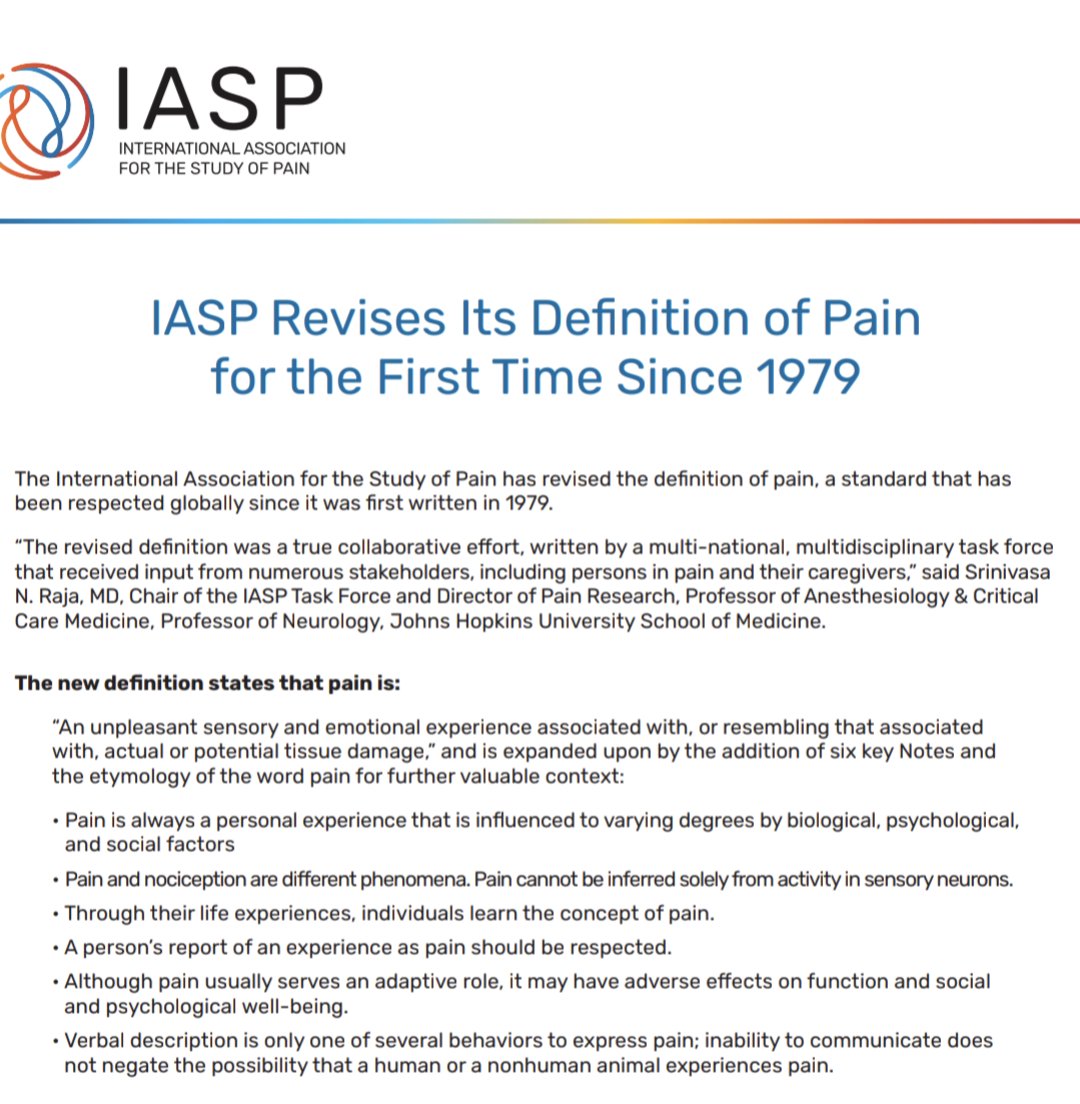
@novicephysio@PainSci If anything I would think the proper statement would be that, definitively, pain is "inconsistently correlated" with nociception, or "loosely correlated." The clinical implication of the language matters
@novicephysio@PainSci Ok so what were you trying to get me to understand regarding the pinching example? Weren't you trying to demonstrate that pain is correlated with nociception? It seems like we both just agreed that it isn't. Pain is subjective. It is an sensory AND emotional experience