Brave New World is a great novel, but I don't think it's Huxley's best. Here's my ranking of every novel by Aldous Huxley, from Crome Yellow to Island.
https://t.co/lRF7aWSxfN
To care about aesthetics is usually understood to be superficial and shallow. That doesn't have to be the case. Aesthetics doesn't have to be about ornamentation--it can augment our reading experiences, making them more meaningful and profound.
https://t.co/CRlzGWdG0t
Poem of The Week: The Passionate Man's Pilgrimage
Walter Raleigh
Give me my scallop shell of quiet,
My staff of faith to walk upon,
My scrip of joy, immortal diet,
My bottle of salvation,
My gown of glory, hope’s true gage,
And thus I’ll take my pilgrimage.
Blood must be my body’s balmer,
No other balm will there be given,
Whilst my soul, like a white palmer,
Travels to the land of heaven;
Over the silver mountains,
Where spring the nectar fountains;
And there I’ll kiss
The bowl of bliss,
And drink my eternal fill
On every milken hill.
My soul will be a-dry before,
But after it will ne’er thirst more;
And by the happy blissful way
More peaceful pilgrims I shall see,
That have shook off their gowns of clay,
And go apparelled fresh like me.
I’ll bring them first
To slake their thirst,
And then to taste those nectar suckets,
At the clear wells
Where sweetness dwells,
Drawn up by saints in crystal buckets.
And when our bottles and all we
Are fill’d with immortality,
Then the holy paths we’ll travel,
Strew’d with rubies thick as gravel,
Ceilings of diamonds, sapphire floors,
High walls of coral, and pearl bowers.
From thence to heaven’s bribeless hall
Where no corrupted voices brawl,
No conscience molten into gold,
Nor forg’d accusers bought and sold,
No cause deferr’d, nor vain-spent journey,
For there Christ is the king’s attorney,
Who pleads for all without degrees,
And he hath angels, but no fees.
When the grand twelve million jury
Of our sins and sinful fury,
’Gainst our souls black verdicts give,
Christ pleads his death, and then we live.
Be thou my speaker, taintless pleader,
Unblotted lawyer, true proceeder,
Thou movest salvation even for alms,
Not with a bribed lawyer’s palms.
And this is my eternal plea
To him that made heaven, earth, and sea,
Seeing my flesh must die so soon,
And want a head to dine next noon,
Just at the stroke when my veins start and spread,
Set on my soul an everlasting head.
Then am I ready, like a palmer fit,
To tread those blest paths which before I writ.
My ranking of Lemony Snicket's excellent Series of Unfortunate Events is having a resurgence! Excellent series if you haven't read these books.
https://t.co/o3rgGD7TBg
Carrying on with my read-through of Dickens novel. I'm now on Dombey and Son, a novel I know nothing about.
Two chapters in though and I'm already hooked, which is a big improvement over Martin Chuzzlewit, which took a bit of work!
Poem of the Week: As Ye Came from the Holy Land
Attributed to Sir Walter Raleigh, I like the interpretation that he wrote this having been ultimately spurned in love by Queen Elizabeth I. Whether that's true, it's a beautiful poem about the fickleness of human desire, and of the steadfastness of true love, which is rarely given.
As you came from the holy land
Of Walsingham,
Met you not with my true love
By the way as you came?
“How shall I know your true love,
That have met many one,
I went to the holy land,
That have come, that have gone?”
She is neither white, nor brown,
But as the heavens fair;
There is none hath a form so divine
In the earth, or the air.
“Such a one did I meet, good sir,
Such an angelic face,
Who like a queen, like a nymph, did appear
By her gait, by her grace.”
She hath left me here all alone,
All alone, as unknown,
Who sometimes did me lead with herself,
And me loved as her own.
“What’s the cause that she leaves you alone,
And a new way doth take,
Who loved you once as her own,
And her joy did you make?”
I have lov’d her all my youth;
But now old, as you see,
Love likes not the falling fruit
From the withered tree.
Know that Love is a careless child,
And forgets promise past;
He is blind, he is deaf when he list,
And in faith never fast.
His desire is a dureless content,
And a trustless joy:
He is won with a world of despair,
And is lost with a toy.
Of womenkind such indeed is the love,
Or the word love abus’d,
Under which many childish desires
And conceits are excus’d.
But true love is a durable fire,
In the mind ever burning,
Never sick, never old, never dead,
From itself never turning.
What is Art? John Dewey attempts to answer this question by asking a more fundamental question. What is an aesthetic experience?
For Dewey, we find aesthetic experience when we pay attention to the simple ebb and flow of ordinary experience.
Aesthetic experience consists in those moments in which we resolve the tensions and conflict of ordinary experience into a unified and stable whole.
I can't recommend another book about aesthetics more than this one.
Tolstoy's moral theory of art led him to reject not only his own greatest novels, War and Peace and Anna Karenina, but also most of Shakespeare's plays and even Beethoven's 9th Symphony.
In this video, I unpack the moral theory of art that led Tolstoy to this radical conclusion.
https://t.co/A4wCXVFeMw
@mattyglesias The UK school curriculum is already largely a mediocre books curriculum. How about a great books curriculum instead? Through it some great poetry and philosophy while you're at it.
@MarcoFoster_ Every human attribute has a negative extreme. Go read Aristotle, learn about vices of excess and deficiency, and then you might be allowed to sit with the grown ups again.
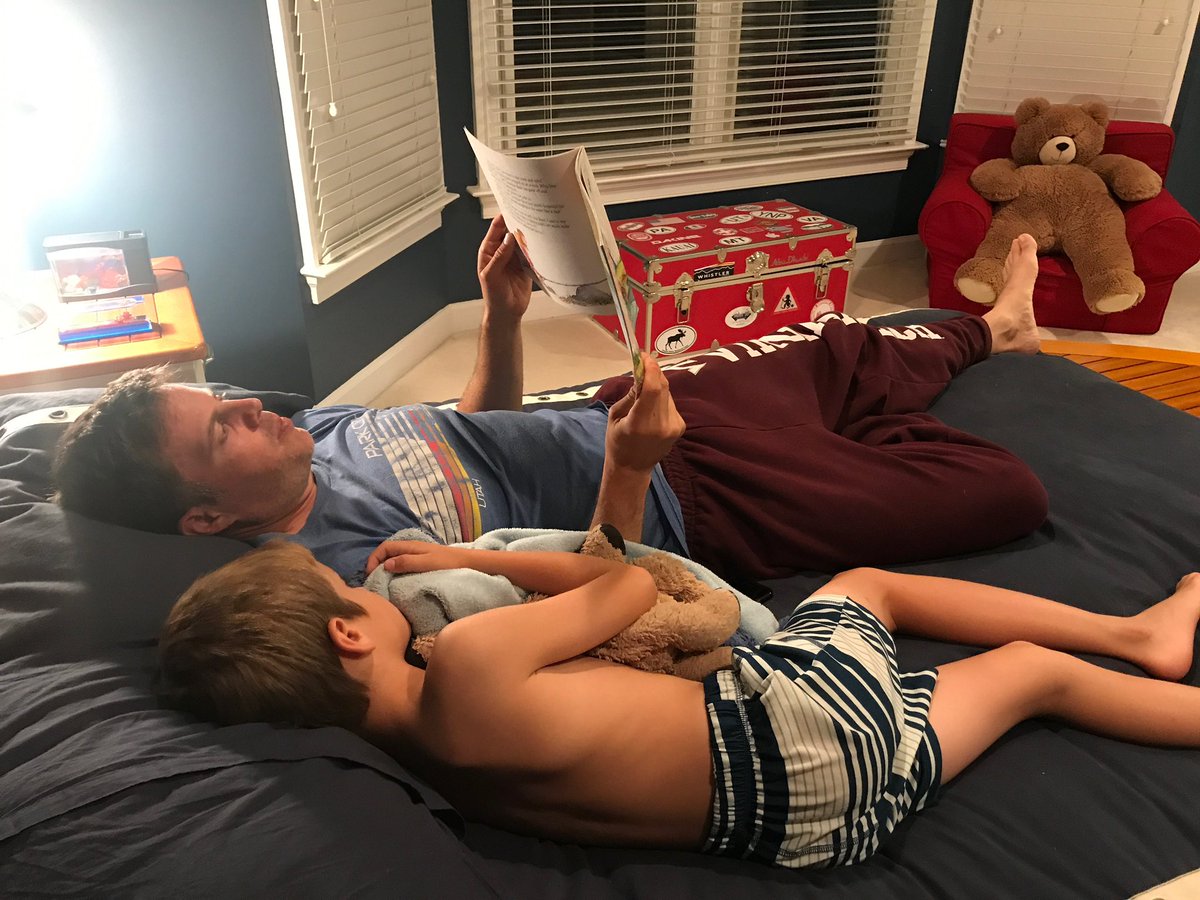
Instead of criticising parents who try to do right by their kids, how about criticising parents who don't. Both my parents were working class, one of them had a pretty chaotic life back then, and yet still somehow managed to find the time to read with/to me at least twice a week.
I still can’t believe these words were written unironically:
“I don’t think parents reading their children bedtime stories should constantly have in their minds the way that they are unfairly disadvantaging other people’s children, but I think they should have that thought occasionally.”
– Adam Swift, University of Warwick, England, May 2015
Fair enough if you don't like them, but book clubs are not performative. They are ways of connecting with people over a shared hobby. In fact, before books were mass produced, many people would gather in groups to read together, usually around the same book.
I've been in a few book clubs over the years. We read on our own but then discuss the books together. It's rewarding and helps you understand what you are reading on a deeper level.
I half agree. The problem is that I think a lot of people have always preferred efficiency and comfort over everything else. Technology feeds into and encourages those impulses, but it's already there. I think genuine curiosity and passion have always been pretty rare, even among people for whom it's supposed to be their jobs (i.e. academics).
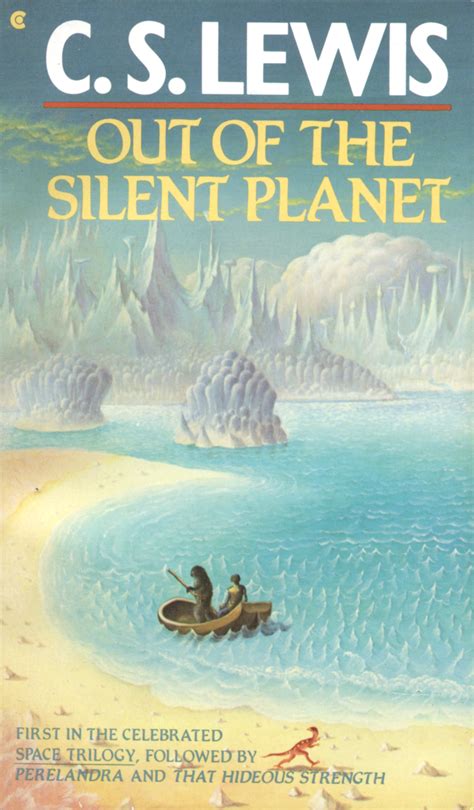
Book of the Week: Out of the Silent Planet by CS Lewis
This book, and I suppose you could say the whole trilogy, is a great and original fusion of science fiction, fairy tale, and Christian mythology.
I didn't know what to make of it at first. The story itself is very simple, the characters too, and yet there is just something about Lewis's imagination and the beauty of his world that made it hard for me to put this book down.
I think Wilde would distinguish between a book having moral subject matter vs a book aiming to teach the audience a moral lesson.
I think sometimes we are apt to think that when books have moral subject matter the book is designed to teach us something, rather than being a story with which we are free to explore and engage with however we choose.
In this way, you can read Dorian Gray and learn the lesson that he learns, or you can end the novel and still think that the decedent way of living is right.
Where I do agree with you though is that many contemporary novels lack substance. So there's very little for the audience to grapple with, moral or otherwise.
Or sometimes books are overly moralistic to the point of destroying the whole work.