Gotta learn them all!!
I spent this semester with an amazing group of students learning sight words, letters, and blends. With the creativity of my awesome partners, Ms. T & @lyndon_history, we created another fun resource for our students to practice their reading skills!#ed204
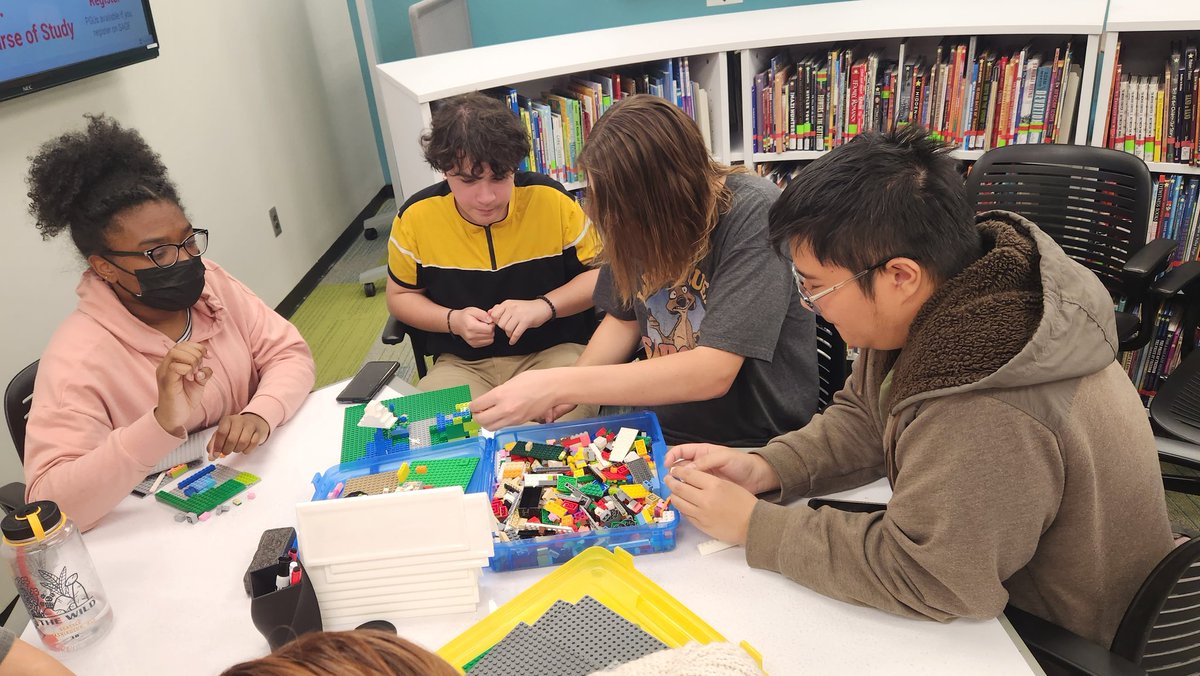
What a fun day learning with Legos! @NCStateCEDMETRC put on a great PGU that utilized lessons from @LEGO_Education that gave us awesome examples for future classroom lesson planning!
@MineralCup 1 minute left and Fluorite is in the lead! This beautiful mineral is not only fluorescent, but it has sub-conchoidal fractures that are smooth with some rounded features. Go Fluorite! #MEA410
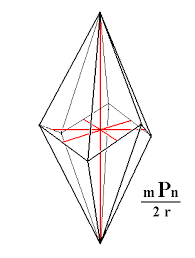
@MineralCup I was sad to see vivianite lose, but Zircon is cool! It's a source of zirconium that is used in furnace linings and as abrasives. It forms an intricate tetragonal-dipyramidal crystal as seen below! #MEA410
@MineralCup Corundum is so cool! It falls into the hexagonal scalenohedral crystallography class. This forms a prism that includes 12 scalene triangles in a hexagonal pattern. #MEA410
@MineralCup Love love love calcite in comparison to crocoite. It's found all over the world, in sedimentary, igneous, and metamorphic rocks! It has an astounding variability in its habit (shape) and conchoidal (smooth and curved) fracture pattern #MEA410
@MineralCup Corundum is one of my new favorites, even though it has a nonvisible pleochroism, it will fluoresce under short and long wave uv lights! #MEA410
@MineralCup I'm surprised Lizardite made it past the first round with it being a source of asbestos and all, but its still cool nonetheless. Vivianite earned its spot with its visible pleochroism, a variability in color based on light polarization. #MEA410
@MineralCup I was originally going to vote for Davemaoite for its name, but after researching Ammineite, I thought better. Ammineite was the first mineral recognized to contain ammine groups, which are functional compounds containing nitrogen with a lone pair. #MEA410
@MineralCup Going back through these tweets, yall have made me appreciate Kyanite. While Malachite was my original vote for its simple monoclinic crystal system, Kyanite's slightly more complicated triclinic structure and uses in refractory and porcelain production won me over. #MEA410
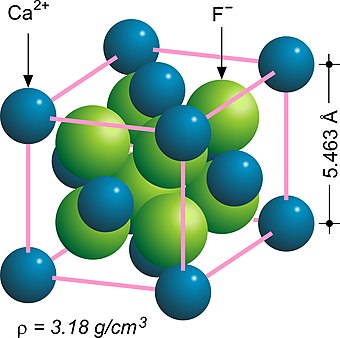
@MineralCup Fluorite for the win! Belonging to the halide minerals, this beautiful crystal has an isometric cubic habit with a face-based cell structure, meaning it grows in simple cubes with its atoms on the face and corners of the cell. #MEA410
@MineralCup Perovskite for today! Perovskite is piezoelectric, meaning when under mechanical stress, it'll produce a charge. I've been thinking of alternate energy sources as Hurricane Ian barrels towards the east coast. Perovskite is a great option for potential solar energy uses! #MEA410
@MineralCup Quartz was the first mineral I loved but fluorite has my vote today. Fluorite forms as octahedrals or cubes and has a face-centered structure, meaning the atoms (black dots) of fluorite are positioned at each corner and face of the structure #MEA410
@MineralCup I've been really off my game these few days, voting but not replying. Today has to be kaolinite! This mineral has a specific gravity calculated at 2.63. The specific gravity helps determine the density of a mineral and is an important property for identification #MEA410
@MineralCup Even though I love galena's cubic formation and metallic luster, quartz is just a classic. Quartz is a part of the trigonal trapezohedral class. It is made of a hexagonal prism with trigonal trapezohedral faces towards the ends of each crystal. #MEA410
@MineralCup Cinnabar still has my ❤️. While zircon has a classic tetragonal system(2 axes are = length w/ a 3rd perpendicular), Cinnabar has more flair with a trigonal crystal system of the trapazohedral class! It has 3 axes of equal length & angle that forms with kite shaped faces. #MEA410
@MineralCup I'm coming back with the shark!! Even though it's not even close, my vote still goes to Fluorapatite. It has a really cool hexagonal crystal system. Its formations put it in a di-pyramidal class, meaning two hexagonal pyramids reflect each other to form this crystal. #MEA410
@MineralCup Even though I love the blues of sodalite, my vote goes to Kaolinite! It's triclinic crystalline system is really cool, each axes of the crystal formation is of different lengths and are at nonperpendicular angles! #mea410
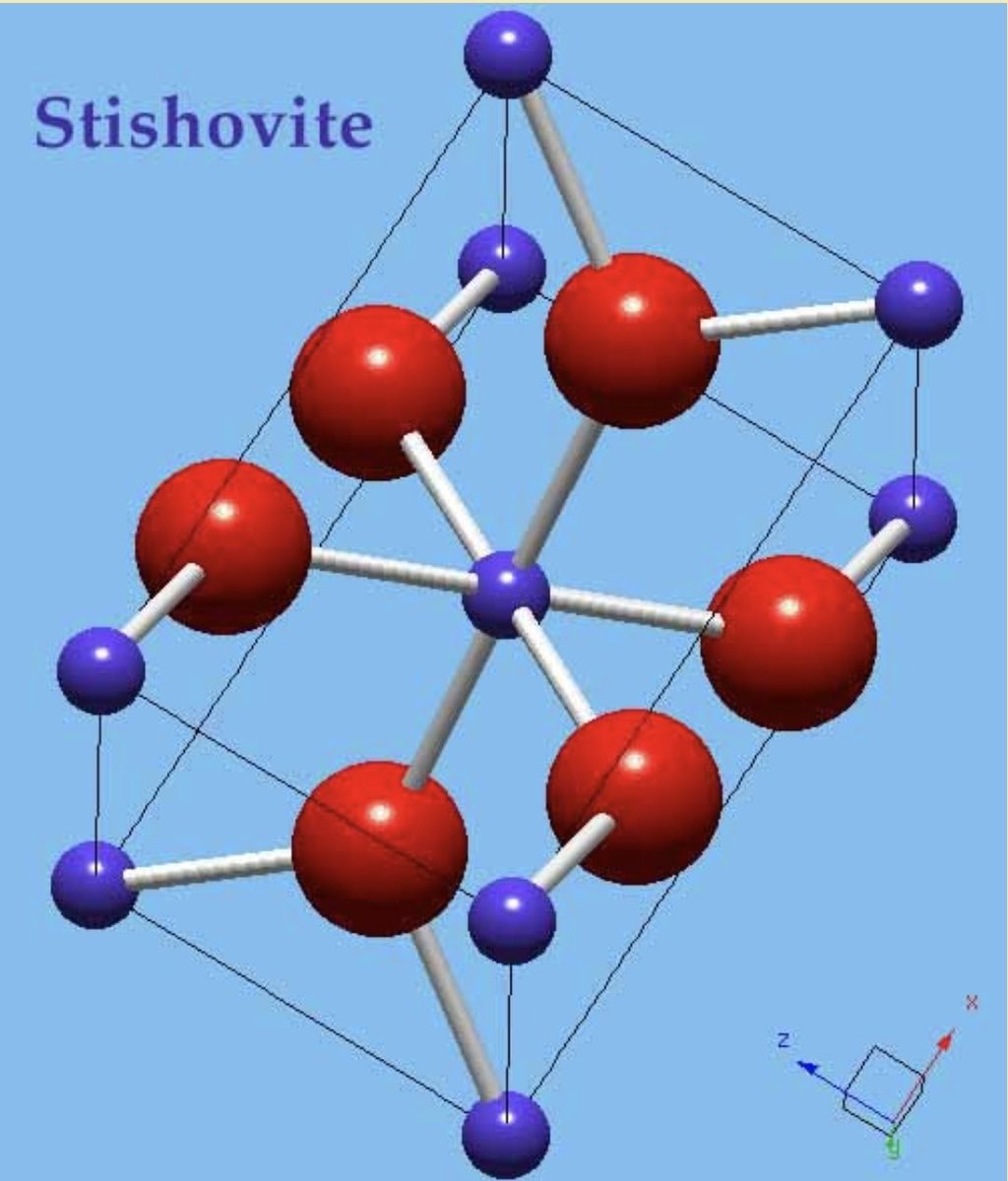
@MineralCup Even with my old nickname being calcite, I'm still voting for Stishovite! It's tetragonal crystalline structure consists of 3 axes at right angles with 2 being of equal length #MEA410