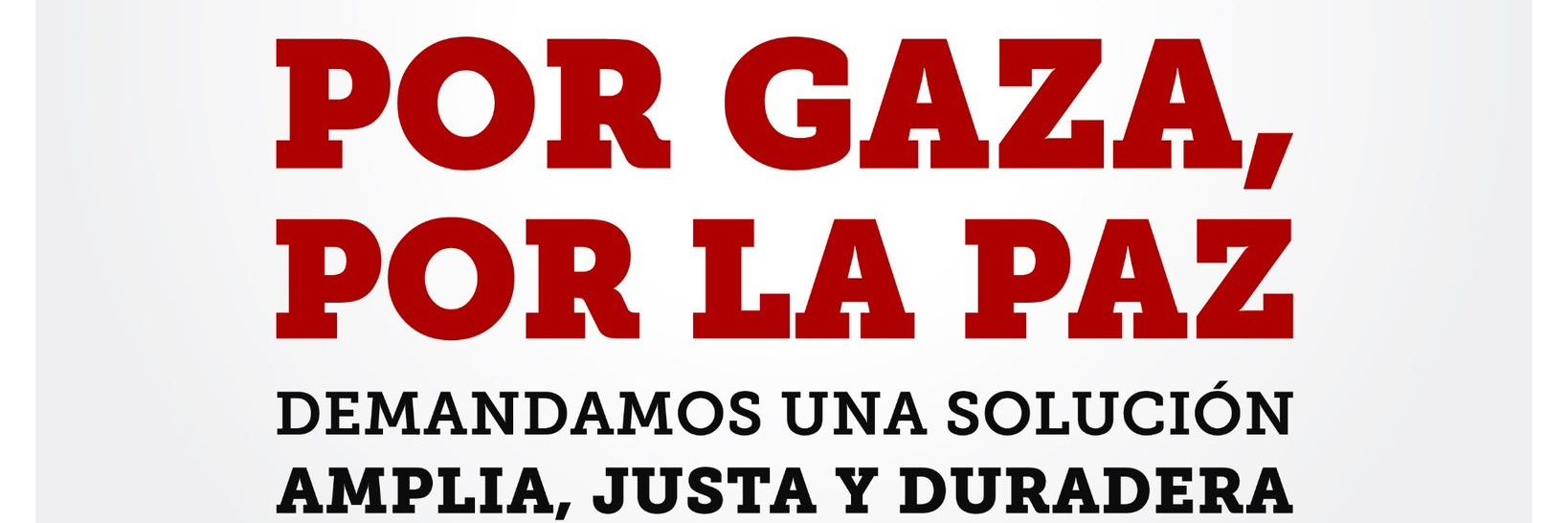
#ZocaloCDMX@Residente
Gracias, gracias, gracias!!!
Lo que no se nombra, no existe! Por eso es tan importante que un artista como @Residente alce la voz por el pueblo #Palestino
Muy muy feliz porque por invitación de un profesor que admiro mucho hoy de nuevo voy a dar la clase de derecho animal en el posgrado de bioética del Instituto Politécnico Nacional 🤗
Cuando un perrito es atropellado, nos llaman para que lo rescatemos y ahí estamos. Después del rescate, muchos necesitan pañales todos los días, y cada vez es más difícil conseguir apoyo para comprarlos. 🥺🐾
Buscamos 150 corazones que donen $10.000. También puedes ayudarnos comprando el calendario 2027 de Mi Mejor Amigo por $45.000 más envío.
Gracias por seguir acompañándolos después del rescate. ❤️
Bancolombia Ahorros 35270197653
NIT 901039372
llave Bancolombia Negocios 0046366126 la plata llega a ASOCIACION DE PROTECCION ANIMAL MI MEJOR AMIGO.
Nequi 3118009018 Mar Med
DaviPlata 3118239988
Paypal [email protected]
Calendario: 📲 WhatsApp (320) 725-5125
#ALICANTE
¿Has oído esa situación en la que llega un bebé a la "familia" y el perro, aunque haya compartido con ella 7 años de su vida, sobra en la ecuación?
#KOBI te lo puede explicar.. De cómo te dan la patada. De cómo acabas en una jaula, triste y asustado
616391813 (mañanas)
URGENTE, pronto lo sacan a la calle 💔💔💔
Hola!! Este perrito se llama Tomy y necesita una familia con urgencia, su humano sufrió un derrame cerebral y ahora ya no está en condiciones de cuidarlo un familiar lo está “cuidando” pero como ven lo tienen encadenado. Es un perrito
Colonos israelíes atacan a una familia palestina que cosechaba aceitunas en Wadi Matin, Masafer Yatta. Los agresores golpearon a los miembros de la familia y les robaron toda su cosecha.
🇪🇸Former Barcelona mayor and current Frente Amplio candidate Ada Colau raises a keffiyeh:
“We have put our bodies to defend Palestine and end the genocide in Gaza… We will continue to put our bodies… Long live Palestine free!”
Extraordinary Documentary - PUT YOUR SOUL ON YOUR HAND AND WALK (2025)
BOOKMARK & SHARE🔖📑
The Life and Last Testimony of Fatma Hassona
On 15 April 2025, 25-year-old Palestinian photojournalist Fatma Hassona learned that a documentary chronicling her life under Israel's bombardment of Gaza had been selected for the Cannes Film Festival.
The following morning, an Israeli airstrike struck her family home in the al-Tuffah neighbourhood of Gaza City, murdering Fatma and several members of her family.
She would never see the finished film on a cinema screen.
Directed by Iranian filmmaker Sepideh Farsi, Put Your Soul on Your Hand and Walk is an extraordinary documentary, constructed almost entirely from video calls between two women separated by borders, war and radically different circumstances.
In April 2024, unable to enter Gaza through Rafah, Farsi established contact with Fatma, a young photographer documenting the destruction of her homeland. What began as an attempt to record life inside the besieged Strip developed into a friendship spanning almost a year.
Through intermittent internet connections, frozen screens and conversations repeatedly interrupted by the realities of war, Fatma describes a life increasingly stripped of its most basic freedoms.
She speaks of bombardment, displacement, hunger, the murder of neighbours and the destruction of everything familiar. Yet she also laughs, shares her poetry, discusses photography and talks about the ordinary future she desperately wants to experience.
What makes this documentary so remarkable is Fatma herself.
She refuses to become merely another face through which the world might briefly acknowledge Palestinian suffering. She is articulate, intelligent, politically conscious and fiercely attached to her homeland.
Her photographs document what Israel's military assault has done to Gaza, but they also preserve the humanity of its people. Children, families, devastated neighbourhoods and the stubborn persistence of everyday life become part of a visual record created by someone living through the very events she is documenting.
The film's title comes from Fatma's own description of what it means to venture outside under bombardment: to place your soul in your hands and walk, knowing that death might come at any moment.
As the months pass, the growing friendship between the two women exposes another painful reality. Farsi can travel, work and return to the safety of her home. Fatma, born in Gaza, has never been permitted those same freedoms.
Yet her attachment to Palestine is unwavering.
When Farsi tells her about the invitation to Cannes, Fatma is delighted. She agrees to attend, but on one condition: that she will be able to return to Gaza afterwards.
That future was stolen from her.
There is something profoundly disturbing about watching a young woman speak so openly about the possibility of being killed, while knowing that the Israeli military would eventually take her life.
Her laughter, her photographs and even the silences between conversations acquire an almost unbearable significance.
But this documentary should not be remembered simply because its central subject was murdered.
Fatma Hassona was an artist and a witness. Her work mattered before her death, and it deserves to be remembered independently of it.
There is a bitter indictment in the circumstances of her murder. On one day, the international film community was preparing to celebrate her testimony. On the next, an Israeli missile had extinguished the life of the woman who provided it.
Put Your Soul on Your Hand and Walk is more than a documentary about Gaza. It is a historical record of a Palestinian woman who understood the importance of documenting the destruction of her people while it was happening.
Israel killed Fatma Hassona, but the photographs she took, the words she spoke and the testimony she left behind remain.
Her life was worth far more than the tragedy of her death.
May her memory, her art and her extraordinary courage endure.
Fatma Hassona (1999–2025)
Directed by Sepideh Farsi | Palestine, France, Iran | 2025
📍A Note of Appreciation to the Filmmakers
My sincere gratitude and admiration go to director Sepideh Farsi and everyone involved in bringing Put Your Soul on Your Hand and Walk to the world.
I also wish to acknowledge the filmmakers and Palestinian solidarity organisations whose efforts have helped bring this extraordinary documentary to audiences through free community screenings.
Their dedication to preserving Fatma Hassona's voice, photographs and testimony is invaluable. At a time when Palestinian lives and stories are being systematically erased, ensuring that her story reaches the widest possible audience is an act of profound historical and human importance.
May Fatma's voice continue to travel beyond borders, beyond censorship and beyond the silence imposed upon her.
All artistic credit and rights remain with the filmmakers and respective rights holders.A note to the filmmakers and rights holders: I am sharing this documentary in solidarity with the Palestinian people and in honour of Fatma Hassona, with the utmost respect for everyone involved in its creation. If you would prefer the film to be removed, please contact me directly and I will honour your request.
GAZA: THE DESTRUCTION OF A SOCIETY
Beyond the Bombs, Beyond the Death Toll
What does it mean to destroy a people?
Is it enough to murder them, starve them, drive them from their homes and reduce their cities to rubble? Or does the destruction go further, reaching into their universities, hospitals, libraries, collective memory and even their ability to bring future generations into the world?
In Gaza, Israel's devastation extends far beyond the extraordinary Palestinian death toll. It has dismantled the institutions, professions, infrastructure and cultural foundations upon which an entire society depends.
Palestinian human rights organisations, including Al-Haq, Al Mezan and the Palestinian Centre for Human Rights (PCHR), have spent years documenting these crimes. Their investigations describe not a series of isolated incidents, but interconnected patterns of destruction that they identify as integral to Israel's genocide against the Palestinian people.
The terminology matters because each form of destruction exposes another dimension of what Palestinians have endured.
SCHOLASTICIDE: THE DESTRUCTION OF KNOWLEDGE
Gaza's universities have been devastated, schools turned into ruins and educational institutions rendered incapable of functioning.
In September 2026, PCHR published an extensive investigation titled Scholasticide and Genocide in Gaza, drawing upon testimony collected by its own field researchers and lawyers.
By July 2026, the organisation had documented the killing of approximately 20,051 students, more than 830 teachers and educational staff, and over 194 scholars, academics and researchers.
PCHR concluded that Israel's destruction of education was not merely a consequence of military operations, but part of a comprehensive policy aimed at dismantling the intellectual, social and cultural foundations of Palestinian society.
Among the dead are Professor Sufyan Tayeh, an internationally recognised physicist and university president, and Refaat Alareer, the Palestinian poet and educator who dedicated his life to helping young Palestinians tell their own stories.
Their murder deprived Gaza of far more than two extraordinary individuals. It deprived future generations of their accumulated knowledge, experience and intellectual guidance.
MEDICIDE: THE DESTRUCTION OF THOSE WHO HEAL
Gaza's medical system has endured repeated attacks on hospitals, ambulances, healthcare workers and essential medical facilities.
Doctors have performed operations without anaesthesia. Premature babies have faced death when incubators could no longer function. Cancer patients, dialysis patients and the seriously wounded have been deprived of life-saving treatment.
In January 2025, Al-Haq published The Systematic Destruction of Gaza's Healthcare System: A Pattern of Genocide.
Its investigation examined attacks on healthcare facilities, the detention, torture and killing of medical professionals, and the denial of medicines and essential medical supplies. Al-Haq identified these practices as evidence of genocidal intent.
The consequences do not end when the bombing stops. Destroying an entire healthcare system also destroys the expertise, training and institutional capacity needed to keep future generations alive.
INFANTICIDE AND THE TARGETING OF CHILDREN
The killing of Palestinian children must occupy a central place in any examination of Gaza's destruction.
Infanticide describes the intentional killing of infants. The broader intentional killing of children, when committed with the requisite intent to destroy a protected group, can also constitute an act of genocide.
Palestinian human rights organisations have documented children killed inside their homes, displacement shelters and places where families sought refuge.
By October 2026, PCHR stated that more than 22,000 Palestinian children had been murdered.
These children were not merely casualties of a conflict. They were individuals whose lives, development and futures were violently extinguished.
In June 2026, a UN Independent International Commission of Inquiry concluded that Israeli authorities and forces had deliberately targeted Palestinian children. Its findings placed these acts within the commission of genocide, crimes against humanity and war crimes.
The significance is impossible to ignore. Children represent a society's biological, cultural and intellectual future. Killing them destroys lives in the present and extinguishes the futures those lives might have created.
REPROCIDE: THE DESTRUCTION OF FUTURE GENERATIONS
Perhaps one of the most disturbing dimensions of Israel's assault concerns the deliberate destruction of reproductive life.
Reprocide is an emerging term describing systematic attacks on reproductive capacity, healthcare, family formation and the conditions required to sustain future generations.
The destruction of Gaza City's Al-Basma IVF Centre provides a devastating example.
According to testimony collected by PCHR from the clinic's owner, Dr Baha al-Din al-Ghalayini, Israeli shelling destroyed approximately 4,000 frozen embryos and 1,000 additional reproductive specimens.
These belonged to Palestinian families who had endured years of infertility, expensive treatment and immense emotional hardship. For some couples, they represented their final opportunity to have a biological child.
The damage cannot simply be repaired.
Al-Haq has documented how attacks on maternity facilities, starvation, forced displacement and the denial of reproductive healthcare have endangered Palestinian women, increased pregnancy complications and undermined the ability to conceive, give birth and care for newborn children.
This is not merely a humanitarian concern. Article II(d) of the Genocide Convention expressly identifies imposing measures intended to prevent births within a protected group as a genocidal act.
The destruction of reproductive capacity therefore raises an especially grave question: whether the campaign has attacked not only Palestinians alive today, but the conditions necessary for future Palestinian generations to exist.
ELITICIDE AND EPISTEMICIDE: THE ERASURE OF EXPERTISE
Eliticide describes the elimination of a society's intellectual, professional and cultural leadership. Epistemicide concerns the destruction or suppression of knowledge systems.
Gaza has lost engineers, physicians, scientists, academics, writers, researchers and other professionals whose accumulated expertise sustained its institutions and communities.
When a specialist is killed, decades of knowledge can disappear with them. When laboratories and research institutions are destroyed, even surviving experts may be deprived of the means to continue their work.
The devastation of Gaza's intellectual life is therefore more than a consequence of individual deaths. It threatens the continuity of expertise necessary for a society to recover, govern itself and develop independently.
MEMORICIDE: THE DESTRUCTION OF PALESTINIAN MEMORY
A people's history survives through more than written records.
It exists in manuscripts, libraries, archives, photographs, historical buildings, cultural traditions and the memories passed from one generation to another.
Israel's destruction of Gaza's cultural and historical infrastructure has damaged this inheritance on an immense scale.
The destruction of these institutions carries particular significance for Palestinians, whose historical presence, dispossession and national identity remain central to their struggle for self-determination.
When archives disappear, evidence may be lost forever. When cultural institutions are destroyed, communities lose the means to preserve and transmit their history.
And when those entrusted with maintaining that history are killed, the damage reaches into generations that have not yet been born.
DOMICIDE, URBICIDE AND ECOCIDE: MAKING LIFE IMPOSSIBLE
The destruction of Gaza has extended into almost every aspect of civilian existence.
Domicide describes the widespread destruction of homes. Urbicide concerns the devastation of urban environments and the social life they sustain. Ecocide describes severe environmental destruction.
Residential neighbourhoods, markets, factories, agricultural land, orchards, water infrastructure and sanitation networks have suffered catastrophic damage.
These are not simply buildings and utilities. They are the systems through which people obtain food, earn a living, maintain relationships and sustain communities.
The destruction of agricultural land threatens food production. The destruction of water and sanitation systems creates lasting health hazards. The loss of homes and businesses deprives families of security and economic independence.
The cumulative result is a population whose ability to sustain itself has been profoundly weakened.
THE DESTRUCTION OF PALESTINIAN JOURNALISM
There is another dimension that deserves particular attention: the deliberate murder of the people documenting these crimes.
Palestinian journalists, photographers and filmmakers have risked their lives to preserve testimony and provide the outside world with evidence of events inside Gaza.
The destruction of independent journalism serves a profoundly dangerous purpose when it prevents atrocities from being recorded, investigated and challenged.
Reports have documented the killing, detention, intimidation and discrediting of Palestinian media workers, alongside restrictions on international press access.
When those recording history are silenced, the victims face the additional danger of having their experiences denied, distorted or forgotten.
THE UN: RECOGNITION WITHOUT ADEQUATE PROTECTION
In September 2025, the UN Independent International Commission of Inquiry concluded that Israel had committed genocide against Palestinians in Gaza.
Its findings examined the killing of civilians, deliberate targeting of children, systematic destruction of education and healthcare, reproductive violence, starvation and the conditions imposed upon the Palestinian population.
These conclusions matter. They establish that the accusation of genocide is supported by extensive international investigation, alongside the years of evidence collected by Palestinian organisations.
But recognition is not protection, and condemnation is not accountability.
Palestinian human rights organisations have been unequivocal in their criticism of the international community's failure to act.
The Palestinian Human Rights Organisations Council has warned that UN mechanisms have failed to protect Palestinians, while PCHR has condemned the continued provision of weapons, political protection and diplomatic cover to Israel.
The reasons for this paralysis are not entirely mysterious.
Powerful states have continued supplying Israel with military assistance, obstructing accountability or shielding it from meaningful consequences. The United States has repeatedly exercised its Security Council veto and, in September 2025, imposed sanctions on Al-Haq, Al Mezan and PCHR, three Palestinian organisations cooperating with international accountability efforts.
It is important to distinguish the work of individual UN investigators, some of whom have produced exceptionally strong findings, from the failure of governments and international institutions to translate those findings into effective protection and enforcement.
For Palestinians, the disparity between documentation and action has been devastating.
A report cannot stop a bomb. A resolution cannot feed a starving child unless governments act upon it. And recognition of genocide means tragically little when the structures enabling it remain intact.
THE DESTRUCTION OF A SOCIETY
Consider the cumulative effect.
Children killed before reaching adulthood. Universities destroyed before students can graduate. Doctors murdered while hospitals collapse around them. Researchers deprived of laboratories. Journalists killed while documenting the devastation. Families stripped of their homes, livelihoods and cultural inheritance. Fertility clinics destroyed, along with embryos representing the hopes of thousands of Palestinians seeking to become parents.
Each represents a distinct form of harm. Together, they reveal why Palestinian investigators have argued that Israel's campaign is directed not merely at military objectives, but at the conditions necessary for Palestinian collective existence.
Israel disputes accusations of genocide and maintains that its operations have targeted armed groups LOL. The intent behind every individual strike has not been independently established but we have eyes, and they're wide open. But the broader patterns documented by Palestinian organisations and international commissions provide substantial grounds for investigating the destruction as a deliberate, interconnected policy.
And the consequences extend far beyond those already killed.
An entire population can be made dependent upon outside powers when its schools, hospitals, economy, agricultural systems and institutions of self-government are devastated.
Reconstruction alone cannot remedy that. Buildings may be replaced, but the accumulated expertise of murdered professionals cannot. New libraries cannot restore every destroyed manuscript. Fertility treatments cannot necessarily replace lost embryos. A child killed today will never grow into the adult who might have helped rebuild Gaza tomorrow.
This is the dimension of genocide that demands greater recognition: the destruction of the foundations through which a people sustains itself across generations.
Palestinians have demonstrated extraordinary determination to preserve their communities, knowledge and cultural identity despite decades of occupation, displacement and dispossession. That resilience must never be mistaken for an obligation to withstand endless destruction.
The question is no longer whether Gaza has suffered an unprecedented assault on its civilian foundations. The evidence of that devastation is overwhelming.
The questions now concern responsibility, intent, justice and the political structures that have allowed it to continue.
GENOCIDE is not measured by the number of Palestinians murdered alone. Its legal definition also encompasses acts intended to destroy a protected group, including the infliction of destructive conditions of life and measures intended to prevent births.
That is why scholasticide, medicide, eliticide, epistemicide, memoricide, domicide, urbicide, ecocide and reprocide deserve to be examined together.
They describe the ways in which the means of sustaining Palestinian life have been attacked.
For Gaza, the destruction reaches backwards into its history, across the lives of those who survive today, and forwards into the generations whose futures have been stolen or placed in jeopardy.
And that is why justice cannot end with rebuilding Gaza. It must include accountability for the destruction of its people, their institutions, their independence and their right to a future.
One dot “.” can scream louder than silence. Will you leave one for me?
😭😭😭💔💔💔🇵🇸🇵🇸🇵🇸💔💔💔😭
If you're browsing, please leave a ❤️
To every living conscience: We are human beings like you; the rain is now falling on us.
To donate 👇👇
https://t.co/fsj59FnK81