Great news:
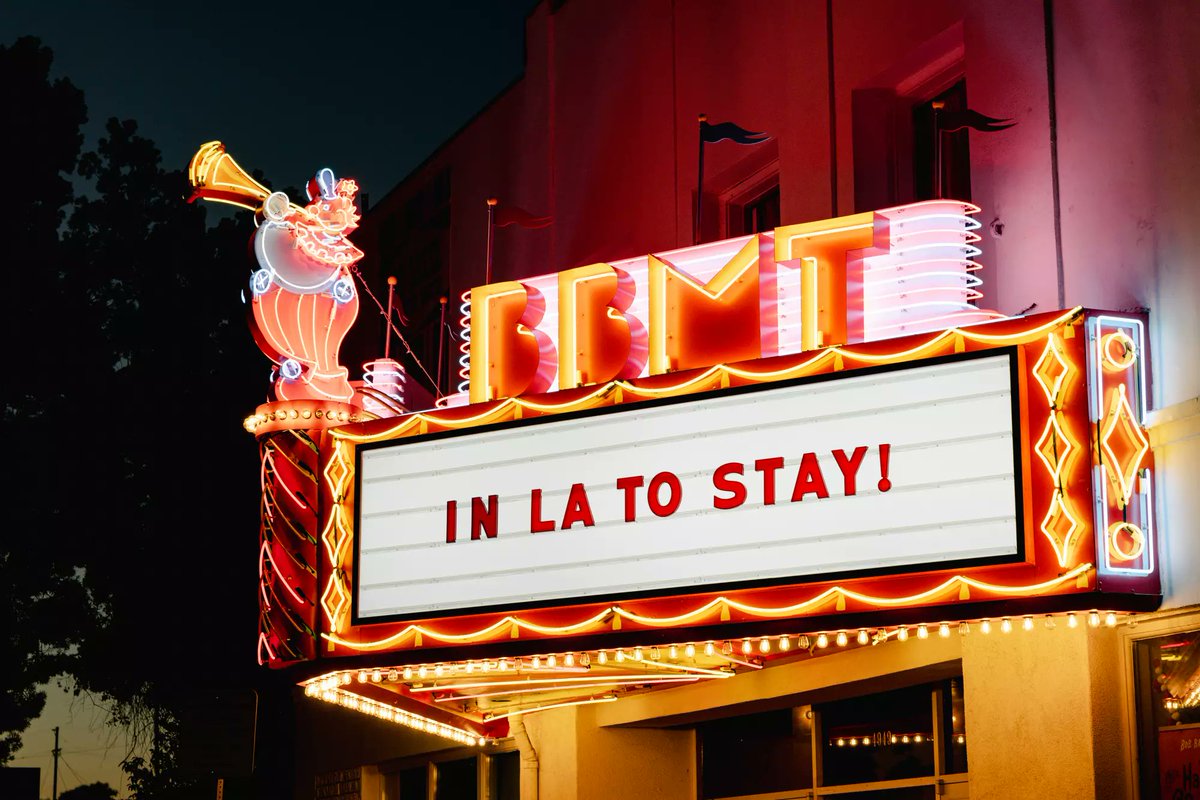
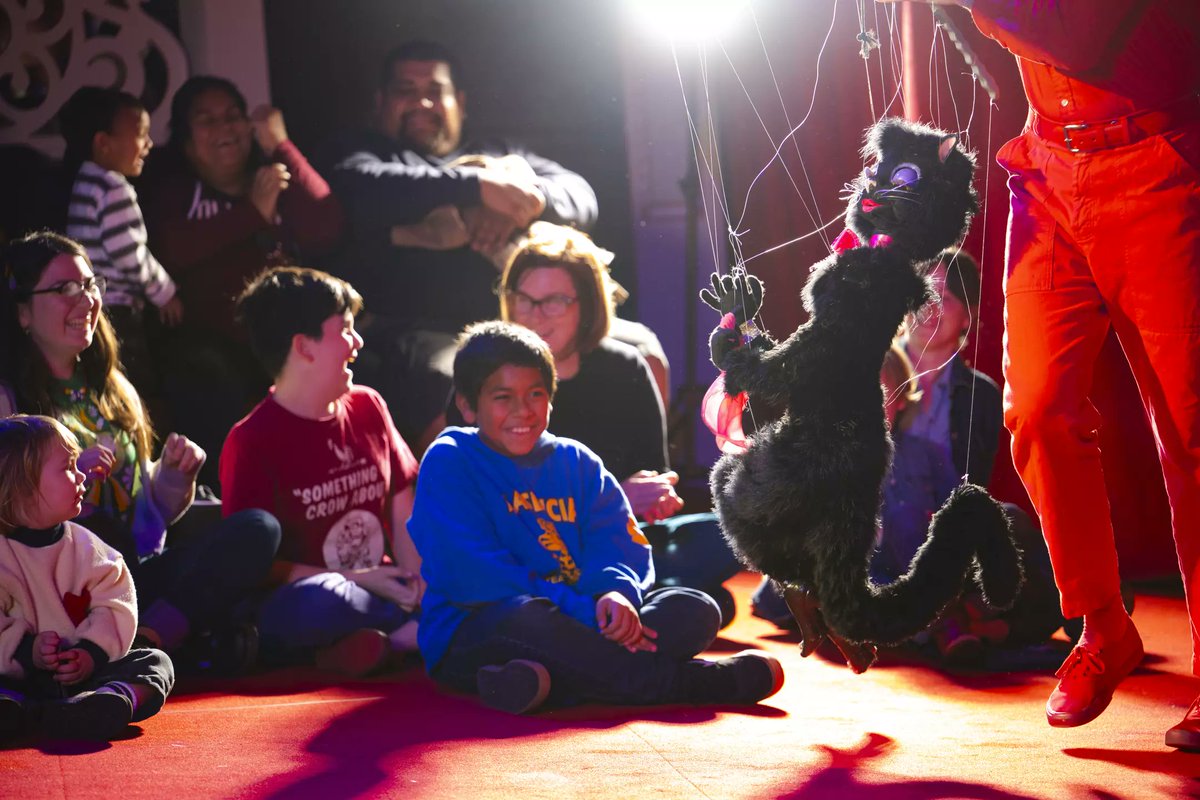
The Bob Baker Marionette Theater is going to buy the Highland Park building they've been leasing since 2019.
To combat the current landlord's rent increases the operation is in the home stretch of buying the former York Theater outright.
Per @ToddMartens:
"Bob Baker over the last year has raised $4.5 million of the $5 million purchase price. It is seeking $500,000 to close the gap as well as an additional $2 million for what it describes as critical renovations, such as repairing the building’s roof and restrooms."
https://t.co/7NKNzdNdJZ
BREAKING: China's autonomous "killer robots" are on track to serve its military on the battlefield within two years, setting a course for a new age of AI-powered warfare which one expert called "the greatest danger to the survival of humankind."
Remote forms of warfare, from drones to cyberattacks, have played an increasingly central role in this century's theatres of war. Control of the skies with unmanned aerial vehicles has been critical issue in the ongoing war in Ukraine, and last week, the U.S. Department of Defense unveiled a fresh $1 billion investment to upgrade its drone fleet.
Several major powers have taken this development a step further, and begun to develop fully autonomous, AI-powered "killer robots" to replace their soldiers on the battlefield.
"I would be surprised if we don't see autonomous machines coming out of China within two years," Francis Tusa, a leading defence analyst, told National Security News. He added that China was developing new AI-powered ships, submarines, and aircraft at a "dizzying rate."
"They are moving four or five times faster than the States," he warned.
China and Russia are already reported to have collaborated on the development of AI-powered autonomous weaponry. Per Newsweek
Here’s why so much of today’s entertainment feels mediocre.
For most of Hollywood’s Golden Age, the major studios owned the theaters. That system ended in 1948 with the Supreme Court’s decision in United States v. Paramount Pictures. The Paramount Decrees forced the Big Five studios to divest their theater chains and banned practices like block booking. The result? Studios no longer had a guaranteed screen for every film they made. If a movie was bad, theater owners simply wouldn’t book it. Survival required quality—studios had to compete on merit.
The same logic held through the home-video and television eras. Studios made the discs, but they didn’t own Target, Best Buy, or Blockbuster. Networks made shows, but every program lived or died by Nielsen ratings and advertiser dollars. There was friction, transparency, and real risk.
Then streaming arrived.
In 2020, a federal judge officially terminated the Paramount Decrees, declaring them obsolete in a world dominated by Netflix, Disney+, Amazon Prime, and the rest. The irony is brutal: streaming has recreated vertical integration on steroids. The same companies now control production and the only theaters that matter—their own apps. Unlike the old studio-owned cinema chains, these platforms don’t have to disclose viewership numbers because the business model is subscription-based, not per-ticket or ad-supported. Metrics are secret. Accountability is gone.
Because every subscriber dollar flows into the same corporate pool regardless of what is watched, the streamers have zero financial incentive to pay market rates—or any real money at all—for outside independent films and series. Why license an indie movie for $10–20 million when you can spend that and more on an in-house project that keeps 100 % of the upside, strengthens your IP library, and is guaranteed top-of-app promotion? Independents are now forced to sell their work for flat, often insultingly low fees (or give it away entirely for “exposure”) because the platform already has a full slate of self-produced content it will always prioritize. The gate is not just closed, the gatekeeper owns the only road.
With no obligation to report performance, studios face zero external pressure to justify budgets. They can greenlight endless in-house projects that are guaranteed distribution, while acquiring outside films or series for pennies on the dollar—if they bother at all. Independent producers are left begging for scraps or shut out entirely.
This is monopoly power the 1948 Court never imagined: total control of both creation and exhibition, insulated from market feedback. When studios and theaters were forcibly separated, independent cinema flourished because talent and good ideas could still find an audience. Today a handful of tech-entertainment giants own the entire pipeline in a way even the old moguls couldn’t dream off.
Monopolies aren't capitalist. We prevent them to open real competition, innovation, quality, and the occasional movie that wasn't filtered through a Teslabot in Netflix's HR wearing an Apple Vision Pro.
A small-town attorney takes on pharmaceutical giants as opioids devastate his community in a new episode of POV tonight at 10pm on CET, the station livestream, or the PBS App: https://t.co/Nk1NekmwlE #pbs#pov#localpbs#opiods#opiodcrisis
@lollasta I created all the custom graphics for the movie, and the Devito logo for his pool man company was my fav.
An early career highlight for me was animating it in AE and watching it play on the Jumbotron at CLE baseball stadium. 😎
@lollasta I was so low on the food chain I have no idea. But - It was the Wild West of indie movies. Attach a couple stars and get a few million to greenlight it.
🤷🏻♂️