Remarkable study showing that in community-recruited, sedentary, at-risk, older adults with cardiovascular risk (i.e., the exact patients we want to reach with screening!) -- AD biomarkers were *not* associated with cognition
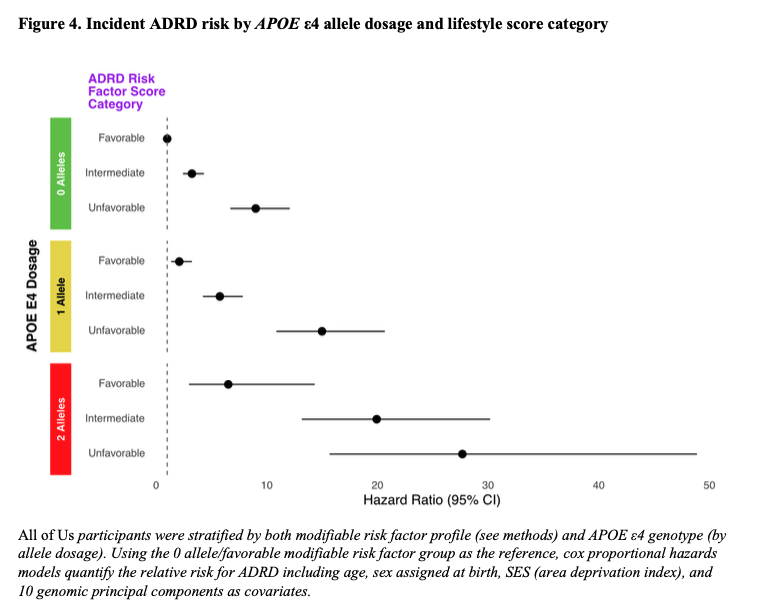
Interestingly, this was not really true when looking at APOE E4 allele dosage. In individuals with two copies of the E4 allele, even a favorable modifiable risk factor score carried a 5x increased risk for ADRD
‼️Our new preprint is out today on MedRxiv!
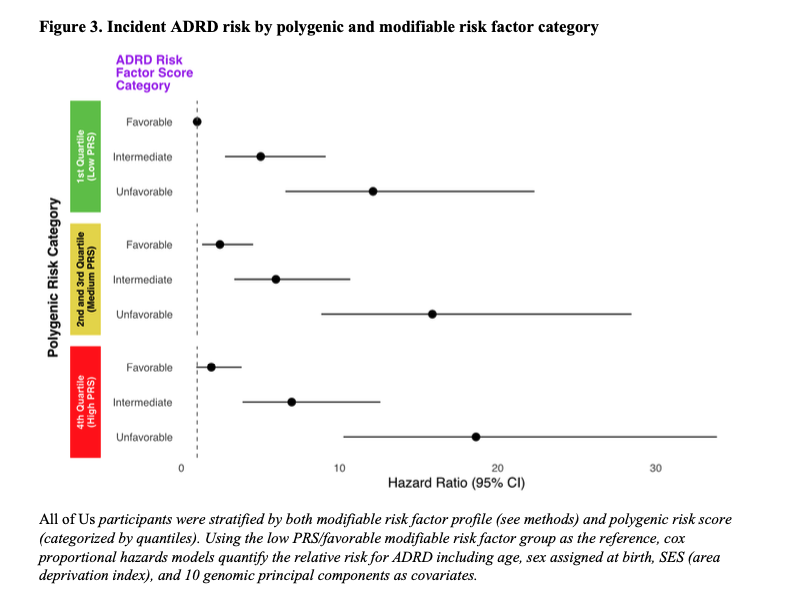
"A Favorable Modifiable Risk Factor Profile Mitigates Polygenic Risk for Alzheimers Disease and Related Dementia" (1/n)
https://t.co/iYslWq5nS1
However, when we put the data together, we found that a more favorable modifiable risk factor profile completely mitigated ADRD risk regardless of polygenic risk score:
Tl:dr version: giving MDs financial bonuses for controlling their patients’ blood pressure paradoxically worsened blood pressure treatment because incentivized doctors were more likely to re-measure elevated BP until “normal” (rather than treat), resulting in many more strokes.
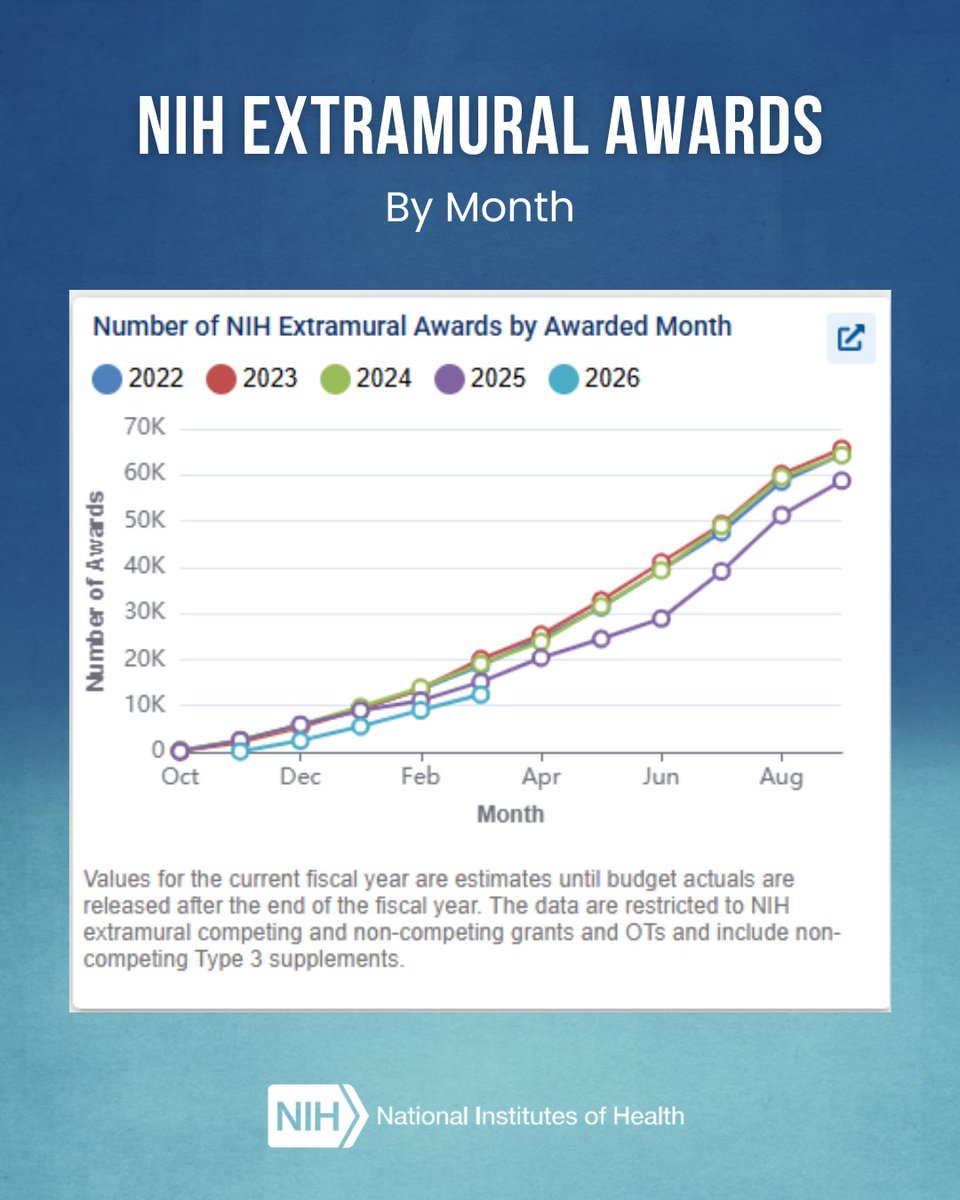
Earnest question: what is the difference between these 2 graphs?
One is from reporting from the Washington Post and one is from the NIH. They have completely different Y axes and tell 2 very different stories
Depends on which kind of statistics you’re talking about. Looking at all the mAb amyloid drugs establishes a Bayesian prior. If the first 19 studies failed and then 1 works, how much should I believe it? Look at the new in the context of the old
This new analysis of Alzheimer's drugs is such a good example of why we can't make any headway as a society.
There is probably a good debate to be had on whether the risks and costs of the two approved beta amyloid drugs, Leqembi and Kisunla, are justified by their benefits.
This is not that. The @cochranecollab authors took the data from the 15 Alzheimer's drugs that failed in clinical trials but had the same basic medicine (antibodies against beta amyloid) as the two that succeeded and lumped them all together.
You don't need statistics to know how silly this is. If you lumped the two fastest sprinters in the world with 15 people who never qualified for a race you'd conclude all people are slow.
Having good debates requires both sides to put forward a thoughtful argument that takes into account the view of the other side. This is not that.
$LLY. And seriously, @ProfRobHoward, how is this wellconstructured?
This is an impressive study but not for the reasons most are discussing about.
This is a beautiful example of a pharmacogenomics study.
- A GWAS of drug response in individuals taking GLP1R agonists reveals a strong signal emerging from the very target of the drug itself--GLP1R
- A GWAS of drug response in those taking GLP1R + GIPR agonists reveal second signal in GIPR!
- A GWAS of drug adverse effects (nausea and vomiting) reveal a super strong signal near GLP1R
Some might say that these are expected, but that's not true. You don't often see such clear findings pinpointing the molecular target of the drug.
These findings validate the mechanism of action of the drug's main effect (weight loss) and adverse effects (nausea and vomiting). And importantly make the case of genetics as a valuable tool to understand molecular targets of drugs. Imagine doing this study when knowing nothing about the mechanism of the drug (that'd be groundbreaking)
This also stands as a proof of concept for continuing pharmacogenomic studies to understand other genes and pathways involved in GLP1R agonists effects.
Then there's a question about how useful this finding is for treating patients, which, as many pointed out, is not that useful. It's a common variant with a tiny effect size, which becomes irrelevant when compared to the main effect of the drug on weight loss. Knowing whether you have this variant has no use; you'll lose weight no matter whether you are a carrier or not.
In future work, it'll be interesting to see how carriers of loss of function variants in GLP1R experience weight loss, particularly the knockouts (if those exist)
Then there is one other perspective that makes this study extremely interesting. I've discussed this previously (https://t.co/Ei6hpa6UHS)
Despite the extraordinary effect GLP1R agonists have on weight loss, there is minimal genetic evidence linking GLP1R gene and obesity. If you try hard, you might find GWAS signals near GLP1R for BMI or related traits, but none of them are convincing. There are are no rare variant signals linking GLP1R with BMI. In other words, just genetics alone could have never ever led to the development of the miracle obesity drug that is GLP1R agonist.
This disconnect between genetics and drug effect highlights a bottleneck of using genetics for drug discovery.
Many of the drugs today act by inhibiting proteins or their gene expression in which case modeling them using genetics is easy. Individuals carrying homozygous loss of function variants serve as natural experiments to predict the maximal efficacy one can achieve by inhibiting the protein.
On the other side, the using genetics to model drugs that activate proteins is tricky. There is no limit to how much you can agonize a protein pharmacologically, but modeling such supraphysiological activation using genetics is difficult as genetic variants leading to such extreme activation are non-existent or extremely rare.
GLP1 is perfect example. Physiological levels and half life of GLP1 is extremely low. But GLP1 analogues are designed to extremely high levels (1000x) and high half life (hrs to days vs minutes). Naturally occurring variations in GLP1 receptors cannot mimic that level of activation, hence we don't we see genetic variations in GLP1R with dramatic effects on BMI.
However, GLP1R genetic variations start to express once the physiological limits of GLP1 concentrations are exceeded, which is what we see in the current pharmacogenomic study. The missense variant that the authors identify seem to have no association with BMI but it has strong association with weight loss, nausea and vomiting that humans experience in response to GLP1R agonists. That's a beautiful illustration of GxE interaction where G expresses in the right environment.
Hopefully, there will be more such studies in larger sample size will happen soon, which will reveal even more interesting genes and pathways that GLP1 touches in our body.
StratGWAS is our new tool for more efficient GWAS of heterogeneous diseases. Instead of treating cases equal, it weights them based on relevant phenotypic information such as medication use, age of onset or recruitment strategy. Full details on MedrXIv https://t.co/J6ANjdmztL.
You might have heard the claim that human genetic evidence increases drug success rate by 2-3 times.
I did a deep dive into the paper making the claim, discussing the nuances of using human genetic insights in drug development.
This is sad. I know as a politician these companies are going to spend a billion dollars against me for saying it but 🤷🏽♀️
Pervasive gambling is not good for society. It turns life into a casino, traps people in addiction & debt, surges domestic violence, and fosters manipulation.
La Sombrita
- $300k development cost
- little shade
- no weather protection
The Bus Bus Stop
- $25k development cost
- tons of shade
- snow, wind, rain protection
- 100% recycled material
OMB has still not released funds to the NIH as mandated by congress! This is just crazy stupid. What’s their end game?! @PattyMurray what is the senate doing about this?
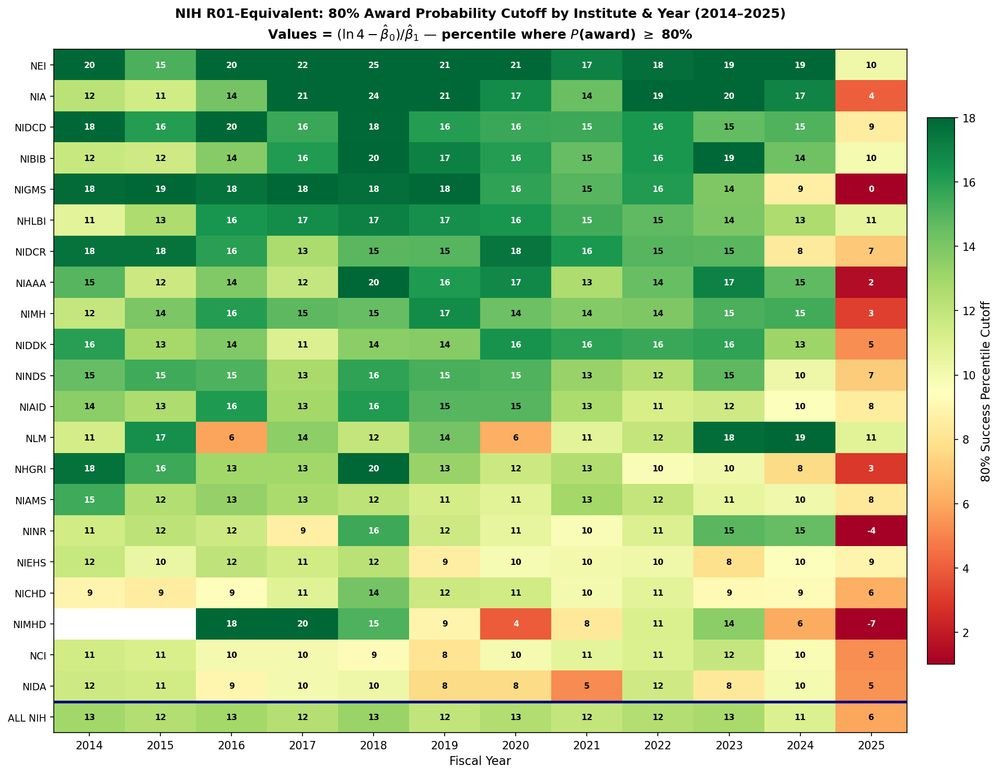
Here is the "effective payline" for each institute, estimated (by Claude) as the percentile where one can expect 80% probability of funding from a logistic regression fit. The effective payline has gone from a historic ~12% to 6% in 2025.