This week on @ClickHereShow's radio show: "Reverse Engineering Us"
AI used to help us understand the world. Now, it’s learning to understand… us. Not just what we click or buy— but how we think. What we want. Even what we feel.
Three stories about machines that don’t just analyze reality… they hold up a mirror. And what that reflection reveals— about power, perception… and who we become when technology starts to see us clearly. #AI #tech #science
LISTEN: https://t.co/50VwJGdnPe
(@prx@TheRecord_Media@RecordedFuture@NPRDina)
In the 1930s, the Rural Electrification Act transformed America by proving that access to power was a prerequisite for modern life. Today, we are at a similar crossroads with the digital divide.
In the latest episode of @ClickHereShow with Dina Temple-Raston on the @TheRecord_Media, our founder Mahesh Krishnaswamy joins an important conversation on why expanding broadband in rural America has been wicked hard — and insights on how we can bring a more comprehensive approach to empower our communities with true digital equity. It's not about the bits and bytes: it’s about the students, workers, and communities who are reclaiming their economic future.
The episode explores how connectivity can shape individual careers, communities, and entire economic development of societies, from the perspective of a U.S. Coast Guard veteran, elected officials, and "recovering graphic designer", among others. It features the stories of Matthew Rantanen, Gigi Sohn, and their observations on how infrastructure is only as good as the lives it improves.
Tune into the full episode Almost Heaven, No Reception, in rural America here or catch it on select NPR stations this week: https://t.co/0nWQa11z8e
After #Tehran throttled the internet during nationwide protests in 2022, Iranians started preparing a workaround: @Starlink.
Smugglers brought thousands of satellite terminals into the country. So when war began and the regime tried to cut its people off from the rest of the world, they still found a signal.
LISTEN to @ClickHereShow: https://t.co/q7reYmTRHq
#IranWar #cyber #tech @prx
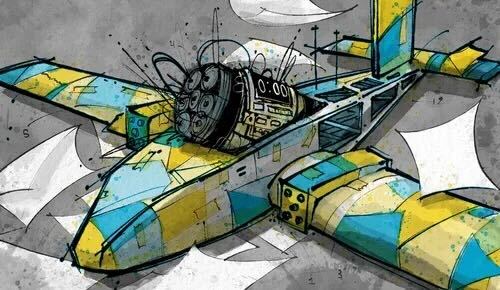
Four years into #Russia’s full-scale invasion of #Ukraine, the war is being fought as much with signal as with shells. An air-defense officer named Zhan describes a sky thick with #drones — while investigators on the ground trace the chips and supply chains that keep them flying.
LISTEN to @ClickHereShow: https://t.co/wANbvZ4P6c
As reports grow that Kim Jong-un’s teenage daughter could soon be formally designated as his successor, we meet the outsiders who watch #NorthKorea when almost no one else can.
In a country closed to inspectors and journalists, open-source “tech detectives” comb through satellite images, videos, and propaganda for tiny clues.
They're trying to piece together what the regime is actually doing as it prepares for what could be a historic handoff of power.
LISTEN to @ClickHereShow: https://t.co/wOS1j8ePlK
(@TheRecord_Media@RecordedFuture@prx)
When the #Trump administration began rounding up #immigrants, a new kind of resistance took shape — digital, crowdsourced and built for the smartphone era. Activists used apps and social media to keep watch on the government. But before long, the government started watching back.
LISTEN:
https://t.co/tFaDlFwi9H
(@RecordedFuture@TheRecord_Media@prx)
This week on @ClickHereShow:
What happens when you cross a marine biologist with a machine-learning engineer? You get someone who thinks humpback whales might be saying something meaningful — and that artificial intelligence could help us finally understand it.
LISTEN: https://t.co/3EIDKyJrxk
(@prx@RecordedFuture@TheRecord_Media@NPRDina)
We're excited to announce that starting this week, @ClickHereShow becomes a weekly hour-long public radio show.
We'll take part of a digital world that’s easy to overlook… and slow it down.
What should we be covering? What questions do you have? You can leave us a voicemail on our toll free line at 661-5-CH-TALK (661-524-8255).
We’ll respond… with a story… with a shout out… maybe we’ll even put it on the air.
https://t.co/YmoxTaUoo2
(@TheRecord_Media@RecordedFuture@NPRDina@prx)
Milo Comerford of @ISDglobal has been studying online #extremism for more than a decade. He’s watched ideologies rise and fall, platforms shift, and tactics mutate. Now, as kids fall into violent online communities with no ideology at all, Milo says we’re overdue for a new playbook.
LISTEN: https://t.co/gvKHcAI7Rf
(@prx@RecordedFuture@TheRecord_Media@NPRDina)
Online, a new strain of extremism is taking root — one that isn’t fueled by ideology so much as impulse, spectacle, and the thrill of causing harm.
This week on @ClickHereShow, we trace how networks like 764 turn chaos into a calling, who gets pulled in, and why the usual tools for fighting extremism keep missing the mark.
LISTEN: https://t.co/hDa0RrI88z
(@NPRDina@TheRecord_Media@RecordedFuture@prx)
#Car theft has changed. No more hot-wiring — just hacking. On @ClickHereShow, we talk with white-hat hacker Kamel Ghali about how our cars became computers on wheels… and why safety hasn’t kept pace with the #tech.
LISTEN: https://t.co/jltT8NMGsT @TheRecord_Media@RecordedFuture@prx
Even the safest automakers can get tripped up by code. On @ClickHereShow, we look at what happened when a #Volvo software update went wrong — and what it reveals about the risks of “move fast and break things” on the open road. #tech#cars
LISTEN: https://t.co/psincZReqZ
(@TheRecord_Media@RecordedFuture@prx@NPRDina)
The Espionage Act was written more than a century ago to stop spies and saboteurs. But over time, its reach has quietly expanded — from enemy agents to insiders, and now, possibly, to the press itself.
@Georgetown Law’s @steve_vladeck tells us how a law built for wartime secrecy could become one of the most powerful tools in Washington’s arsenal.
LISTEN: https://t.co/su2dsDFmJN
In 2017, NSA contractor #RealityWinner shared a five-page classified document with a journalist. Eventually the FBI showed up at her door and she was charged under the Espionage Act.
The episode raised big questions about how journalists handle secrets and how the government punishes those who share them.
This week on @ClickHereShow, we talk to Reality about all that and her new memoir.
LISTEN: https://t.co/bV32KQ2N1J
The latest @ClickHereShow episode connects the grassroots protests outside data centers to the monopolistic businesses practices inside. I appreciated the opportunity to contribute to @NPRDina's thoughtful reporting. https://t.co/eBBFJKJhDh
When Big Tech brought plans for a giant data center to St. Charles, Missouri, the locals fought back.
It raised a question small towns all over the U.S. are asking: What happens when the cloud touches ground?
LISTEN: https://t.co/aZpa4DPIAm
When the #Trump administration began rounding up #immigrants, a new kind of resistance took shape — digital, crowdsourced and built for the smartphone era.
Activists used apps and social media to keep watch on the government. But before long, the government started watching back.
LISTEN: https://t.co/E3lFJo0iQH
Polish developer Kuba Gretzky (@mrgretzky) thought he’d created something to make the internet safer.
He built #Evilginx, a tool that proved even multi-factor authentication — that extra code we all rely on for security— wasn’t as secure as it seemed.
And it worked. Too well. Because soon, #hackers — and even nation-states — started using his code for something else entirely.
LISTEN to @ClickHereShow: https://t.co/NzG0qVeEKA
And more from our interview in @TheRecord_Media: https://t.co/i2n7dIvRAx @RecordedFuture@prx@NPRDina
Polish developer Kuba Gretzky wanted to prove that multi-factor authentication wasn’t foolproof. He succeeded — maybe too well. He speaks with the @ClickHereShow about what happens when a cybersecurity warning becomes the threat itself. https://t.co/98ERiQh2Og
Good morning ☀️
I’m on @ClickHereShow discussing the short life of the #iceblock app
It was a pleasure talking to @TheRecord_Media about protecting my neighbors
🖕🧊😎
https://t.co/Yuazbq1Yb6