🦔Schools across the US are reversing years of technology-first classroom policies after studies show laptop and screen use has either decreased test scores or produced no improvement. Maine adopted one-to-one laptop policies in 2002 and showed no improvement after 15 years.
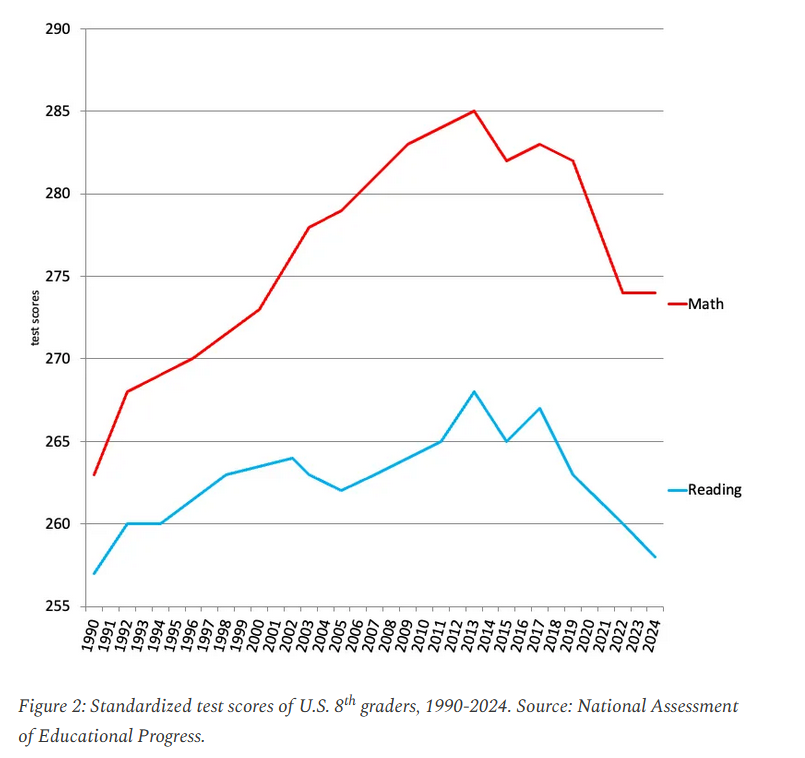
Neuroscientist Jared Cooney Horvath told the Senate that frequent in-class computer use correlates with significantly lower math and science scores across both high and middle income countries, and that Gen Z is the first generation in modern history to score lower than their parents on standardized tests. Schools in Kansas, North Carolina, Michigan and elsewhere are restricting laptop use and returning to pen and paper, with some reporting improvements in reading comprehension within months.
My Take
The data here is hard to argue with. Fifteen years of laptops in Maine classrooms produced no improvement in test scores. Schools that switched back to pen and paper saw reading comprehension improve within months. The technology industry spent billions convincing schools that screens were the future of learning, and the evidence is pointing in the opposite direction.
We're pulling laptops out of elementary classrooms in 2026 at the same moment we're deploying AI into hospitals, courtrooms, and financial systems that depend on humans being able to think critically, catch errors, and exercise judgment. The children who spent their formative years navigating text boxes instead of working through problems on paper are the same people who will be asked to oversee those AI systems in ten years. If the screen-first approach genuinely stunted the development of analytical thinking it was supposed to enhance, we have a compounding problem that goes well beyond test scores.
Hedgie🤗
A new meta-analysis on the impact of goal setting on performance found:
1. Process goals had a large effect on performance
2. Performance goals had a moderate effect
3. Outcome goals had a negligible effect
The biggest predictor of coding ability is Language Aptitude. Not Math.
A study posted in Nature found that numeracy accounts for just 2% of skill variance.
Meanwhile, the neural behaviors associated with language accounted for 70% of skill variance.
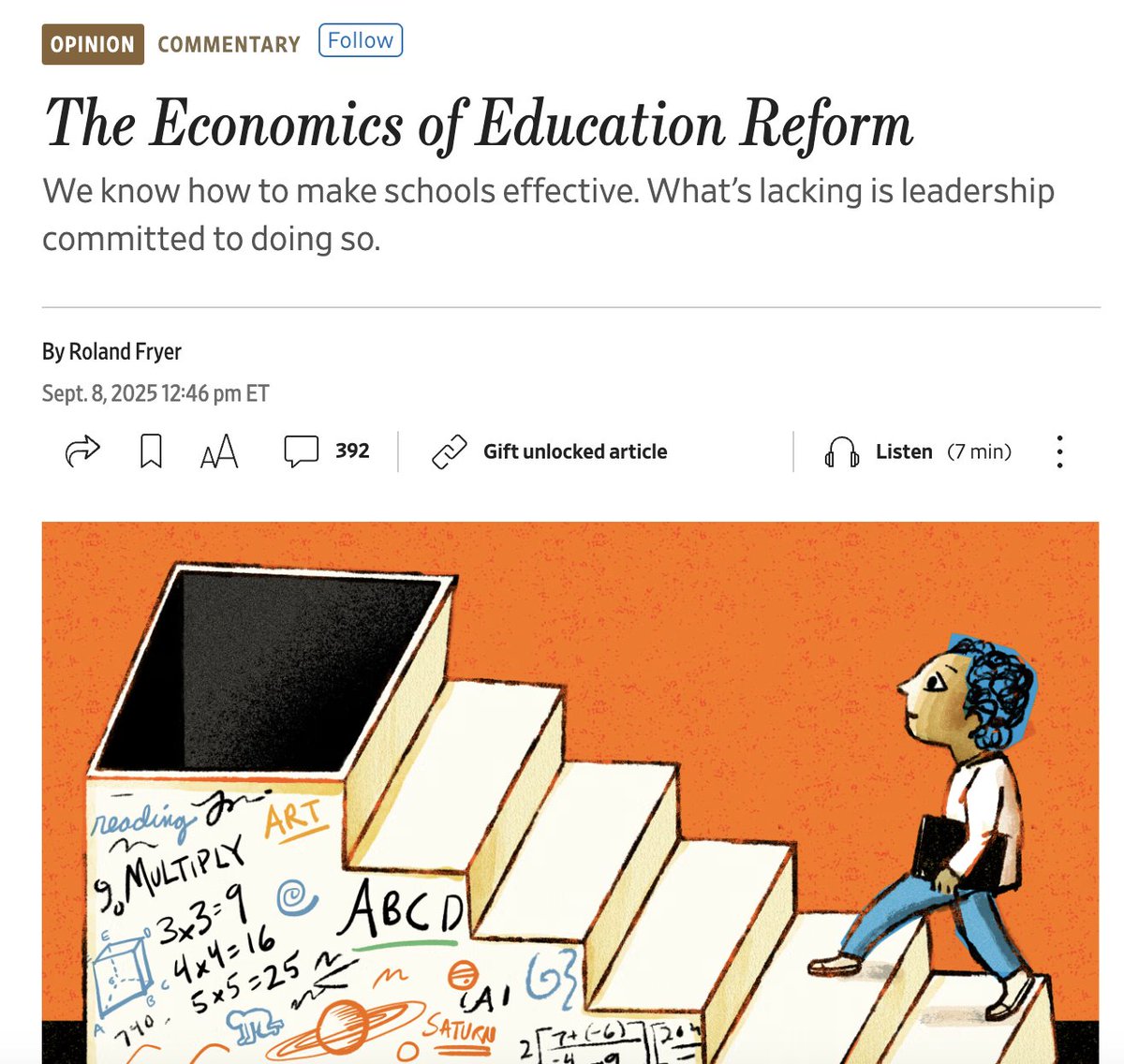
If you read one thing today, make it this by Roland Fryer on education. Link below.
"The tragedy is that we already know what works. High-dosage tutoring, extended learning time, relentless use of data and feedback, and refusing to accept the soft bigotry of low expectations—these aren’t theories. They’re proven."
If K-12 education inequality isn't the top social justice issue in this country, it's got to be at least in the top three. There are so many things we can do to improve the situation, and many don't cost much money. We just need the political will.
Instead, Mississippi did something very boring and very smart: they changed the curriculum. They retrained teachers. That's it: https://t.co/36z4Ei0tmX
Teachers with MA degrees earn $8,200+ more on average, but graduate teacher prep programs provide significantly less math content training than undergraduate programs. In other words, districts aren't getting what they pay for, says @HeatherPeske. https://t.co/FTyFQr6TaF
Not all middle school conflict is "bullying." Writing for @edutopia, leader @Pfagell brings nuance to conversations about supporting students toward social competencies.
https://t.co/XLyFbwTBRa
Shout out to @PrincipalRHMS for hosting me today! Great to see what you all are building at the middle school level. Thank you for your support and mentorship!
It’s here: our yearly review of must-read research. 📊
From the sneaky ways that inattention can spread in your classroom to the promises and perils of AI, here are the studies to know about: https://t.co/hqQxw6wdCe