👋 From now on, ClimaMeter will stop publishing on X and move to https://t.co/YeM7OClf5Q . 🙏Please follow our updates there 🌍! We recognize the importance of equality, diversity, and inclusion as foundation for society & science. These values are currently not supported by X.
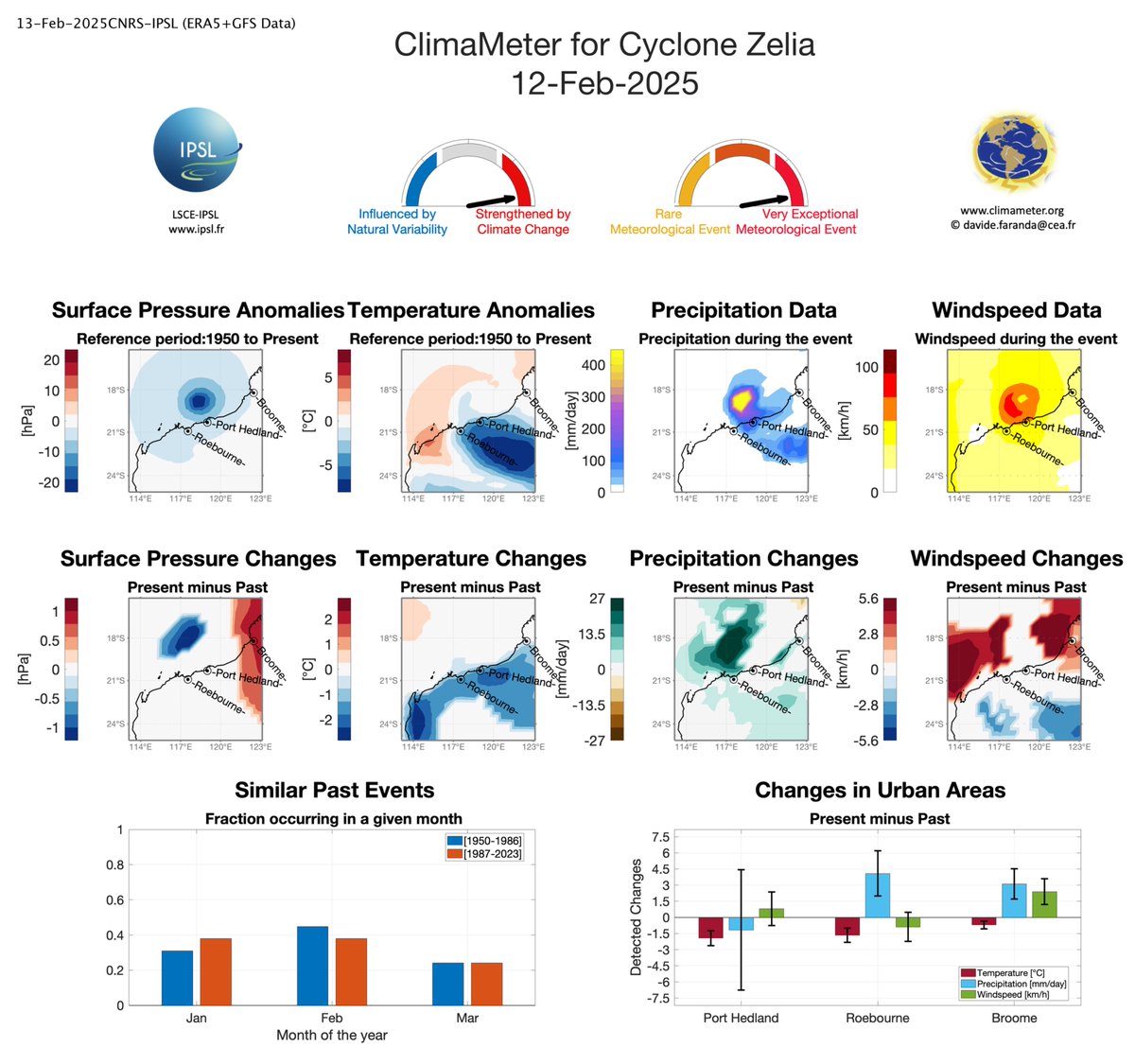
This event was associated with very exceptional meteorological conditions
We ascribe the strengthened wind and heavier precipitation in cyclone Zelia to human driven climate change and natural climate variability likely played a minor role.
#NewReport 🌀Heavy rain and strong winds in cyclone Zelia in Australia strengthened by human-driven climate-change. 🗒️Full study: https://t.co/6CSGYesaDp. Contact Authors: @DaviFaranda (@IPSL_outreach) & Tommaso Alberti (@INGVambiente)
#CycloneZelia
Cyclones similar to Zelia are up -1 hPa deeper, up to 27 mm/day (up to 20%) wetter and up to 5 km/h (up to 10%) windier in the present compared to the past. They lead to colder (up to -2°C) conditions over the Australian Coasts.
This event was associated with exceptional meteorological conditions.
We ascribe the heavier precipitation associated with Queensland floods to human driven climate change and natural climate variability likely played a minor role.
Meteorological conditions similar to that causing #QueenslandFloods are up to 17 mm/day (up to 20%) wetter over the coast of Queensland. Additionally, conditions are up to 5 km/h (up to 20%) windier offshore Queensland and up to 1.5 ºC warmer in the present compared to past
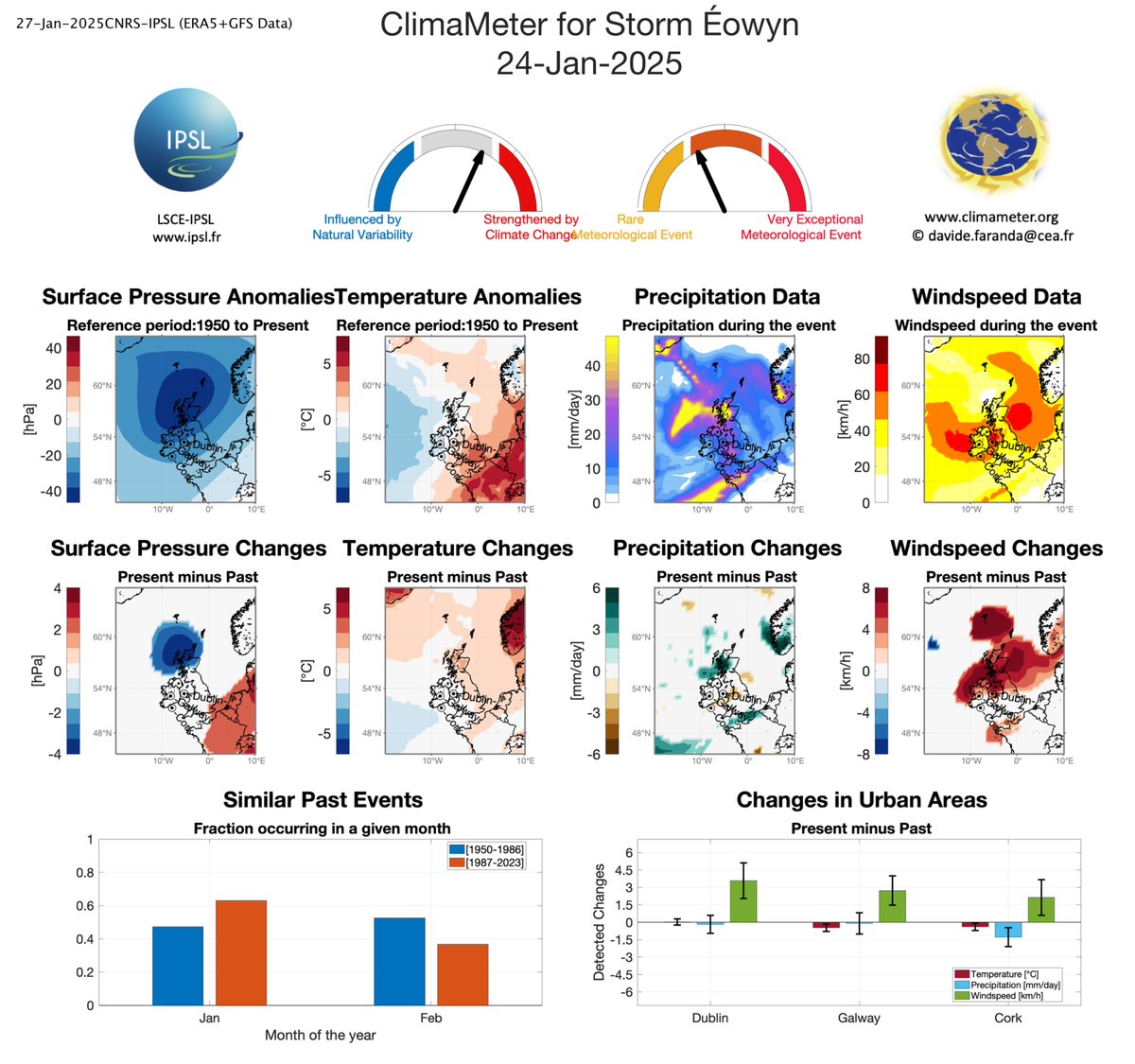
#StormEowyn was driven by very rare meteorological conditions. We mostly ascribe the strengthened wind and higher precipitation of Storm Éowyn to human-driven climate change and natural climate variability likely played a modest role.
#NewReport ☔️💨 Heavy precipitation and strong winds in storm Éowyn mostly strengthened by human-driven climate change. 📊 Full Report https://t.co/4iCOLPq0Zt✍️ @DaviFaranda , @FlavioPons , @mcreal82@mireginesta, Greta Cazzaniga, @ErikaCoppolaE
Storms similar to #StormEowyn are up to 4 hP deeper, up to 8 km/h (10%) windier over the Atlantic coasts of Ireland and France, and up to 6 mm/day (up to 15%) wetter in the present than they would have been in the past.
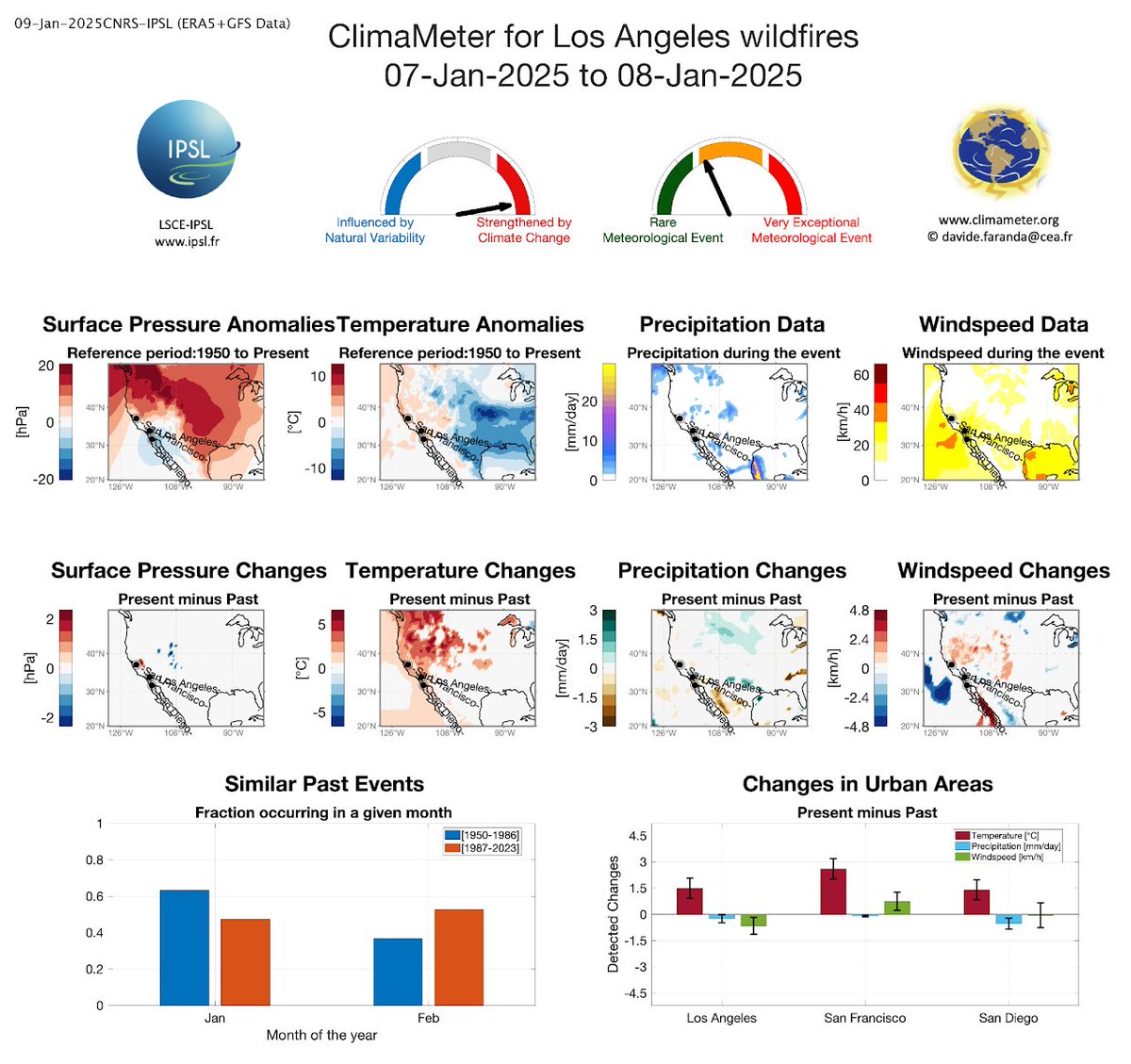
This event was associated with very rare meteorological conditions. We ascribe the strengthened winds, higher temperature, and drier conditions triggering January 2025 California wildfires to human-driven climate change, and natural climate variability likely played a minor role.
Meteorological conditions similar to those triggering January 2025 California wildfires are up 5°C warmer, 3 mm/day (up to 15%) drier, and up to 5 km/h (up to 20%) windier in the present compared to the past, in the area interested by the fires.
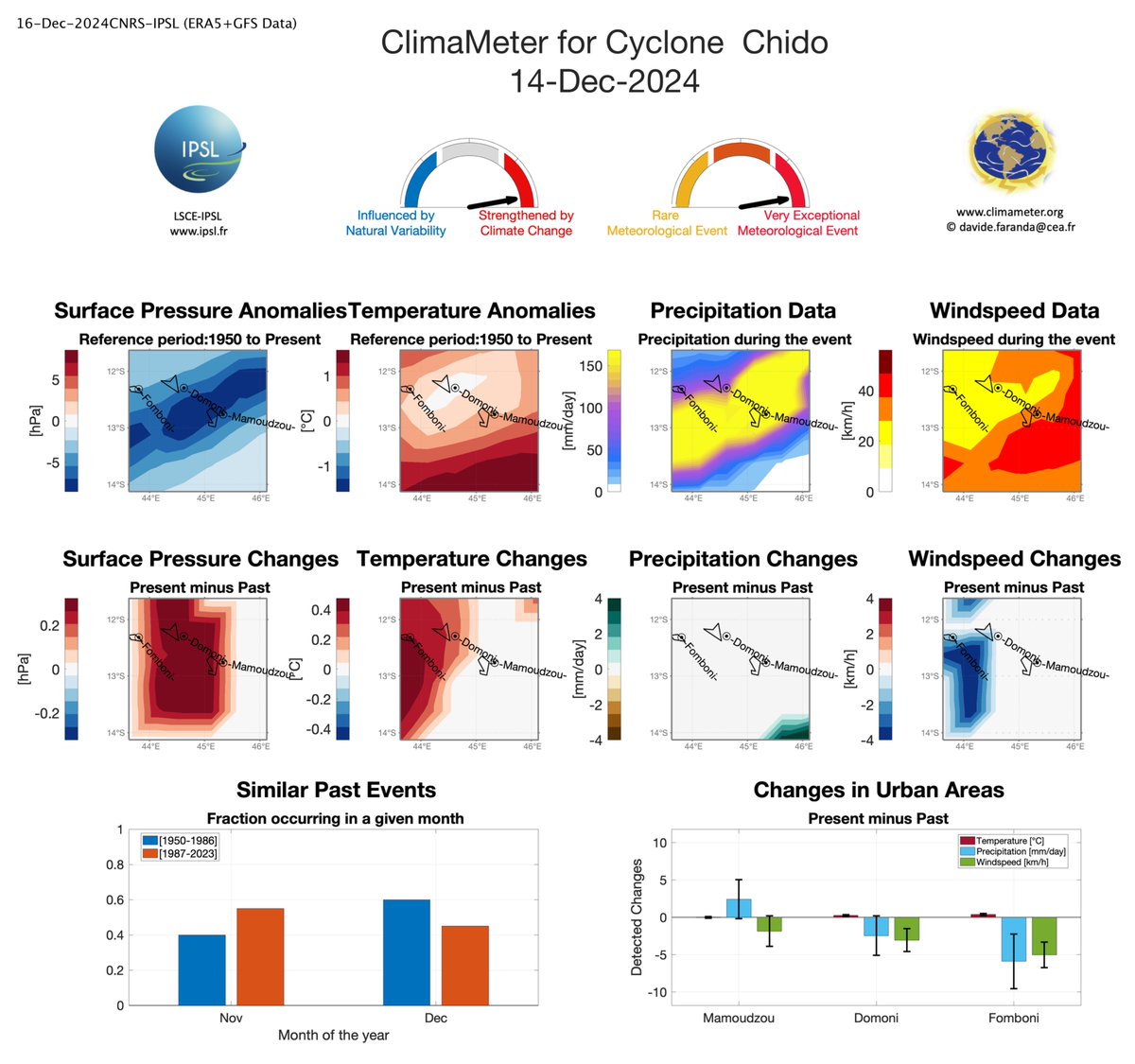
However, with the influence of anthropogenic climate change, the warmer environment (+1.5°C) in which systems similar to #CycloneChido develop can enhance both their intensity and rainfall potential.
#CycloneChido was a very exceptional event in terms of meteorological conditions. Low-pressure systems making landfall in Comoros and Mayotte, such as Cyclone Chido, generally display precipitation and wind patterns similar to past events.
If you are attending #AGU24, don't miss @DaviFaranda invited presentation on ClimaMeter. It will be today, 11 December 2024; in "Detection and Attribution of Anthropogenic Climate Change and Extreme Weather and Climate Events" 16:00 - 17:30 EST, Convention Center, Salon A
This upgrade:
✔️ ensures more robust data retrieval;
✔️ extends our historical period up to 1950, improving the research of analogues;
✔️ makes it possible to perform analysis on the same day an event occurs.
➡️ For more details, visit: https://t.co/2Wu7KXYCBE
🆕 Starting from December 6, 2024, our analyses integrate ERA5 data, providing coverage from 1950 with a latency of approximately 5 days and GFS forecasts, for the most recent days where ERA5 data is not yet available.