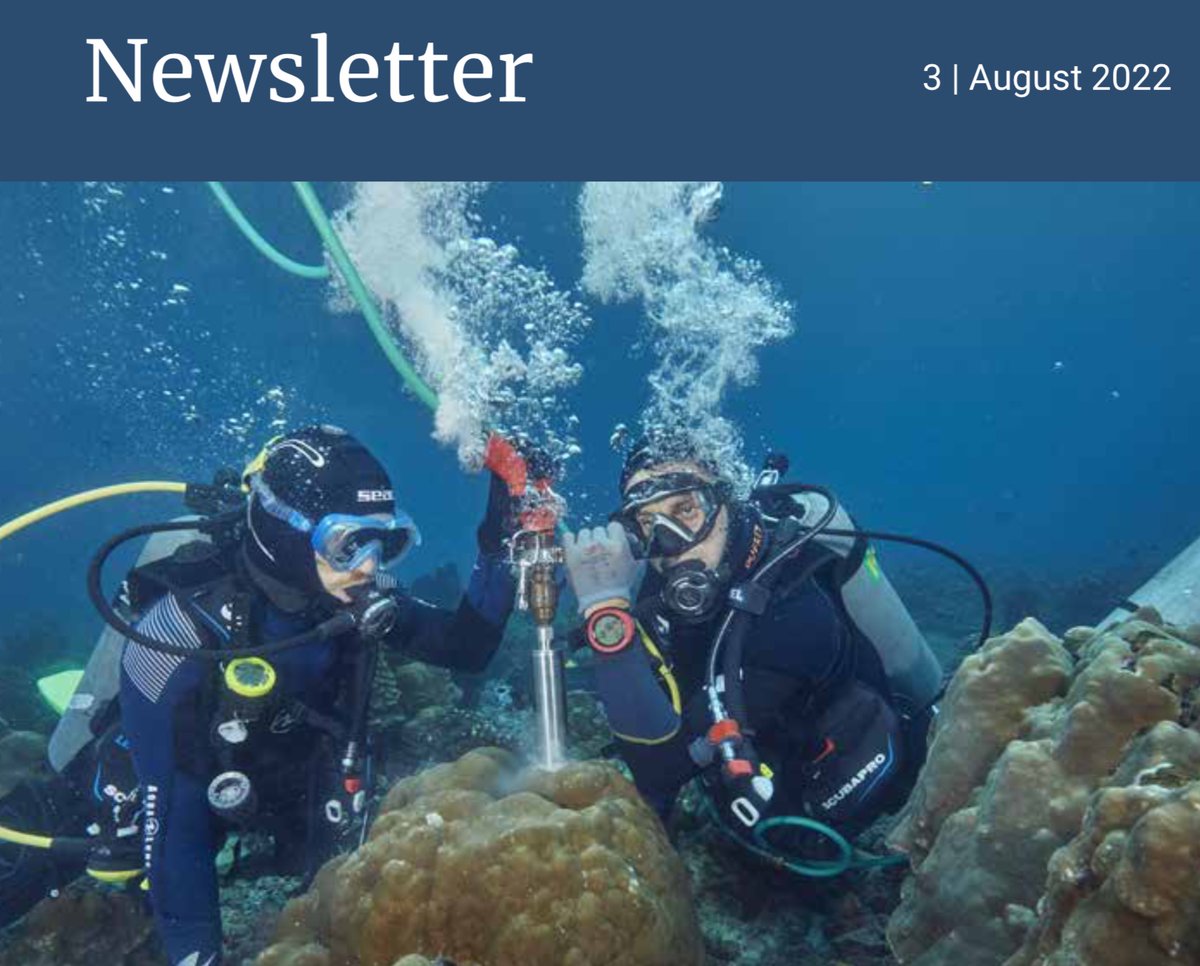
A great summary of what Dr. Nic Duprey and I have been up to for the better part of the last 2 years, along with the S/Y Acadia, @stri_panama, @GalapagosPark@cimarucr, @saveourseas, @UniSeyBERI and many many other collaborators: https://t.co/8DJBhuxUQ9
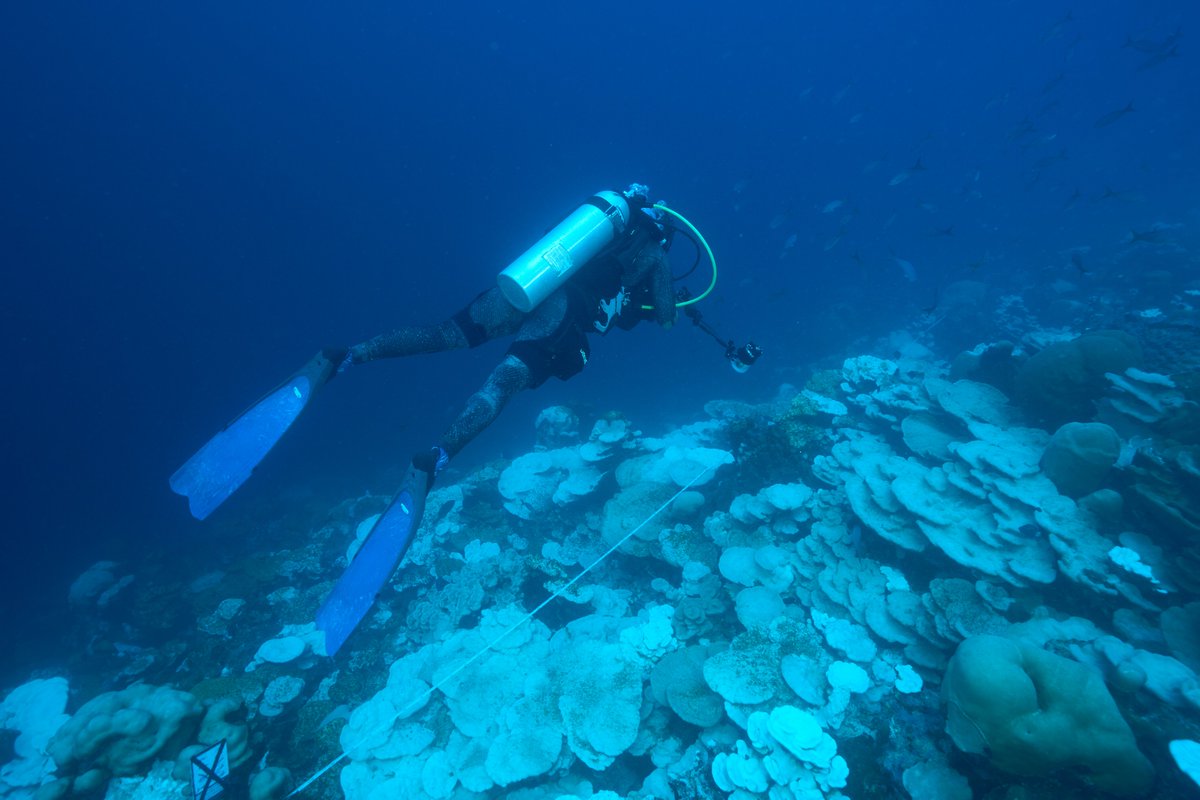
These findings highlight the dual threats that deep coral reefs in the ETP face in the 21st century: the intrusion of warm water (e.g. during a large El Niño) from above and the intrusion of cold water from below (e.g. during a large La Niña)
Check out our newest paper: https://t.co/D9Mpv1ayr3
In 2023, we conducted a field campaign at Clipperton Atoll, a remote atoll in the Eastern Tropical Pacific (ETP). While there we observed a severe cold-bleaching event occurring along the deep reefs (>30m).
Here we link this cold-water bleaching to an anomalously shallow thermocline in the ETP, and demonstrate that oceanography and climate play a significant role in modulating the functionality of Mesophotic Coral Ecosystems in the Eastern Tropical Pacific.
Check out our cool new paper! https://t.co/nLEck6VKRj
Here we show that guano is an important source of N to the reef via groundwater - following its conversion to nitrate - and that we can potentially use its signature in coral skeletons to track bird populations in the past!
Our newest paper is out, which details the work we have been doing over the last 4+ years to improve throughput and consistency across users for the oxidation-denitrifier method, prompted by the rapid increase in applications of this method.
https://t.co/O6pZxSaiCT
@AMG_lab
If you’ve missed it we have had over 50 researchers from our #SPP2299 members and other invited collaborators come together this week in Bremen, Germany to talk about thermal stress indicators in tropical corals. Follow along for updates on the meeting! @dfg_public
Come past the our poster today at #egu2023! We will be talking about all the exciting projects within the programme. You can find us at poster station X3.86 from 10.45-12.30 🪸
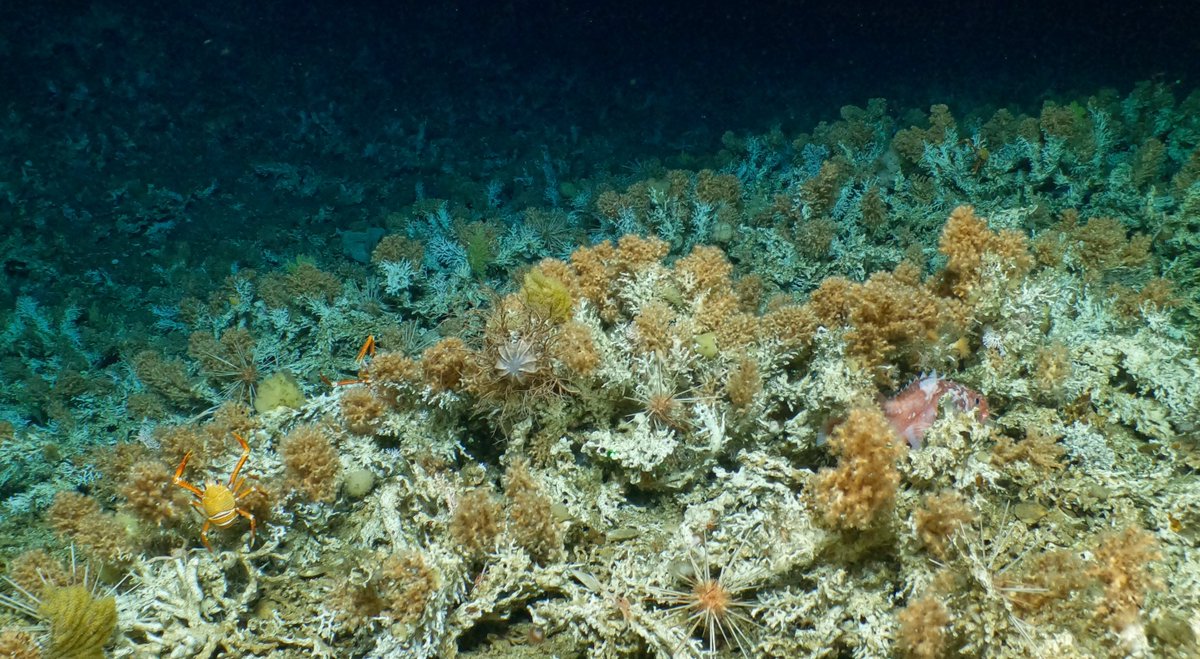
EXCITING DISCOVERY: #GalapagosDeep2023 have found the largest known Galapagos #reef in the #deepsea waters of the platform using #Alvin. And its beautiful 🤩 Unusually high % live coral (Madrepora), as far as the eye can see. Check video out: https://t.co/rDqj13ge3B 1/2
Why are some corals more resilient to climate change than others? Our @stri_panama dives into this question in the latest episode of their podcast, Biodiversa. https://t.co/vpEDT1LKHW
Excited to have been a part of the newest paper from Jen Leichliter and the Lüdecke group:, which you can find here: https://t.co/U3uzoz4LHc
This work shows enamel preserves trophic information, opening up an exciting new avenue of research to better understand past food webs!
The Agulhas Current system is a fascinating place to study local and remote nitrogen cycling!
In our recently published @JGROceans paper, we use nitrate isotopes to their full potential!
https://t.co/UXqiTEefxi
Today marks the departure for Clipperton Atoll, in the remote Eastern Tropical North Pacific aboard the S/Y Acadia! We are traveling there to study the effects of climate change (and in particular the evolution of oxygen deficient zones) on remote coral reefs. Stay tuned!
Hot off the press! A brand new article from the Lüdecke lab, the @AMG_lab, and many collaborators. This paper demonstrates the great potential of tooth enamel, and in particular N isotopes in tooth enamel, as an archive of diet and past climate: https://t.co/gzrdZsksOM
Just got back from a 12 day expedition to the beautiful Revillagigedos national park, where we are studying the coral populations of the islands as part of a collaboration between @MaxPlanckChem, S/Y Acadia, and @stri_panama, @PelayoSalinas, UABCS, and @dpaz_corals
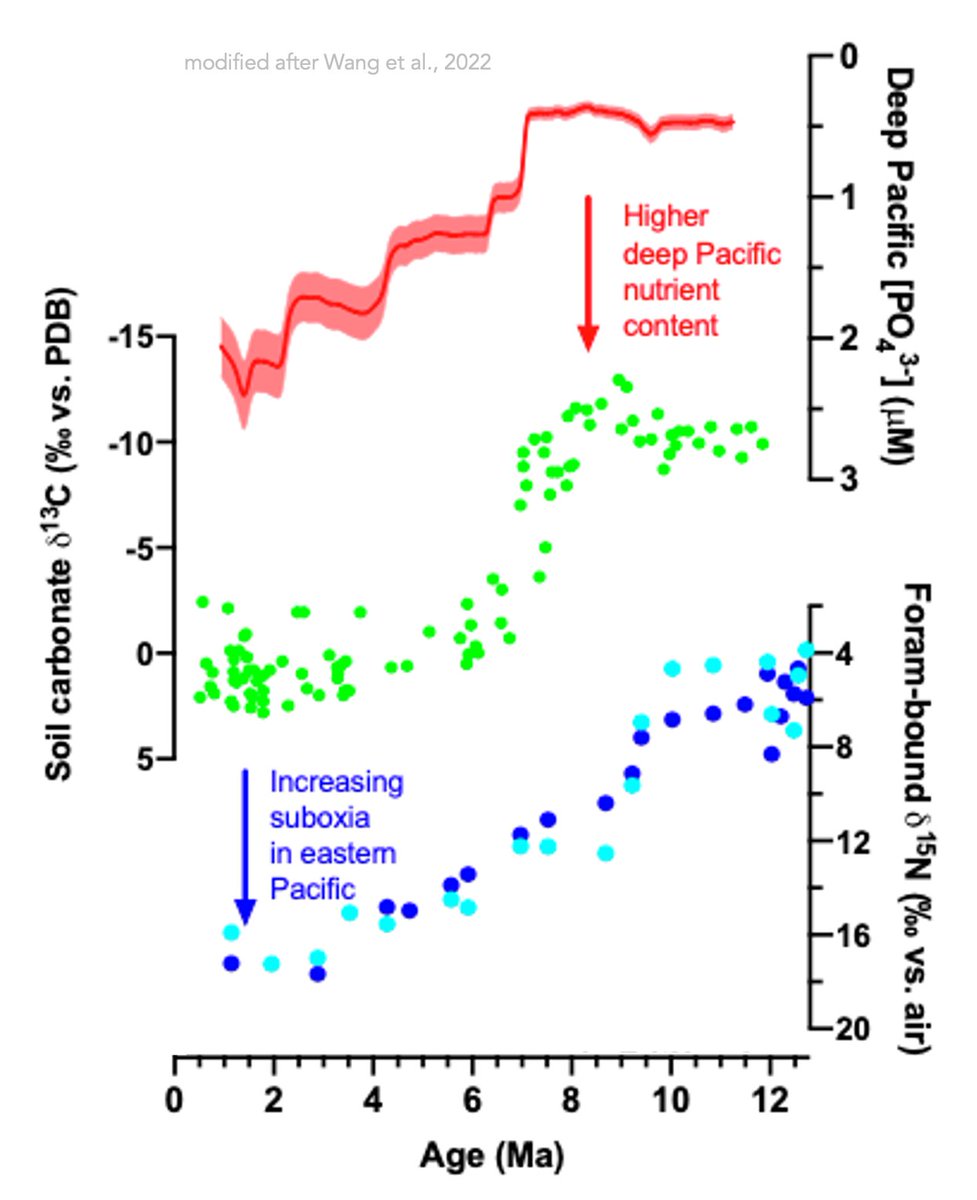
New paper alert! In this study by lead author Tony Wang (together with @AMG_lab, @ChemClimatology, and others) we show the expansion of the Pacific oxygen deficient zones (ODZs) over the last 8 million years using foram-bound nitrogen isotopes in the SE Pacific. (1/3)
I'm lucky to get to collaborate on such exciting stuff! Here you can see ongoing work by the HoMeCo group (Tina, Jen, Sven, and Marisa) in Mozambique. Ultimately nitrogen isotope analyses on fossil teeth have potential to unlock major transitions in fossil food web structure.
Field work @GorongosaPark, Mozambique: Tina Lüdecke, head of the research group Hominin Meat Consumption @MaxPlanckChem, and PhD student Sven Brömme excavate fossils with team members of the Paleo-Primate Project Gorongosa to then analyze stable isotopes of fossil tooth enamel.
Very cool opportunity for citizen science, with work led by @insituphile and @Scripps_Ocean amongst others. Now I just need to get my hands on one for our next expedition to the ETP...
Surfer citizen scientists can totally ride waves and collect information about the ocean with Smartfin, a surfboard attachment. https://t.co/qA4prXVMnD
Check out the newest AMG lab paper here: https://t.co/m8q0ovjMyS
In it we examine how well the organic matter is preserved within the various fossil materials (carbonates, apatite, diatoms) that we measure in our lab. It seems, in short, that they do so quite well. Great news!
A great summary of what Dr. Nic Duprey and I have been up to for the better part of the last 2 years, along with the S/Y Acadia, @stri_panama, @GalapagosPark@cimarucr, @saveourseas, @UniSeyBERI and many many other collaborators: https://t.co/8DJBhuxUQ9