Hello! I'm a math professor with a background in climate science and astrophysics, and I am fascinated by planetary atmospheres, stellar interiors, and the parallels between them. I sometimes still post here, but I have primarily migrated to Blue Sky.
https://t.co/mkXET6u1J7
The Euclid Space Telescope just found a particularly beautiful example of an Einstein ring (a gravitational lensing effect) around the galaxy NGC 6505.
Source: https://t.co/3FNrNvPrxa
If climate change can exacerbate wildfires, why has burn area decreased? According to this modelling study, climate change has contributed a 16% increase in burned area, but this was more than canceled by the 19% decrease due to land-use changes.
https://t.co/cNO3xD5VJL
Looking for a postdoc position, or know someone who is? Interested in cloud feedbacks? @mzelinka and I are recruiting for a project focused on high cloud feedbacks funded through the DOE RGMA program. Feel free to contact us for more information. Please share! https://t.co/IlCVEtd7xO
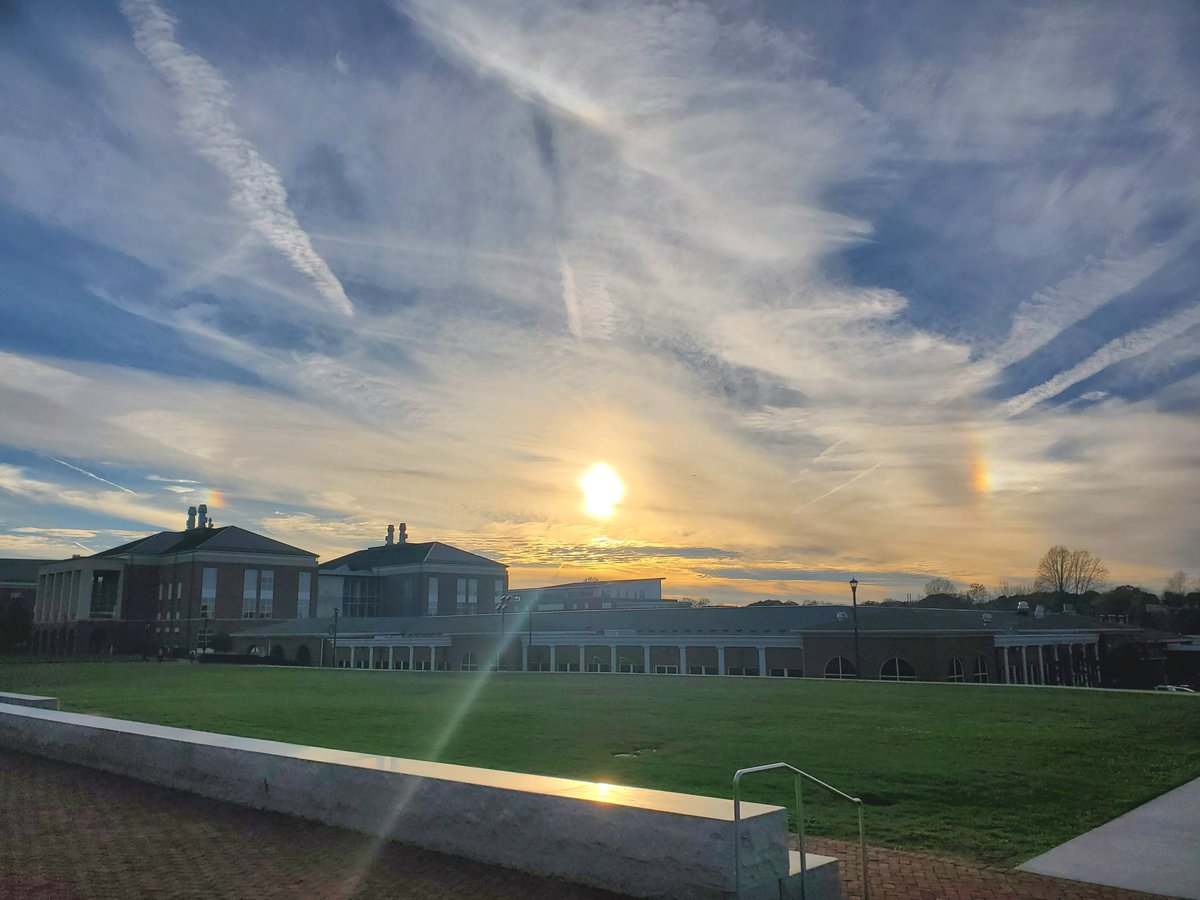
Sundogs and cirrostratus over central Virginia earlier this week. I suspect that many of us in the atmospheric sciences got started because we looked up at something like this and wondered what was going on up there.
...so much of the CO2 stays in the atmosphere long-term and the effect is cumulative.
But this means that it took the total cumulative activity of all of humanity over the last 100+ years to have a relatively modest impact on the way hurricanes work.
Climate change is mostly caused by the slow accumulation of CO2 from industrial activity, energy production, transportation, etc. Eventually, all this new CO2 can and does warm the climate.
CO2 emissions are powerful precisely because...
a G type star. A planet orbiting an M dwarf star (a much more common type) would not have this problem.
M dwarves emit mostly infrared, and ice is not very reflective in infrared, so the ice-albedo feedback is less effective on such planets.
https://t.co/hpcGvvJWUR
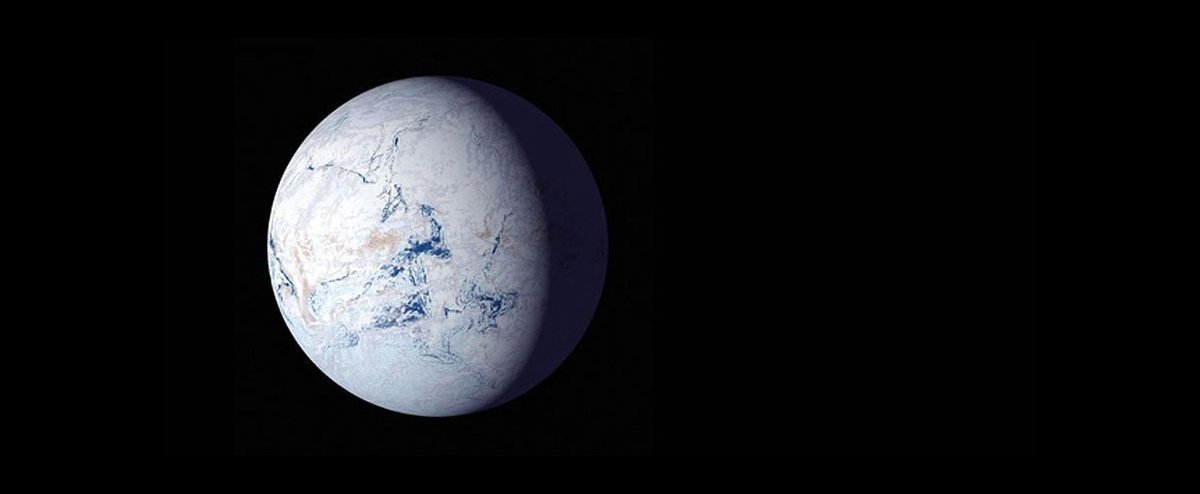
Earth may have a more unstable climate than some planets. Here's why.
On Earth, the ice-albedo feedback allows the climate to swing back and forth between a "snowball Earth" state and the warmer state we see today...
the planet, which then melts even more ice, and locks the climate into a stable warm state.
This switch between "snowball Earth" and "warm Earth" states may have occurred several times in the distant past.
But here's the interesting part: this only works because Earth orbits...