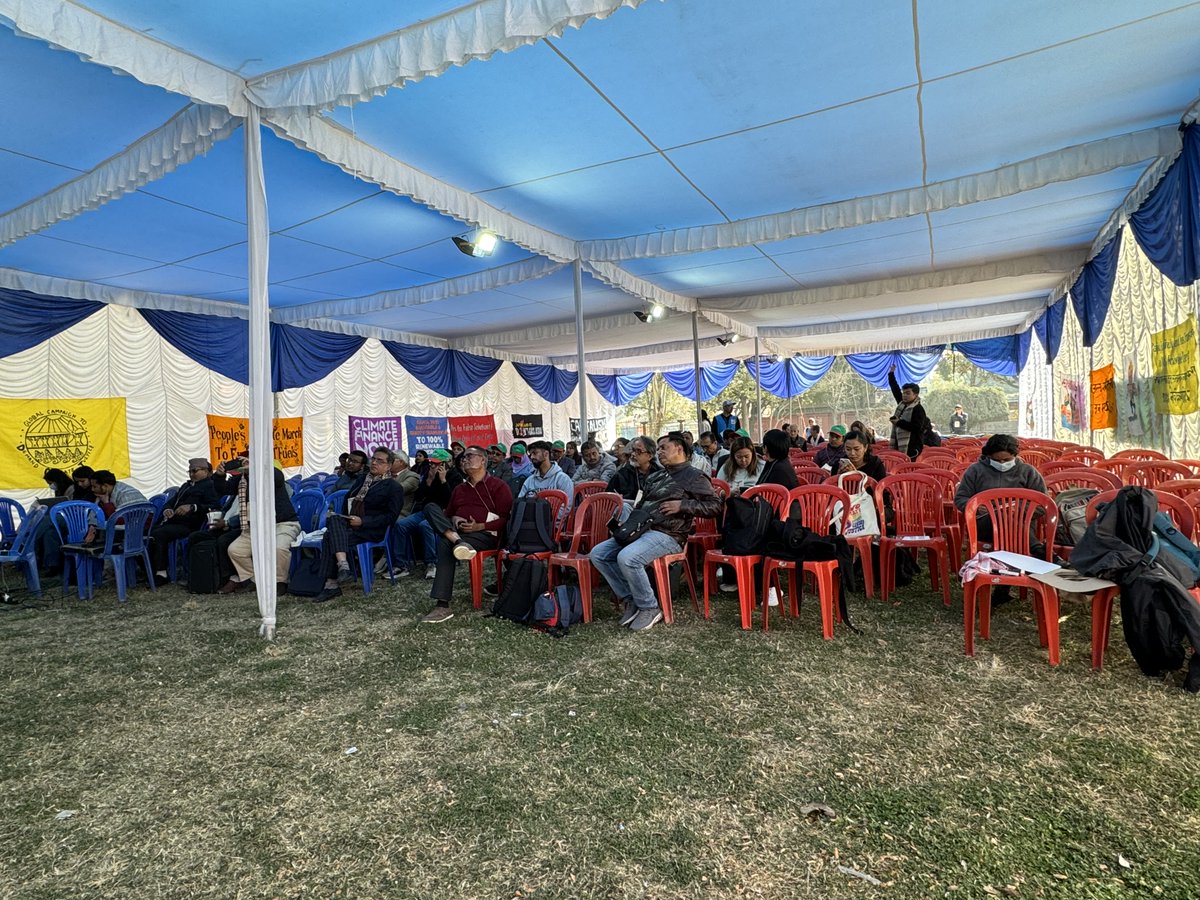
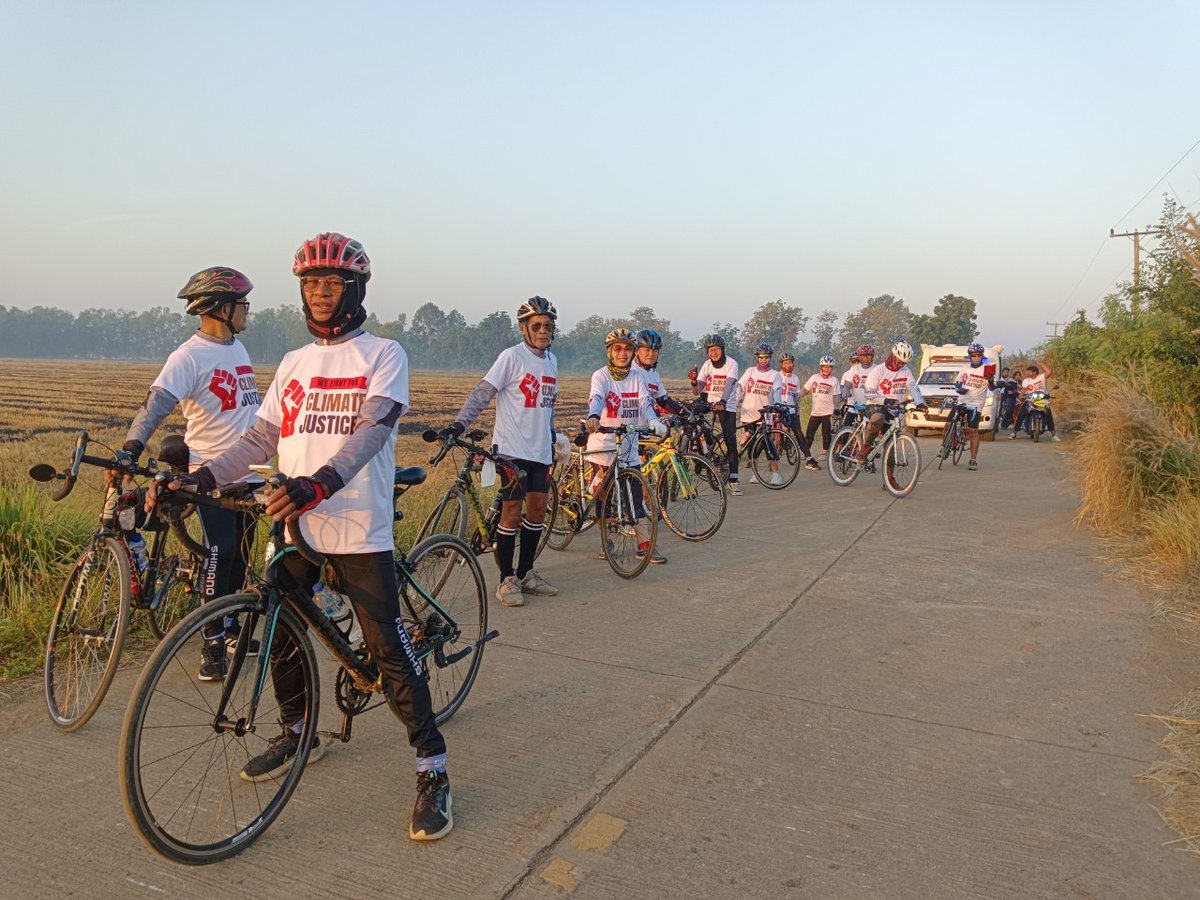
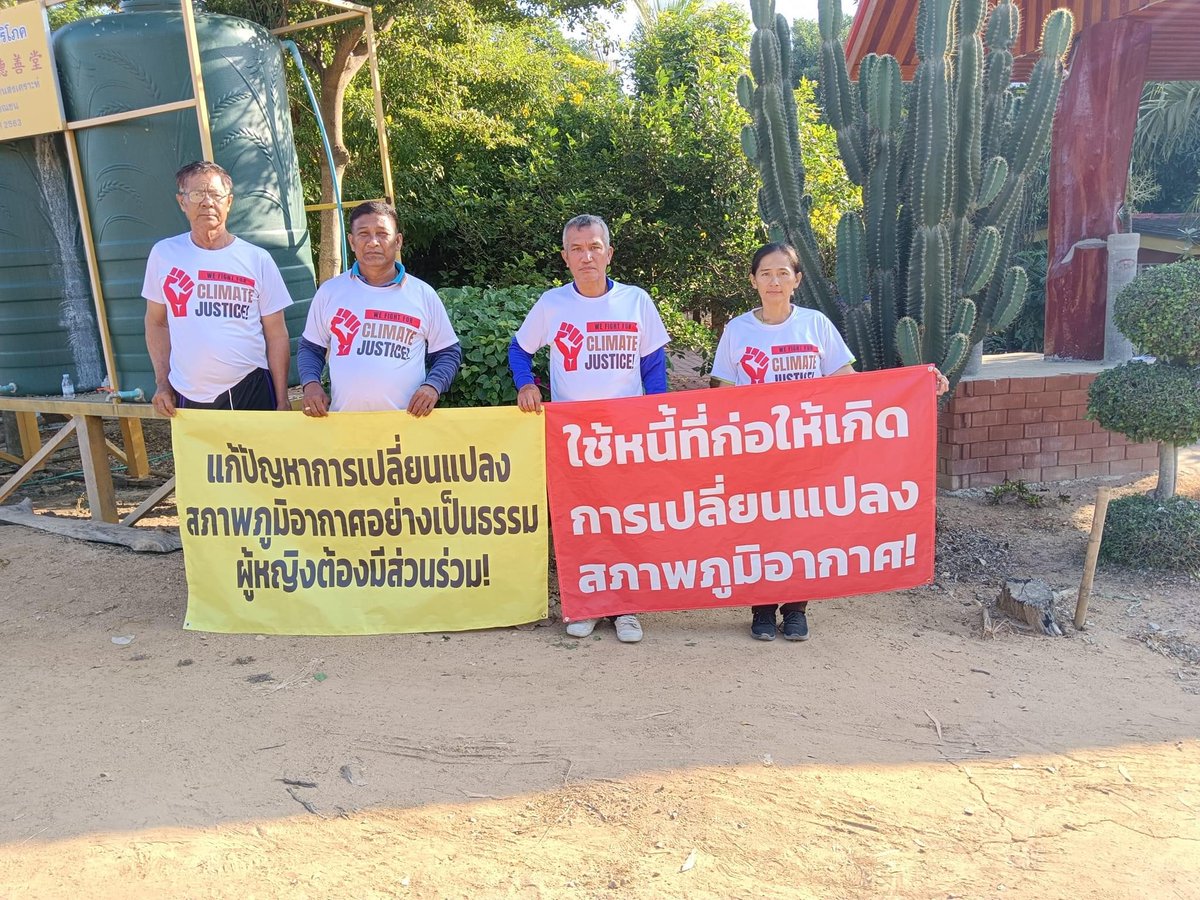
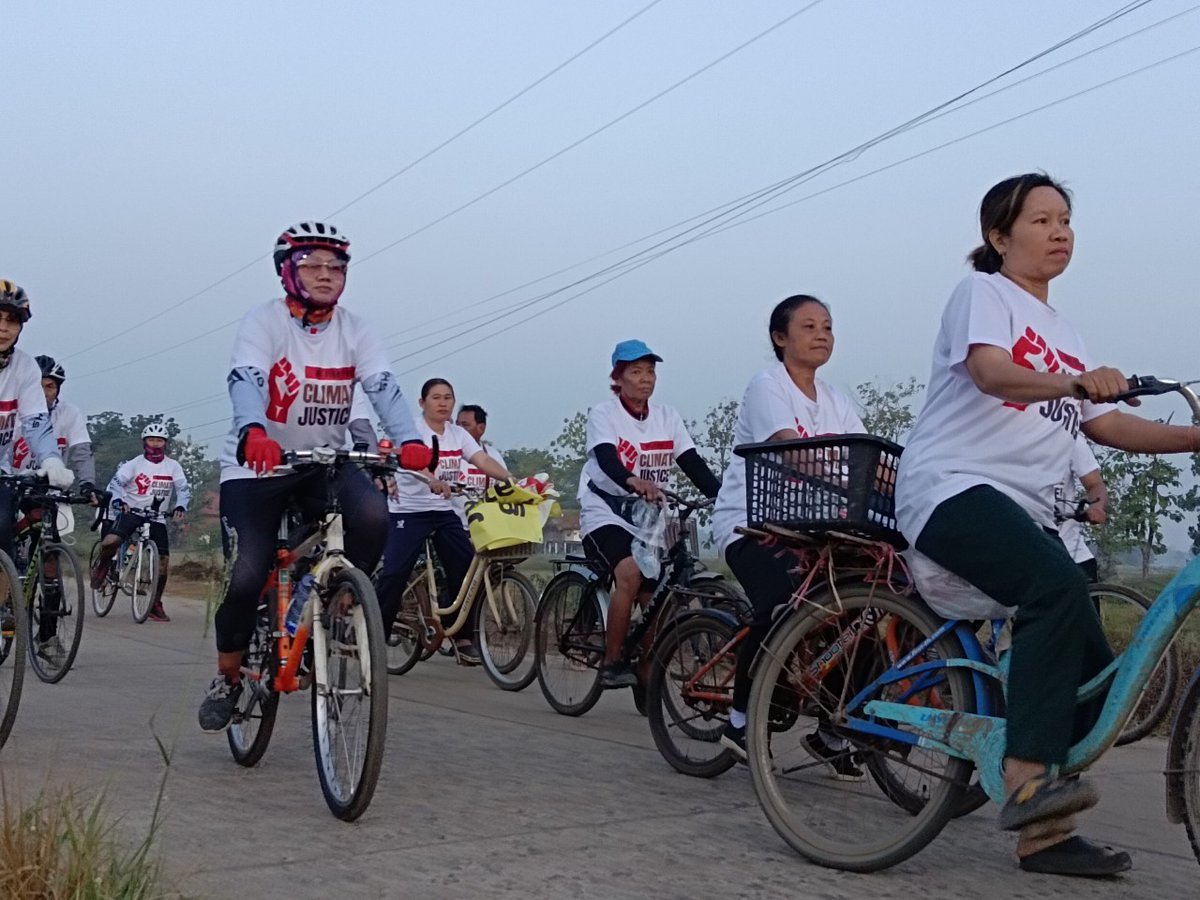
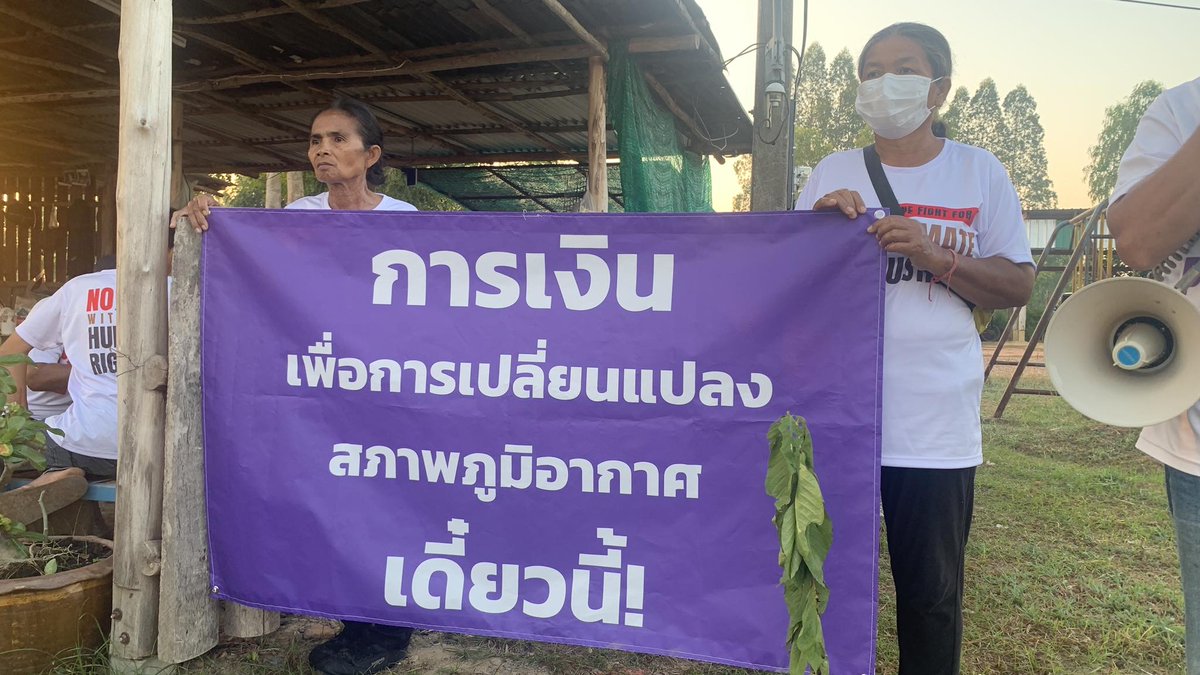
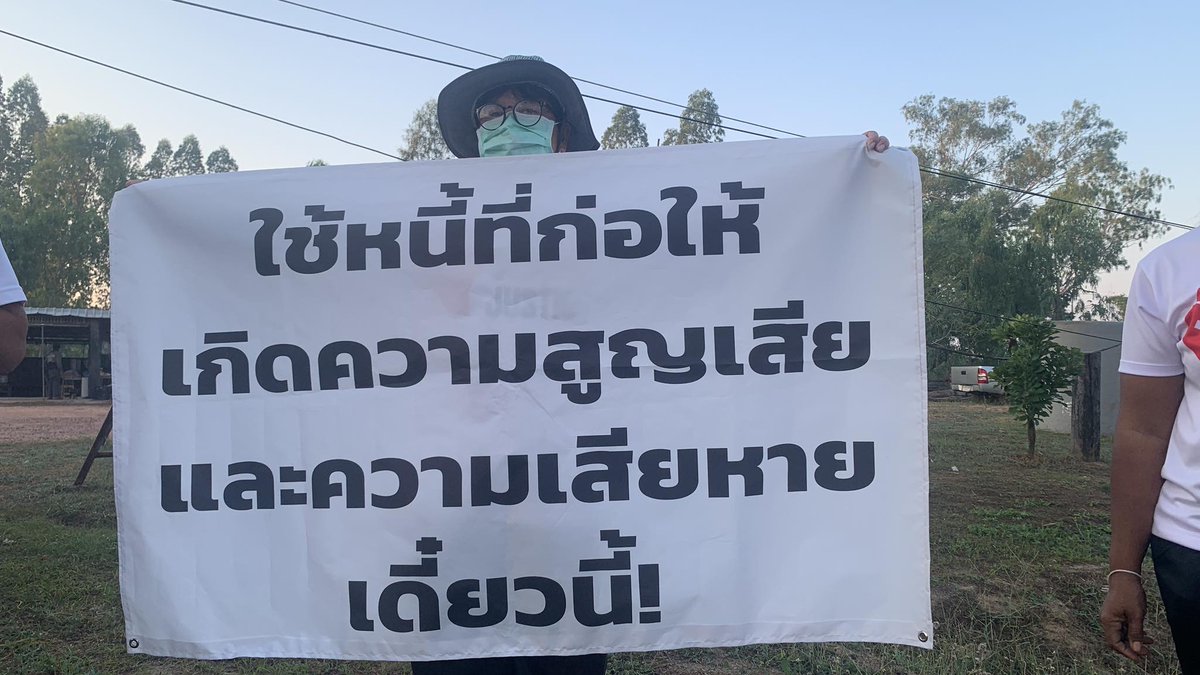
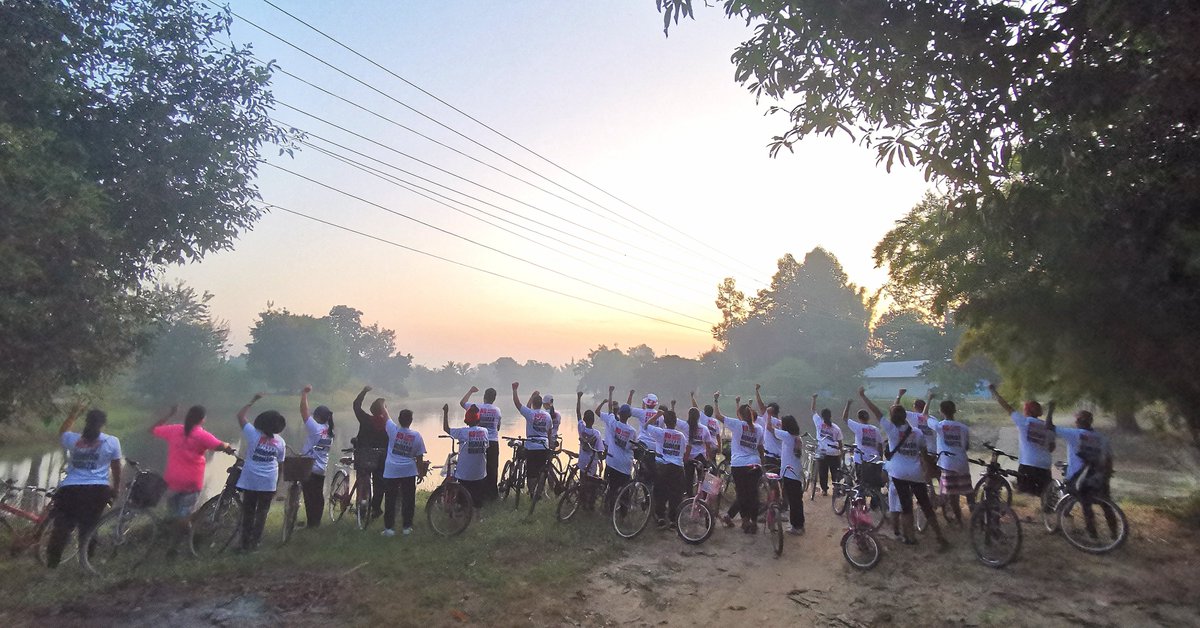
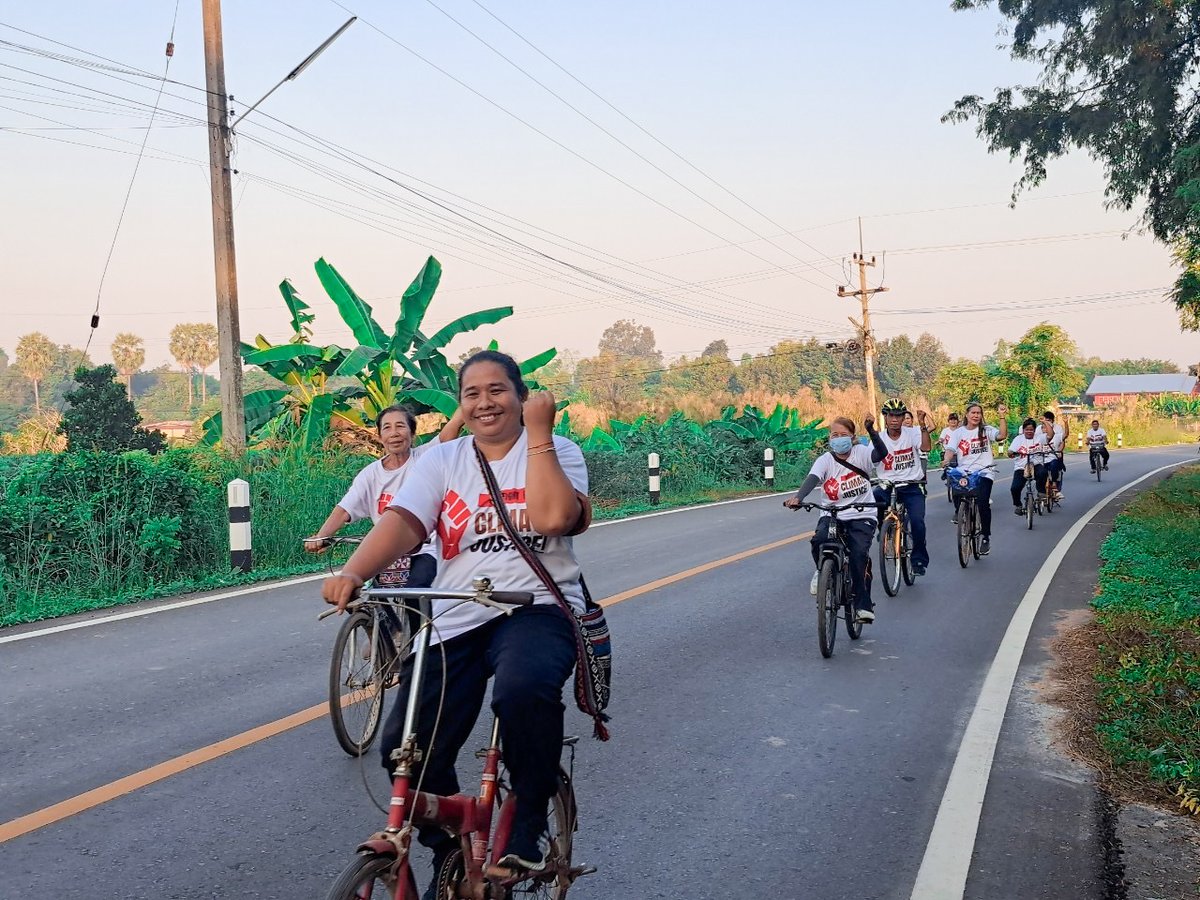
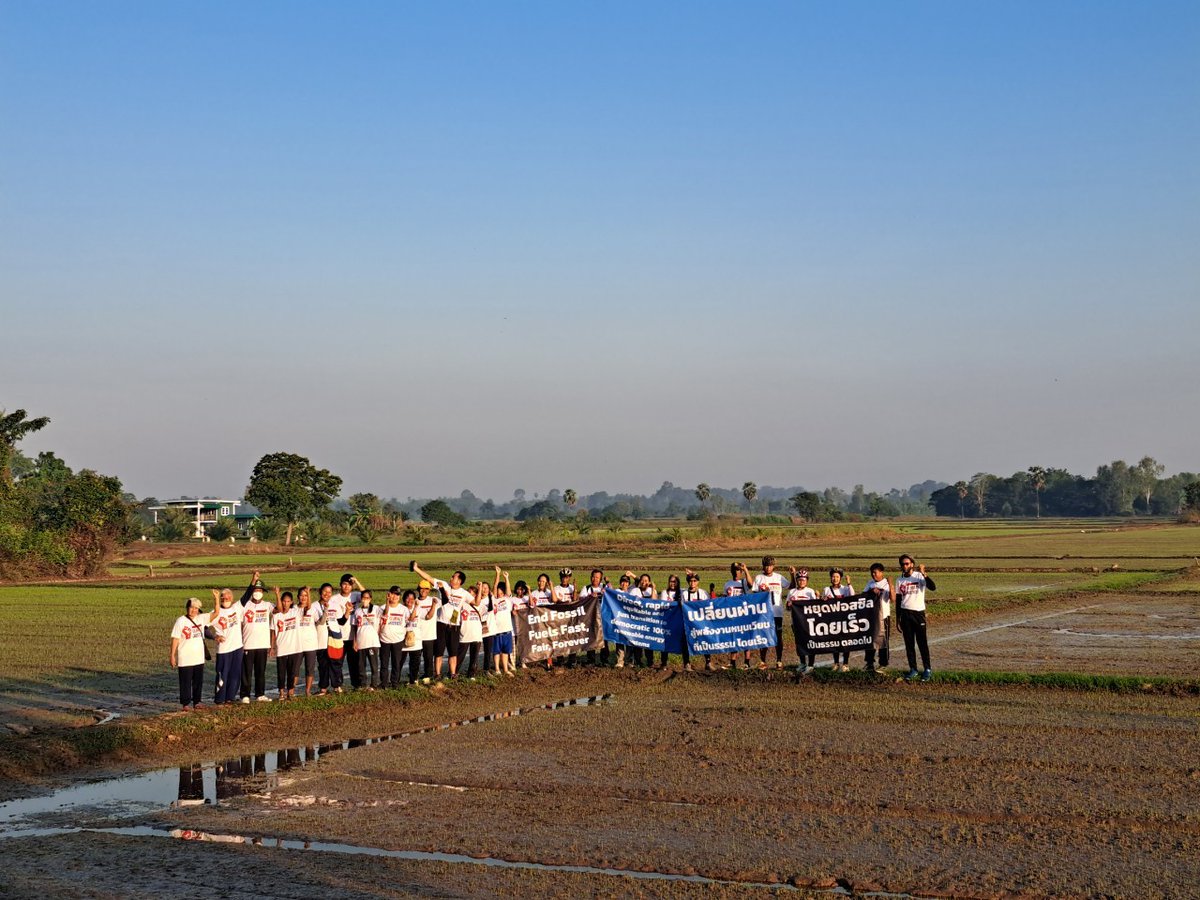
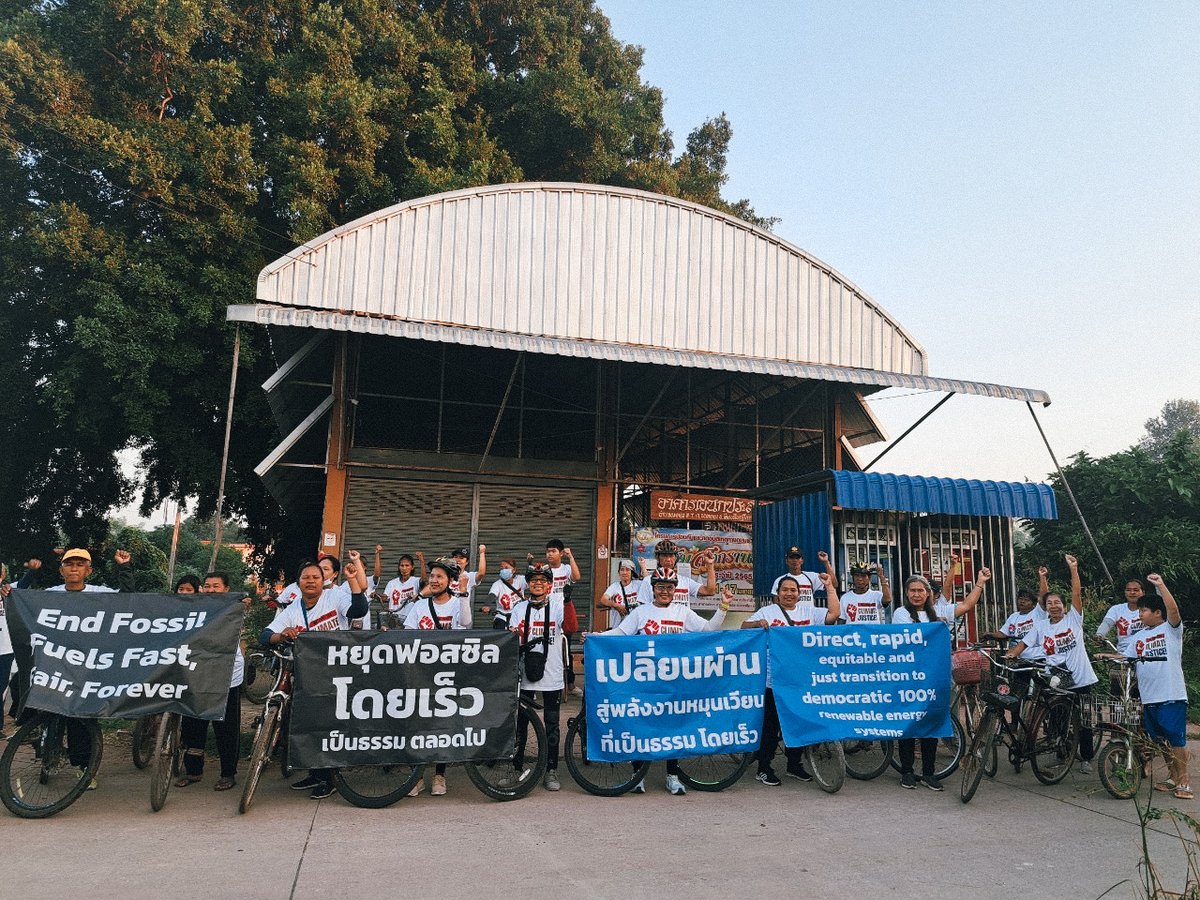
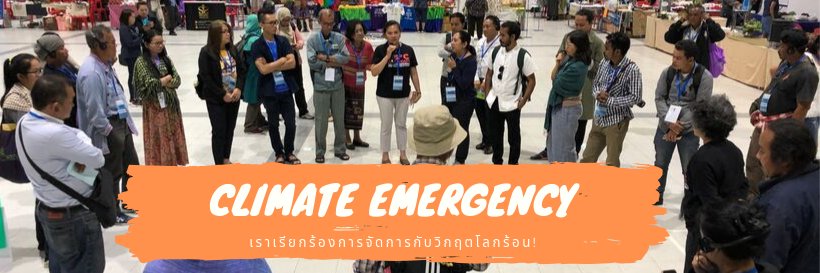
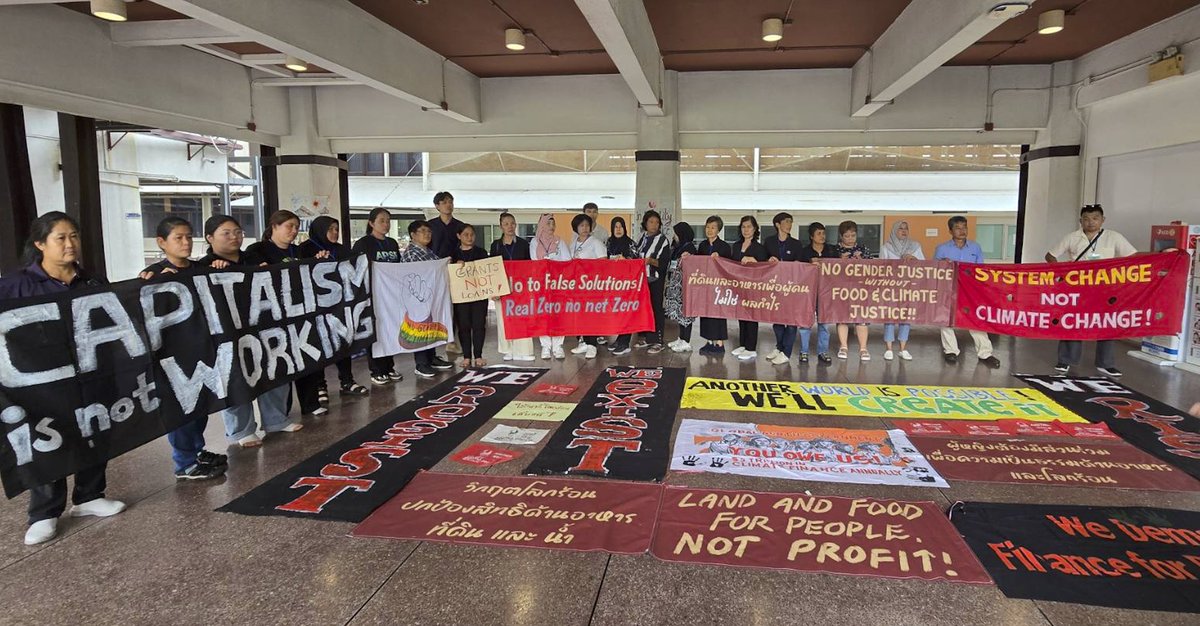
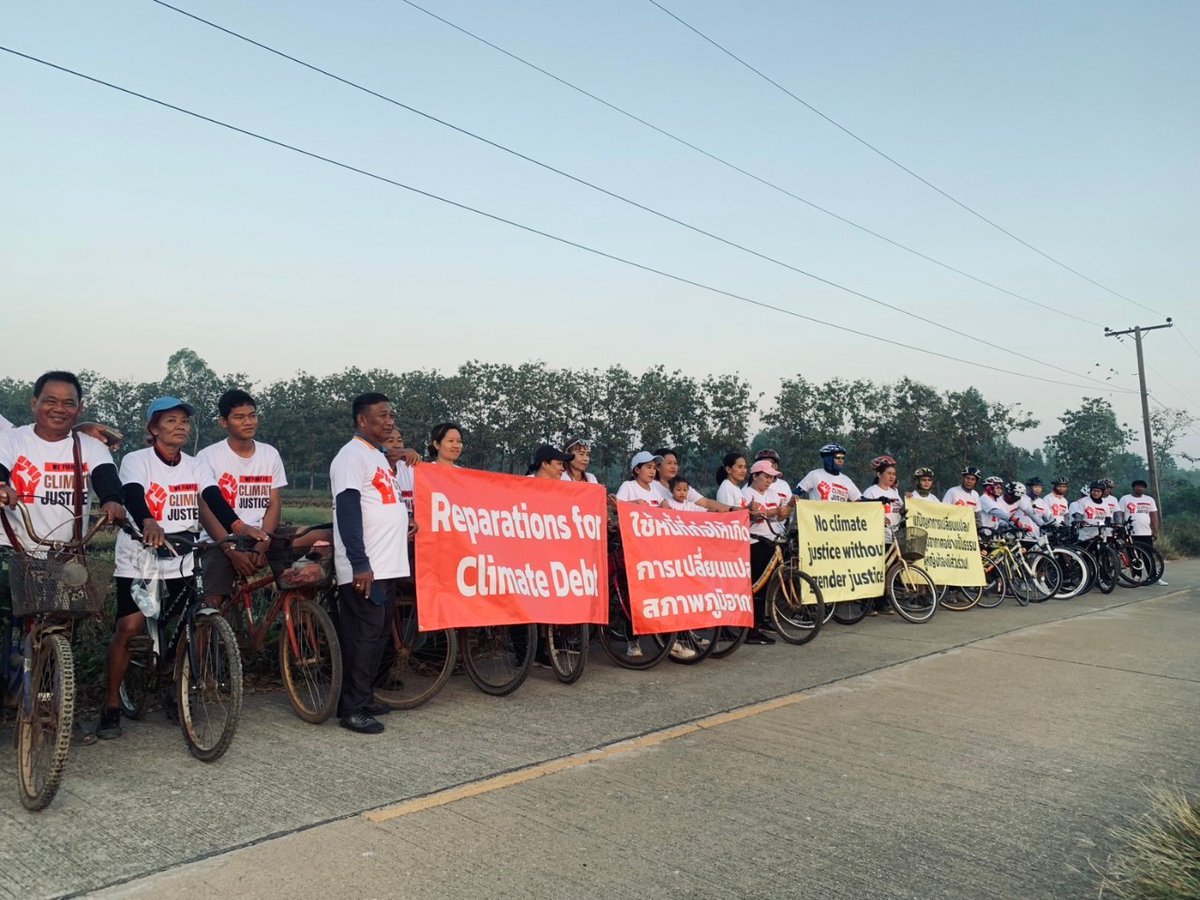
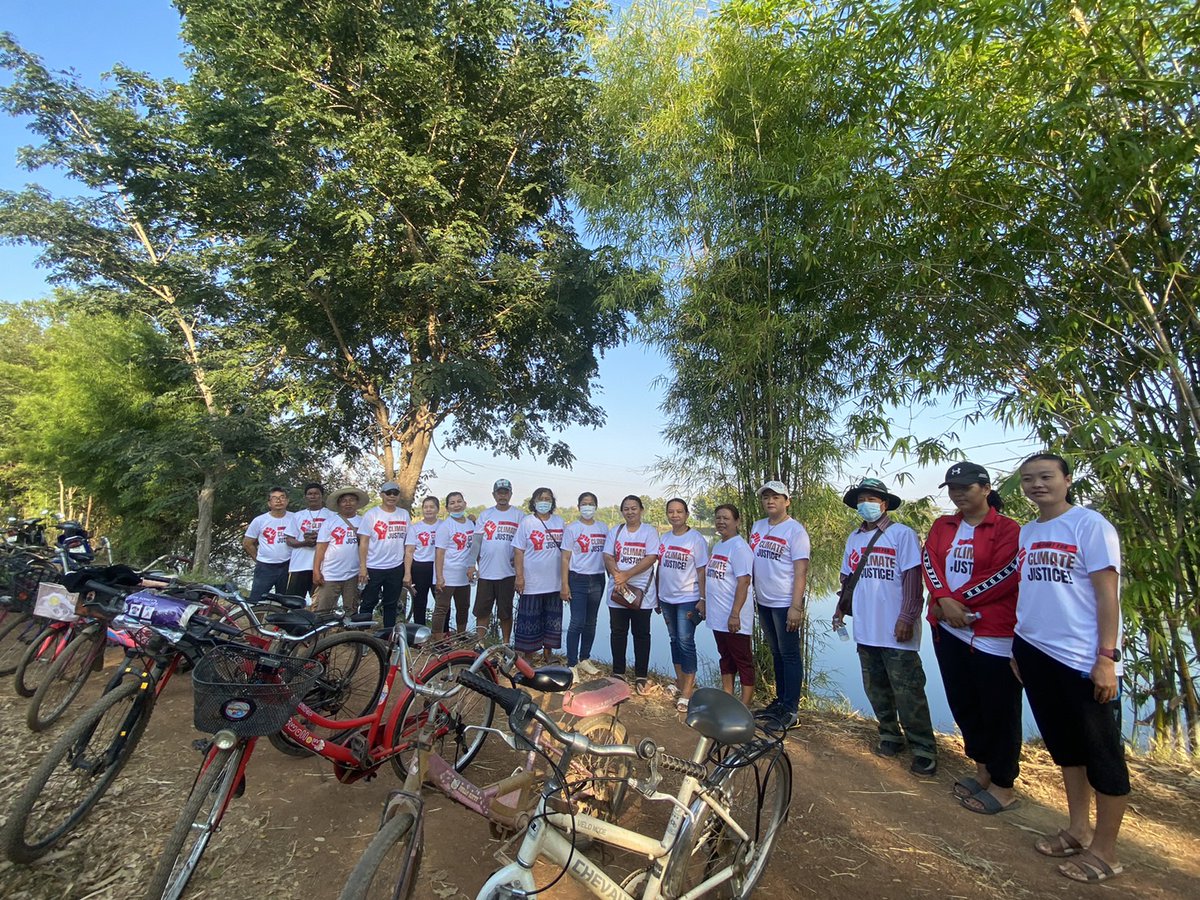
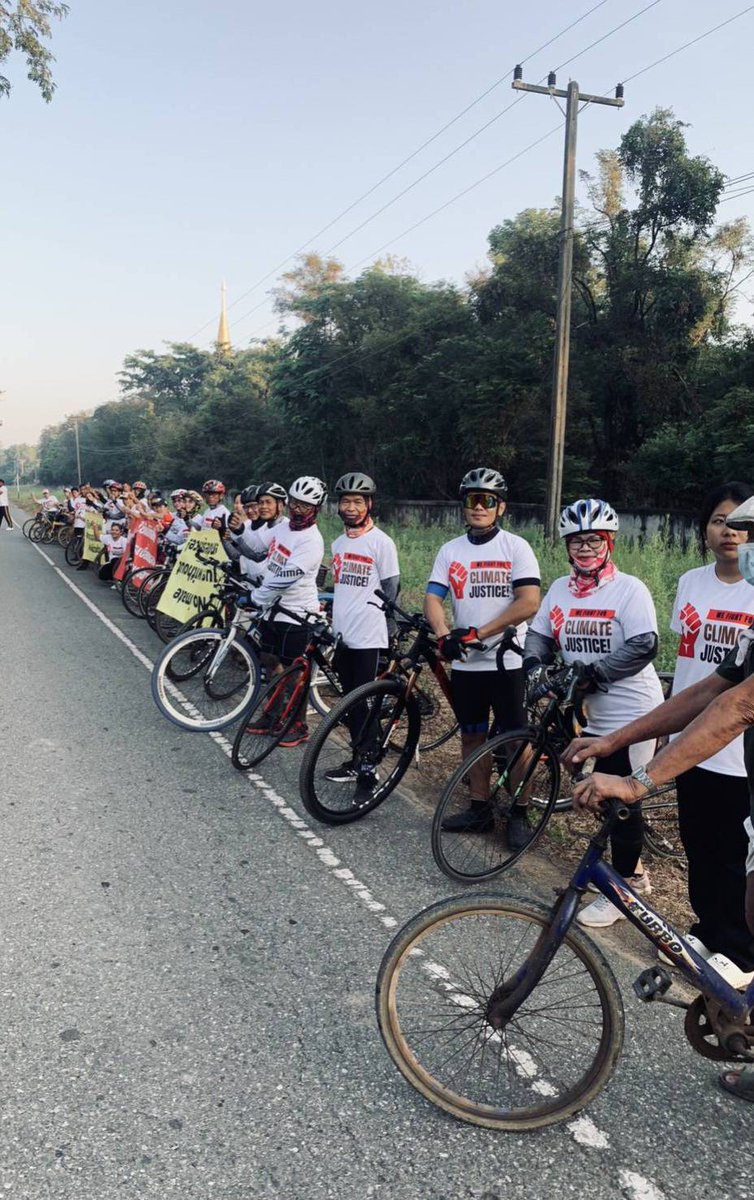
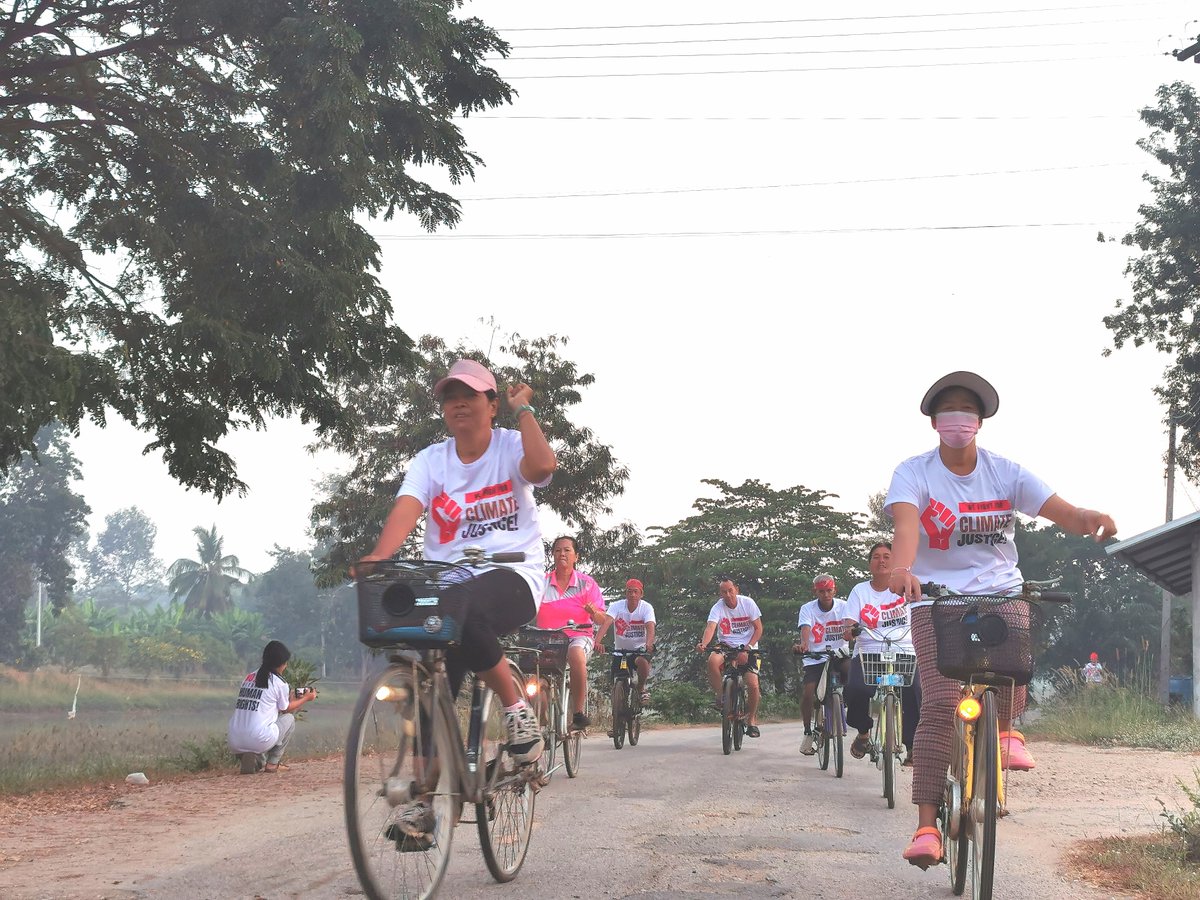
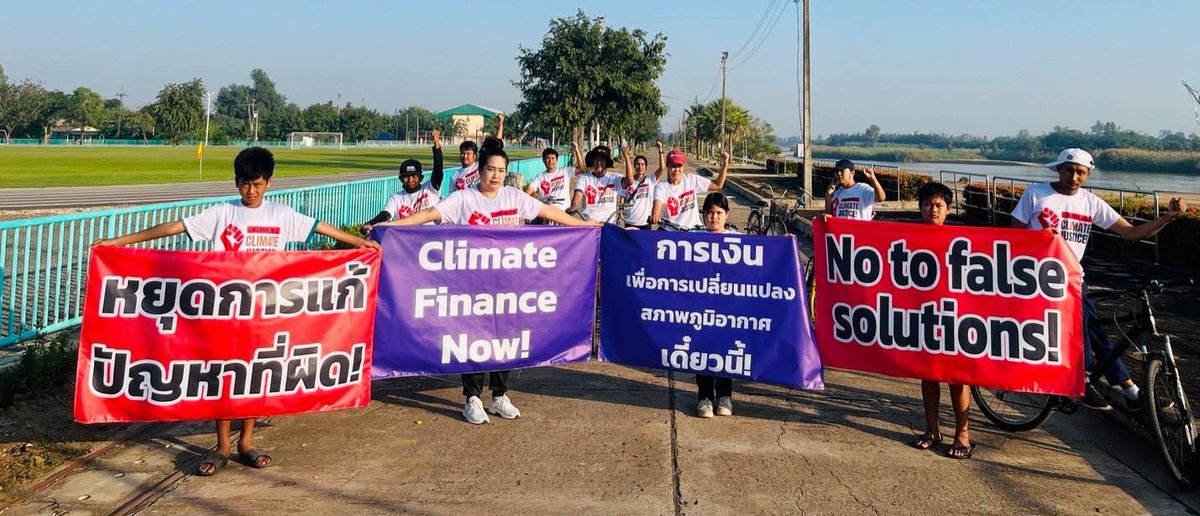
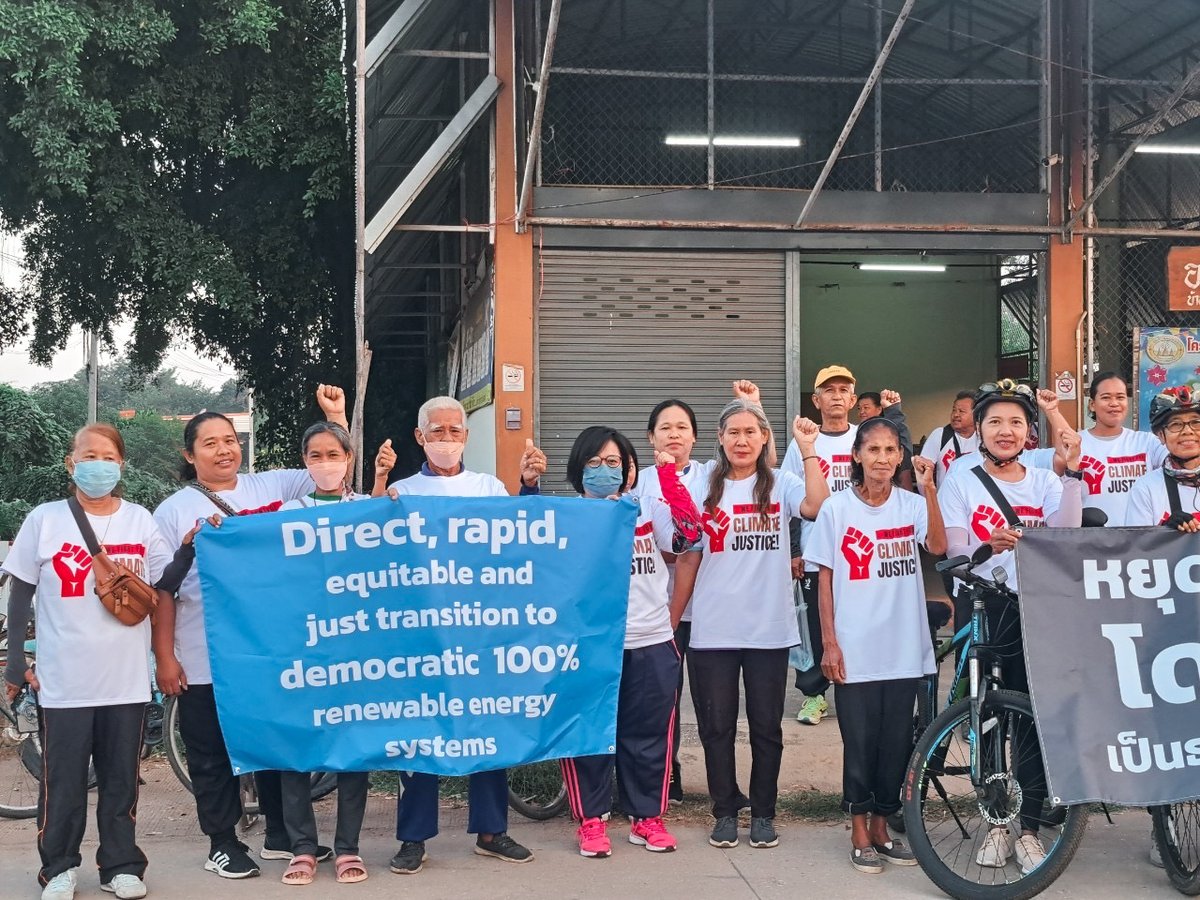
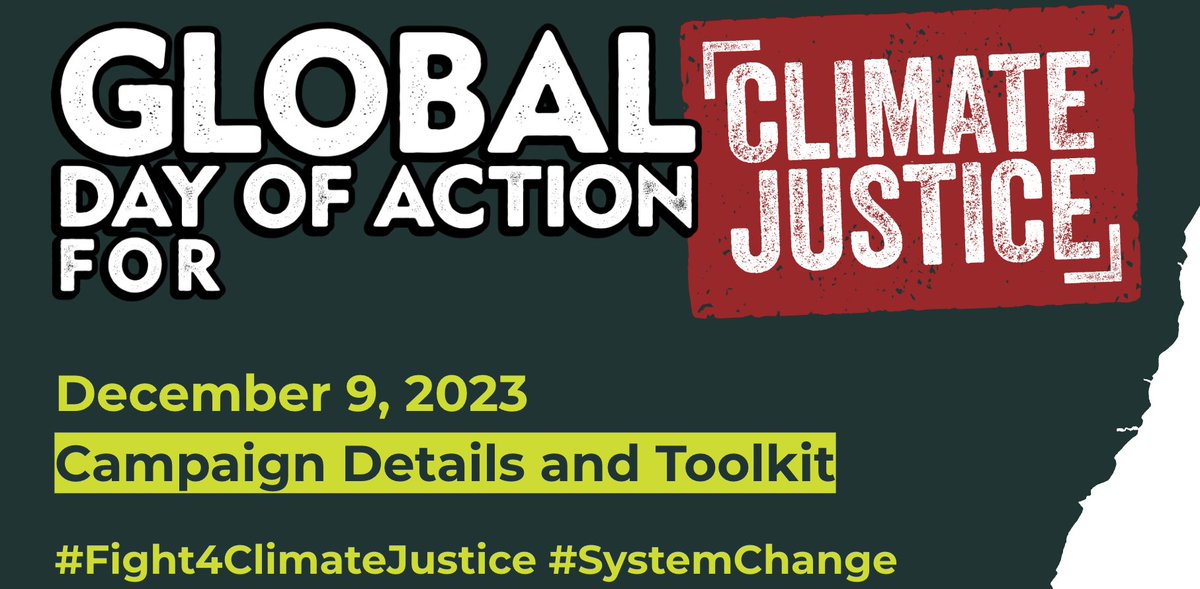
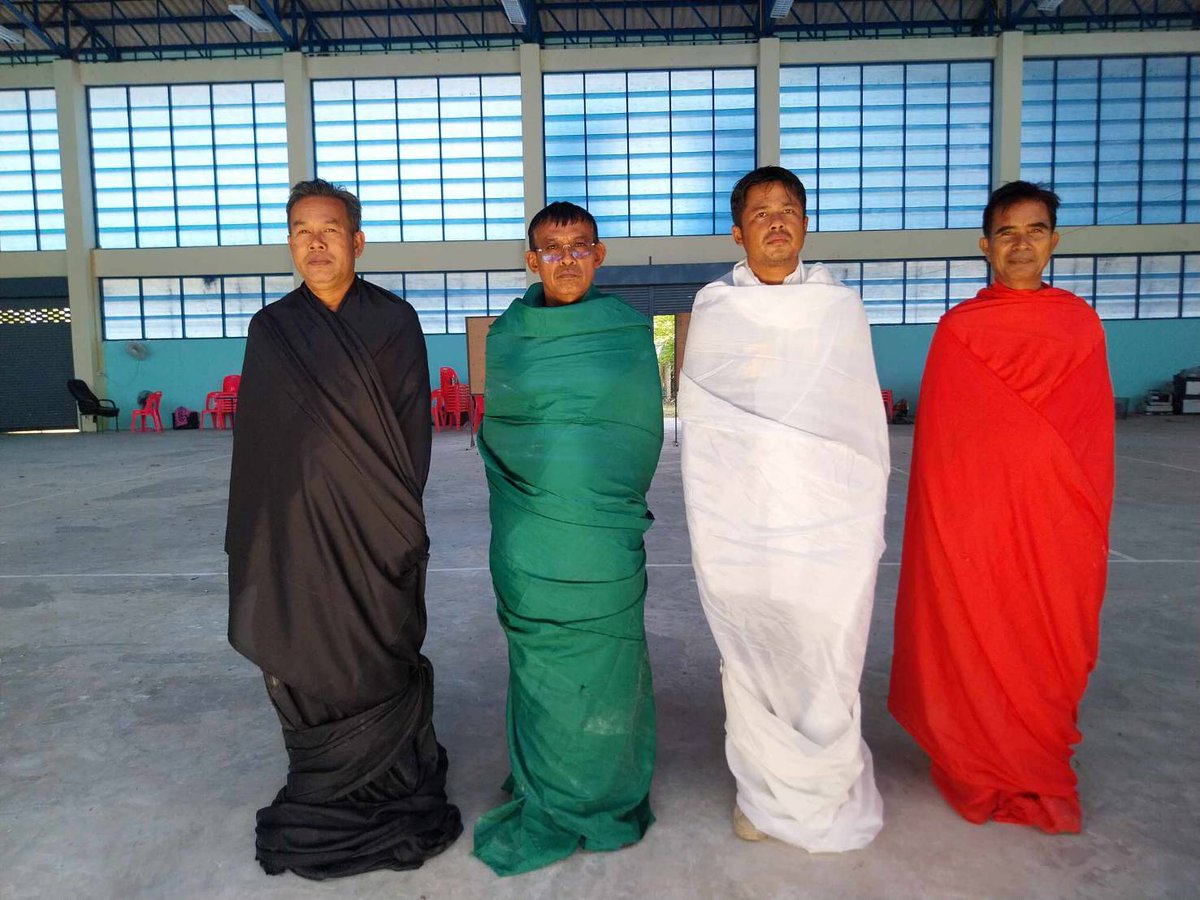
Farmers, fisherfolks, women, queer people, and informal workers in Thailand joined the Global Day of Action happening worldwide during #COP30, demanding #ClimateJusticeNow. They face extreme heat and rising seas — and are rising for a #JustTransitionNow to #EndInequalities.
Reality and farmer's struggles in Nong Payorm, Thailand and in Philippines, Myanmar, Cambodia--not only from impacts of climate change, but also the false solutions! Make it right for the peoples. No False Solutions! see more @asiaclimatecons: https://t.co/f8joV3CWOu
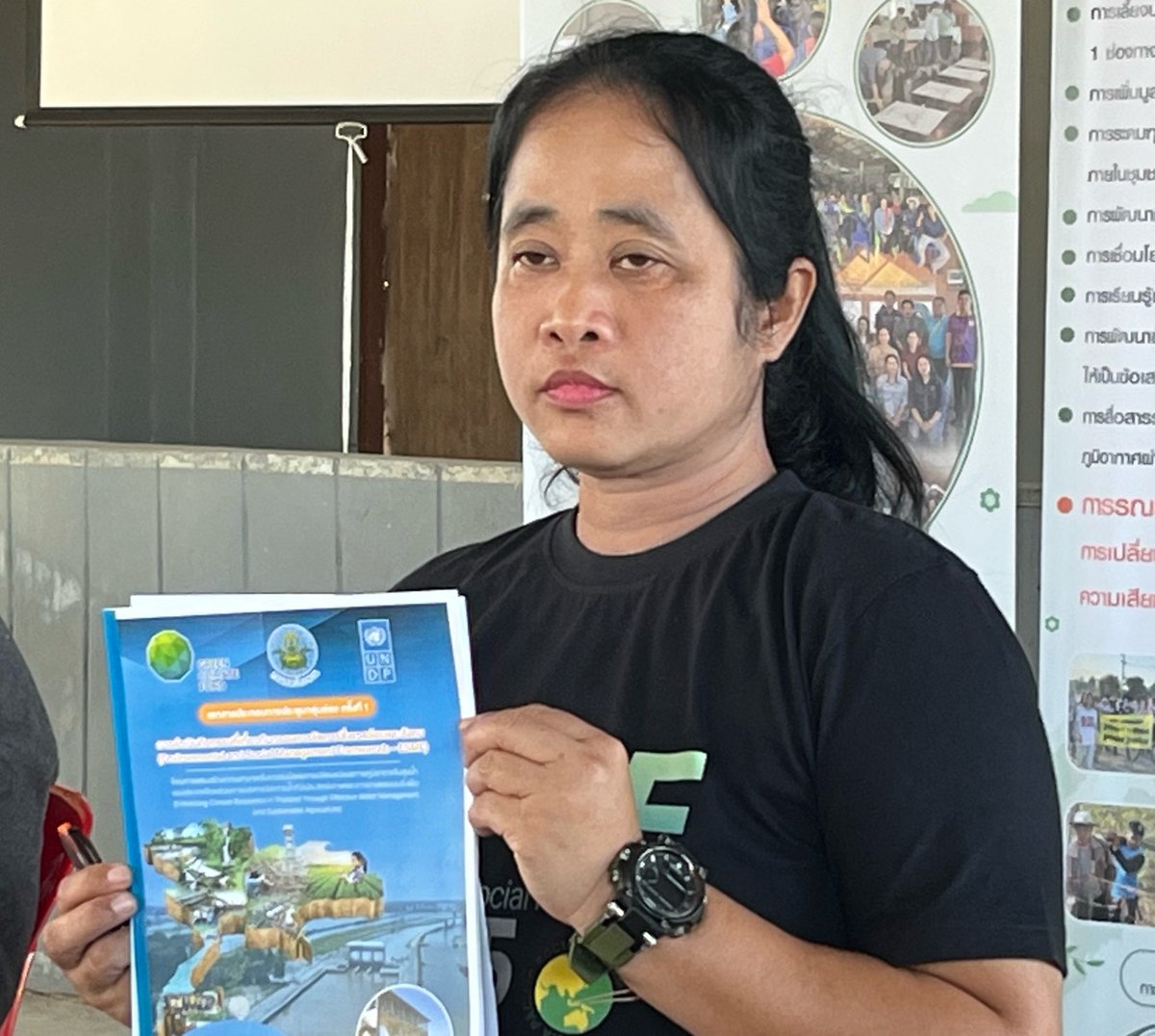
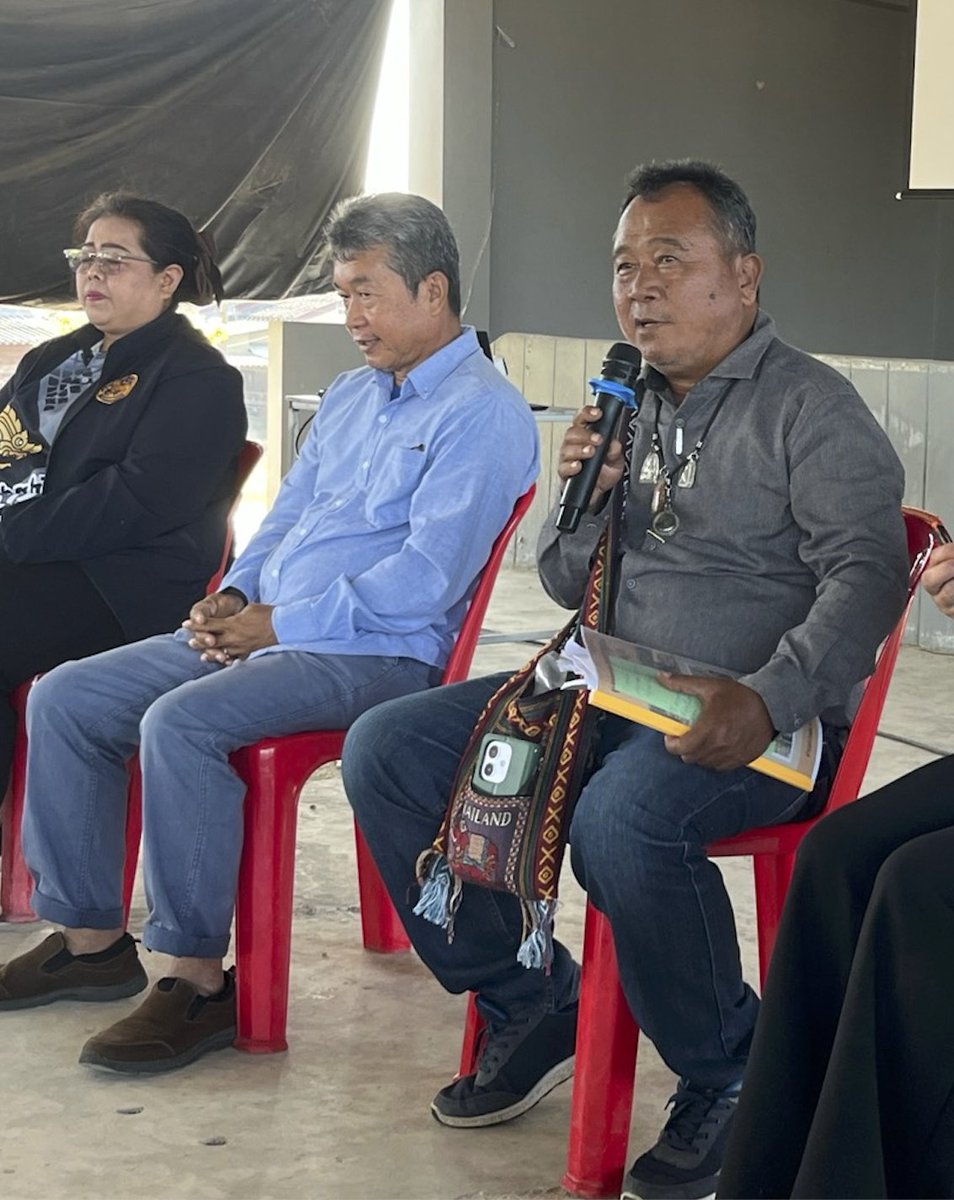
Story of Farmers from Nong Payorm District, Phichit Province, Thailand.
"I am directly confronting the harsh realities of climate change. The livelihoods are under threat due to increasingly erratic weather patterns"
#VoicesFromTheGround#MakeItRightFroClimatePeoplesAndEcosystem
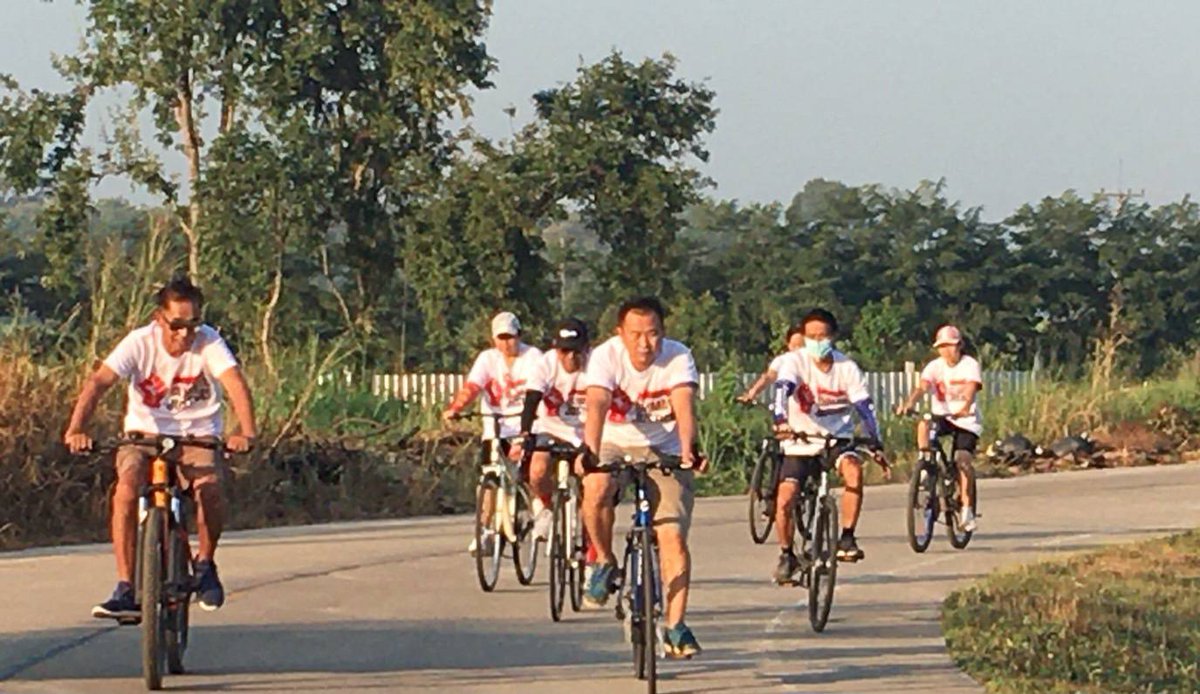
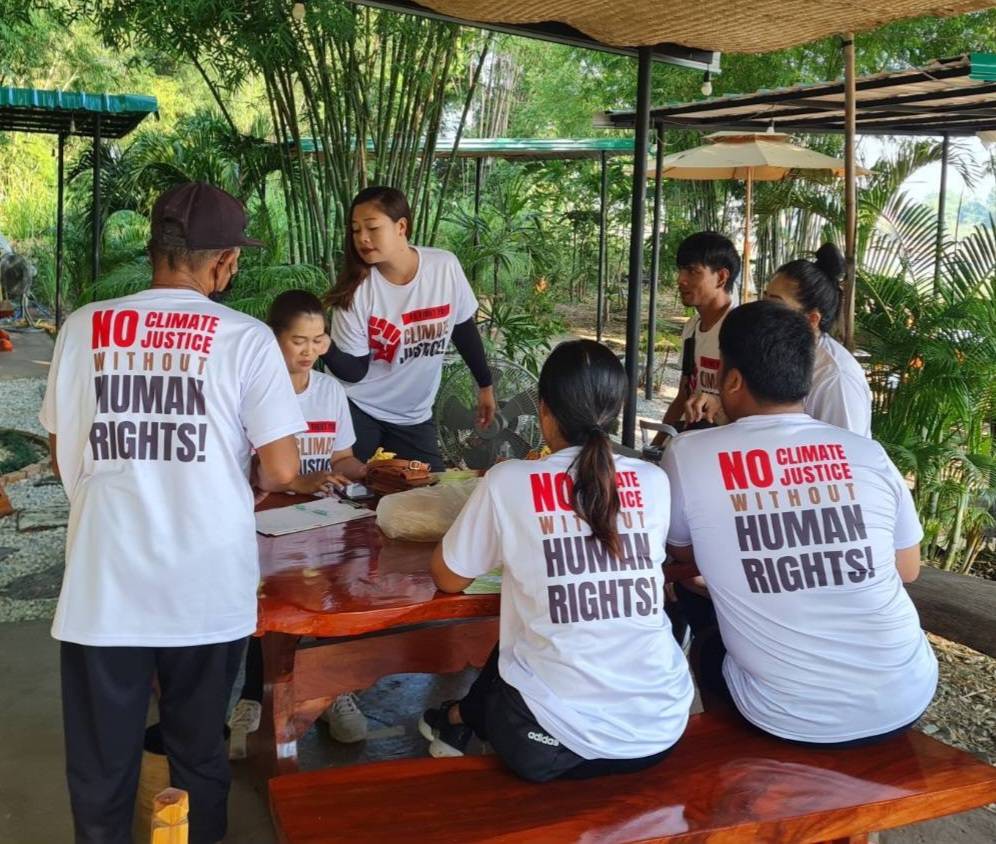
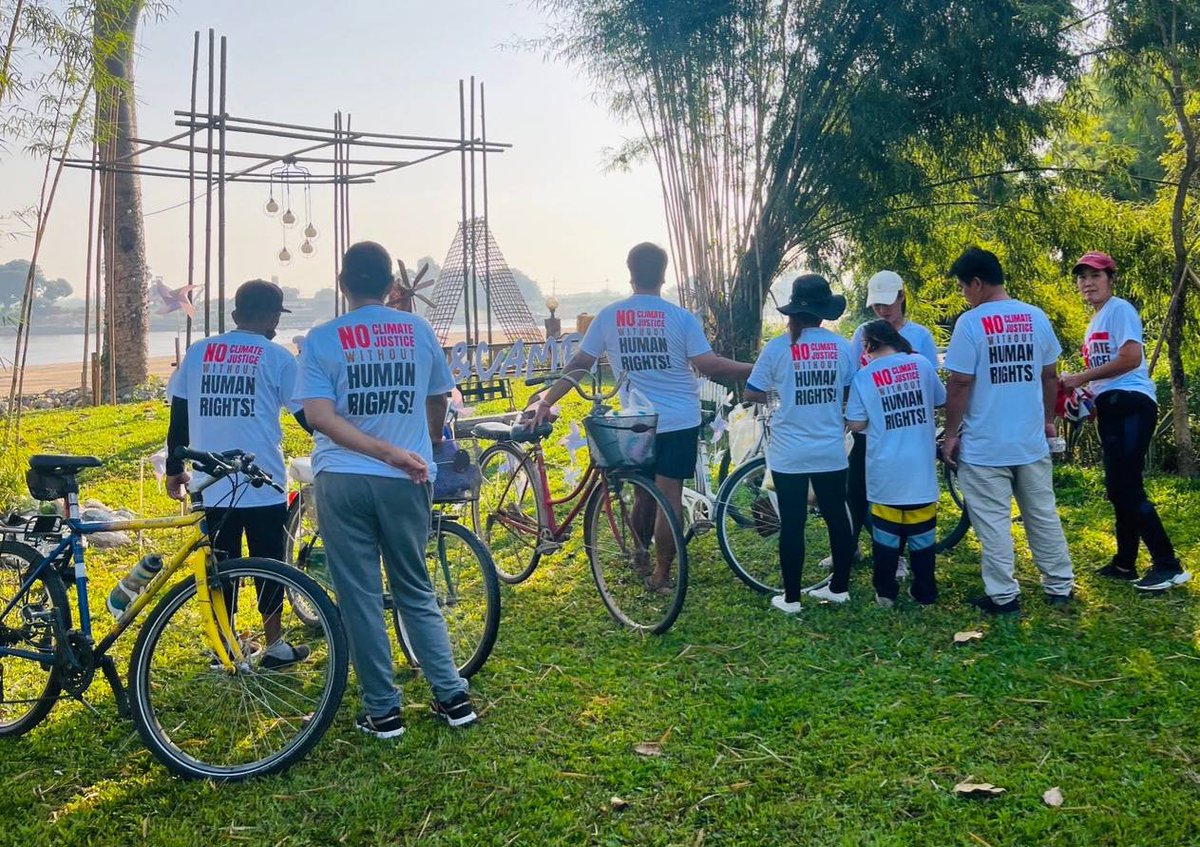
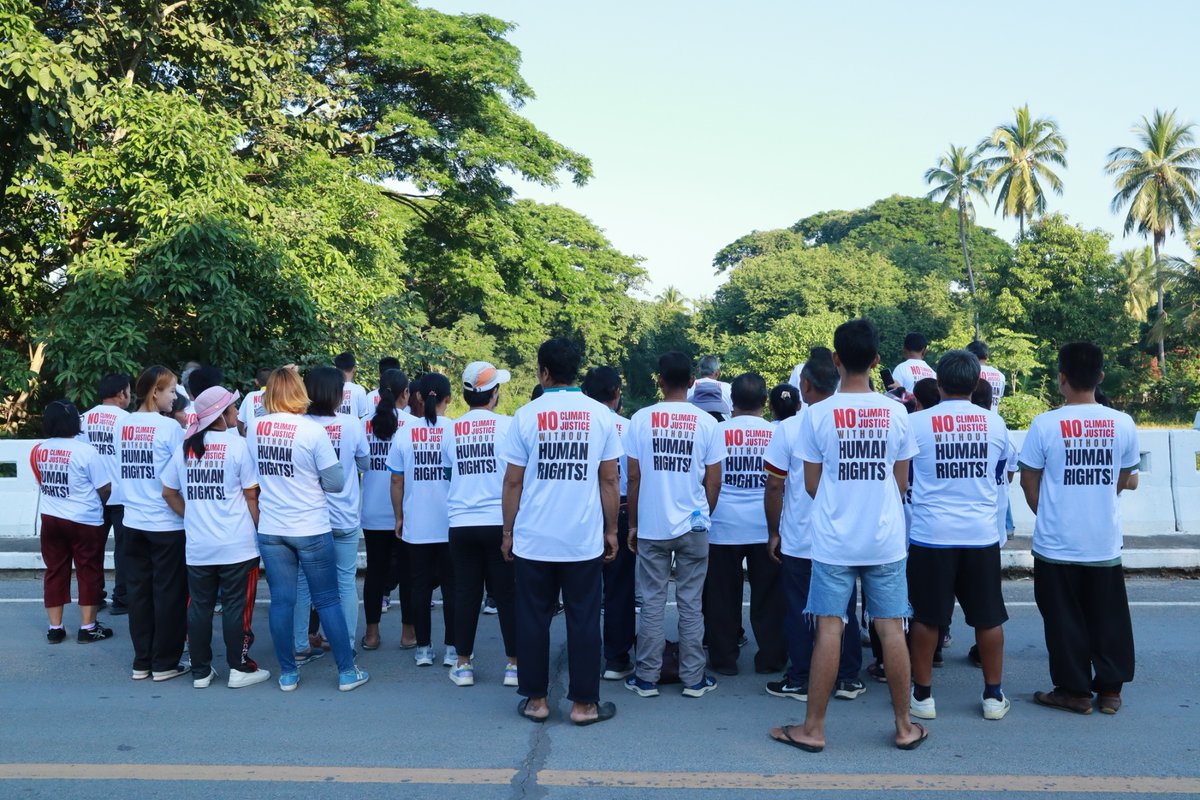
Communities in Noen Ma Prang and Conservation Group Food, Phitsanulok, Thailand together with CWT and @AsianPeoplesMvt#Fight4ClimateJustice joined the Global Day of Action for climate justice. #EndFossilFuels#SystemChange No Climate Justice Without Human Rights!
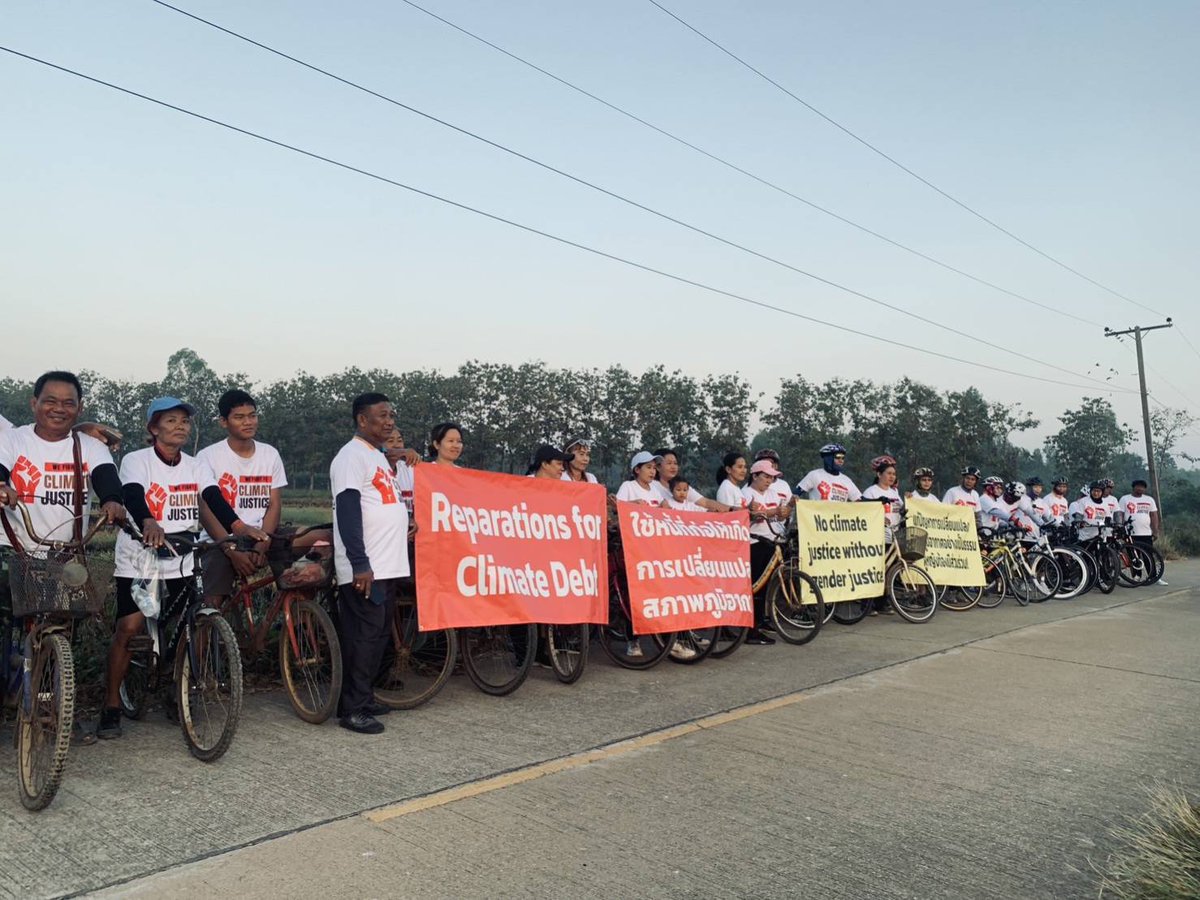
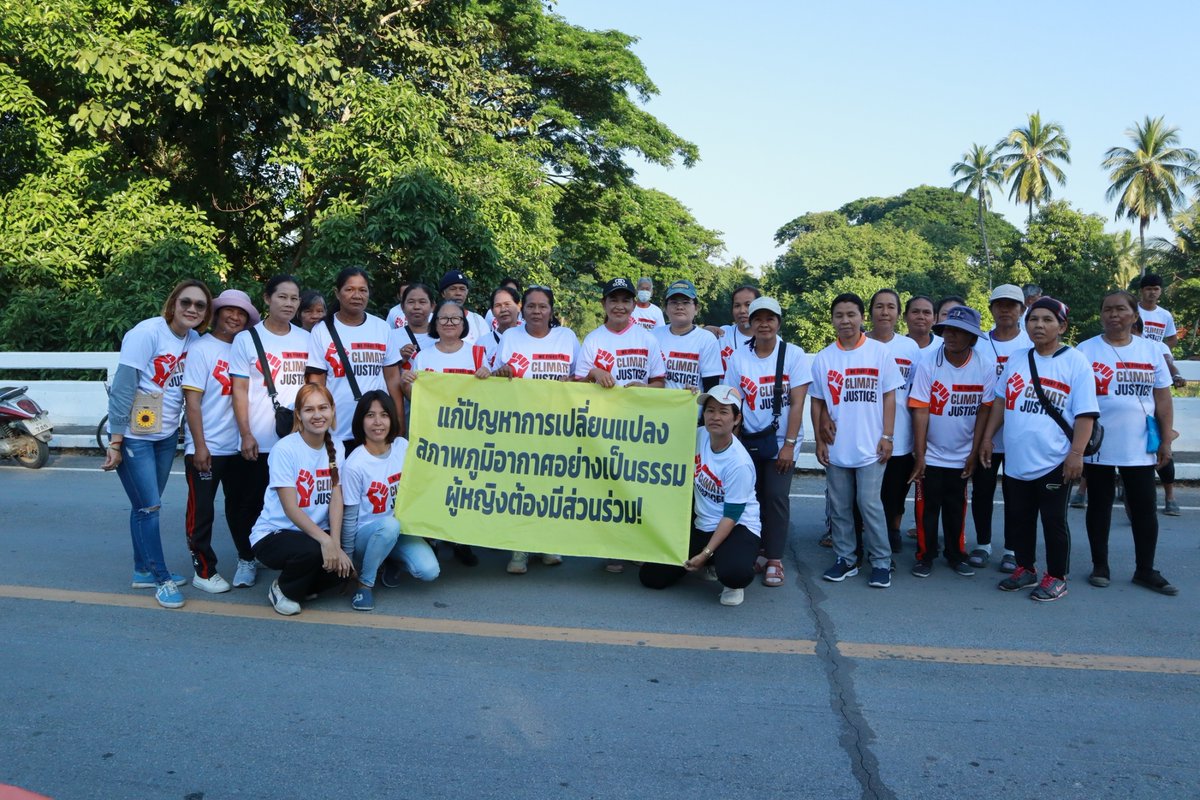
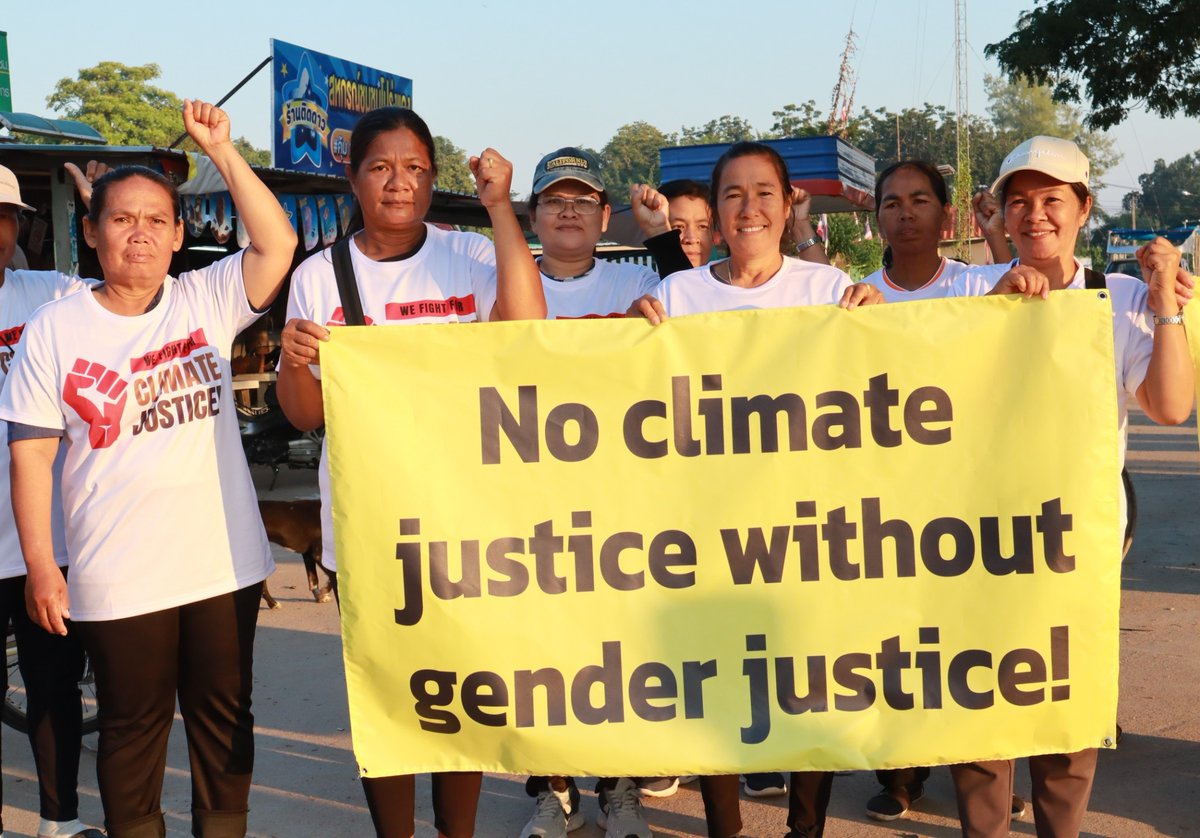
Farmers in Wang Sai Poon and Nong Plong, Phichit, Thailand faced with long drought period, #Fight4ClimateJustice joined the Global Day of Action for #ClimateJustice calling for Reparation for Climate Debt. No climate justice without gender justice!
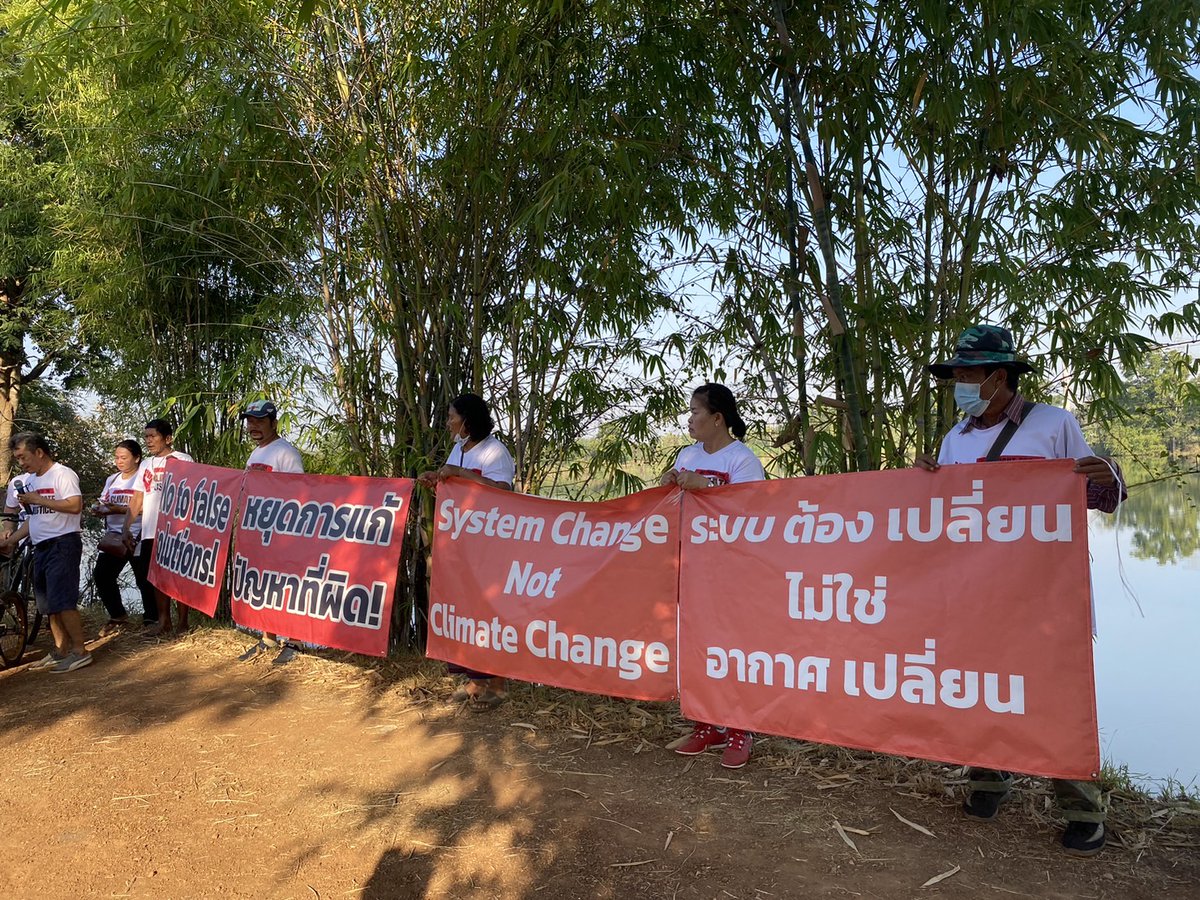
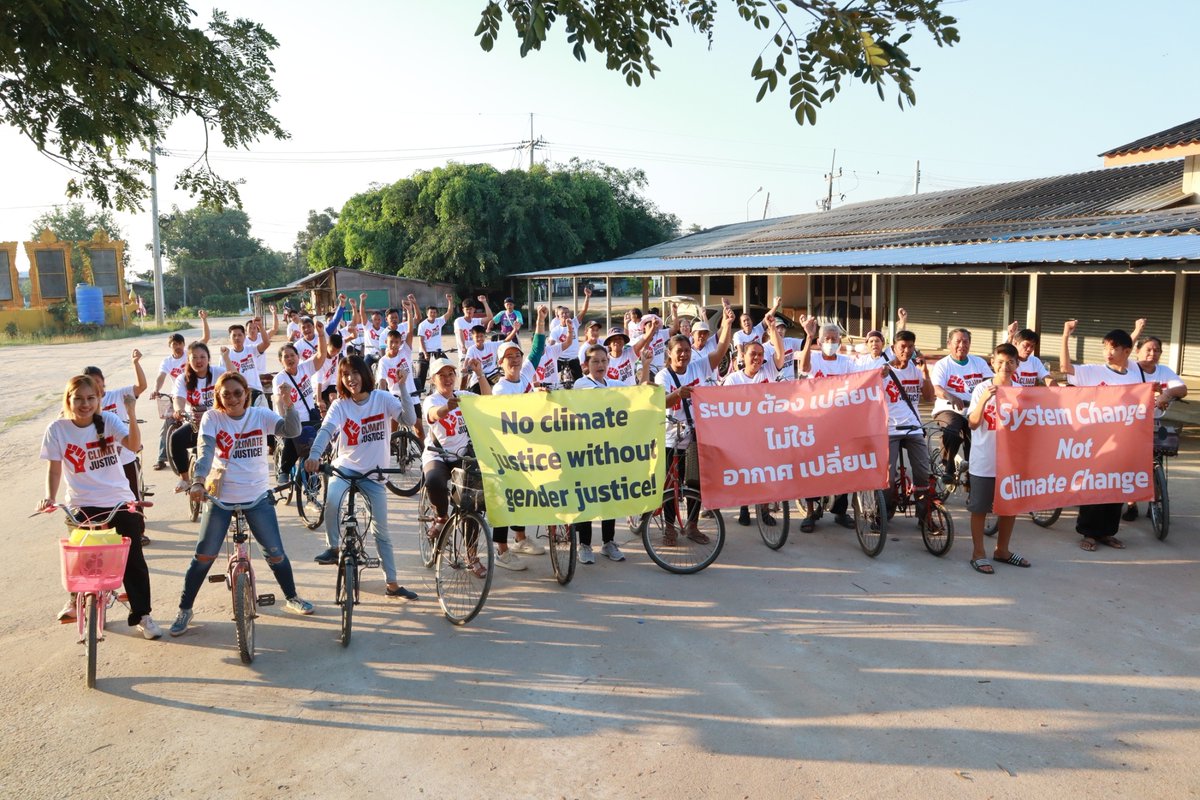
Impacted by climate change and false solutions of climate smart agriculture technologies, farmers in Nong Payorm, Phichit, Thailand #Fight4ClimateJustice joined the Global Day of Action for #ClimateJustice calling for #SystemChange saying No to False Solutions
Happening Now! Global Day of Action in 8 communities in Thailand --joined by Communities of JomThong Cooling Families,BangRaKham,NoenMaPrang Conservation Group;Pong Daeng Community Forests; Wang Sai Poon+NongPlong,NongPaYorm;WangYang,Tha Putsa #Fight4ClimateJustice#SystemChange
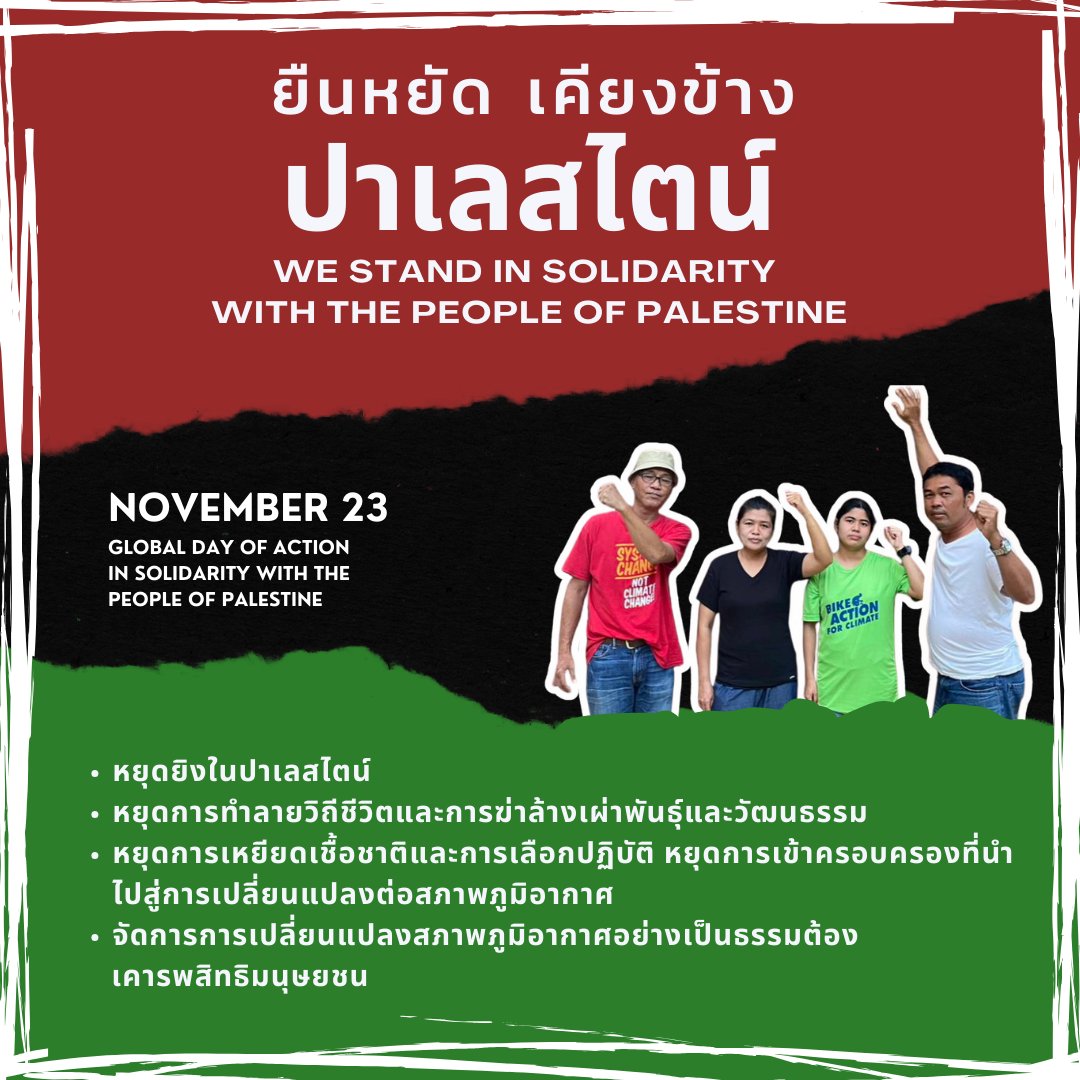
We Stand in Solidarity with the People of Palestine and call for Immediate Ceasefire in Palestine
End the Blockade, End Apartheid,
End settler colonialism and climate colonialism.
No climate justice without human rights.
On gender, the systemic issue of women's roles being confined to the kitchen is not addressed in FP214. While it aims to enhance women's economic empowerment and access to finance and technologies, it places an additional burden on women both in the farm and in the household.
The FP214 appears to give a substantial role to the private sector in project governance compared to the involvement of local farmer groups, local NGOs. This could lead to contract farming that has historically favored corporations and profit-making.
The FP214 appears to give a substantial role to the private sector in project governance compared to the involvement of local farmer groups, local NGOs. This could lead to contract farming that has historically favored corporations and profit-making.
The use of hybrid rice species that require less water and lead to early harvests suggests that these technologies are geared towards export rather than household consumption. Farmers would be compelled to buy these hybrid seeds for each planting, increasing their expenditures.
The use of hybrid rice species that require less water and lead to early harvests suggests that these technologies are geared towards export rather than household consumption. Farmers would be compelled to buy these hybrid seeds for each planting, increasing their expenditures.
Some of the proposed smart technologies of FP214, such as LLL, could undermine the diversity of food available in rice farms e.g. pumpkins, ant-eggs, fish. Levelling land for rice cultivation as proposed will destroy the source and diversity of food available in the rice farm.
Some of the proposed smart technologies of FP214, such as LLL, could undermine the diversity of food available in rice farms e.g. pumpkins, ant-eggs, fish. Levelling land for rice cultivation as proposed will destroy the source and diversity of food available in the rice farm.
In many FP214 proposed sites, farmers don't own a land, raising concerns about project's inclusiveness-it will only involve those with land ownership; those without would be excluded, further marginalised. Adaptation must encompass ALL farmers, not just those with land ownership.