⁉️What revenue and costs might the #CBAM generate in 2026-2027?
CAKE developed CBAM Explorer under the #LIFEENSPIRE project. It is an interactive tool to analyze CBAM revenues and costs for EU Member States in 2026–2027.
📊CBAM Explorer: https://t.co/cYOPdsaNfG
#KOBIZE#IOŚPIB
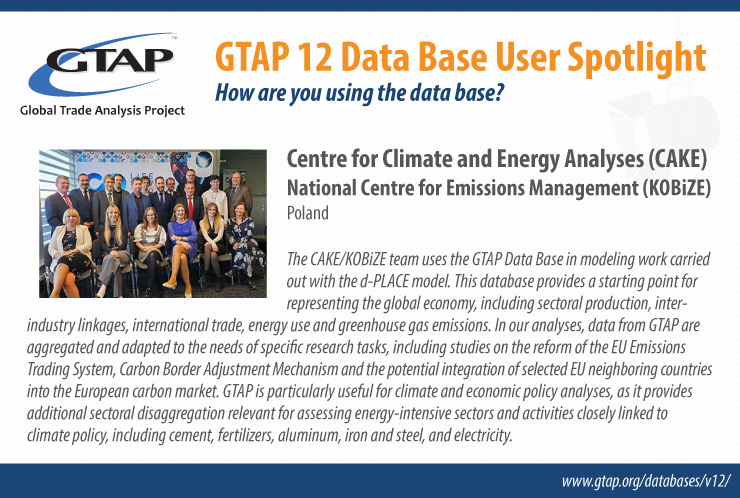
🌍Daily GTAP 12 Spotlight🌍
Follow along as we feature how #GTAP Network members are using the #GTAP12 Data Base to tackle important matters in trade, climate, energy, agriculture, and sustainable development to advance research and inform better policy.
https://t.co/tMEqdq1JDm
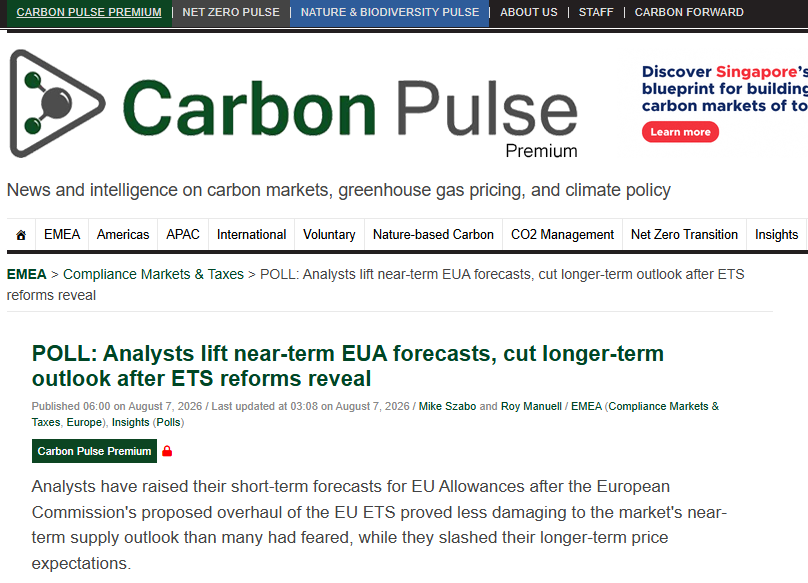
📢🌐 Beyond the undeniably fascinating, and genuinely important, debates currently absorbing the #ETS community around the #LRF, #MSR, allocation rules, funds, #benchmarks and free allocation, there is another issue that may prove fundamental to the entire EU ETS and the wider climate-policy architecture:
🧭 Who will govern an increasingly complex European carbon budget?
The Commission’s proposal does more than recalibrate the existing system. It introduces new EU-level functions: the central purchase of Article 6 credits and permanent removals, the auctioning of allowances to finance them, and the coordination of these mechanisms with allowance supply and investment instruments.
Each solution may be justified. Taken together, however, they change the institutional logic of the EU ETS.
📉 Scarcity will increasingly depend not only on the CAP, the LRF and automatic MSR rules, but also on procurement decisions, auction timing, delivery performance and administrative choices.
This is not necessarily the wrong direction. Greater flexibility may help reconcile climate ambition with technological readiness, industrial transformation and political sustainability. But flexibility without proper governance can become discretion.
⁉️ How will the integrity of the EU carbon budget be protected if fewer credits can be purchased, or removals are delivered later or in smaller volumes than assumed? Such differences should trigger transparent and proportionate adjustments to allowance supply.
⚙️ Can the MSR manage this new complexity? It can respond to a measurable surplus of allowances, but it cannot assess credit integrity, manage procurement risks, contract removals or coordinate these operations with auctions and investment support.
⚖️ And how should responsibilities be separated when EU institutions simultaneously develop rules, manage regulatory assets, conduct purchasing operations and oversee financial instruments? These functions require specialised capacity, auditable procedures and democratic accountability. They also have distributional consequences for sectors, technologies and Member States.
Central purchasing may therefore be a sensible first step - particularly compared with allowing companies to use international credits directly. But a central buyer is not yet a complete governance model.
🎯 In my new article, I argue that this emerging architecture should open a broader discussion about a European Central Carbon Bank, a European Carbon Management Authority or a comparable dedicated institution.
📖 https://t.co/JLAbF0UAX9
#MSR #ClimateGovernance #Article6 #CarbonRemovals #EUClimatePolicy #ParisAgreement #ECCB #ECMA #KOBiZE
@climate_cake #IOSPIB
🚨 How have Poland's greenhouse gas emissions profile changed over the last 35 years?
📊 Our analysis explores key trends in Poland's #GHG emissions from 1988 to 2023, highlighting a nearly 40% drop in total #emissions.
📖https://t.co/si0vBjsi4r
#KOBIZE#GHG#Poland#NetZero
📢Ukazał się nowy numer „Raportu z rynku CO2”, a w nim informacje na temat, m. in.:
🔹 kształtowania cen uprawnień #EUA,
🔹 wskaźników referencyjnych (benchmarków) dla lat 2026-2030,
🔹prawdopodobnego kształtu propozycji KE ws. reformy EU ETS (tekst przygotowany przed publikacją KE);
🔹nowego kalendarza aukcji na 2026 r. w związku z zakończeniem sprzedaży funduszu RRF,
🔹analizy raportu CESIP dotyczącego mechaniki działania EU ETS,
🔹analizy sytuacji w kwestii Społecznych Planów Klimatycznych,
🔹analizy wstępnych danych Eurostat dotyczących wykorzystania OZE oraz dostaw gazu do UE w 2025 r.,
🔹podsumowania sesji negocjacyjnej SB64,
🔹raportu Banku Światowego The World Bank Group „State and Trends of Carbon Pricing 2026”,
🔹 kalendarium najważniejszych wydarzeń związanych z funkcjonowaniem systemu #EUETS w lipcu 2026 r.:
🔗 https://t.co/cHVlY7swiv
#EUETS #EUA #CBAM #KOBiZE #climate #klimat #climatepolicy #OCTT #energy #climatelaw #energytransition #energypolicy #energetyka #transformacja #CO2
🌍 W dniu 26.06.2026 r. @SebastianLizak1 uczestniczył w spotkaniu, na którym @ireform_eu zaprezentował raport dotyczący finansowego bilansu Polski w #EUETS. Nasz ekspert przedstawił potencjalne zmiany elementów systemu z perspektywy planowanej rewizji EU ETS. Link w komentarzu.
🎙️ I was pleased to join International Carbon Action Partnership (@ICAPSecretariat ) ’s Carbon Market Conversations podcast to discuss the Polish perspective on carbon pricing, just transition and the future of the EU ETS.
The carbon market debate is not only about the carbon price. It is also about investment capacity, industrial competitiveness, social acceptance, energy security and the credibility of Europe’s climate policy.
🗣️ In the episode, we discussed why Poland is such an important case for the future of carbon pricing in Europe. Not because Poland is an argument against carbon markets, but because it is a real stress test for their practical effectiveness.
An ambitious carbon price lands very differently in a country with a historically coal-based power system, energy-intensive industry, older buildings, uneven access to transport alternatives and regions still undergoing deep structural change.
⚙️ The EU ETS has been one of the most important climate policy instruments in Europe. But the next phase will require more than technical adjustments. We need a carbon market architecture that is more predictable, more investment-oriented and better equipped to manage distributional impacts across Member States.
This is especially important for countries where the transition still involves deep structural change in the energy system, industry, buildings and transport.
My main message was that carbon pricing remains one of the most efficient tools for decarbonisation, but the carbon price alone is not enough.
It must be embedded in a credible transformation pathway: visible revenue recycling, clean infrastructure, modern grids, industrial decarbonisation instruments, protection against carbon leakage, support for vulnerable households and a realistic just transition for coal regions.
🎯 If people and companies see only higher costs, the system will generate resistance. If they see real alternatives being financed - clean power, efficient buildings, clean heating, public transport, industrial technologies and new jobs - the ETS can remain a driver of transformation.
We also touched upon the need for stronger carbon market governance, including ideas such as a #ECCB or a similar carbon market authority that could help make the system more predictable, strategic and resilient.
🙏🏻 Many thanks to @ICAPSecretariat and Trevor Laroche-Theune for the invitation and for the thoughtful conversation.
🔗 You can listen to episode here:
🎧 Spotify: https://t.co/fIgvzTNzib
🍎 Apple Podcasts: https://t.co/xJTSBRXKHO
📻 Podomatic: https://t.co/VXVWYqieyn
#CarbonMarketConversations #EmissionsTrading #CarbonPricing #ETS #EUETS #JustTransition #SCF #ClimateAction #ICAP #NetZero
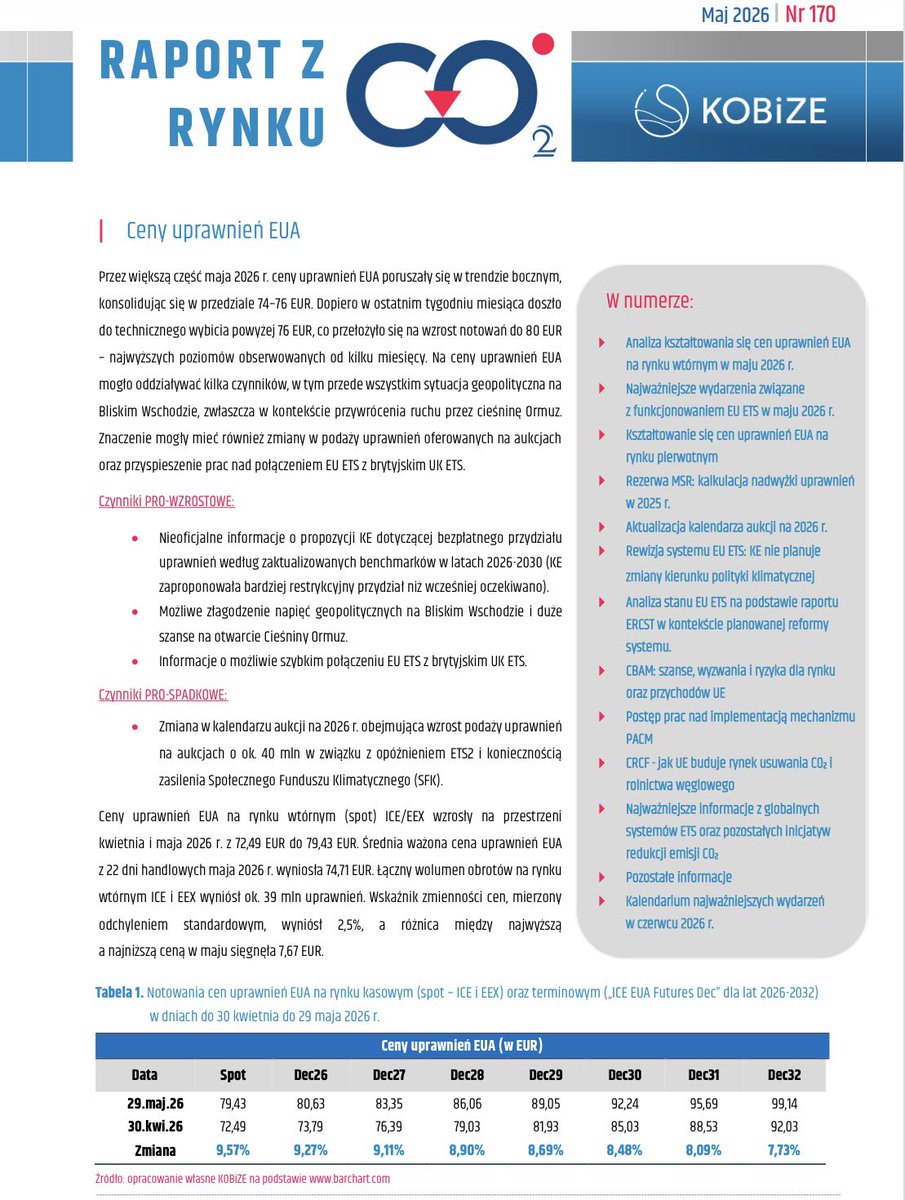
📢Ukazał się nowy numer „Raportu z rynku CO2”, a w nim informacje na temat, m. in.:
🔹 kształtowania cen uprawnień #EUA,
🔹 kalkulacji nadwyżki uprawnień w 2025 r. w ramach rezerwy #MSR,
🔹aktualizacji kalendarza aukcji na 2026 r.,
🔹możliwym kierunku polityki klimatycznej KE w kontekście planowanej reformy systemu EU ETS,
🔹analizy stanu #EU ETS na podstawie raportu ERCST - European Roundtable on Climate Change and Sustainable Transition ,
🔹szans, wyzwania i ryzyk dla rynku oraz przychodów UE w kontekście wprowadzenia podatku granicznego #CBAM,
🔹postępu prac nad implementacją mechanizmu #PACM oraz rynku usuwania CO2 i rolnictwa węglowego #CRCF
🔹 kalendarium najważniejszych wydarzeń związanych z funkcjonowaniem systemu #EUETS w czerwcu 2026 r.:
📖🗣️ https://t.co/3aBecjxtPx
#EUETS #EUA #CBAM #KOBiZE #climate #klimat #climatepolicy #OCTT #energy #climatelaw #energytransition #energypolicy #energetyka #transformacja #CO2
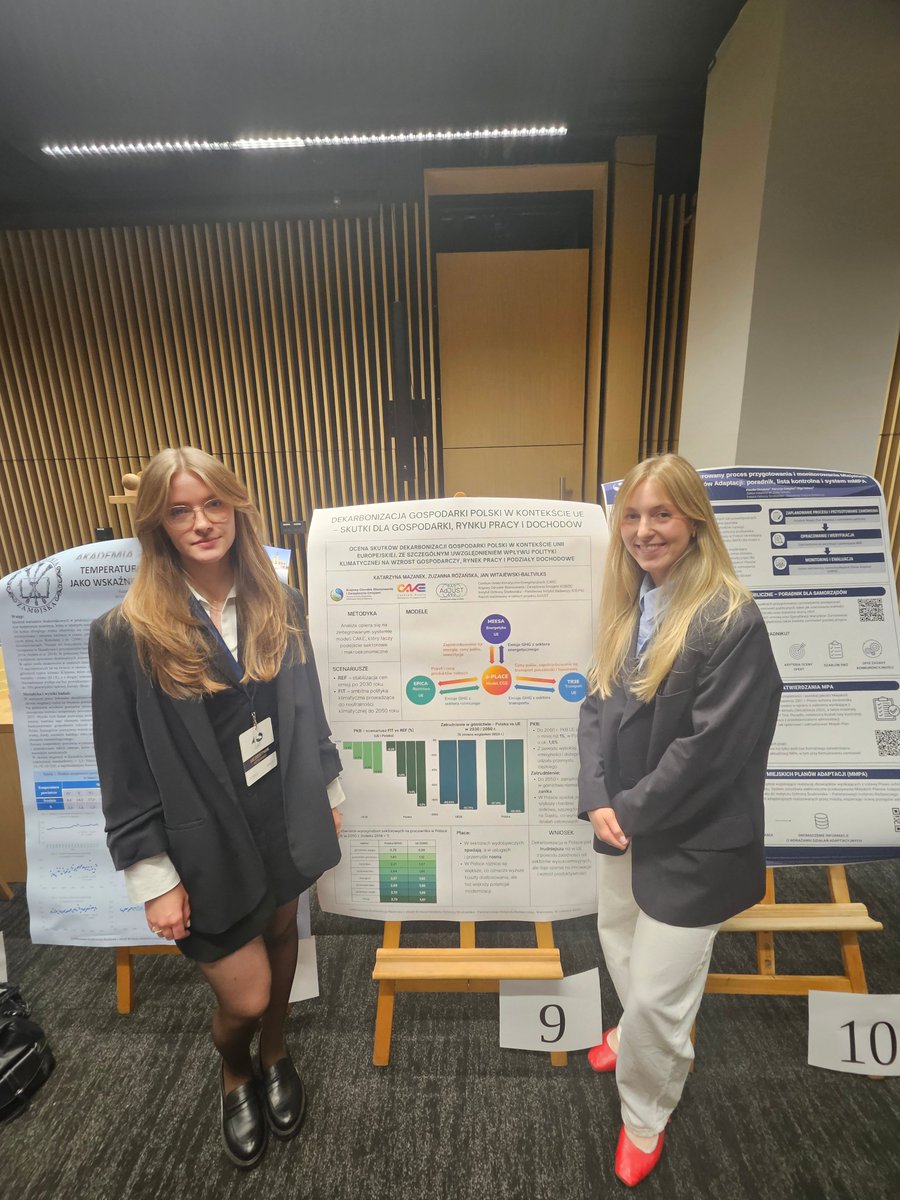
💡 Jubileusz to też mocny głos merytoryczny. @RJeszke i @MaciejCygler prowadzili debaty o transformacji i modelowaniu, a na strefie wystawowej zaprezentowaliśmy poster projektu #AdJUST (Horyzont Europa) o skutkach dekarbonizacji Polski i UE. Dziękujemy za słowa uznania!
#KOBIZE
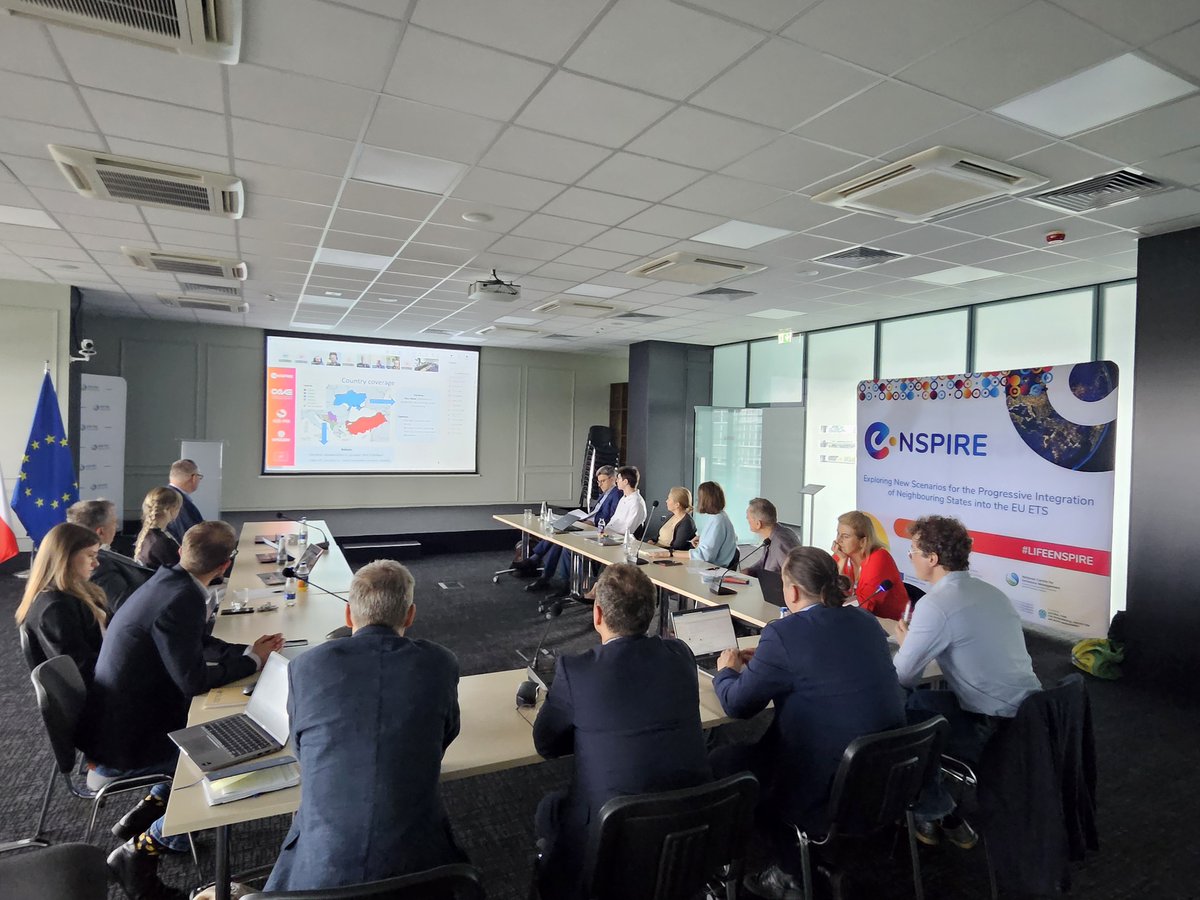
�� On 15 June 2026, the first Advisory Board meeting of the #LIFEENSPIRE project brought together leading experts to discuss #CBAM, #EUETS developments, #carbonpricing & decarbonisation pathways in Europe & neighbouring countries.
💡More: https://t.co/GF3czKmRCq
@LIFEProgramme
⁉️💡Więcej informacji o wydarzeniu można znaleźć na naszej stronie @CLIMATE_CAKE:
🔗https://t.co/JiPMduRlp4
📊🔄Link do symulatora CBAM: https://t.co/cYOPdsaNfG
#CAKE#KOBIZE#IOŚPIB@izba_u