This study is the result of a collaborative research effort between ClinCaseQuest, Kyiv Medical University, and Bukovinian State Medical University, bringing together expertise in clinical simulation, medical education, and AI-assisted learning analytics.
🏆 Second International Recognition of the Defragmented Debriefing Model
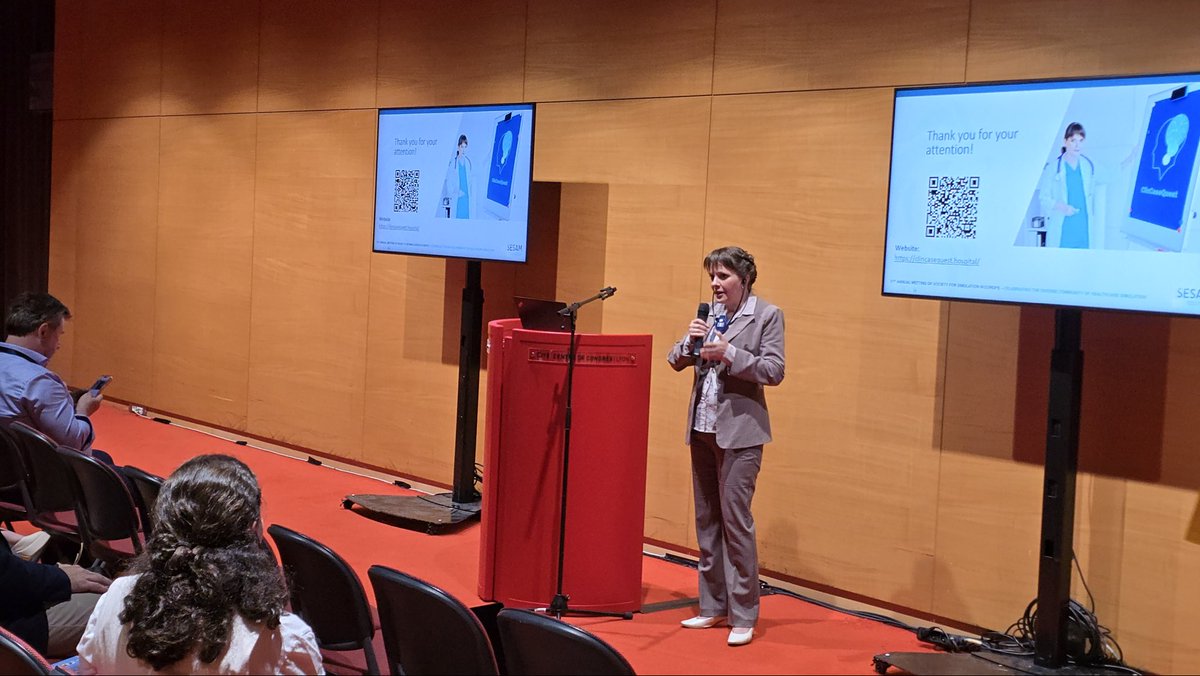
At the 31st Annual Meeting of SESAM 2026 (Society in Europe for Simulation Applied to Medicine) in Lyon, France, our research on psychological safety in simulation-based education received the Most Popular ePoster Award.
This study became a sub-study within a broader validation experiment conducted in autumn 2025 in collaboration with the team of Kyiv Medical University.
We would like to especially acknowledge the contribution of the key participants in this work:
✨ Mariia Yartseva - for the idea of expanding the standard validation protocol by integrating psychometric questionnaires to assess psychological safety and anxiety levels, as well as for her scientific support of the study.
✨ Iryna Avramenko - for scientific support of the research and presenting the results at SESAM 2026 in Lyon.
This award marks the second international recognition of the Defragmented Debriefing Model.
📍 In 2024, at SESAM 2024 in Prague, our model was recognized as an innovation in simulation-based education, acknowledged by the SESAM Scientific Committee, and published in Advances in Simulation.
In 2026, the model received another important validation of its value - this time directly from the international professional simulation community.
This represents a double recognition:
🔹 first by the scientific community 🔹 now by the practical professional audience
The Defragmented Debriefing Model remains one of the key scientific foundations of the ClinCaseQuest ecosystem, aimed at advancing clinical reasoning and reducing medical errors.
The journey continues 🚀
#SESAM2026 #MedicalSimulation #ClinCaseQuest #Debriefing #Innovation #ClinicalReasoning #HealthcareEducation #DefragmentedDebriefingModel
We are proud to share that our founder and CEO, Dr. med. Nataliia Lopina, has been recognized as a Visa Everywhere Pioneers 2026 Winner.
This recognition highlights not only personal resilience, but also the vision behind ClinCaseQuest and AI-Driven Patients — building innovative approaches to improve patient safety, reduce medical errors, and strengthen clinical reasoning through simulation-based education.
At ClinCaseQuest & AI-Driven Patients, we believe the future of medical education lies in intelligent simulations, data-driven debriefing, and next-generation clinical reasoning analytics.
We are grateful to TERN, Visa, and the program partners for supporting refugee women entrepreneurs and creating opportunities for innovation and growth.
This is an important milestone — and only the beginning.
#VisaEverywherePioneers #HealthTech #MedicalEducation #AIinHealthcare #ClinCaseQuest #ClinicalReasoning #AIdrivenPatients
At the 31st Annual Meeting of SESAM (the Society in Europe for Simulation Applied to Medicine) in Lyon, France, the ClinCaseQuest team, led by founder and CEO Dr. med. Nataliia Lopina, had the honor of presenting our research within the session:
XRAIV: Extended Reality (XR), Use of AI and Virtual Simulation Modalities
(Chairman: A. AL-MASRI, Simulation Program Director, Denmark)
"AI-Assisted Analysis of Branching Clinical Simulation Reports: Evidence from a Multicultural Multi-Centre Study on Enhancing Efficiency and Quality Management"
In this study, we demonstrated how AI can transform post-simulation analysis in medical education — reducing hours of manual report processing into structured analytics within minutes.
Our multicentre study demonstrated that:
🔹 AI can analyze 150–200 clinical decisions within a single simulation
🔹 identify hidden cognitive errors and clinical reasoning patterns
🔹 reduce educator workload
🔹 improve the quality of debriefing and personalized learning
What makes this approach unique is not only AI analytics itself, but the architecture of our branching simulations, creating an entirely new type of educational data:
🌳 dynamic branching scenarios with real consequences of decisions
🧠 full logging of the clinical reasoning process — not only the final outcome
📊 massive streams of structured big data reflecting behavior, errors, self-corrections, and decision-making logic in real time
This creates a new class of data for medical education — data not only about outcomes, but about the thinking process itself.
The presented results generated strong audience interest, active discussion, and positive professional feedback.
We sincerely thank SESAM for supporting this scientific direction and creating a space for innovation in simulation-based medicine.
Special thanks to our validation centers and research leaders:
💙 Тетяна Антофійчук (BSMU)
💙 Iryna Avramenko (KMU)
💙 Mariia Yartseva (KMU)
The integrated AI analytics module within the ClinCaseQuest ecosystem is still ahead.
#SESAM2026 #MedicalSimulation #ClinicalReasoning #AIinHealthcare #MedicalEducation #HealthTech #ClinCaseQuest
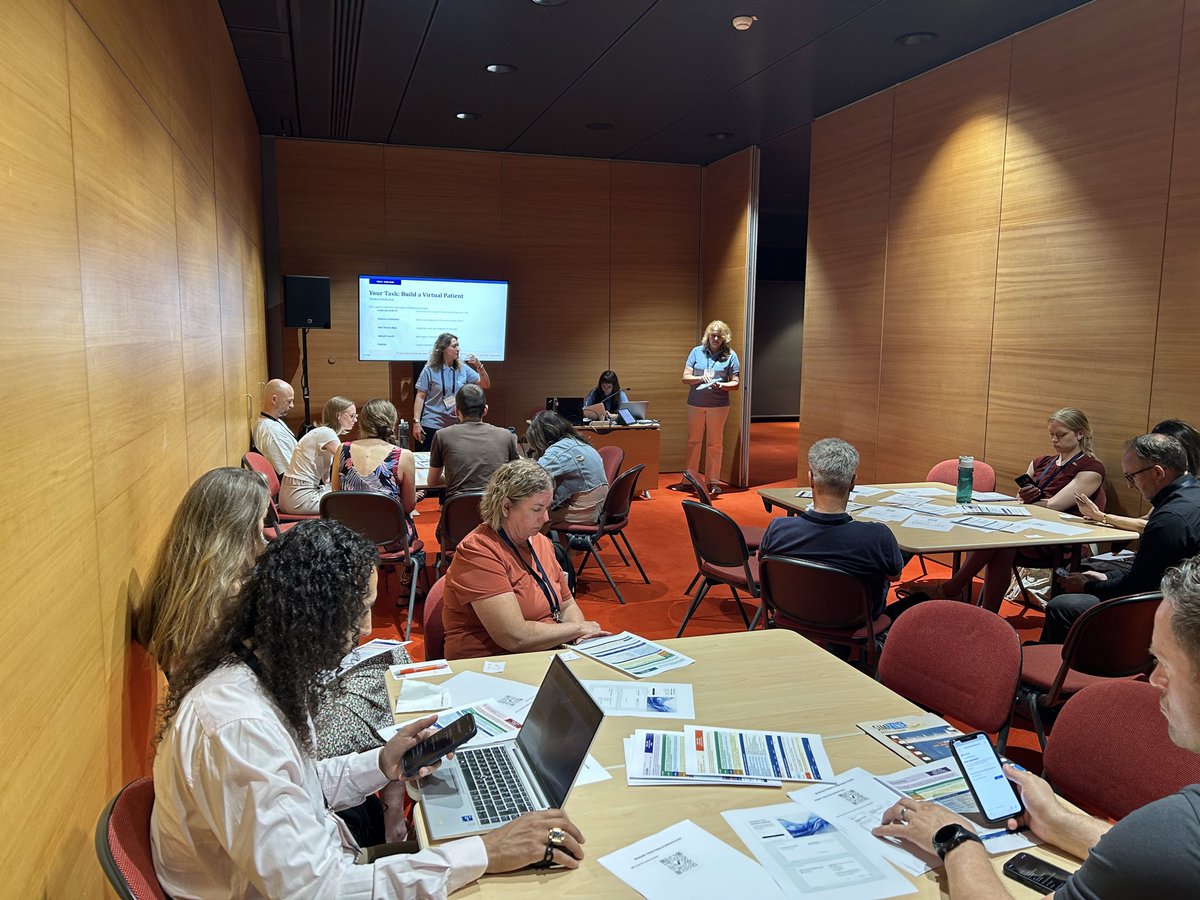
At the SESAM 2026 Conference in Lyon, France, we conducted the first pilot workshop of AI-Driven Patients — an early functional prototype that we are actively developing to explore new approaches in clinical simulation.
This was not just a demonstration. It was a live process of testing, validation, and interaction with real users.
Together with our trainers, participants went through the full cycle:
🔹 Introduction to the concept and live demo
🔹 Registration and first access to the system
🔹 Creation of their own clinical scenarios in Creator Mode
🔹 Running simulations in Consultation Mode
🔹 Case presentations and group discussions on clinical reasoning
🔹 Initial analysis of decision-making logic through AI-driven analytics
🔹 Debriefing, reflection, and structured feedback collection
For us, this was an important milestone — an opportunity to test the prototype in a real educational environment, identify emerging challenges, and better understand how AI can support the development of clinical reasoning.
This is only the beginning.
Ahead lies further validation, development of core modules, and preparation for future scaling.
Behind every strong workshop stands a strong team.
I sincerely thank Тетяна Антофійчук , Iryna Avramenko , Iryna Kyselova , and Mariia Yartseva for your professionalism, support, energy, and collaboration.
Together, we made this pilot possible.
#SESAM2026 #Lyon #MedicalSimulation #ClinicalSimulation #MedicalEducation #ClinicalReasoning #AIinHealthcare #HealthcareInnovation #PrototypeValidation #HealthTech #ClinCaseQuest #AIDrivenPatients
🔬 Seeking Consortium Partners | Erasmus+ KA220-HED · Horizon Europe · EU4Health
ClinCaseQuest with AI analytics and AI-driven patients is a simulation platform for healthcare education focused on strengthening clinical reasoning, healthcare workforce competencies, and reducing medical errors through evidence-based simulation training.
We are looking for universities, medical schools, and research institutions for collaboration within European grant consortia.
What we bring:
🔹 AI-driven clinical simulation and digital patient technologies
🔹 Deep clinical reasoning and branching simulation scenarios
🔹 Learning analytics and competency assessment supported by machine learning
🔹 Mathematical Model for Medical Error Severity Stratification (Cureus, 2024)
🔹 Defragmented Debriefing Model (SESAM / Advances in Simulation)
🔹 AI-assisted analysis of learner trajectories and competency development
🔹 Evidence-based healthcare education and psychological safety by design
🔹 Medical error reduction, patient safety research, and multicentre validation studies
🔹 Infrastructure for controlled educational research and pedagogical innovation
Our work combines medical education research, educational technology, and applied AI, making ClinCaseQuest a strong partner for projects in digital health education and healthcare workforce development.
We are particularly interested in:
→ Erasmus+ KA220-HED & CBHE
→ Horizon Europe Cluster 1
→ EU4Health
→ Digital Europe Programme
→ EIT Health projects
📩 Let’s connect:
🌐 https://t.co/emm04TMxwN
✉️ [email protected]
#ErasmusPlus #HorizonEurope #MedicalEducation #SimulationLearning #HealthProfessionsEducation #AIinEducation #ConsortiumPartner #EdTech #CompetencyBasedEducation #EU4Health #HigherEducation #DigitalHealth
💫 The Emotions of Learning: When the Right Clinical Decision Becomes a Victory
In the photo, an African medical student is genuinely celebrating after earning +10 points in a simulation scenario on the ClinCaseQuest platform.
This moment is more than just an emotion — it reflects the other side of the Mathematical Model for Medical Error Severity Stratification that underpins our simulation methodology.
🔹 If errors within a scenario are evaluated according to their level of clinical severity, then correct decisions follow a mirrored system of positive stratification — each successful action is rewarded in proportion to its importance for patient care quality and clinical outcomes.
The photo captures exactly such a moment: the student received +10 points for a clinical decision that had a significant positive impact on the patient's outcome.
Her excitement demonstrates that simulation-based learning can be deeply emotional when every correct decision feels like a real victory in patient care.
🩺 This emotional engagement is an essential part of our mission:
We want students not only to memorize algorithms, but to experience the clinical process, feel responsibility, enjoy success, and build confidence in their own abilities as future healthcare professionals.
#ClinCaseQuest #SimulationBasedLearning #MedicalEducation #ClinicalReasoning #Innovation #AIinMedicine #EmotionalEngagement #LearningThroughExperience #UkraineInScience #BranchingSimulation
🌐 ClinCaseQuest: Simulation Training Without Device or Location Limitations
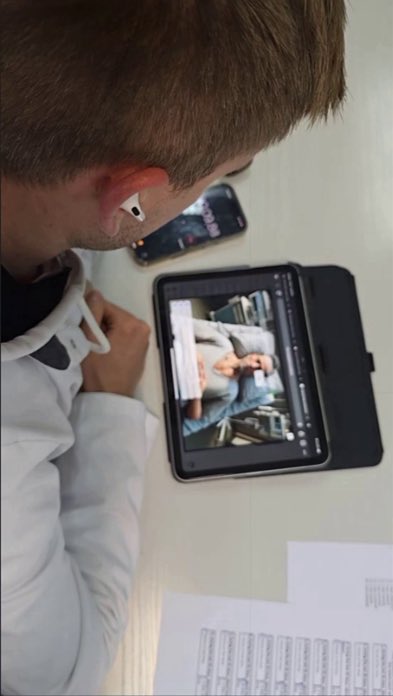
In the photo, students are simultaneously participating in a ClinCaseQuest simulation training session using different devices: smartphones, tablets, and laptops.
This is how we envision the future of medical education — flexible, accessible, and interactive.
Simulation training with ClinCaseQuest does not require specialized equipment or high-performance computers. Students can complete simulation scenarios from any device, anywhere with an internet connection.
🧠 This approach enables equal access to practical clinical training regardless of country, campus, or technical infrastructure.
Every student can develop clinical reasoning, decision-making, and teamwork skills within a convenient digital learning environment.
This is another step toward our mission: making high-quality simulation-based education accessible to every future healthcare professional.
#ClinCaseQuest #SimulationBasedLearning #MedicalEducation #DigitalInnovation #AIinMedicine #ClinicalReasoning #AccessibleEducation #BranchingSimulation #UkraineInScience
We are excited to announce that we have been selected to deliver a 90-minute workshop at the SESAM Annual Meeting 2026 in Lyon, France 🇫🇷
Workshop title:
AI-Driven Patients: Building and Running Intelligent Clinical Simulations in Real Time
The workshop will demonstrate how AI-powered technologies can transform simulation-based medical education through:
• rapid AI-assisted scenario generation
• AI-powered clinical scenario creator mode
• adaptive AI-driven patients
• interactive patient consultation mode
• real-time simulation logs
• AI-driven learning analytics for clinical reasoning assessment
Participants will gain hands-on experience designing intelligent clinical simulations, using the clinical scenario creator mode, running simulations in patient consultation mode, and analyzing automatically generated performance insights.
The session brings together an international multidisciplinary team from ClinCaseQuest& AI-Driven Patients, Kyiv Medical University, Shupyk National Healthcare University of Ukraine, and Bukovinian State Medical University.
We are proud to contribute to the future of healthcare simulation, faculty development, and AI-enhanced medical education at #SESAM2026.
#ClinCaseQuest #SESAM2026 #HealthcareSimulation #MedicalEducation #AIinHealthcare #ClinicalReasoning #VirtualPatients #DigitalHealth
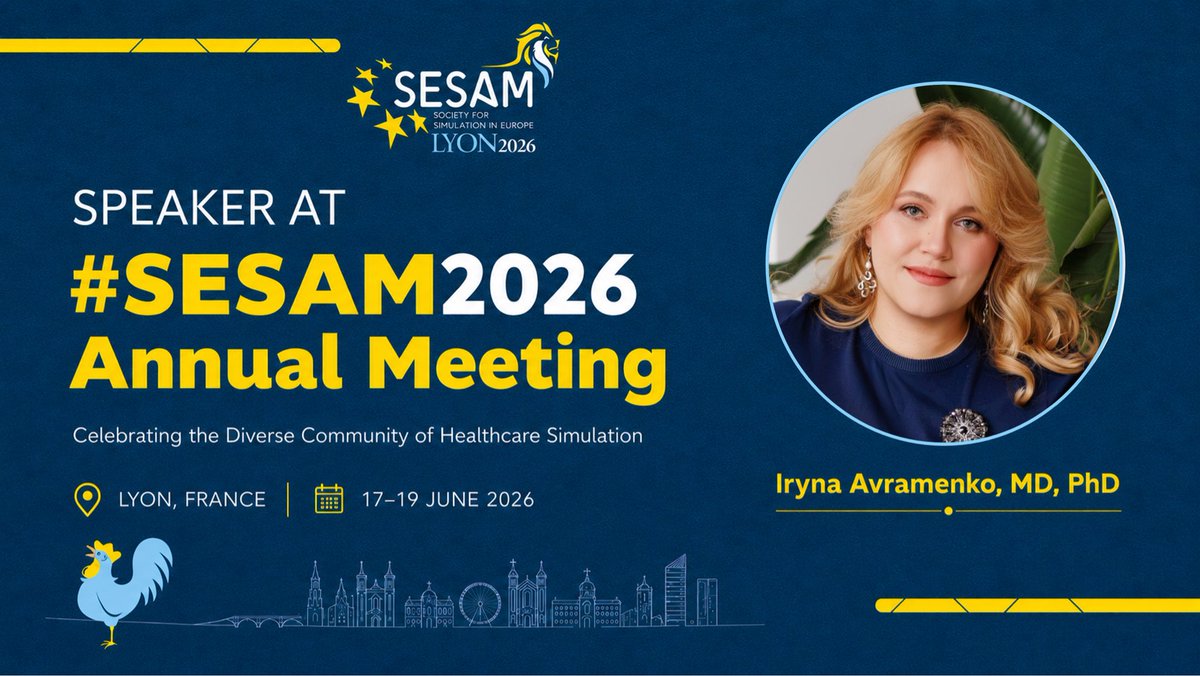
We are proud to share that Assoc. Prof. Iryna Avramenko, Head of our validation studies at Kyiv Medical University, will present an E-poster at the SESAM Annual Meeting 2026 in Lyon, France 🇫🇷
E-poster title:
“Psychological Safety and the Paradox of Anxiety Reduction in Simulation-Based Training: A Multicultural Single-Centre Study Applying the Defragmented Debriefing Model”
The study explores how psychologically safe simulation environments can reduce anxiety levels during simulation-based training while supporting deep clinical reasoning and learner engagement.
The research was conducted using the ClinCaseQuest platform and is directly connected to the validation of the Defragmented Debriefing Model and cognitive branching methodologies in multicultural medical education settings.
The findings demonstrated statistically significant anxiety reduction following simulation training, supporting the role of structured debriefing and psychologically safe educational design in healthcare simulation.
We are excited to contribute to the global discussion on simulation-based medical education, psychological safety, and AI-driven learning analytics at #SESAM2026.
#SESAM2026 #ClinCaseQuest #KMU #HealthcareSimulation #MedicalEducation #PsychologicalSafety #ClinicalReasoning #AIinHealthcare
We are proud to share that Assoc. Prof. Iryna Avramenko, Head of our validation studies at Kyiv Medical University, will be presenting at the SESAM Annual Meeting 2026 in Lyon, France 🇫🇷
Presentation topic:
“Validation Study of a Branching Simulation Integrating Mathematical Error Stratification and Defragmented Debriefing: Evidence from a Multicultural Single-Centre Cohort of Medical Students”
The study is directly connected to the validation of ClinCaseQuest simulation methodologies, including cognitive branching, mathematical error stratification, and the Defragmented Debriefing model.
This presentation represents another important step toward the international scientific validation of deep clinical reasoning approaches based on cognitive branching, with further integration of AI-driven analytics.
We are excited to contribute to the global healthcare simulation community at #SESAM2026 and look forward to connecting with educators, researchers, and innovators in Lyon this June.
#SESAM2026 #KMU #ClinCaseQuest #HealthcareSimulation #MedicalEducation #AIinHealthcare #ClinicalReasoning
We’re proud to share that ClinCaseQuest will be presented at the SESAM Annual Meeting 2026 in Lyon, France 🇫🇷
Our founder, Dr. Nataliia Lopina, has been selected to deliver an oral Short Communication at one of the leading global conferences in healthcare simulation.
🔬 Presentation topic:
AI-Assisted Analysis of Branching Clinical Simulation Reports: Evidence from a Multicultural Multi-Centre Study on Enhancing Efficiency and Quality Management
This research reflects our core mission: transforming clinical simulation through AI-driven analysis and deep clinical reasoning based on cognitive branching.
At ClinCaseQuest, we are developing next-generation simulation environments that go beyond traditional training — enabling deep analysis of clinical reasoning, identifying error patterns, and improving decision-making through advanced AI-driven learning analytics.
This work demonstrates how structured analysis of branching simulation data can significantly enhance both educational outcomes and quality management in healthcare systems.
We’re excited to contribute to the global conversation on the future of simulation-based medical education and to connect with innovators, educators, and partners in Lyon this June.
#SESAM2026 #HealthcareSimulation #MedicalEducation #AIinHealthcare #ClinicalReasoning #DigitalHealth #EdTech #ClinCaseQuest
🏆 We are proud to share that our founder, Nataliia Lopina, was ranked #1 in the EXIST-Women 2026 program at Brandenburg University of Technology Cottbus-Senftenberg (Germany).
The program brought together 34 participants, with selection based not only on the startup idea, but also on the founder’s profile, motivation, and potential.
This recognition reflects not only an individual achievement, but also the strength of the mission we are building at ClinCaseQuest.
At this stage, we are developing an AI-driven analytics module for clinical reasoning in branching simulations.
Instead of evaluating only final answers, we focus on: • decision pathways • cognitive patterns • severity and structure of medical errors
This approach allows us to transform simulation data into measurable, objective learning analytics.
Medical errors remain one of the leading causes of death worldwide. Improving how clinicians think - not just what they answer - is key to reducing these errors.
The EXIST-Women program provides mentorship, training, and a strong innovation ecosystem, supporting the next phase of our development.
The EXIST program is supported by the German Federal Ministry for Economic Affairs and Energy and co-financed by the European Union (ESF Plus).
We would also like to express our sincere gratitude to the evaluators and professors for their time and valuable feedback.
Special thanks to the Gründungsservice der BTU team for their support throughout the application process for their guidance.
We are grateful for the support - and moving forward 🚀
#HealthTech #EdTech #AI #MedicalEducation #Simulation #WomenInTech #WomenInScience #FemaleFounders #Startup #ClinCaseQuest #EXISTWomen #BTU #Cottbus
🎥 Behind the scenes of validation: how ClinCaseQuest was tested in real clinical learning environments
We are sharing moments from the validation study conducted with 5th- and 6th-year students of Kyiv Medical University.
This video captures not just the process — but the real engagement, focus, and clinical thinking that emerged during simulation training.
🧠 Students interacted with branching scenarios, made clinical decisions, reflected on outcomes, and learned through structured debriefing.
These are the moments where learning becomes experience — and experience becomes competence.
📍 Multicultural cohorts
📍 Real clinical reasoning
📍 Safe and adaptive learning environment
ClinCaseQuest in action.
#ClinCaseQuest #SimulationBasedLearning #MedicalEducation #ClinicalReasoning #AIinMedicine #ValidationStudy #KyivMedicalUniversity
📸 In the photo: a student during a simulation training session on the ClinCaseQuest platform is performing cardiac auscultation and independently counting the heart rate using a stopwatch.
This is exactly the effect we aimed to achieve when creating our branching simulations — so that the student does not simply see ready-made vital signs on the screen, but performs clinical actions independently, just as in real practice.
🩺 This approach transforms simulation from a “digital game” into a полноценный clinical experience, where every step requires observation, analysis, and clinical reasoning.
The student does not receive ready-made answers — they learn to see, hear, count, and think. In ClinCaseQuest simulations, the student acts as a physician, not just clicking buttons.
This is the essence of cognitive branching: instead of passive learning — active immersion in the decision-making process.
#ClinCaseQuest #SimulationBasedLearning #MedicalEducation #ClinicalReasoning #Innovation #AIinMedicine #BranchingSimulation #PedagogicalExperiment #UkraineInScience
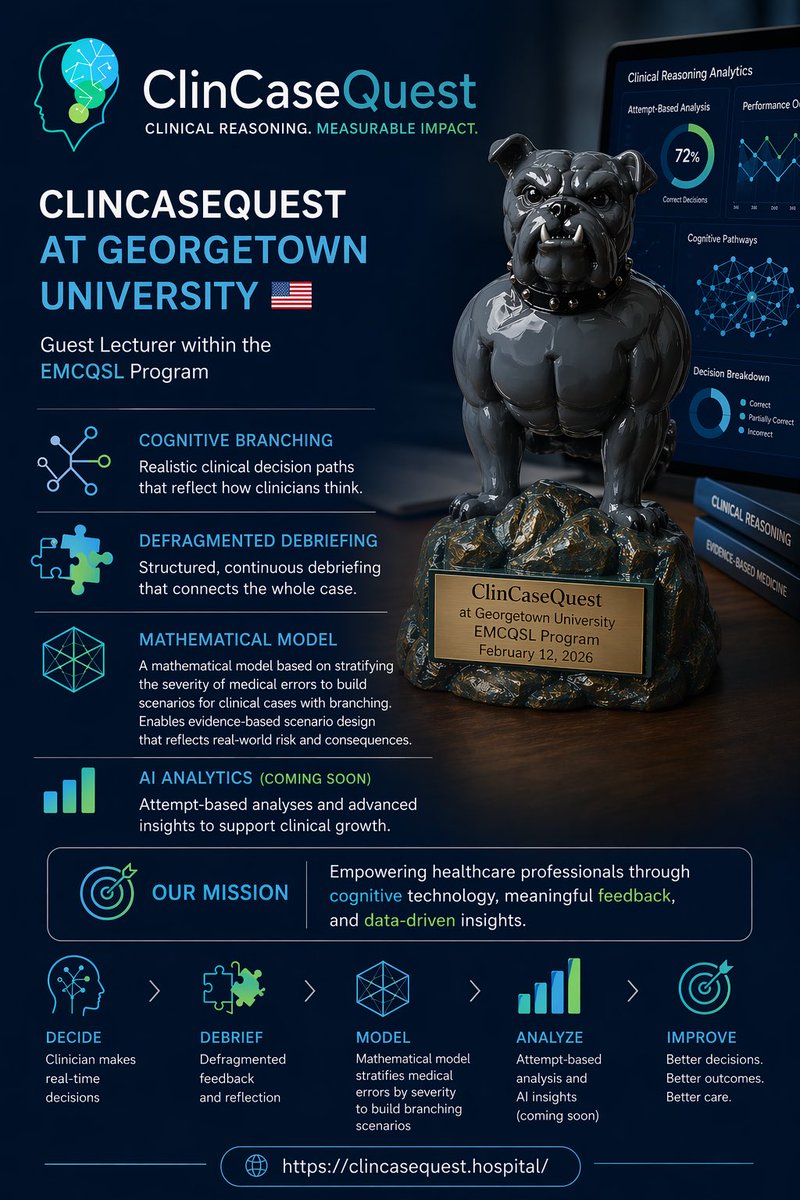
ClinCaseQuest at Georgetown University 🇺🇸
We were honored to contribute to the EMCQSL Program at Georgetown University as a guest lecturer — a space where clinical quality, patient safety, and leadership come together.
This experience once again confirmed an important idea:
clinical reasoning is not just about the final diagnosis — it is about the pathway of thinking.
At ClinCaseQuest, we focus on making this pathway visible and measurable through:
🔹 Cognitive Branching — reflecting real clinical decision-making trajectories
🔹 Defragmented Debriefing — continuous feedback integrated within the scenario
🔹 Mathematical Model — stratifying the severity of medical errors to build meaningful branching scenarios
🔹 AI Analytics (coming soon) — attempt-based analysis to understand how decisions are made, not just their outcomes
We are deeply grateful to the EMCQSL community for meaningful discussions, trust, and collaboration around patient safety and learning from errors across institutions and borders.
Special thanks for the symbolic recognition — a reminder of strength, resilience, and commitment to better clinical decisions.
🌐 https://t.co/rUOMajftC0
#ClinCaseQuest #ClinicalReasoning #MedicalEducation #PatientSafety #Simulation #HealthcareInnovation #LearningFromErrors #GeorgetownUniversity #EMCQSL
🎥 How students learn clinical thinking through simulation
In this video, you can see real students working with clinical scenarios on the ClinCaseQuest platform as part of a validation study.
Together with Bukovinian State Medical University, we explore how clinical thinking is formed — not only the final result, but the pathway to it.
💡 Key observation:
Even when 100% of students arrive at the correct final diagnosis, their clinical reasoning pathways can differ significantly.
That is why we are developing a new approach —
Attempt-Based Analysis of clinical reasoning
📊 based on:
• branching simulation logs
• dynamic analysis of decision-making
• AI-driven analytics of the thinking process
This allows us to:
✔ evaluate not only the correctness of answers
✔ identify hidden reasoning errors
✔ develop deep clinical competence
🌿 Simulation is not only about learning.
It is a psychologically safe space for thinking, making mistakes, and growing.
🙏 We sincerely thank the students and faculty of BSMU for their openness to innovation and participation in this study.
🚀 We continue to develop new standards in medical education.
#MedicalSimulation #ClinicalReasoning #MedicalEducation #SimulationTraining #PsychologicalSafety #DefragmentedDebriefing #ClinCaseQuest
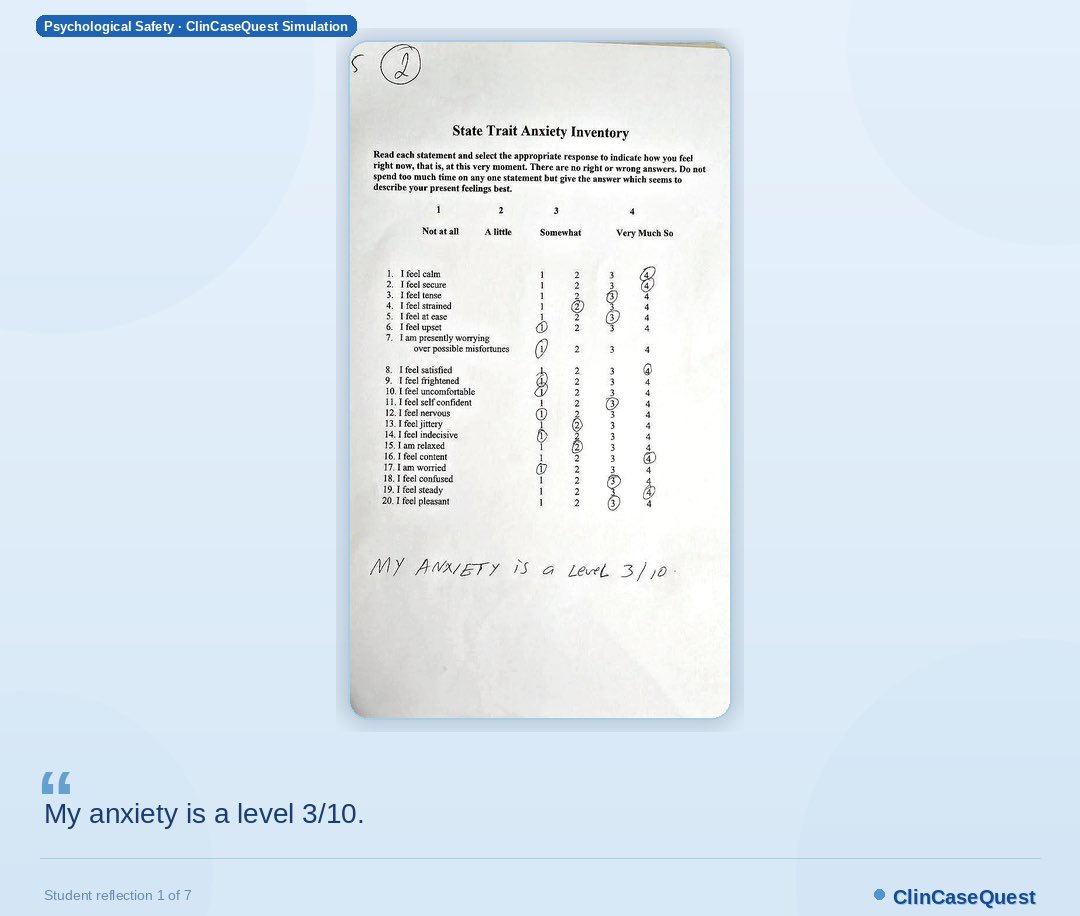
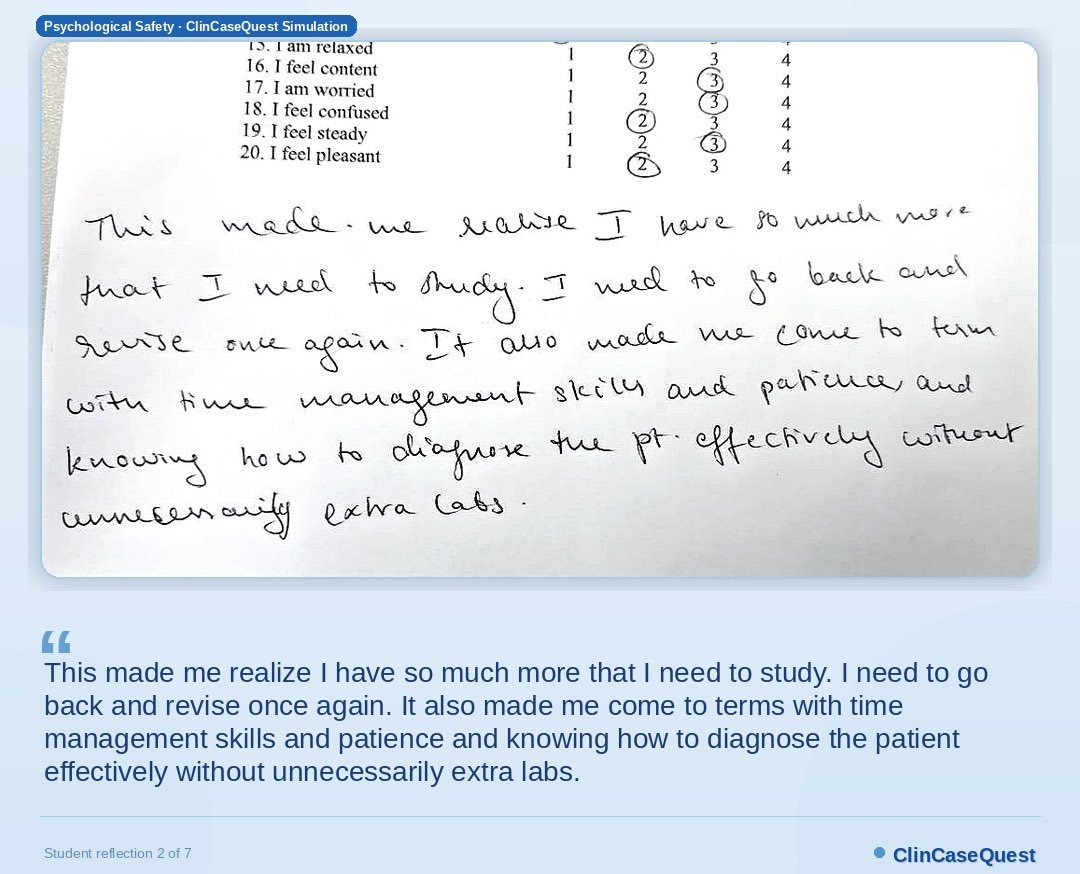
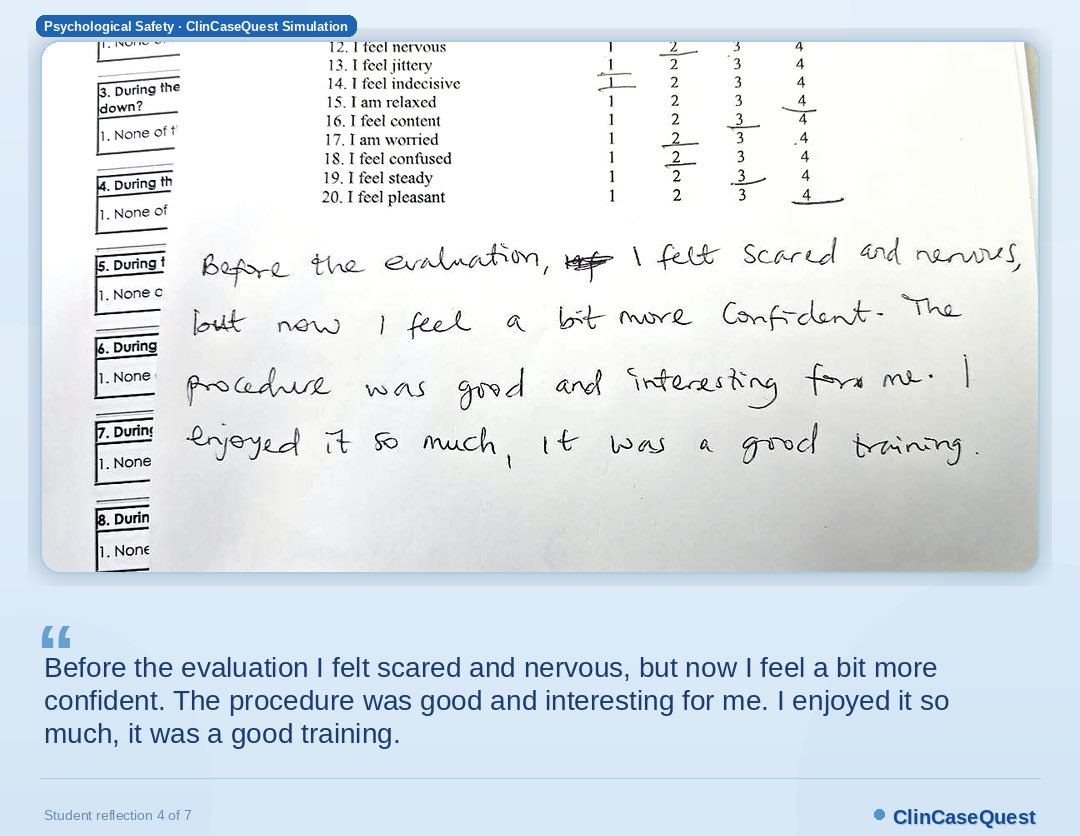
💬 Key words from students’ open feedback after completing simulations in ClinCaseQuest (as part of a psychological safety study conducted in collaboration with Kyiv Medical University):
🩵 calm — emotionally balanced, composed 💪 confident — confident in their knowledge 😊 relaxed — reduced tension, more at ease 🌟 capable — feeling competent ��� motivated — inspired to continue learning 😌 less anxious — reduced anxiety 🙂 happy — satisfied with the outcome 🕰️ patient — attentive, composed 📚 confident in my knowledge — increased self-confidence in knowledge ➡️ more confident to continue — readiness to move forward 💡 hopeful for the future — optimism and belief in personal growth
📌 These words did not appear by chance: students were asked only to complete standardized scales (K10, STAI-S), yet some of them voluntarily added their own reflections and thoughts.
🌿 This is a direct reflection of the impact of ClinCaseQuest simulation: less anxiety → more calmness, confidence, and internal stability
📊 These qualitative insights align with the quantitative findings of the study: after the simulation, levels of state anxiety decrease, while students demonstrate increased confidence in their knowledge.
💡 We describe this as the phenomenon of anxiety reduction after simulation in ClinCaseQuest — an effect identified through our joint educational research.
📌 The study was conducted in collaboration with Kyiv Medical University as part of a joint research project under the scientific supervision of Iryna Avramenko and Mariia Yartseva.
🚀 At ClinCaseQuest, we create an environment where learning becomes experience, and experience becomes a source of confidence.
#ClinCaseQuest #SimulationBasedLearning #MedicalEducation #PsychologicalSafety #DefragmentedDebriefing #Innovation #AnxietyReduction #AIinMedicine #UkraineInScience
🧠 Psychological Safety in Simulation-Based Learning: What Students Really Experience
As part of a validation study at Kyiv Medical University, we analyzed both learning outcomes and the psycho-emotional state of students during simulation-based training.
📌 Study design:
•Prospective single-center study
•31 students (5th–6th year, international cohort)
•Platform: ClinCaseQuest
•Branching simulations with integrated Defragmented Debriefing
•Supervised by Iryna Avramenko and Mariia Yartseva
📊 Assessment tools:
•K10 (psychological distress)
•STAI-S (state anxiety)
📌 Key observation:
Although students were only asked to complete standardized questionnaires, many spontaneously added personal reflections—sharing thoughts and emotions in their own words. This became one of the most meaningful outcomes of the study.
�� Student reflections:
Students reported reduced anxiety, increased confidence, improved clinical reasoning, and greater motivation to study. Many described moving from fear and uncertainty to calmness, focus, and self-assurance after simulations.
📉 Results:
•Average state anxiety decreased by 13.2%
•45% of students showed reduced anxiety
💡 Conclusion:
Simulation-based learning is not only about performance metrics. It creates a psychologically safe space where students can think, reflect, and grow. Sometimes the most important data are not numbers, but what learners choose to express themselves.
#ClinCaseQuest #SimulationBasedLearning #MedicalEducation #PsychologicalSafety #DefragmentedDebriefing #Innovation #AnxietyReduction #AIinMedicine #UkraineInScience