Why Do Some Women Release Fluid During Sex?
Have you ever wondered why some women release fluid during sexual stimulation or orgasm, while others do not? Let’s break it down medically in simple terms.
1. Female Ejaculation
Female ejaculation is when a woman releases a small amount of fluid through the urethra (the opening where urine comes out) during sexual stimulation or orgasm. The fluid is thought to come mainly from the Skene’s glands, which are located near the urethra. It may appear whitish or milky.
2. Squirting
Squirting usually involves the release of a larger amount of fluid through the urethra during sexual stimulation, sometimes with orgasm and sometimes without it. Research suggests that much of this fluid comes from the bladder and may contain diluted urine. It can also contain secretions from the Skene’s glands.
Although female ejaculation and squirting are often confused, they may differ in the amount and composition of the fluid released.
3. Why Does It Happen?
Sexual stimulation causes changes in the body involving the pelvic muscles, bladder, urethra, and nearby glands. These changes may lead to fluid release in some women. However, scientists are still studying exactly how the process works.
4. Does It Happen to Every Woman?
No. Some women experience female ejaculation, some experience squirting, some experience both, and others experience neither. These differences are generally normal.
5. Is It Necessary for Orgasm?
No. A woman does not need to release fluid to experience pleasure or reach orgasm. The amount of fluid released—or whether any fluid is released at all—does not determine how aroused or satisfied she is.
How the Cervix Opens During Labour: A Remarkable Part of Childbirth
During pregnancy, the cervix generally remains firm and closed, helping protect the developing baby inside the uterus.
As labour progresses, the cervix undergoes remarkable changes:
🔹 0–3 cm: Early Labour
The cervix begins to soften, thin out (effacement), and open gradually.
🔹 4–6 cm: Labour Progresses
The cervix continues to dilate as uterine contractions become stronger and more regular. The amniotic sac may help apply pressure to the cervix.
🔹 7–10 cm: Advanced Labour
The cervix continues to thin and open until it reaches 10 cm dilation, which is generally considered full dilation and allows the baby to pass through the birth canal during vaginal delivery.
The process varies from person to person, and cervical dilation does not always follow these exact stages or timelines.
A recent study documented COMPLETE REMISSION of Stage IV cancers using fenbendazole.
Patients with advanced melanoma, breast, and prostate cancer saw their tumors disappear — without chemotherapy.
A healthy person kisses an HIV-positive individual on the lips. There is no visible blood in either person’s mouth.
What is the risk of HIV transmission through this kiss?
A) Very high risk
B) Moderate risk
C) Low but significant risk
D) No risk in ordinary kissing
Why Every C-Section Scar Looks Different 🤰🏥
Not all C-section scars heal the same way. Some become thin, flat lines, while others may develop into hypertrophic or keloid scars, widen, appear depressed, or become darker than the surrounding skin.
These differences can be influenced by genetics, skin type, wound healing, and other factors.
Understanding the different types of scars helps distinguish typical healing patterns from changes that may need medical attention.
Save • Learn • Share 🩺
How Cataracts Are Treated: Modern Eye Surgery Is Remarkable
Cataracts cause the eye’s natural lens to become cloudy, leading to blurred vision and, in severe cases, blindness.
The good news? Cataracts can often be treated through surgery, during which doctors remove the cloudy lens and replace it with an artificial one. Many patients experience significant improvement in their vision afterward.
🌍🚨 SUPER EL NIÑO: Could Extreme Heat and Heatwaves Put Africans at Risk? Here’s How to Protect Yourself! 🥵☀️
Have you heard about Super El Niño and its potential impact on global temperatures and weather patterns? With concerns about extreme heat, Nigerians need to understand the risks of heat exhaustion and heatstroke.
Here are practical ways to protect yourself:
💧 Stay hydrated: Drink water regularly throughout the day, even when you’re not thirsty.
☀️ Avoid peak heat: Limit strenuous outdoor activities during the hottest hours, usually late morning through afternoon.
👕 Dress smart: Wear lightweight, loose-fitting, light-coloured clothing and a wide-brimmed hat outdoors.
🏠 Keep cool: Stay in shaded, well-ventilated or air-conditioned spaces where possible. Close curtains against direct sunlight.
🚗 Never leave anyone in a parked car: Temperatures inside vehicles can rise dangerously fast, even with the windows slightly open.
👵🏽 Check on vulnerable people: Children, older adults, outdoor workers and people with chronic illnesses may be at greater risk.
⚠️ Know the warning signs: Heavy sweating, dizziness, headache, nausea and weakness can indicate heat exhaustion.
🚑 Recognise heatstroke: Confusion, seizures, collapse or a very high body temperature may indicate a life-threatening emergency. Call emergency services, move the person to a cool place and cool them rapidly with cold water or wet cloths. Do not give fluids to someone who is confused or unconscious.
Important: El Niño does not automatically mean Nigeria will experience a specific level of extreme heat. Its effects vary by region, and forecasts should be checked with reliable meteorological agencies.
📢 Share this information. Staying informed and taking precautions can save lives!
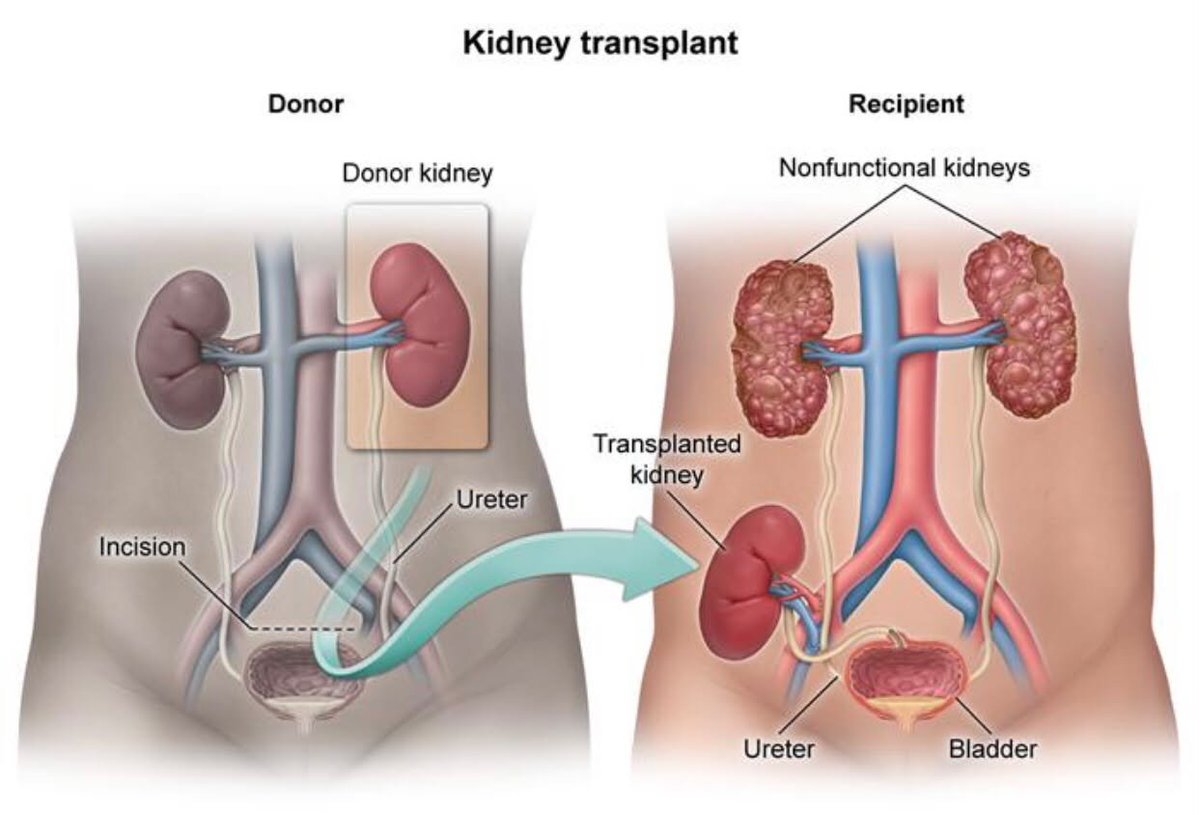
DID YOU KNOW THAT WHEN YOU RECEIVE A DONATED KIDNEY, THEY DON’T REMOVE THE BAD ONE, THEY JUST ADD THE NEW ONE?
When someone’s kidneys fail and they need a kidney transplant, you might assume the surgeons will remove the two damaged kidneys and replace them with a healthy one.
BUT THAT IS NOT WHAT USUALLY HAPPENS! 🔥
In most kidney transplants, the patient's original kidneys are left inside their body. Instead, the surgeon places the donated kidney in the lower abdomen, connects it to the blood vessels and bladder, and allows it to take over much of the work of filtering the blood and producing urine.
Read that again!
*TWO OLD KIDNEYS + ONE DONATED KIDNEY = THREE KIDNEYS IN ONE BODY!*
And no, the original kidneys do not necessarily have to be removed just because they have stopped working properly. Doctors usually leave them alone unless there is a medical reason to take them out.
Of course, there are exceptions. If the original kidneys cause certain complications, such as recurrent infections, cancer or other serious problems, doctors may decide to remove one or both.
But here's what you need to know: the donated kidney doesn't even need to occupy the original kidney's position to function! It can do its job from its new location in the lower abdomen.
Human anatomy will humble you if you let it. 🌚
Imagine carrying three kidneys and still not knowing where your spare one is!
Lungs of a 52-Year-Old After 30 Years of Smoking Were Rejected for Organ Donation
These are the lungs of a 52-year-old organ donor who had smoked for 30 years. The lungs were reportedly rejected for transplantation because of their poor condition.
Smoking can cause severe, long-term damage to the lungs, affecting their ability to function properly.
A powerful reminder of the lasting consequences of smoking. 🚭
FG Confirms Ebola Case In FCT ABUJA
The Federal Government has confirmed a case of Ebola virus in the Federal Capital Territory (FCT).
🚨 EBOLA CONFIRMED IN THE FCT: WHAT SHOULD YOU DO?
Prevention starts with the right information, not panic.
✅ Wash your hands regularly with soap and water.
✅ Avoid contact with the blood and body fluids of anyone suspected of having Ebola.
✅ Never touch the body of someone who has died from suspected Ebola.
✅ Watch for fever, severe weakness, headache, vomiting and diarrhea, especially after possible exposure.
If you have symptoms after a possible exposure, call public health authorities before going to the hospital. This helps protect you, other patients and healthcare workers.
In Nigeria, call the NCDC toll-free line on 6232 for guidance.
Do not spread rumours or stigmatize anyone. Early reporting, contact tracing and safe medical care can save lives.
Share this information. It could help someone make the right decision.
Warning: This is a human brain. Yes, you can see the pulsations. You can see the Dura is opened. You can see the arachnoid and the pia. What else did you notice?