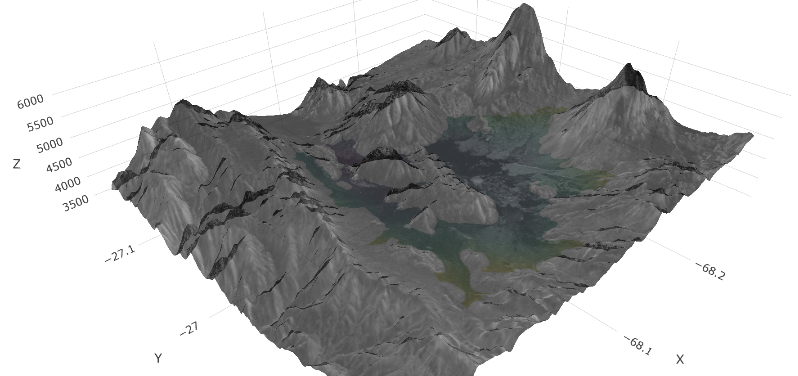
Lithium is not a rare mineral. Dozens of undeveloped lithium deposits are already known to exist.
I wrote this post to explain how to compare them.
https://t.co/dDX0eSjJtT
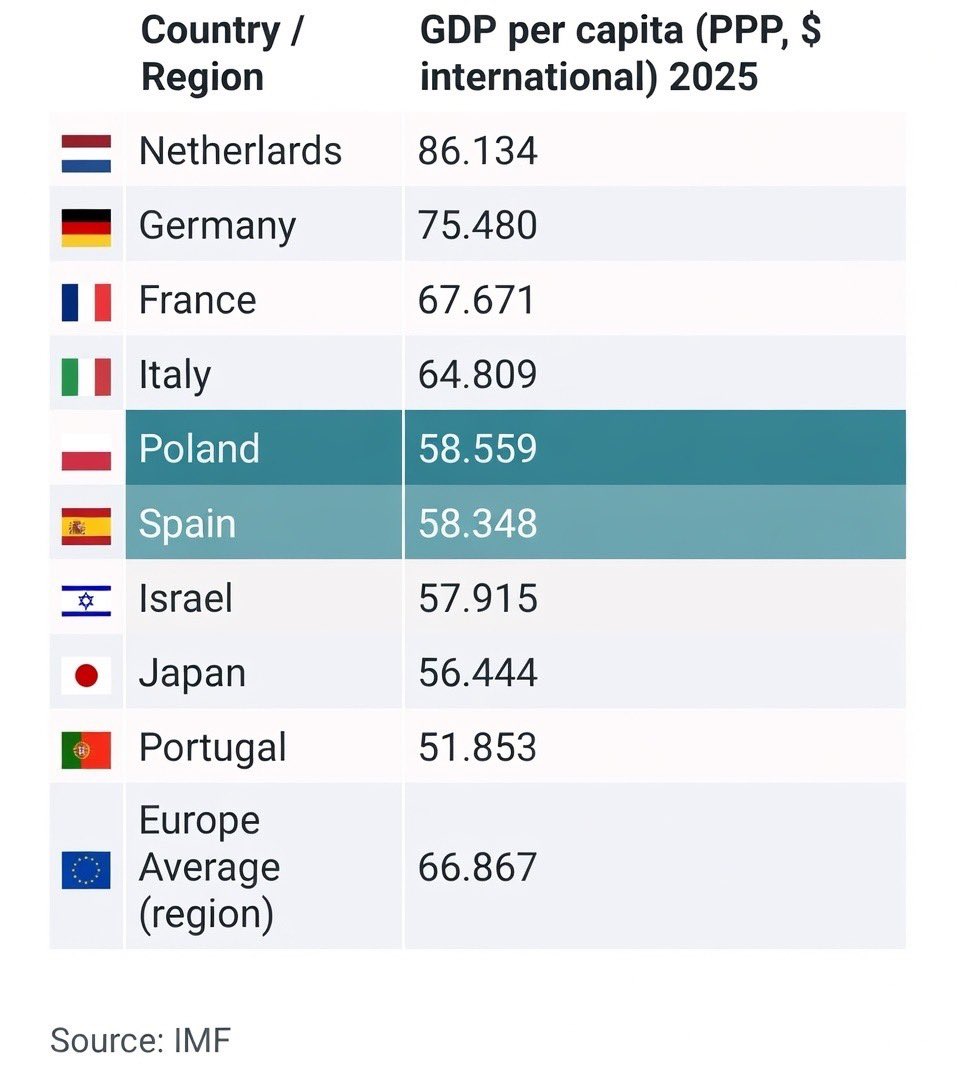
Poland's standard of living surpassed Japan's, it also overtook Spain last year.
Free market, capitalism and entrepreneurialism are the only proven way to escape socialist misery and poverty. One cannot multiply wealth by dividing it, prosperity can be only created by hard work.
The 3-2-1 Backup Rule is more important than ever if you code with AI because fatal accidents can happen
It means you should have 3 copies of your data, in 2 different media types and 1 copy off-site
1) One is the actual data on your own server (the hard drive) or DB server
2) One backup is in cloud storage (that's the different media type)
3) One backup is off site, at another provider, and preferrably in another geographical location
For me that's 1) Hetzner VPS, 2) Hetzner's own daily and weekly backups on the dashboard, and 3) Backblaze B2
Hetzner's own backups are impossible to access by the VPS or AI, so that's safer
If you use AWS or other providers you can apply the 3-2-1 Backup Rule in your own way
I've never lost any data!
Benedict Evans' OpenAI piece is really a first-principles strategy essay in disguise. His core framework:
Durable advantage requires structural compulsion, not just excellence. The test isn't "Is your product good?" — it's "What mechanism prevents you from losing even when competitors match your technology?"
He runs every OpenAI asset through this filter and keeps getting the same answer: nothing.
No network effects (my using ChatGPT doesn't make yours better). Engagement a mile wide but an inch deep (80% of users send <3 prompts/day). The chatbot is a "thin wrapper" — an input box and output box on an undifferentiated engine, just like browsers were.
The killer distinction: platforms harness external creative energy while you hold the reins (iOS, Windows). Infrastructure merely enables what gets built on top (TSMC, AWS). OpenAI is positioning as a platform but may structurally be infrastructure.
Capital intensity without lock-in is WeWork, not Uber. And incumbents with distribution beat pioneers with technology once the tech is replicable — which it is.
It's Munger-style inversion applied to the hottest company in tech. Not "Why will OpenAI win?" but "What structural mechanism would prevent OpenAI from losing?" The silence is deafening.
How will OpenAI compete? — Benedict Evans https://t.co/8x51y7uakg
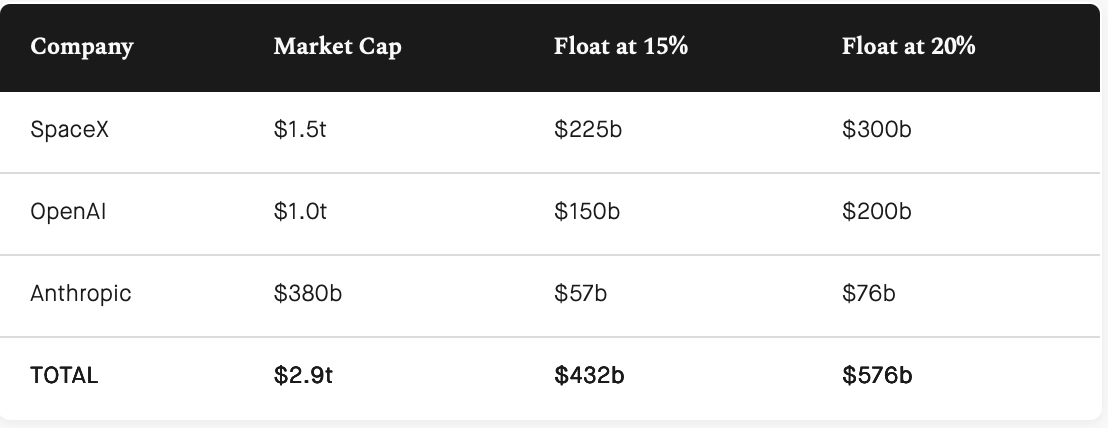
We’re about to witness three of the largest IPOs in history. SpaceX is targeting $1.5t. OpenAI aims for $1t. Anthropic is valued at $380b. Combined, $2.9t in market cap.
The scale is unprecedented. But the real problem isn’t the market cap. It’s the float.
Typical IPOs offer 15-25% of their shares to public markets. This creates enough liquidity for price discovery while allowing founders & early investors to maintain control. Facebook floated 15%. Google floated 19%. Alibaba floated 15%.
At a 15% float, here’s what these three IPOs would require :
E187 with @ZelandezGene & @Clint_Van the founders of #Zelandez is online. Learn how innovation and technology is changing the world of brine. https://t.co/xAVnHJoeAh
The latest edition of The Power Current is out and today we welcome @ErnestScheyder author of the terrific new book "The War Below: Lithium, Copper And The Global Battle To Power Our Lives"
https://t.co/bMSJJnqJgZ
I landed in the United States 10 years ago with nothing but credit card debt.
After one startup exit, one big tech job, and one unicorn, I genuinely believe that it wouldn't have been possible anywhere else in the world.
Here are 10 things I love about this country:
So today, when I read https://t.co/0DjpclovR1 from @jimniels, my head & heart were instantly transported back to that fateful disagreement.
Wish I'd had his post to better make my arguments, though I fear it wouldn't have made much difference.