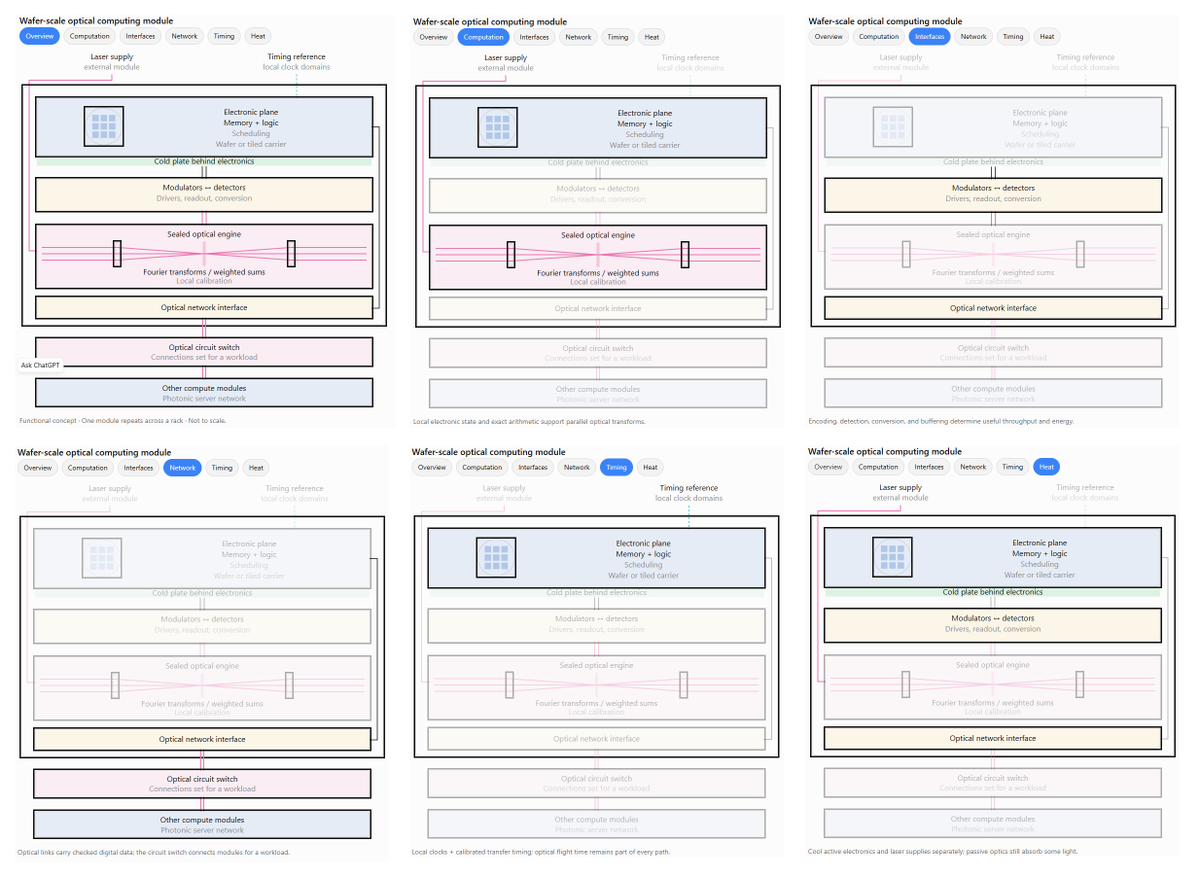
You've got to think outside of the box @elonmusk Everyone is trying to go small on mini wafes. Go bigger and use light instead. Removing the size constraint opens up more ambitious design options: wafer-scale electronic compute and memory, a separate free-space optical calculation stage, and optical links across the rack. Photonic server integrations is the future and Google has already proven its TPU v4 mirrors can reconfigure connections in ms. Perform as much useful computation as possible for each memory access, each optical input, and each conversion between light and electricity, no need for huge electricity plants either, see pdf. You owe me a good commission in this. :-)
Explore what Indigenous psychedelic traditions and modern neuroscience can teach us about neuroplasticity, emotional healing, and the promise and limitations of psychedelics in mental healthcare. https://t.co/Gg00WNLg6G
@elonmusk It’s the Claude Effect. They want to stamp everything as Claude and that won’t work in the longterm. It would be very interesting to learn want the age distribution is @elon
@elonmusk Starship + lunar far side. A stage-gated concept study looks at selected radioactive-waste transport and far-side storage. It deliberately separates arithmetic stretch cases from credible next steps and recommends Phase 0-1 only. No radioactive payload until every technical, legal and safety gate closes. Open to formal technical evaluation. "Lunarific"
Conceptual base construction next. Tesla Optimus robots assemble modular habitats, solar farms and support structures on the far side to support long-term operations. LUNARIFIC 3.0 keeps every such activity inside a gated research architecture. No radioactive material until every gate is closed.
Healthcare doesn't end when you leave the hospital. My-E-Health we are proud to be able to be by your side every step of the way. https://t.co/LAloGDxwT2
@elonmusk@SpaceX Conceptual base construction. Tesla Optimus robots can charge themselves in theri moon buggy, assemble modular habitats, solar farms and support structures on the far side to support long-term operations. LUNARIFIC 3.0 keeps every such activity inside a gated research architecture. No radioactive material until every gate is closed.
@SpaceX@elonmusk Conceptual only. A future in which reusable lunar cargo is routine could enable premium services that solve multi-generational Earth problems. One candidate under study: carefully selected, fully conditioned material with independent safety authority and funded far-side stewardship. The plan’s own words: do not fund fiction. Fund the research architecture that preserves the real option, LUNARIFIC 3.0.
@SpaceX Night pad. Far-side surface. An independent concept (LUNARIFIC 3.0) examines selected radioactive-waste transport using Starship-class vehicles. It is deliberately cautious and recommends only Phase 0-1 research and non-radioactive demonstration. The stewardship problem is real. The logistics reference point has shifted. Happy to share the non-confidential summary for technical review.
@elonmusk Low-angle far-side surface. This is the environment under consideration for long-term stewardship of a narrow class of high-value radioactive material — if, and only if, every technical, legal, and safety gate can be closed. Starship changes the transport equation.
The concept study insists on discipline first.
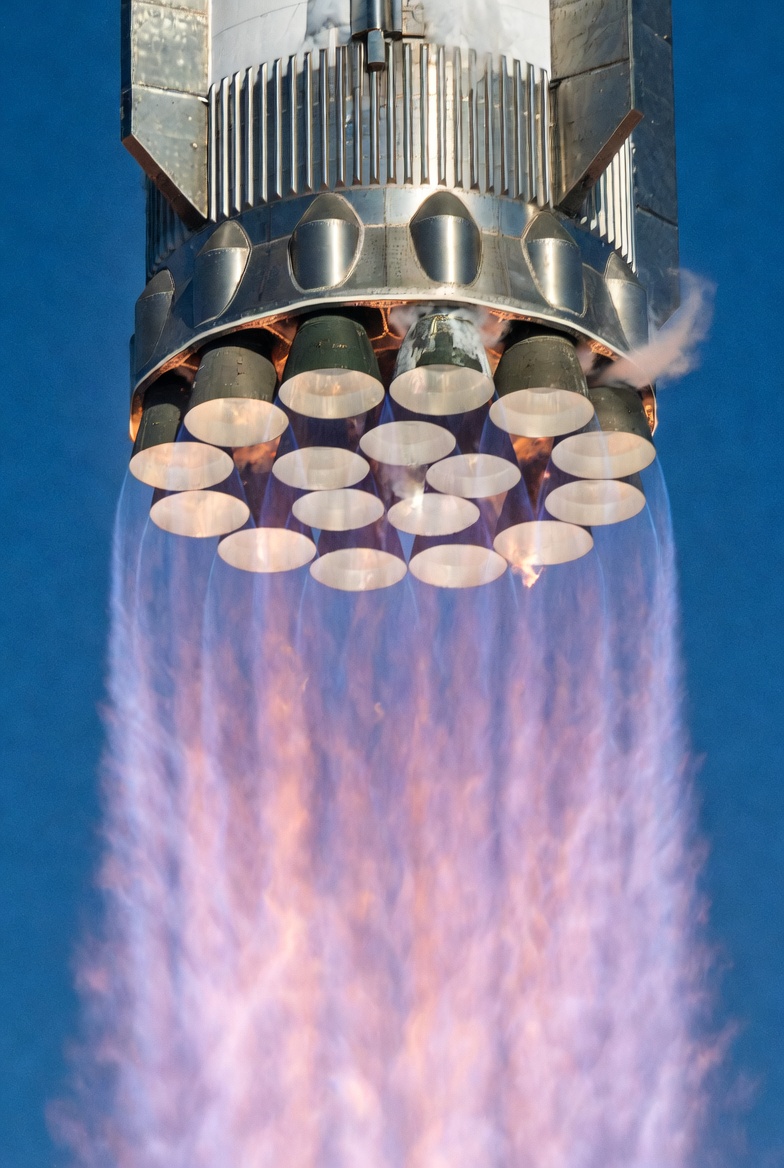
@SpaceX Raptor engines. Real thrust. Moving selected, conditioned material to the lunar far side would require thousands of landings over time plus tankers and infrastructure. That is why any serious plan starts with non-radioactive package development, independent safety authority, and policy pathway work. Cadence and certification are the binding constraints — not the rocket size.
Full stack. Clear day. Starship’s published lunar cargo rate is $100 M per tonne. That number opens a new conversation about high-value, politically stranded materials that carry extraordinary long-term risk on Earth. A detailed concept study already distinguishes what is currently credible from what remains a stretch. Phase 0-1 research is the only recommended next step.
@elonmusk Night launch. Real capability. Global spent nuclear fuel inventory: ~448,000 tonnes discharged, ~322,000 still stored. A vertically integrated service concept exists that pairs Starship-class transport with multi-barrier packaging and far-side emplacement — but only after rigorous stage gates. The first step is honest feasibility work, not hype.
@Wendy168aa The Chinese Queqiao satellite has already communicated from the dark-side at a distance of about 65000 km behind the moon @elonmusk would solve this in a heartbeat too.