We’re excited to announce the launch of the next version of https://t.co/cXOh7q3ZVT.
You can now build and deploy DeepAgents in hours—not weeks—without the heavy lifting of designing architectures, stitching tools with LLMs, or doing complex context engineering, just like the big players!
If you’re building DeepAgents for your company or clients and would like a demo, email us at [email protected].
Join the waitlist for early access and receive a $100 credit toward building and deploying complex agents.
This video was taken at @MIT@medialab at Project #NANDA: Architecting the Internet of AI Agents part of #bostonAIWeek presented by our ceo @thomasarul
P.S. Earlier this year, we launched RemoteAgent v1, which operated via email and powered over 3,000 use cases—ranging from research reports to coding tasks, presentations, real estate data, and complex spreadsheets. You can see samples here https://t.co/xhc9wEbU5U
The new version of RemoteAgent connected to over 150 tools and successfully ran continuously for five hours in one run!!
12/12
11)Multi-Agent Orchestration: Managing the Digital Workforce
In 2026, the challenge shifts from building one AI to managing a "digital workforce." Without coordination, specialized agents (Sales, Legal, Procurement) can work at cross-purposes or get stuck in infinite loops.
The Risk: "Agentic Chaos"
Conflicting Goals: Agents optimizing for different metrics (e.g., speed vs. cost) creating friction.
Context Silos: The "Support AI" having no visibility into what the "Sales AI" promised.
What Works
The "Manager" Model: Use a high-reasoning model (e.g., GPT-5/Claude 4) to oversee and delegate to smaller, specialized agents.
Standard Protocols: Adopt frameworks like Model Context Protocol (MCP) so agents share a single, real-time view of data.
Hard Guardrails: Define "Rules of Engagement" where agents must escalate to a human for high-risk decisions.
12) Measurement (If You Can’t Measure Value, Funding Stops)
Define ROI metrics per use case:
hours saved
cycle time reduction
error reduction
customer response time
revenue lift
A launch isn’t a metric. Outcomes are!!
Thomas Arul
Ceo CloserLook AI
https://t.co/Xnmpt0zKla
11/12
10)Don’t Rip and Replace—Build on Top
Replacing an existing SaaS or legacy application takes time, budget, and change management—and it often slows adoption because teams lose familiar workflows.
What works
Leverage the existing database and APIs as the source of truth.
Build a new application + user interface layer on top that improves the workflow without forcing a full migration.
Embed AI directly into that UI and into day-to-day tools (email, CRM, ticketing, docs) so it’s actually used.
10/12
9)Open-Source Models: Control Without the Chaos
Open-source models work best for internal tools, department assistants, data-sensitive workflows, and high-volume tasks where cost matters.
What works
Deploy different models by department/use case (not one model for everything).
Use open-source for volume work and frontier models for complex reasoning.
Maintain governance: versioning, evals, drift monitoring, and rollback.
Plan for change: when a provider deprecates an API/model version, you may need to update prompts and rewrite integration logic—so build abstraction layers and an upgrade playbook.
9/12
8)Token Economics: The Hidden Cost of AI Adoption
Most companies don’t think seriously about AI usage economics until the first surprise bill hits. With agentic systems, cost doesn’t just scale with users—it scales with behavior.
What drives runaway cost
agents looping or “chatting” too much
oversized context windows
using the biggest model for every step
no caching, summarization, or routing
What works
Set per-agent budgets, rate limits, and alerts (treat it like cloud spend).
Use model routing: smaller/cheaper models for routine steps, larger models only when needed.
Add summarization + caching so agents don’t pay repeatedly to “re-learn” the same context.
Use a sandbox/computer-use approach with step limits, timeouts, and allowed actions to prevent loops and keep behavior auditable.
8/12
7)Keep Your Company’s “Secret Sauce” Secret
With AI tools (OpenAI and other LLMs), the risk is letting sensitive information leak or be used in ways you didn’t intend—especially if you paste proprietary strategy, pricing logic, customer lists, source code, or internal playbooks into the wrong product, plan, or settings.
What works
Assume anything you are sending to an LLM could be retained or reviewed unless your plan/settings explicitly say otherwise. Review privacy/data policies and confirm your org’s retention and training settings.
Use the right environment for sensitive work. For crown-jewel workflows, consider private deployments (including hosting open-source models).
Limit exposure by design: keep high-value docs in restricted vaults, apply least-privilege access, and redact PII/client-confidential details before sending content to any AI system.
7/12
6) AI Can Hallucinate—and the Mistakes Can Get Expensive
Hallucinations aren’t just funny slip-ups. In a business setting, they can turn into:
wrong legal language (bad clauses, misleading terms)
incorrect financial numbers (wrong metrics, wrong calculations)
fabricated product claims (features that don’t exist)
incorrect policies shared internally (misguidance that spreads fast)
What works
Ground answers in trusted sources and require internal citations.
Train the system to say “I don’t know” when confidence is low.
Use evaluation test sets before rollout to catch failure modes early.
Keep a human in the loop for sensitive or high-impact outputs.
Start in low-risk areas (research, drafting, summarization) before expanding to high-stakes decisions.
6/12
5) Guardrails First: Security for Agentic AI
Agentic AI doesn’t just answer questions—it can take actions and share information. Without strong controls, risk grows fast: sooner or later something sensitive will be exposed, either internally or externally.
High-risk failure modes
Over-broad access exposes payroll, HR, or finance data
Sensitive content gets sent to vendors or customers
Connectors are misconfigured and pull the wrong systems/data
Weak authentication on internal tool gateways creates a backdoor
What works
Least privilege by default: the AI can only access what the user/role is permitted to access.
Department separation: “HR AI” should not have the same permissions as “Sales AI.”
Policy enforcement: block outbound sharing of sensitive categories (PII, payroll, contracts).
Audit logs: capture who requested what, what was accessed, and what actions were taken.
Human approval for high-risk actions: wires, contract sends, account deletions, and anything irreversible.
5/12
4) Data Readiness: The Real AI Foundation
AI is only as effective as the data it can access—safely and reliably. Most rollouts struggle when:
information is scattered across too many tools
documents and knowledge aren’t structured or searchable
permissions are inconsistent or unclear
nobody agrees on a single source of truth
What works
Define access by role + task: specify exactly what data AI can use for each job function and workflow.
Prioritize the highest-impact content: clean, label, and organize the top 20% of data that drives most outcomes first.
Assign ownership and freshness rules: clearly answer “who owns this dataset?” and “what counts as current?” so the AI doesn’t rely on outdated or conflicting info.
4/12
3)The Pilot Trap: Why AI Never Reaches Production
A lot of companies aren’t failing at AI—they’re stuck in pilots and proof-of-concepts that never change how the business runs. The usual culprits are predictable:
trying to automate everything at once
unclear ownership (“everyone owns it” = no one owns it)
no plan to integrate into real systems and workflows
no success metrics, so nothing gets funded or scaled
What works
Start small and ship: go live and prove value in 30–60 days, not 12 months.
Choose one workflow with clear ROI: measurable time saved, cycle time reduced, or error reduction.
Name a single Production Owner: one accountable leader who can make decisions and drive delivery—not a committee.
3/12
2)The Human Bottleneck in AI Adoption
Most leaders know AI is coming—but many don’t have a clear operating plan. Meanwhile, employees often hear “AI” and think, “Is this replacing me?” That uncertainty creates resistance, slows experimentation, and can quietly kill adoption.
What works
Set the narrative early: communicate that AI is meant to eliminate repetitive work and increase output—not create chaos or surprise layoffs.
Fund real enablement: training, simple playbooks, approved tools, and updated workflows people can actually follow.
Create distributed ownership: appoint AI Champions in each department to coach teams, collect feedback, and drive practical rollout.
2/12
1. Shadow AI Is Already Inside Your Company (Without Governance)
Every employee is already using personal AI accounts—ChatGPT, Gemini, Claude—for real work: drafting emails, summarizing docs, analyzing spreadsheets, even writing code. And in the process, people routinely paste or upload company information (customer data, contracts, strategy notes, internal docs) into tools the company doesn’t control.
The problem isn’t “should we adopt AI?” It’s that AI adoption has already happened—without a gatekeeper. There is no single control layer to enforce policy, prevent data leakage, or even give leadership visibility into what’s being shared and what’s working.
What breaks (fast)
No visibility: Security can’t tell which AI tools are used, by whom, or for what.
No policy enforcement: “Don’t paste confidential data” becomes a poster, not a control.
No learning capture: Best prompts and workflows stay siloed in individuals, not scaled across departments.
What works
Deploy an “AI Firewall” (GenAI security gateway): a central broker that monitors and controls usage of ChatGPT/Gemini/Claude and other LLM tools, with audit logs and enforcement.
Real-time DLP on prompts + uploads: detect and redact/block sensitive categories (PII, payroll, contracts, source code, customer lists) before content leaves the org.
Standardize “approved workflows”: publish vetted prompt templates and department playbooks (Sales, HR, Finance), so good usage scales safely.
Distill learnings across departments: track what use cases deliver value (time saved, cycle-time reduction), then turn top patterns into reusable, governed workflows.
1/12
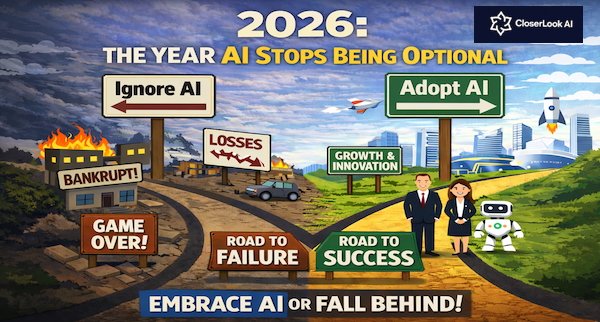
2026: The Year AI Stops Being Optional
After working with multiple companies on implementing Enterprise AI, here are the top friction points we see—and what works.
There will be two kinds of companies in 2026.
Companies that Adopt AI:
They redesign how work gets done, embed AI into real workflows, ship faster, reduce cycle time, and expand margins over time.
Companies that hesitate:
They stay in “pilot mode,” watch competitors automate execution, lower costs, and respond faster to customers—then slowly lose share, talent, and relevance.
This isn’t hype. AI is moving faster than prior tech waves because it doesn’t just upgrade one function—it touches every department: sales, support, finance, operations, engineering, HR, and legal.
The difference in 2026 won’t be who tried AI. It will be who implemented AI successfully across departments and can prove ROI.
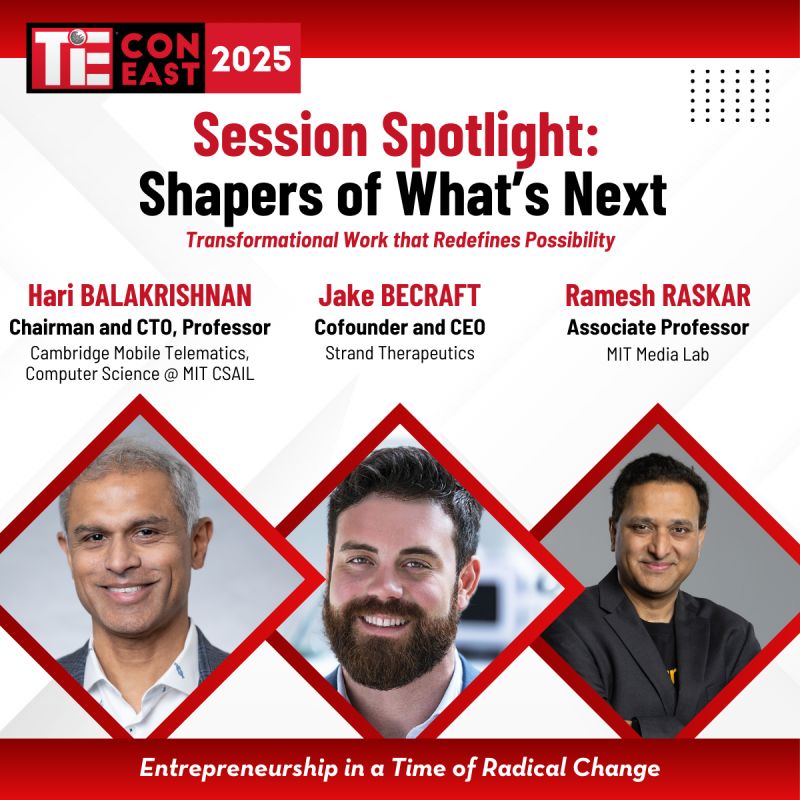
This is my 10th TiECON, and it feels very different. We are witnessing a fundamental shift in technology—one that will deeply shape the future of humanity and entrepreneurship.
We’re in a moment where technology is redefining how we work, live, and build. I’m looking forward to @HariBalakrish20 and @raskarmit insights on what’s ahead—from Agentic AI to the Entrepreneurial opportunities emerging at the intersection of AI and blockchain!!
TieCon East Register now before it’s too late! ⏳ Grab your seat before it’s gone: https://t.co/XUjgIUBJYw
📆 Sept 26 | 📍Sheraton Boston
💡Learn more: https://t.co/s2TsKZ83Jm @CloserLookAI@TiECONEAST@tiesv
🔥RemoteAgent transforms @PhilipsHealth's customer journey in 10 mins, cutting drop-offs & adding $3.6M in revenue! Name one company that matches this: https://t.co/zKuiKrdWsj
Future’s here — why lag behind?
Don’t settle. @OpenAI's GPT-5 was just the warm-up!
McKinsey-style competitor reports that used to take a month? RemoteAgent chews them up before your coffee cools. Here’s RemoteAgent’s competitor benchmarking for Nike, Adidas, and Lululemon: https://t.co/8lyZ9Sigw4
The best part? It didn’t need to be told twice.
🩺RemoteAgent's @CVSHealth dashboard dissected May-July 2025 data with surgical precision for MinuteClinic’s preventive care strategy. From eye health spikes, targeted regional campaigns, and inventory smarts, RemoteAgent’s genius is a must-have for your company too!
RemoteAgent's dashboard for @UPS: Turning July 2025 route data into a fuel-saving masterpiece. $95K/year in electric fleet wins, served with unmatched brilliance.
🪄Nothing short of data wizardry!