Two hundred years ago, a squirrel might've traveled for dozens of miles through Tennessee's forests without ever touching the ground.
Folk lore even claimed a squirrel could travel from the Atlantic to the Mississippi without touching the dirt floor.
Among those forests stood the American chestnut, growing up to 100 feet tall with a trunk diameter of 5-10 feet.
It was one of the most common and important trees in the eastern United States—feeding wildlife, feeding people, and shaping entire ecosystems.
Then a fungal blight arrived.
Within a few decades, somewhere between 3-4 billion trees were gone.
Today, most people in Tennessee couldn't recognize a mature American chestnut in a photo.
That's a remarkable thing when you consider how common the tree once was.
The lesson is simple:
The American chestnut reminds us that stewardship must begin long before something becomes rare.
It was a chilly morning across central NC! Raleigh-Durham Airport broke a daily record low temperature of 48 degrees. The previous record was 49 degrees set in 1956. #ncwx
My buddy Ryan just sent me another video that is INSANE from inside his hanger of the loud boom felt and heard all across SC earlier today. For context he owns an aviation maintenance company at Hamilton-Owens Airport in downtown Columbia.
Check it out as the pressure wave hit the hanger door. 🤯
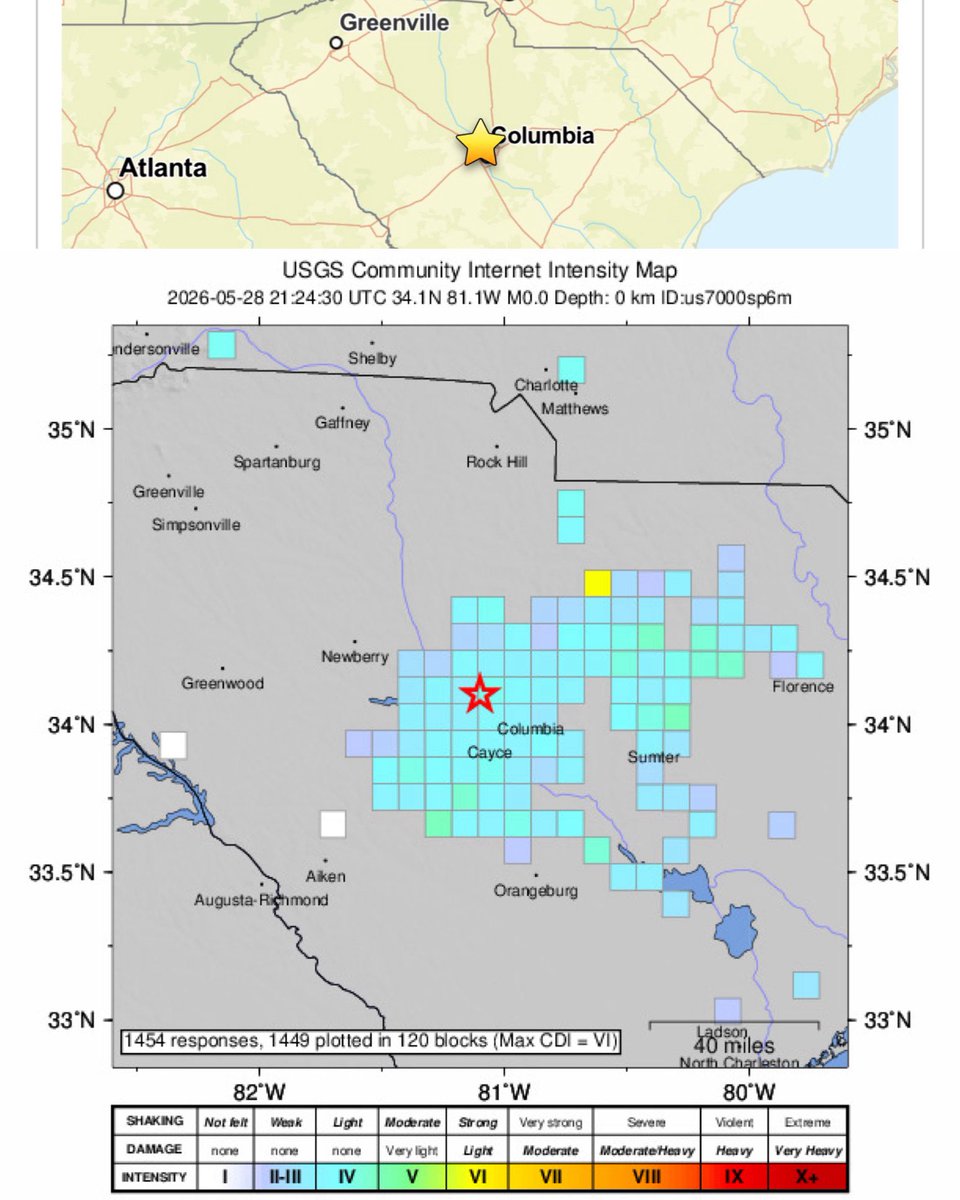
The USGS has confirmed the loud boom/shock wave earlier was a sonic boom and not an earthquake. The source is still not known. It wasn’t jet planes because the boom/shock wave was heard/felt over a vast area of more than 100 miles. A meteor or space debris still is the most likely source.
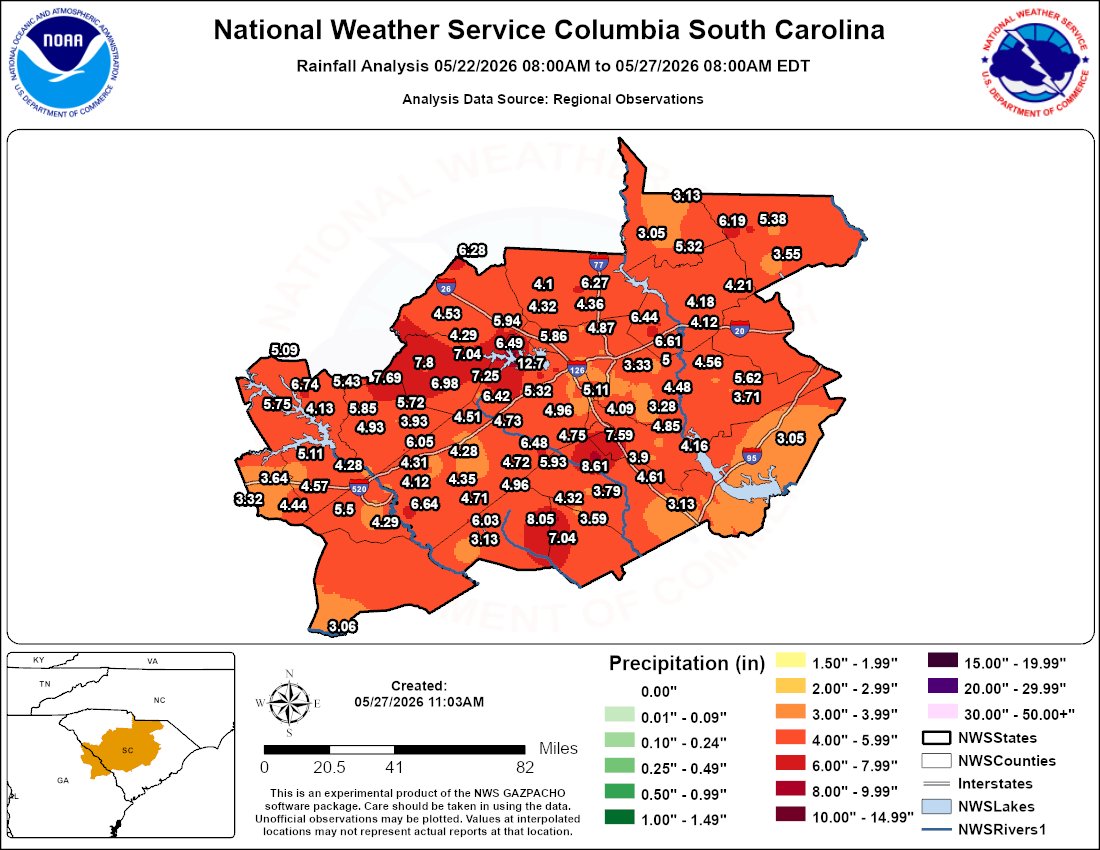
Looking at rainfall totals from the past 5 days, we have had quite a bit of rain out there! Totals generally range from 3-6" with outliers on either side of those numbers. Thankfully we are looking at more isolated convection this afternoon. #scwx#gawx