Built from the ground up. As a head coach, I’ve taken over two 0-win programs:
• Lincoln (Seattle) - 11 wins in Year 3 (freshmen/sophomores only)
• Grays Harbor - 13 wins in Year 2 (2nd most in 20 yrs) amid admin turnover
D1/D2 assistant experience.
Program builder. Proven.
All that glitters ain't gold 🟡
The Cats are set to carry a 100% retention rate into the 2026-27 season 🤩
The grass is greenest where you water it ‼️
#BobcatBuilt | #Attitude | #Family
"I don't have to be their life, but they are my life."
Kelvin Sampson talks on the importance of not taking a break to make sure his players are taken care of for the next step in their lives. ❤️
Love this from #Illini head coach Brad Underwood - asked if he has any issue/finds it unfair to have to play Houston IN Houston in the Sweet 16.
"I could care less... I'm an old JUCO ball coach. I drove on 16 passenger fans. I drove from Dodge City, Kansas to Mesa, Arizona for a basketball game... If you had told me back then that I'm getting to coach basketball in the Sweet 16 and play Houston - I would sign up for it, I would crawl to get there."
Says regardless of where the game is, Illinois would/will need to play well to beat the Cougars.
(Video from NCAA)
On this day in 1966, Texas Western's "Glory Road" squad upset Kentucky to win the National Championship 👏
The Miners were the first team to start an all-black starting five in a Championship Game.
#MarchMadness
NEWS: Stetson guard Ethan Copeland is entering the transfer portal, he told @LeagueRDY.
The 6-foot-2 guard out of Sunnyside, Washington is a big-time shotmaker who spent one season at Stetson.
He averaged 15.0PPG, 3.7RPG, 2.1APG and 1.5SPG this season. Shot 43% from 3.
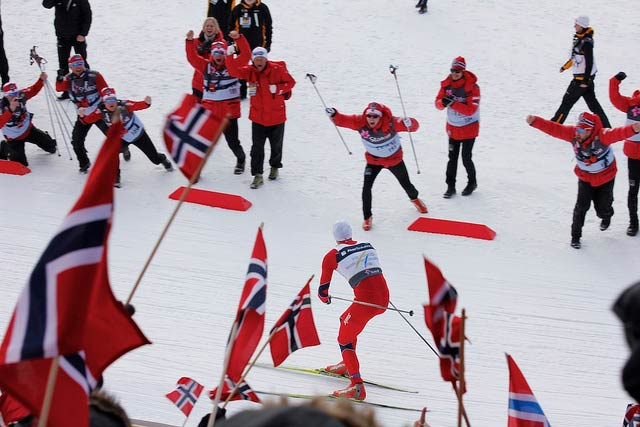
Norway consistently wins the most medals at the Winter Olympic Games, with a population of just 5.6 million people.
A big part of their success is how they treat youth sports—and it’s the opposite of what we do in the US. Here’s what we can learn from Norway:
1. Scorekeeping:
In the US: Youth sports tend to be hyper competitive even at early ages. Leagues almost always keep score.
In Norway: Scorekeeping isn’t even allowed until age 13.
Removing winners and losers keeps the focus on the process not outcomes. It keeps kids engaged longer because it minimizes pressure (and tears) and maximizes fun, learning, and growth. The goal isn’t to win a third grade championship. It’s to love sport and keep playing.
2. Trophies:
In the US: If you give everyone a trophy, you’re creating snowflakes who will never gain a competitive edge.
In Norway: Whenever trophies are awarded, they are handed out to everyone.
If getting a trophy makes young kids feel good, we should give them trophies. Maybe they’ll come back and play again next year!!
As for the creation of snowflakes with no competitive edge—Norway’s athletes are tough as nails and all they do is win.
3. Prioritizing Fun:
In the US: Far too often, the goal is to win.
In Norway: The national philosophy is “joy of sport.”
Youth sports in the US are driven by adults, ego, and money. Youth sports in Norway are driven by fun.
Only half of kids in the US participate in sports. The number one reason they drop out: because they aren’t having fun anymore. In Norway, 93% of kids participate in youth sports. Fun is the foremost goal.
4. Playing Multiple Sports:
In the US: There’s pressure to specialize early and play your best sport year round.
In Norway: Try as many sports as you can before specializing as late as college.
Norway encourages kids to try all types of sport. This reduces injury and burnout and increases all-around athleticism. It also helps promotes match quality, or finding the sport you are best suited for as your body develops, which is impossible if you commit to a single sport too early.
5. Affordability
In the US: There is increasingly a pay-to-play model with high fees for leagues, equipment, and travel. This excludes many kids from playing.
In Norway: It’s a national priority to keep youth sports affordable and therefore accessible for all.
Kids aren’t priced out, which creates opportunities for everyone to participate (and develop into athletes), regardless of their parents’ income level.
We could learn a lot from Norway:
In the US, 70% of kids drop out of youth sports by age 13. This not only diminishes an elite-athlete pipeline, but it also destroys an opportunity for healthy habits and all the character lessons kids can learn from sport.
In Norway, lifelong participation in sport is the norm. The goal isn’t to have the best 9U team. It’s to develop the best athletes. Those are two very different things. And Norway has the gold medals to prove it.
"It has always seemed strange to me... The things we admire in men, kindness and generosity, openness, honesty, understanding and feeling, are the concomitants of failure in our system. And those traits we detest, sharpness, greed, acquisitiveness, meanness, egotism and self-interest, are the traits of success. And while men admire the quality of the first they love the produce of the second." - John Steinbeck
This quote is taken from John Steinbeck’s Cannery Row (1945). In the novel, Steinbeck examines a core contradiction of modern life: the virtues people publicly celebrate are rarely the ones that lead to success. Kindness, honesty, generosity, and empathy are praised in principle, yet in competitive economic systems they often hinder advancement. In contrast, traits like greed, shrewdness, and self-interest tend to produce material rewards, even while being morally criticized.
Steinbeck isn’t condemning success itself. Rather, he highlights a cultural paradox—society applauds virtue but frequently profits from its opposite. The final line underscores this tension: goodness is admired, yet ambition and self-interest are what generate the wealth and productivity people ultimately enjoy. Maybe that contradiction is simply part of the world we live in.