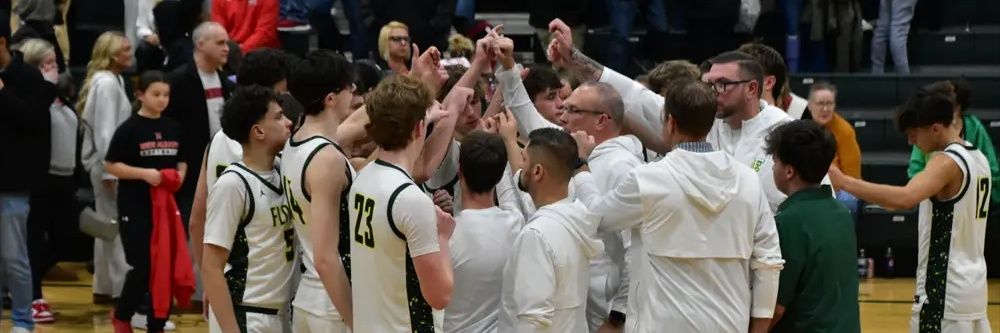
One of the biggest misconceptions in high school sports is that coaching is primarily about practices, games, and wins.
The reality is that coaching has become one of the most challenging roles in education because coaches are expected to wear dozens of hats while being evaluated from every direction.
Every parent, player, administrator, and community member often has a different expectation of success.
One family wants college recruiting to be the priority.
Another wants playing time.
Another wants winning.
Another wants player development.
Another wants discipline.
Another simply wants their child to enjoy the experience.
The challenge is that those goals frequently conflict, and coaches are often expected to satisfy all of them simultaneously.
Most coaches are balancing far more than what happens between the lines. They manage team culture, player conflicts, parent concerns, academics, transportation, fundraising, budgets, equipment, scheduling, eligibility, social media issues, and the emotional needs of teenagers.
At the same time, every roster includes athletes with different abilities, goals, motivations, and commitment levels. Some dream of college athletics. Some are trying to make varsity. Some simply want to belong. Building one program that serves all of them is incredibly difficult.
Perhaps the greatest challenge is decision-making.
Who starts?
Who plays?
Who sits?
Who travels?
Who gets moved up?
Who gets cut?
Every decision creates opportunity for one athlete and disappointment for another. Even well-intentioned decisions can be viewed as favoritism or politics when seen through the lens of an individual family.
Recruiting adds another layer of complexity. Coaches are expected to help athletes pursue college opportunities while also managing the needs of an entire team. Supporting one athlete can sometimes raise questions from another family about their child’s opportunities.
Social media has amplified many of these challenges. One lineup decision, one difficult conversation, or one emotional moment can quickly become public discussion, often without the full context.
There are also pressures many people never see.
Pressure from administrators to represent the school well.
Pressure from parents to provide opportunities.
Pressure from athletes to help them achieve their goals.
Pressure from communities that often measure success by wins and losses.
Pressure to retain athletes in an era of increasing transfers and movement.
And all of this occurs while coaches are trying to develop young people, not just athletes.
What makes coaching difficult is not that people don’t care.
It’s that everyone cares deeply, but often about different things.
Parents focus on their child.
Players focus on their opportunities.
Administrators focus on the school.
Communities focus on results.
Coaches must somehow balance all of those interests while making decisions they believe are best for the team.
As a former college coach, athletic director, and high school administrator, I’ve learned that most coaches are not trying to hold athletes back, play favorites, or make life difficult for families. Most are simply navigating competing priorities, limited resources, and difficult decisions while trying to do what’s best for kids.
Because at its core, coaching has never really been about managing games.
It’s about managing people.
And that’s what makes it both incredibly challenging and incredibly important
@TweetsbyCoachP Sounds exactly like some parents I'm familiar with. They must've found a template to create the email message. I love "other parents" reference. They always make it sound like they are speaking for the "group".
One of the biggest misconceptions about college recruiting is that there is a simple formula for success.
Families often believe that if an athlete works hard, performs well, gets good grades, and attends the right events, recruiting will take care of itself. The reality is far more complicated.
Every family enters the process with different goals. Some are chasing Division I opportunities. Others prioritize academics, scholarship money, playing time, proximity to home, or simply the chance to continue competing. The challenge is that those goals often conflict, forcing families to make difficult decisions with no clear right answer.
Adding to the confusion are the countless voices involved. High school coaches, travel coaches, trainers, recruiting services, college coaches, social media influencers, and other parents all offer advice. Most mean well, but they are speaking from different experiences and perspectives, which often leads to conflicting recommendations.
Social media has made recruiting both easier and harder. Athletes have unprecedented access to coaches and opportunities, but they are also constantly comparing themselves to commitment graphics, scholarship announcements, and highlight reels. What they rarely see are the thousands of athletes still searching for opportunities or the setbacks behind those success stories.
Another challenge is that college coaches evaluate far more than athletic ability. They are assessing academics, character, coachability, leadership, maturity, roster fit, and long-term potential. Recruiting decisions are often based on factors families never see.
Perhaps the most difficult reality is that there is no universal roadmap. One athlete may need more exposure. Another may need more development. One may find the perfect fit close to home, while another may need to look across the country. What works for one athlete may not work for another.
As a former college coach and athletic director, I’ve learned that recruiting shouldn’t be viewed as a competition to win. The goal isn’t the biggest logo, the highest level, or the most impressive commitment graphic.
The goal is finding the right fit academically, athletically, financially, and personally.
Because long after the signing day photos are taken, success isn’t determined by where an athlete committed.
It’s determined by whether they found a place where they can thrive.
@BRamseyKSR@JWReamer Yeah, but that $10K would not come from the athletics budget. It would be part of capital improvements that exist in every school budget. @IHSAA1 is creating their own narrative to support their vote. No research was done with states that currently have a shot clock.
@IHSAA1 Pass the shot clock proposal! People in Indiana want to talk about how Indiana is pure basketball. They bring up rushed shots, bad offense, etc that might occur. A shot clock would allow schools to play zone defense the entire game w/o teams stalling. Reward good defense!
Texas HC Steve Sarkisian - Investment vs Sacrifice
"I try to get into our players minds that they are investing in themselves, they are investing in their team. And there will come a point where they will get a return on their investment."
Why do some programs WIN year after year?
Been fortunate to be a part of a few…
Here are 5 Reasons Why Successful Programs Win Year after Year…
[THREAD] 🧵
Powerful scene here at Truist Arena.
Cooper’s head coach, Tim Sullivan, allegedly has been asked to resign at the end of the season due to a problem with team culture.
Student section chanting “Keep the culture.”
Sullivan just coached the Jaguars to their second Sweet 16.
Billy Donovan on the importance of good relationships with your teammates
“You have to love your teammates…It can’t just be sharing a jersey with people in a locker room…It has to be what are my teammates going to tell their kids”
(Via @GatorsFB 🎥)
HUSTLE IS A TALENT
Hustle can be contagious. Be a spark plug. Create your own momentum. Supply the energy your team needs. Shots may or may not go in the basket, but hustle should never have an off-day.
📹 @PGCbasketball