In September of 1814, America was once again in trouble.
The young republic was only thirty-eight years old. The War of 1812 had gone badly. British troops had marched into Washington, burned the Capitol, set the White House ablaze, and now turned their sights toward Baltimore. If Fort McHenry fell, the harbor would be open, the city would likely follow, and another devastating blow would be dealt to the fragile nation.
Amid this uncertainty, a young American lawyer named Francis Scott Key sailed under a flag of truce to the British fleet. He had come to negotiate the release of a friend, a physician the British had captured.
He succeeded.
The British agreed to free the doctor.
But there was a catch.
Because Key and his companions had seen too much of the British fleet and learned too much about its plans, they were not allowed to return to shore. Instead, they were detained aboard a ship in the harbor and forced to watch the coming battle from behind enemy lines.
On the morning of September 13, the bombardment began.
For the next twenty-five hours, British warships unleashed somewhere between 1,500 and 1,800 bombs and rockets upon Fort McHenry. These were the “bombs bursting in air” and the “rockets’ red glare” of the song—not poetic embellishments, but terrible realities.
Key stood on the deck through the endless day and the long, terrifying night. Every explosion lit the darkness for a fleeting instant before the smoke swallowed everything again. Somewhere beyond that wall of fire stood the fort. Somewhere beyond it flew an American flag if it still flew at all.
He could not see.
He could only listen.
As long as the guns continued firing, there was reason to hope. The British would not waste ammunition on a fort that had already surrendered.
Then, just before dawn…
The guns fell silent.
For the first time all night, there was only stillness.
It was the most frightening sound of all.
Had the fort finally fallen? Had the defenders surrendered? Had the flag been torn down in the darkness while no one could see?
There was nothing to do but wait.
As the first light of September 14 slowly pushed back the smoke, Francis Scott Key strained his eyes toward the distant fort.
Then he saw it. Not a British flag.
The American flag. Still there. Still flying.
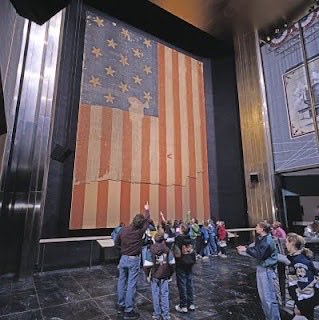
That flag was no ordinary banner. Months earlier, the fort’s commander had commissioned a Baltimore flagmaker, Mary Pickersgill, to sew a flag so enormous “that the British would have no difficulty seeing it from a distance.” It measured roughly thirty by forty-two feet, carried fifteen stars and fifteen stripes, and was so large it had to be assembled on the floor of a brewery because no ordinary room could contain it.
That was the Star-Spangled Banner.
The very flag Key saw through the morning mist.
The very flag that still survives today in the Smithsonian.
Overcome by what he had witnessed, Key reached into his pocket, pulled out an envelope, and began writing. The words came from a heart that had spent an entire night fearing his country might disappear with the dawn.
He first titled the poem Defence of Fort M’Henry.
Within days it was printed and circulating throughout the country. Before long, people began singing it to a melody they already knew—an old British tune called “To Anacreon in Heaven,” originally written for a London social club. There is something beautifully ironic in that: America’s most beloved patriotic song borrowed the melody of the very nation it had just survived. It also explains why the anthem is so notoriously difficult to sing. It was never written for ordinary voices gathered in stadiums or school assemblies.
The song spread quickly and became one of America’s favorite patriotic hymns, but it would wait more than a century before receiving official recognition. Not until 1931 did Congress declare “The Star-Spangled Banner” the national anthem of the United States.
OMG 🚨 CNN is in Tehran Iran covering the funeral for Ayotollah Khamenei on July 4th weekend & America 250.
You really can't hate CNN enough. Iran allows zero media inside but CNN is allowed because they're propaganda just like the IRGC.
250 years ago, a bold idea changed the course of history. Today we celebrate the people, principles, and enduring promise of the United States of America.
Happy 4th of July from the White House. 🇺🇸
In September of 1814, America was once again in trouble.
The young republic was only thirty-eight years old. The War of 1812 had gone badly. British troops had marched into Washington, burned the Capitol, set the White House ablaze, and now turned their sights toward Baltimore. If Fort McHenry fell, the harbor would be open, the city would likely follow, and another devastating blow would be dealt to the fragile nation.
Amid this uncertainty, a young American lawyer named Francis Scott Key sailed under a flag of truce to the British fleet. He had come to negotiate the release of a friend, a physician the British had captured.
He succeeded.
The British agreed to free the doctor.
But there was a catch.
Because Key and his companions had seen too much of the British fleet and learned too much about its plans, they were not allowed to return to shore. Instead, they were detained aboard a ship in the harbor and forced to watch the coming battle from behind enemy lines.
On the morning of September 13, the bombardment began.
For the next twenty-five hours, British warships unleashed somewhere between 1,500 and 1,800 bombs and rockets upon Fort McHenry. These were the “bombs bursting in air” and the “rockets’ red glare” of the song—not poetic embellishments, but terrible realities.
Key stood on the deck through the endless day and the long, terrifying night. Every explosion lit the darkness for a fleeting instant before the smoke swallowed everything again. Somewhere beyond that wall of fire stood the fort. Somewhere beyond it flew an American flag if it still flew at all.
He could not see.
He could only listen.
As long as the guns continued firing, there was reason to hope. The British would not waste ammunition on a fort that had already surrendered.
Then, just before dawn…
The guns fell silent.
For the first time all night, there was only stillness.
It was the most frightening sound of all.
Had the fort finally fallen? Had the defenders surrendered? Had the flag been torn down in the darkness while no one could see?
There was nothing to do but wait.
As the first light of September 14 slowly pushed back the smoke, Francis Scott Key strained his eyes toward the distant fort.
Then he saw it. Not a British flag.
The American flag. Still there. Still flying.
That flag was no ordinary banner. Months earlier, the fort’s commander had commissioned a Baltimore flagmaker, Mary Pickersgill, to sew a flag so enormous “that the British would have no difficulty seeing it from a distance.” It measured roughly thirty by forty-two feet, carried fifteen stars and fifteen stripes, and was so large it had to be assembled on the floor of a brewery because no ordinary room could contain it.
That was the Star-Spangled Banner.
The very flag Key saw through the morning mist.
The very flag that still survives today in the Smithsonian.
Overcome by what he had witnessed, Key reached into his pocket, pulled out an envelope, and began writing. The words came from a heart that had spent an entire night fearing his country might disappear with the dawn.
He first titled the poem Defence of Fort M’Henry.
Within days it was printed and circulating throughout the country. Before long, people began singing it to a melody they already knew—an old British tune called “To Anacreon in Heaven,” originally written for a London social club. There is something beautifully ironic in that: America’s most beloved patriotic song borrowed the melody of the very nation it had just survived. It also explains why the anthem is so notoriously difficult to sing. It was never written for ordinary voices gathered in stadiums or school assemblies.
The song spread quickly and became one of America’s favorite patriotic hymns, but it would wait more than a century before receiving official recognition. Not until 1931 did Congress declare “The Star-Spangled Banner” the national anthem of the United States.
I pledge allegiance to the flag of the United States of America, and to the republic for which it stands, one nation under God, indivisible, with liberty and justice for all.
Alan Jackson played his last show last night.
He is one of the good ones.
A patriot and Christ centered.
He has a neurological disease which impedes his balance and ability to play the guitar.
He is my favorite country singer of all time.
He told stories. He made you not just hear, but FEEL what it is to be a “good ole boy”. He was also never afraid to be bold in his faith.
But I have a more personal story about Alan Jackson I’d like to share and it is the reason I have always been a fan of him and his music.
Back in 1992, I was going on my first real trip with my mom up to New York to see her sister and my cousins.
It was the first time I had ever flown.
Our flight left later in the evening, not quite a red-eye, but close. I think it was somewheres around 10 or 11pm.
At the time, Charlotte Douglas Airport was way smaller and far less busy than it is now.
So me and mom board the plane, and I take the window seat (as kids usually do).
Me and mom are chit chatting, and she was doing her best to calm me. See, me and flying don’t really get along. Neither do me and heights - never have, prolly never will. To say I was a bit wound up about the flight would be an understatement.
The plane is continuing to board, and there weren’t many folks on the plane. As memory best serves, it was maybe 1/3 full, if that.
Everyone is seated, doors are shut, plane is ready to push. Then the pilot comes over the speaker to tell us there would be a slight delay as some folks were making their way to the plane.
Door opens up, and 5-6 dudes get on the plane. All wearing stetsons and boots. The 3rd dude on to the plane stood out a little more because he had frills hanging off his coat and he was wearing a white stetson. He was noticeably taller than the rest as well.
The first two dudes keep coming down the aisle and end up sitting right behind us.
The third dude stops at our row, looks at my mom and me, tips his hat and says “Evenin, folks. How y’all doin?”, then takes the aisle seat right next to my mom.
My mom, who rarely ever swore, then says “Holy shit. You’re Alan Jackson”.
He says “Yes’m I am, and you are?”. So mom introduced us.
But here’s what really sticks with me: Mom had told him I was a bit scared for my first flight. Wanna guess what Alan Jackson did? He asked if it was okay to pray with us. So he did.
After which, we spent the entire flight chatting with Alan Jackson. He and his band even belted out a couple songs along the way.
It is legit one of those memories I will never forget.
I never got to see him to live. But I’d say this experience trumps any concert of his I could have went to.
I think something like that speaks more to the man he is than his music. Here he is, just met this kid and his mom 5 minutes prior, and he is offering a prayer to calm my fears for my first flight.
So, in closing - I pray Alan can find true peace in his retirement, and I pray that the Father will provide him with healing and assuage his suffering with the disease he has.
Thank you for the prayer, @OfficialJackson. Thank you for all the wonderful music, and thank you for never being afraid to profess your love for our Lord and Savior Jesus Christ.