Things nobody tells you when you start training:
1. Soreness isn't proof of a good workout
2. The scale lies weekly, not daily
3. Week 1 motivation isn't real, your coach cares more about week 12 than week 1
#beginnerfitness#fitnesstips#personaltrainer
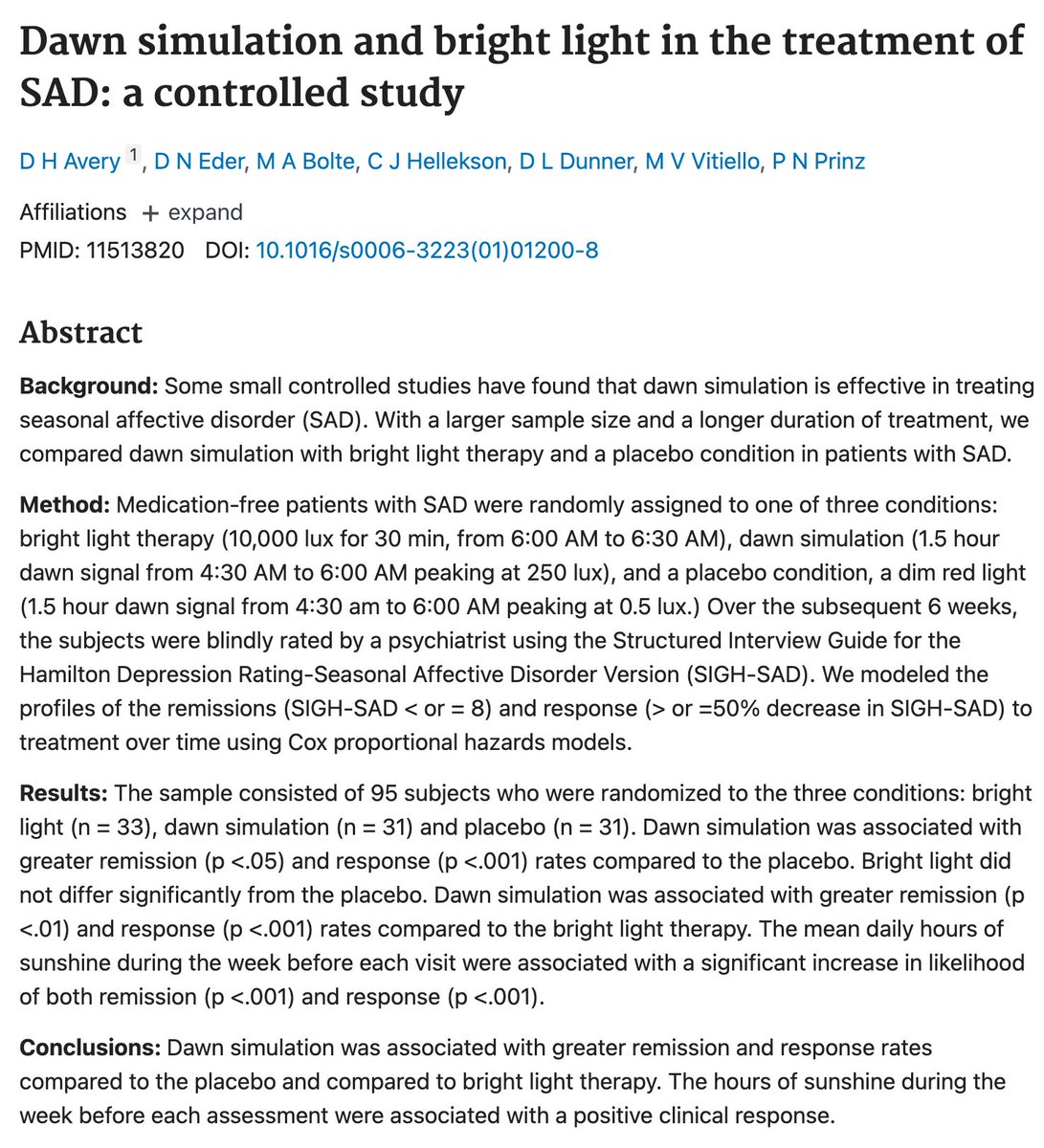
Dawn simulation (gradual light 4:30-6am, peak 250 lux) outperformed bright light therapy and placebo for seasonal depression
Remission was 61% with dawn simulation vs 48% with bright light and placebo
More hours of sunshine in the prior week also predicted better outcomes
Exercise Is a Hormone Factory, Not Just a Calorie Burner
Your muscles talk to your brain, fat, bones, skin, and immune system. Here is the science, straight from peer-reviewed research
What exercise-released myokines actually do:
1. Brain & cognition
Cathepsin B and irisin cross the blood–brain barrier → increase BDNF → boost hippocampal neurogenesis and brain health
2. Fat loss & metabolism
IL-6 stimulates lipolysis, reduces visceral fat, and increases AMPK-driven fat oxidation
3. Brown fat activation
Irisin, meteorin-like, and IL-6 convert white fat into energy-burning brown-like fat
4. Muscle growth control
Musclin, LIF, IL-4, IL-6, IL-7, and IL-15 promote hypertrophy
Myostatin puts the brakes on muscle growth
5. Bone strength
Decorin, IL-6, IGF-1, and FGF-2 enhance bone formation
Myostatin negatively regulates bone formation
6. Glucose regulation
IL-6 increases insulin-stimulated glucose uptake and boosts liver glucose output during exercise only
7. Insulin & pancreas protection
IL-6 induces GLP-1 release → increases insulin secretion
Angiogenin, osteoprotegerin, and IL-6 protect pancreatic beta cells
8. Immune modulation
IL-6 suppresses TNF and increases IL-10 and IL-1ra → anti-inflammatory effects
9. Stress hormones & blood cells
IL-6 raises cortisol → neutrocytosis and lymphopenia
10. Vascular & skin health
FSTL-1 improves endothelial function and revascularization
IL-15 improves aging skin
Exercise is systemic medicine.
You are not just training muscles.
You are training your brain, metabolism, immune system, bones, and longevity.
Alcohol is a known carcinogen, not just “empty calories”
Even one drink a day nudges a woman’s breast cancer risk higher, and sustained moderate intake (1–3 drinks per day) can push lifetime risk from 1 in 8 toward roughly 1 in 4
Heavy drinking raises mouth and throat cancer risk about five-fold, and roughly five drinks per week has a cancer impact similar to smoking 4–5 cigarettes per week for men and 10 for women
Cutting out the daily drink (and keeping alcohol to rare, occasional use) is one of the simplest ways to meaningfully lower long-term cancer risk
Andrew Huberman’s 4:33 breathing protocol that turns stress into superpower:
Deliberately flood your body with adrenaline (cold shower, ice bath, or TUMO-style breathing: 25–30 fast breaths in nose/out mouth → exhale & hold 15–30 sec → repeat 3 rounds → big inhale & relax hold).
Result?
• You become very alert yet profoundly calm
• Perfect neuroplasticity state for learning (like 3 espressos + theanine + perfect sleep)
• Adrenaline signals spleen → releases killer immune cells → faster healing
• Builds stress resilience — you learn to stay chill in high-adrenaline states
Warning: NEVER do breath holds in water/bathtub (4+ deaths reported) or while driving.
Do 1–3×/week. You’ll discover your own relationship to adrenaline.
Clip here 👇
Who’s trying Huberman’s adrenaline → calm protocol this week?
Why higher VO₂ max is important | Peter Attia
This clip is from episode # 379 of The Drive which was released on 1/12/26.
In the full episode, we cover:
-Use the base-and-peak model to structure your week, knowing what belongs in “base,” what belongs in “peak,” and how to combine them without breaking recovery
-Choose the right approach for your time budget, with clear guidance for ~150 minutes/week, moderate training volumes, and high-volume scenarios
-Execute aerobic work correctly without lab testing, including how hard it should feel, how long to hold it, and how to progress
-Implement VO₂ max training the way Peter prescribes it, with clear guidance on pacing, recovery, and dosing
-Measure progress knowing when lab tests matter, when field tests are enough, and why most wearable metrics mislead
-Apply the framework across starting points, including beginners, metabolically unhealthy trainees, older adults, women, and higher training ages
-Understand Peter’s updated thinking on zone 2 training and how recent debates do (and do not) change real-world prescriptions
-Avoid the traps that waste years of training, including misapplied intensity, under-dosed volume, poor recovery, and the wrong metrics
This AMA episode (Ep. # 379) is available exclusively for premium members. Become a member now to watch or listen on my website (https://t.co/GCIwQFxJza) or your favorite podcast player.
More evidence on the link between metabolic health, muscle, and the brain.
This review (open access) makes a compelling argument that insulin resistance, chronic hyperglycaemia, mitochondrial dysfunction, oxidative stress, and inflammation interact to promote both muscle wasting and neurodegeneration.
One of the many, many reasons exercise has such a strong benefit for the entire physiological system.
It's not a guarantee, but avoiding type 2 diabetes is a pretty good way to avoid both sarcopenia & cognitive decline (especially Alzheimer's).
https://t.co/LyWXk2d0tg
If you wake up tired even after 8 hours, your sleep might not be working the way you think😴🚫
Insomnia and sleep apnoea affect millions, but most people never get properly assessed.
Your body runs on light, not caffeine. ☀️
Here’s how your circadian rhythm actually controls your energy.
Morning sunlight = natural caffeine.
Blue light from screens and bright overhead lights at night = biological confusion.
Your circadian rhythm is your 24-hour internal clock, and when it’s misaligned, sleep, mood, and hormones all suffer.
Get light early. Dim screens late.
Simple tweaks = massive energy upgrades.