I rarely recommend books, esp S&C books because most are horrible…but if you work in sport, performance, or leadership, The Director’s Manual is non-negotiable
Most people in “high performance” spend years trying to figure out how to lead a department, manage people, communicate across disciplines, and build systems that actually function under pressure
This book shortcuts a lot of those lessons
Reading it felt like reliving a lot of the mistakes, challenges, politics, and growing pains I experienced over the last 10-15 years across college athletics, the NFL, and now building Blueprxnt
The reality is most coaches are taught how to coach…but very few are taught how to lead, organize, communicate, and operate at a high level inside a department
That’s the gap this fills
Whether you’re an S&C coach, RD, ATC, sport scientist, or someone trying to move into leadership, there’s something in here that will make you better at your job
Good books are like appreciating assets
The best ones keep revealing new lessons every time you revisit them
@CBSNews Cool headline @CBSNews is this information relevant or does it change anything about the fact the a terrorist rammed his vehicle into a place of worship with the intent to take innocent lives…on 🇺🇸 soil? Hey @bariweiss I thought you weren’t all about the headlines?
So now the country you supposedly “represent” is they? Where were you when civilian protesters were getting slaughtered in Iran?
You DO NOT represent US.
If Israel had the ability to save every baby in Gaza, it would.
If Hamas had the ability to kill every baby in Israel, they would.
That is the difference.
This isn't anything new, it just goes to show how modern environments can impact and influence health and recovery and subsequently performance and SHOULD be accounted for
A subpar environment can add additional "invisible" internal stress to an already overloaded system via:
-Sleep timing & light exposure
-Chronic stress & cortisol
-Inflammation & oxidative stress
-Mitochondrial function
-Recovery capacity vs training load
Because:
-Circadian disruption worsens insulin sensitivity
-Poor sleep increases injury risk
-Oxidative stress impairs collagen repair
-Mitochondrial dysfunction reduces tissue resilience
Injuries are a complex and multifaceted problem as they are not just mechanical failures, they’re failures of biological readiness under load
Tissue fails when:
Load > current recovery + tissue quality
Which is driven by:
-Inflammation
-Oxidative stress
-Hydration status
-Nutrient availability
-Hormonal state
-Sleep quality, etc.
So, yes, chronic environmental stressors (light disruption, poor sleep, inflammation, oxidative load, psychological stress, nnEMF exposure) can reduce recovery capacity and tissue resilience increasing injury risk over time
IF the appropriate interventions/precautions are not put in place and practices/repeated regularly
The NYG also practice in a higher "exposure" environment AND they are right next to the largest media bed/metropolis in NYC in the ENTIRE COUNTRY which factors in heavily in terms of environment because major cities act as chronic recovery interference environments, especially NYC
Why? Because of:
-Excessive blue light exposure
-Air pollution/poor air quality and inflammatory load
-Circadian dysruption
-Intense commutes
-Excessive social strain
-Infrastructure density and more EMF/nnEMF exposure
The Giants have also been one of the most injured teams in the league for ~10-15 years EXCEPT a stretch a few years ago (when I worked there)
Understanding all the aforementioned above along with figuring out what metrics to test/assess and how to impelement the appropriate strategies to mitigate any additional stress/inflammation/strain was my aim and focus
The reality is most athletes (even professional ones) are CLUELESS when it comes to knowing what to do to take care of their own health and A LOT of professional team staffs are too
BUT, in their defense, there is A LOT most people (even all these esoteric gurus/docs/influencers) don't know about what it's like working directly in the team environment because it is VERY HARD to do/accomplish everything that you want to do for your team/athletes (even in the name of health) and until you know what it really is like it's easy to judge when you're on the outside
Sure, the substation isn't in a great location and it's not doing anything to help but it IS NOT the sole reason for why the 49ers are so injured, it's just a piece of the whole puzzle
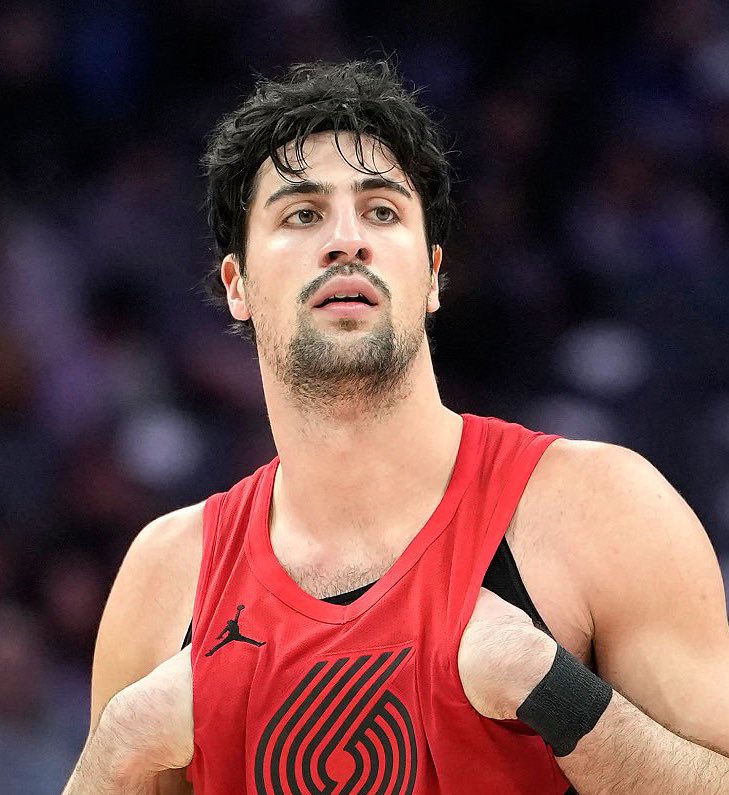
Deni Avdija says he’s fed up with the hate he receives for being from Israel, calls out the lack of education on the topic, and demands respect, saying those outside the Middle East shouldn’t speak on it
“You don’t have to love what I stand for or how I look, but if I’m a good player, give props. All this hate … for no reason. Like, I’m deciding things in the world. I’ll be honest: What do people expect me to do? This is my country, where I was born, where I grew up. I love my country; there are a lot of great things about my country. But obviously, not everyone is educated and knows what is going on, and that’s what pisses me off. Because if you are educated and know what is going on, it’s fine to say what you think and say who you think is right or wrong. But if you are not educated and you are not part of the Middle East, and you don’t understand how long this goes back and understand the consequences and everything … just don’t say anything.”
(Via https://t.co/UbAaSGHr3W)
Being in nature reduces fatigue and boosts attention.
34 experiments: After walking, playing, and learning in parks, forests, or water, kids & teens show better focus and self-control.
Not all outdoor time is equal. Green and blue spaces are more refreshing than urban settings.
You’re not really healthy if your routine has to be perfect for you to function
If a bad night of sleep wrecks you for days…
If one pizza ruins your digestion for a week…
If you need a cold plunge, supplements, and 3 hours of silence just to feel normal…
You don’t have health
You have fragility in disguise
Being healthy = being resilient and adaptable