A mantra (or in this case a team name) directs our attention to who we want to be (performance identity) and how we want to act (performance behaviors/habits)…. mantras work, esp. when we commit to the meaning(s) behind them!
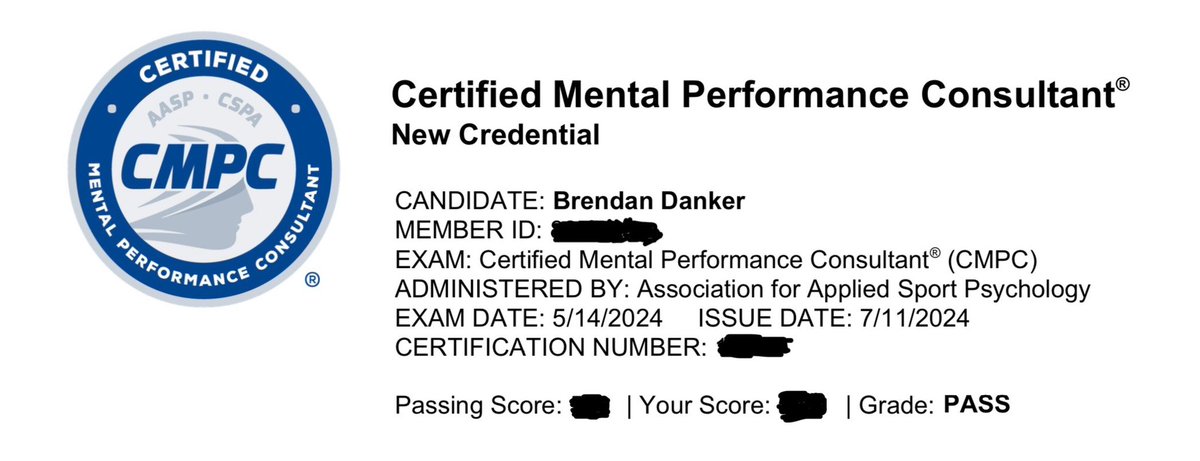
It’s official …received confirmation today that I passed my (long overdue 😊) certification exam, and have now officially completed all requirements for the credential of Certified Mental Performance Consultant (CMPC) through the Assn. for Applied Sport Psychology.
Harrington on the mental game:
“I would actually say once you get to our level it’s 99% mental. I’ll find you 10000 guys who hit the golf ball better than any pros on tour or as good as them and they’re not tour players and never will be.”
Spot on 👏
This is really impressive perspective 🧠
• Being grateful for the opportunity puts you in a calming mindset
• Instead of an anxious process of ‘I have to get a hit here’
If you’re nervous before a performance, it turns out it’s actually more effective to reframe that arousal as excitement than it is to try and calm down.
Rather than working against your body’s natural physiology, the data suggests using that energy as fuel for performance.
“You got a choice - you either come in & let your circumstances control your attitude - or you let your attitude control your circumstances.”
- Brad Stevens
Advertisements are proven to stimulate positive impressions in our minds and influence our thoughts, emotions and behaviors. Marketing 101 AND Mental Training 101.
Joe Burrow sacked 9x yet kept his cool and kept persisting = mental toughness = Bengals in the AFC Championship! All negatives are opportunities to rise!
Coach K: “If you don’t prepare to win, you don’t deserve to win.” This resonates beyond sport. Preparation is the ultimate confidence and performance booster!
Love the visual cue reminder and placement here by Kyler Murray…advertising to yourself the desired mental and emotional states to channel your best performance is such a simple, yet effective strategy!
I talk with @jMarkCole a lot about expectations so that I can become more aware of where I have the greatest opportunity for improvement. Because I can’t see myself as clearly as those closest to me can see me.
Great example of an emotionally intelligent coach. Loudest when a job done well! The impulse of most coaches is to get frustrated and loud after mistakes.