50 years ago, some were already sounding the alarm about the culture of youth sports in America.
Written by a sports psychologist in 1976:
“The great majority of young athletes are competing in a sport because they want to have fun, improve their skills, and be with their friends.
Yet many of their parents believe that they should raise their young athletes the way Vince Lombardi ran his football team.”
Look at this photograph.
It’s 1968.
The man carrying this little boy on his shoulders is not his father.
His father has just left.
Left his mother.
Left their home.
Left for another life.
And the man who showed up — who drove 45 minutes across London just to check on a 5-year-old boy whose world had suddenly fallen apart — is holding him steady with both hands while the child laughs at the top of his lungs.
That drive would inspire the best-selling Beatles single of all time.
The boy’s name was Julian Lennon.
And he has never quite known how to feel about it.
Julian Charles John Lennon was born on April 8, 1963.
Four days earlier, The Beatles had released their first album.
His father, John Lennon, was becoming one of the most famous people on Earth.
From the beginning, music came first.
The touring.
The recording.
The chaos.
The fame.
Julian came after all of it.
Paul McCartney, however, had known Julian since he was a baby. He watched him grow up while the world around the Beatles became louder and stranger and harder to survive.
Then, in May 1968, John told Cynthia Lennon their marriage was over.
He had fallen in love with Yoko Ono.
Cynthia later said she came home from vacation and found Yoko already there.
Just like that, the family was broken apart.
Julian was five years old.
Paul McCartney decided to drive out to see Cynthia and Julian.
No cameras.
No publicity.
No grand gesture.
Just a friend showing up because a little boy was hurting.
And during that drive, Paul started humming.
“Hey Jules… don’t make it bad…”
Later, he changed “Jules” to “Jude.”
The song became “Hey Jude.”
Released in August 1968, it spent nine weeks at No. 1 in America, sold millions of copies, and became the biggest-selling Beatles single in history.
But for Julian Lennon, the song carried two truths at once.
To the world, it became comfort.
To him, it became memory.
A reminder that his father had walked away.
And that another man had stepped in long enough to help carry the weight.
Years later, Julian admitted he has a “love-hate relationship” with the song.
Because every stadium singalong…
Every radio replay…
Every well-meaning person saying “Your song!”…
Also brings him back to that moment when his childhood changed forever.
Yet even through all the complicated feelings, one thing never changed:
He never forgot that Paul showed up.
Not because he had to.
Not because it benefited him.
But because a child needed kindness.
Look at the photograph one more time.
A little boy laughing with his whole body.
A man holding him securely on his shoulders.
Two hands making sure he doesn’t fall.
Julian doesn’t know yet about the divorce.
About the fame.
About the legal battles.
About inheritance disputes.
About the strange burden of having your pain turned into one of the most famous songs ever written.
Right now, he only knows one thing:
Someone came.
And sometimes, for a child, that is everything.
He won two World Series starts for the New York Yankees. He was a 1963 All-Star. He had one of the most electric arms in baseball. And then baseball spent nearly thirty years pretending he didn't exist.
That is the Jim Bouton story — and it isn't really about baseball at all. It's about what happens when a man decides to tell the truth in a world that desperately needed the lie.
Bouton grew up in New Jersey and Illinois, the kid they called "Warm-Up Bouton" in high school because he warmed the bench so reliably that an actual game appearance felt like a rumor. The star of the team was Jerry Colangelo — later the owner of two major professional franchises. Bouton? He was the kid who mixed an odd knuckleball into his delivery just to survive. There were no scouts buzzing around him. No projections. No hype.
And then there were.
He signed with the Yankees for $30,000 and clawed his way through the minors. By the time he reached the majors in 1962, they were calling him "Bulldog." The cap that flew off his head every time he threw — violent, all-in, nothing held back — became his trademark. He wore number 56 his entire career. A spring training number. The kind of number they give players who aren't supposed to stick. He kept it on purpose, because he never wanted to forget how close he came to not making it.
He went 21–7 in 1963. He won both his starts in the 1964 World Series, finishing with a 1.48 ERA across three career Fall Classic appearances.
He was that good.
Then an arm injury in 1965 stole his fastball. Just like that, the Bulldog was gone. The Yankees sold his contract to the Seattle Pilots in 1968 — a team that hadn't even played a game yet. Bouton arrived at the end of the line and started keeping a diary.
That diary became Ball Four.
Published in 1970, it was the most honest book ever written about professional baseball — and baseball commissioner Bowie Kuhn called it "detrimental to the game." He tried to force Bouton to sign a statement declaring it fiction. Bouton refused. Ball Four described drug use, infidelity, alcohol, petty cruelties, front-office manipulation, and all the ordinary human wreckage hiding behind the pinstripes. Teammates never forgave him. He was informally blacklisted. For years, he was quietly uninvited from every Old-Timers' Game, every reunion, every back-slapping ceremony where men who had played the game pretended it had always been noble.
The blacklisting lasted nearly thirty years.
He refused to disappear. He attempted a comeback — pitching in the Northwest League, a stint in the Mexican League, and finally, in 1978, Ted Turner signed him for the Atlanta Braves. He made it back to the majors at 39. He pitched in a semi-pro league in Bergen County, New Jersey, because he genuinely loved the game that had pushed him out. He invented Big League Chew. He wrote more books. He kept moving.
In 1997, his daughter Laurie was killed in a car accident at 31. The grief was unimaginable. His son Michael, unable to watch his father's pain in silence, published an open letter to the Yankees in The New York Times on Father's Day 1998, asking them to invite Bouton to the Old-Timers' Game. The Yankees said yes.
On July 25, 1998, Jim Bouton walked out to the mound at Yankee Stadium wearing number 56. The crowd rose. The standing ovation was long, and loud, and late — nearly three decades late — but it came.
Think about what it means to be exiled from the thing you love most, not for failing at it, but for telling the truth about it.
Bouton had a stroke in 2012 that damaged his memory and speech. He died on July 10, 2019, at 80 years old, at home.
Ball Four is still in print. It is still considered one of the greatest sports books ever written. The game that tried to bury him ended up needing him to define it.
He wore number 56 as a reminder of how close he came to not making the club. He should have worn it as a reminder of what courage actually looks like.
Mike Leach is on the ballot for the College football Hall of fame. That's awesome he deserves it.
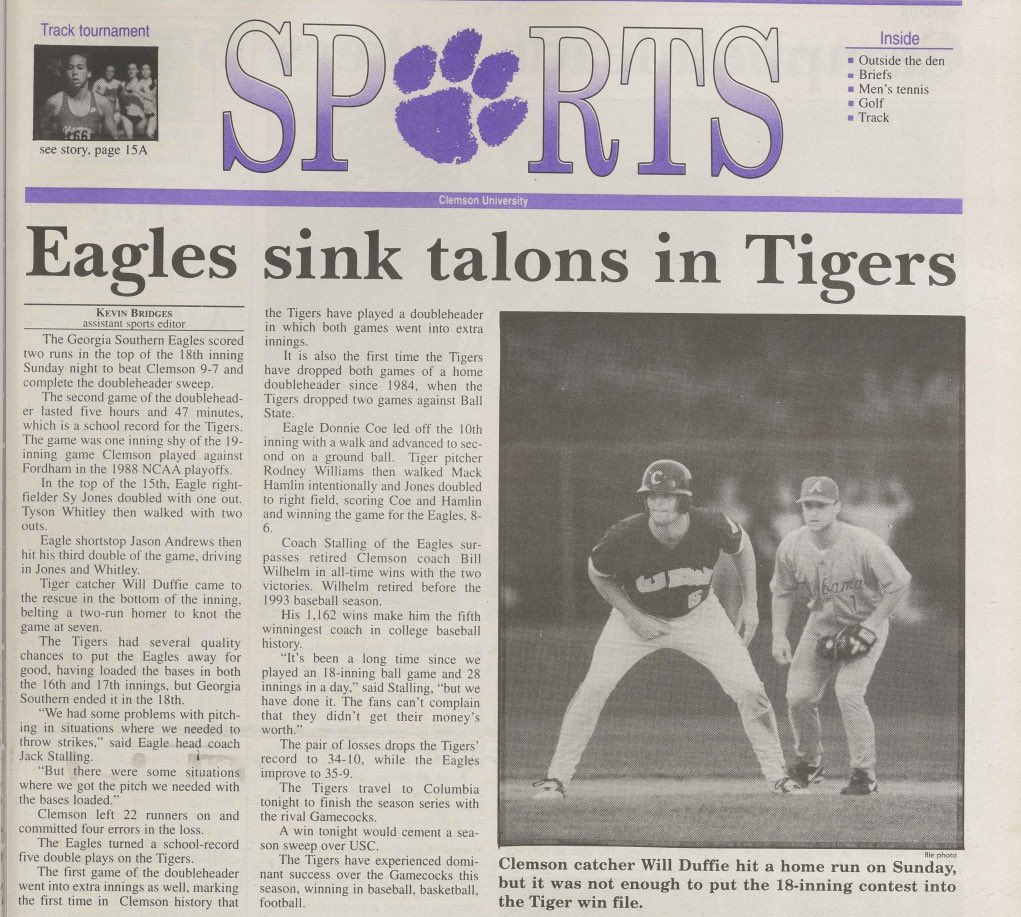
Georgia Southern has something to say about that though, so I thought today is a great day to repost my Erk Russell video
Tournaments didn't replace playgrounds & open gyms. They replaced free play. Those aren't the same thing. The more adults organize every minute of youth sports, the fewer opportunities athletes have to develop creativity, problem-solving, leadership, and genuine competitiveness.
Rick Barry hit 90% of his free throws during his NBA career shooting “granny style” and nobody else has committed to it in the almost 50 years since. I find that insane.
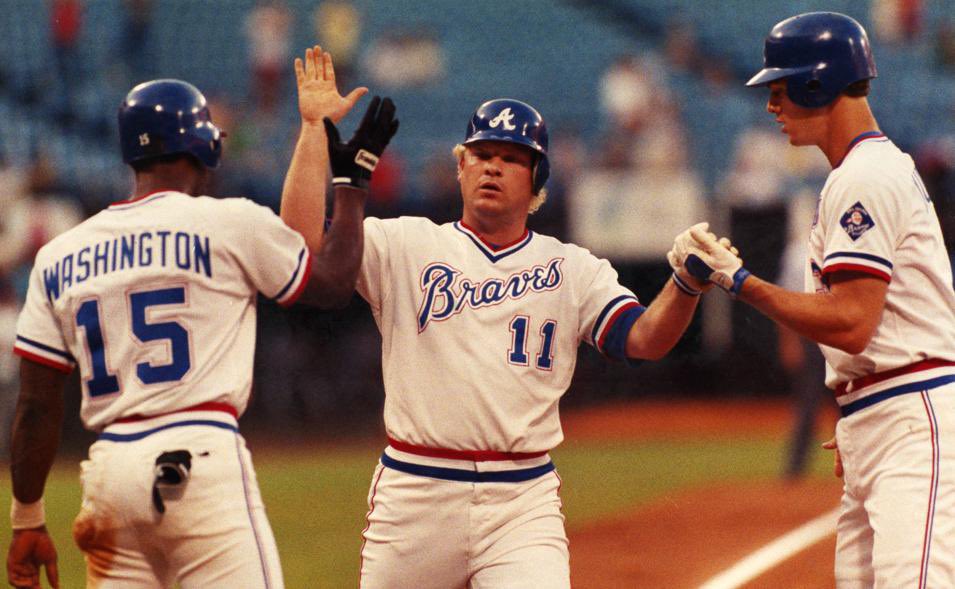
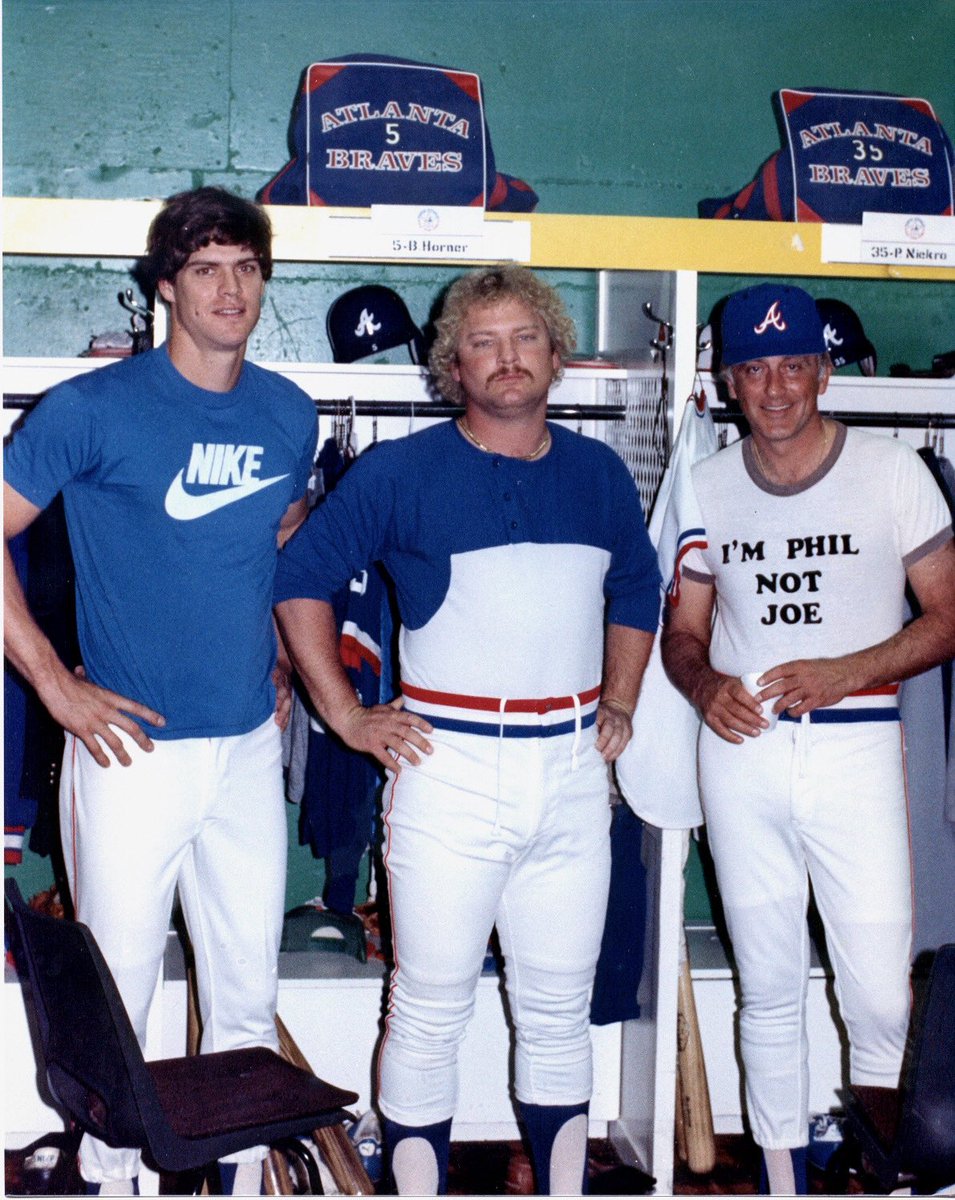
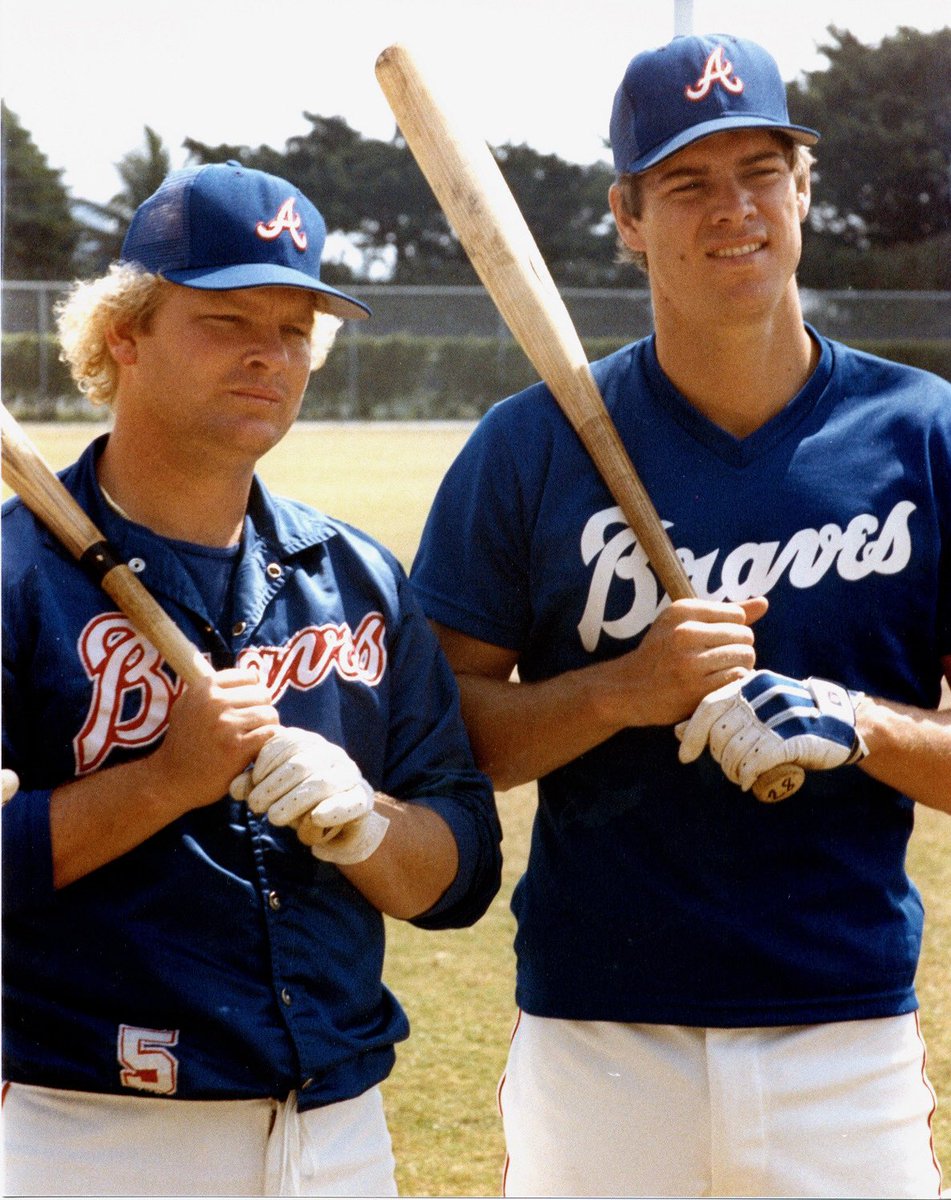
Bob Horner and I were destined to be teammates somewhere. I signed a letter of intent to play baseball at Arizona State before I was drafted. Bob played at ASU and ended up in Atlanta my first full year in the major leagues—1978. One way or another, it was bound to happen.
From the minute Bob Horner joined the Braves, all us players could see he was good. I mean… really good. And that swing—short and quick, x or and could turn around anybody’s fast ball. And Bob knew the strike zone. He just did not swing at a bad pitch (like I had a tendency to do a little too often…) He was a unique talent and I was very lucky to be in the lineup with him most of my career. All of my numbers were better when he was hitting behind me. And that fact is not lost on me. I know my career was better because of him.
It’s been a hard few weeks for the Braves Family losing Ted and Bobby—and now Bob. These 3 men all had such a profound impact on my career. I am forever grateful.
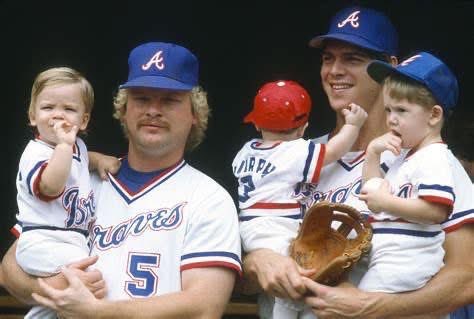
Nancy and I will miss Bob and our hearts go out to Chris and Trent and Tyler, along with their entire family.
The older we get, the more we cherish wonderful memories and this past month has brought a flood of them back to us. The gratitude we feel for them all has been overwhelming.
Rest well, my friend and teammate.
Super Sky Point to Bob Horner. He was the NL Rookie of the Year and an All-Star but if you were around back then you know he was more than that. Much more. He was a fixture in the homes of millions of us through the miracle of cable television during those epic childhood summers that seemed like they’d never end.
I was a fan for over 40 years but had never met Bob until I interviewed him last December about Dale Murphy’s Hall of Fame case. As you’d expect, Bob was a fierce advocate for his fellow Fulton County basher. How could he not be? They were Murph and Horner. Horner and Murph. The Hall and Oates of the Launching Pad.
You know, these sky points all suck to write but this one hurts more than most. The four-homer game, the bad perm, Chief Noc-A-Homa waiting by his teepee for another Horner long ball. I have tweeted a lot about Bob Horner through the years and it’s because he represents to me, and I suspect many of you too, something far bigger than baseball: WTBS coming out of the magic box on top of my 400-pound Zenith, cool air coming through my bedroom window after another afternoon of Wiffle Ball, and Rick Mahler (probably) toeing the rubber at about 7:05 while hoping to keep the Braves in it with smoke and mirrors long enough for Horner and Murph to do some damage. And me sprawled out on green and yellow shag carpet in Kentucky paying 100 times more attention to Skip Caray, Ernie Johnson, and Pete Van Wieren than any of my teachers.
Farewell, you sweet slugging bastard. Tell St. Peter you brought your glove for the hot corner and to write you into the cleanup spot. #RIP
Heading to Mass at Lady of Angels in Lakewood Ranch- have tough week -starts Mon.with bloodwork-consultation with oncologist & Tues. IMMUNOTHERAPY for cancer on lungs & liver.I will THINK POSITIVE & HAVE FAITH -all cancer patients should do the same 🙏🙏🙏 https://t.co/R5LzggiRw9
One day, our kids will be finished playing sports and they will be adults raising their own kids.
The best thing that we can do now is to teach them how to be good, happy people so they can raise good, happy people one day.
~ via @CoachBechler