This is where we close the chapter, not the conversation.
Over the course of this campaign, we talked about inheritance rights, marriage rights, Column 18, workplace harassment, and the institutions that exist, on paper and in practice, to protect them.
Educate yourself. Know your rights. And when you need answers, ask Numainda, our digital tool, built to give you the information you're looking for, when you need it, not when someone else decides you're ready for it.
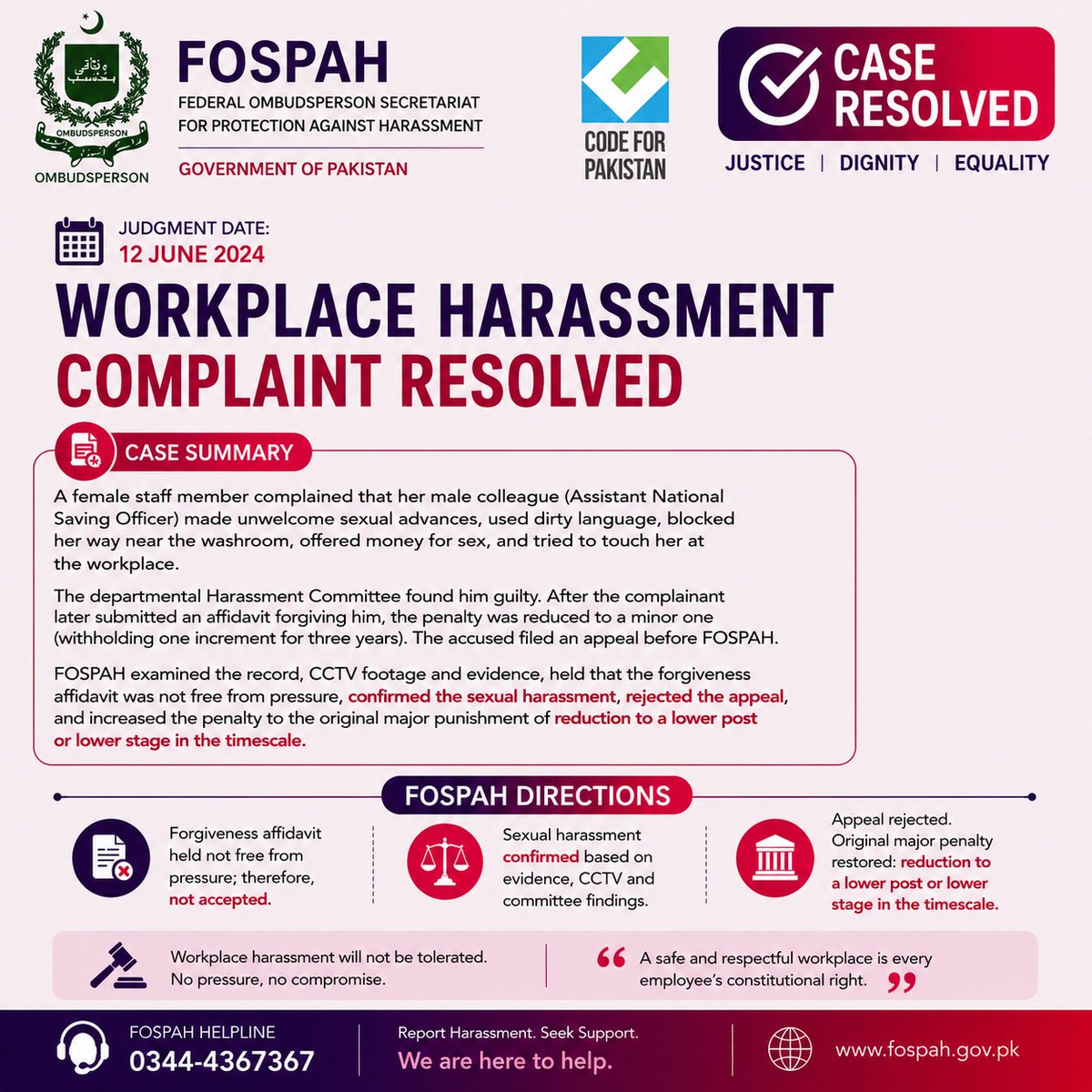
especially when it may have been given under pressure. The system is built to look deeper than a signature. This is why we keep sharing these judgments. Real laws exist. Real institutions exist to enforce them. And the only way they work is if people actually know they're there,
lower post or lower stage in the timescale.
As FOSPAH put it plainly: a safe and respectful workplace is every employee's constitutional right.
This case matters for a reason many people don't realize. A forgiveness affidavit doesn't automatically close a harassment case,
FOSPAH examined the record, CCTV footage, and evidence, and held that the forgiveness affidavit was not free from pressure. The sexual harassment charge was confirmed, the appeal was rejected, and the penalty was increased back to the original major punishment, reduction to a
After the complainant later submitted an affidavit forgiving him, the penalty was reduced to a minor one, withholding a single increment for three years. The accused then filed an appeal before FOSPAH, seeking to overturn the finding entirely.
The complainant stated that he made unwelcome sexual advances, used inappropriate language, blocked her way near the washroom, offered money for sex, and attempted to touch her at the workplace.
The departmental Harassment Committee found him guilty.
Case Resolved: Confirming Harassment, Even After a Forgiveness Affidavit
The Federal Ombudsperson Secretariat for Protection Against Harassment (FOSPAH) issued its verdict in a case filed by a female staff member against a male colleague.
Case Resolved: A Widow's Fight Against a Discriminatory Employment Condition
The Federal Ombudsperson Secretariat for Protection Against Harassment (FOSPAH) issued its verdict in a case filed by a widow working on contract with a federal organization.
As FOSPAH put it plainly: equal treatment at the workplace is not a privilege, it is a constitutional right.
This is why we keep sharing these judgments. Real laws exist. Real institutions exist to enforce them.