We’re honored to announce that Cogstate has been selected to support cognitive measurement in the XPRIZE Healthspan competition, a 7-year, $101 million global competition designed to revolutionize human aging.
Read the announcement: https://t.co/TJwLN578Yd
Our latest blog explores why an end-to-end strategy is becoming increasingly important for rare disease research and how integrated approaches to rater training, eCOA design, and central monitoring can help improve confidence in trial outcomes.
Read more: https://t.co/nPnHPrFn4S
Can lifestyle interventions meaningfully slow cognitive decline? Results from the US POINTER trial suggest they can. Cogstate is proud to support research in this area through validated cognitive assessments. Read the study: https://t.co/wlczJx6hXI
The countdown to #AAIC26 is on! In just a few weeks, the Cogstate team will join the global Alzheimer's disease research community in London. Explore Cogstate's full list of AAIC 2026 presentations: https://t.co/g67T8oQoCr
It's National Work from Home Day—but at Cogstate, that’s every day. As a virtual‑first organization, flexibility is just one part of how we enable our teams to do their best work. Interested in joining us? Explore opportunities on our careers page: https://t.co/tA3oHs6dzj
Our US offices are closed today in observance of Juneteenth, a day that marks a time when freedom was delayed, and a reminder that inequity doesn't end with declaration. It’s a time to reflect on progress and consider how each of us contributes to a more equitable future.
London, here we come! We're thrilled to join the global Alzheimer's disease community at #AAIC26 and discuss what's next for AD research. Schedule a meeting 👉 https://t.co/g67T8oQoCr
Recent research on NGLY1 Deficiency Disorder highlights how longitudinal cognitive and functional data can inform endpoint selection, expected trajectories, and meaningful change (Morrison et al., Human Molecular Genetics). Read the publication: https://t.co/GJxQjHOkOL
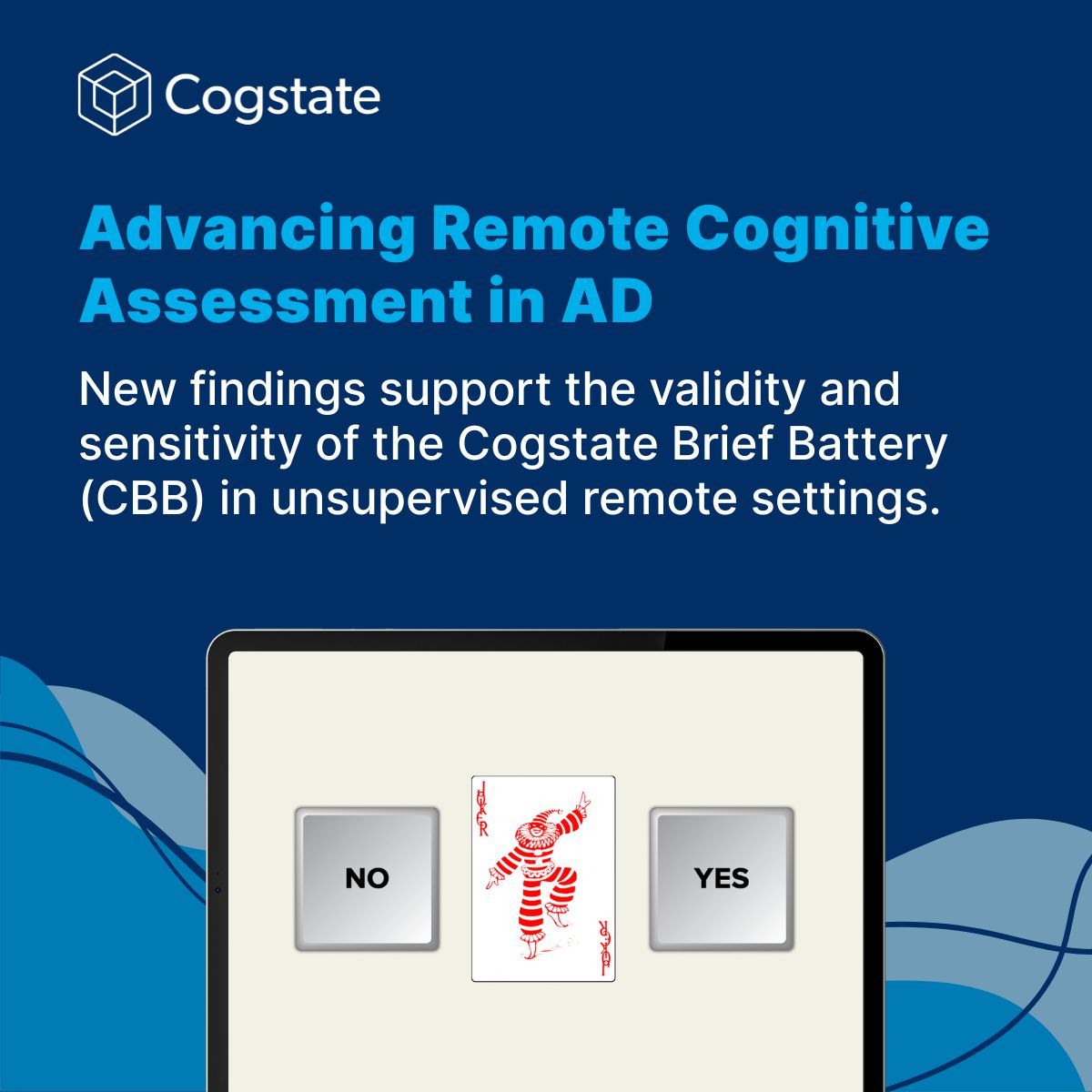
A new study by Prof. Paul Maruff and co-authors shows that remote, unsupervised cognitive testing using the Cogstate Brief Battery delivers results comparable to in-clinic assessments—and remains sensitive to early cognitive decline. Read the publication: https://t.co/0XsyGTpHCR
Recent work from Rachel Buckley and team examining p‑Tau217, tau aggregation, and cognitive decline in preclinical AD suggests that disease trajectories—and their cognitive expression—can differ by sex. Read the publication: https://t.co/gtIcjUpmHA
With strong sensitivity, specificity, and predictive value, the FCSRT can be a useful endpoint in preclinical and early AD trials. Read quick insights from Cogstate experts on how to ensure the FCSRT yields high quality data for accurate decision making: https://t.co/pFiLnnx6R5
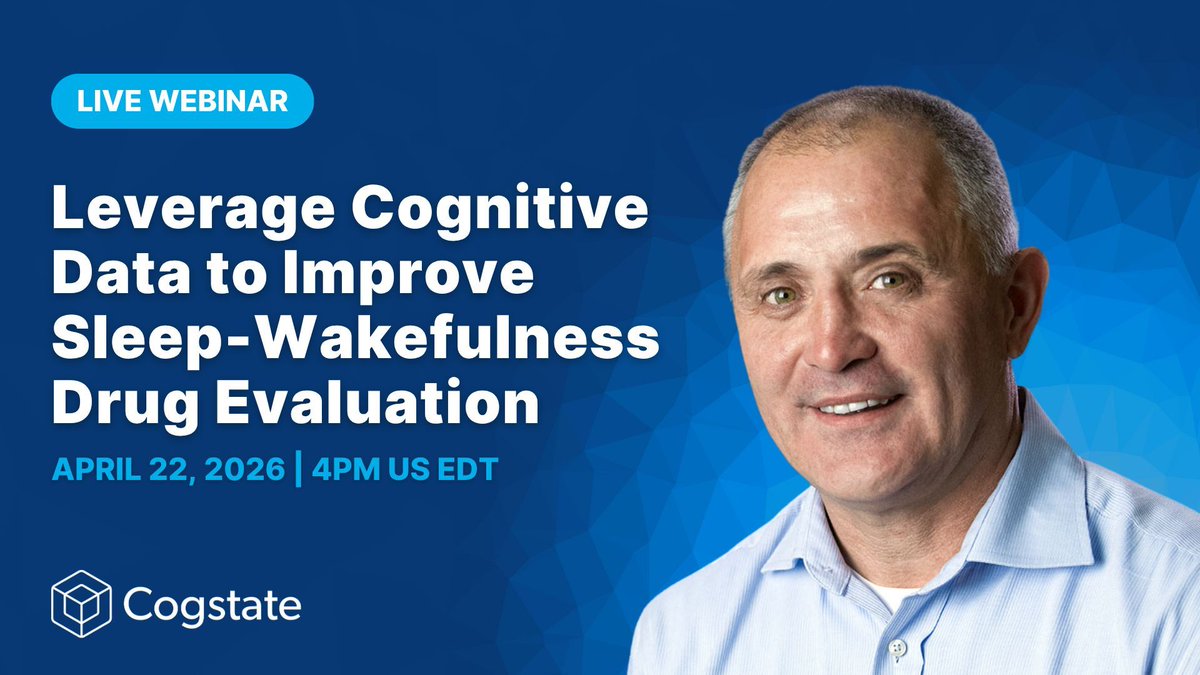
Are you developing a sleep disorder medicine? Join Prof. Paul Maruff for an upcoming webinar where he’ll review a data-driven framework for understanding the nature and magnitude of cognitive impairment in sleep disorder drug development. Register now: https://t.co/DLaIxVY3HQ
Placebo response rates in major depressive disorder (MDD) trials can reach as high as 30-40%, obscuring true treatment effects. Join us for a webinar on mitigating placebo response and enhancing signal detection in MDD clinical trials. Register here: https://t.co/vC9Va4WM36
This JAMA Neurology article co-authored by Prof Paul Maruff features a recent P2 trial for adults with NT1, where treatment with the oral OX2R-selective agonist oveporexton resulted in significant improvements in attention, executive function, and memory. https://t.co/9VcVm0Csct
Svenja Wacker, PhD (Neuropsychology Science Director) presented data at the 2025 ISCTM Spring Conference showcasing the strengths of the Cogstate Brief Battery as a valid option for remote, self-administered cognitive testing via smartphone. Learn more: https://t.co/jrqciXKL4I
The CDR scale's ability to detect meaningful change depends on rater expertise, rigorous training, and careful protocol planning. Our latest blog explores practical strategies to increase signal detection and ensure reliable outcomes in your AD studies. https://t.co/llgxD0aIbM
For decades, the ADAS-Cog has been considered a gold standard in Alzheimer’s disease clinical trials. However, this legacy tool has limitations; explore insights from our science team about advantages and challenges of the ADAS-Cog in our newest blog: https://t.co/7QqspTbibM
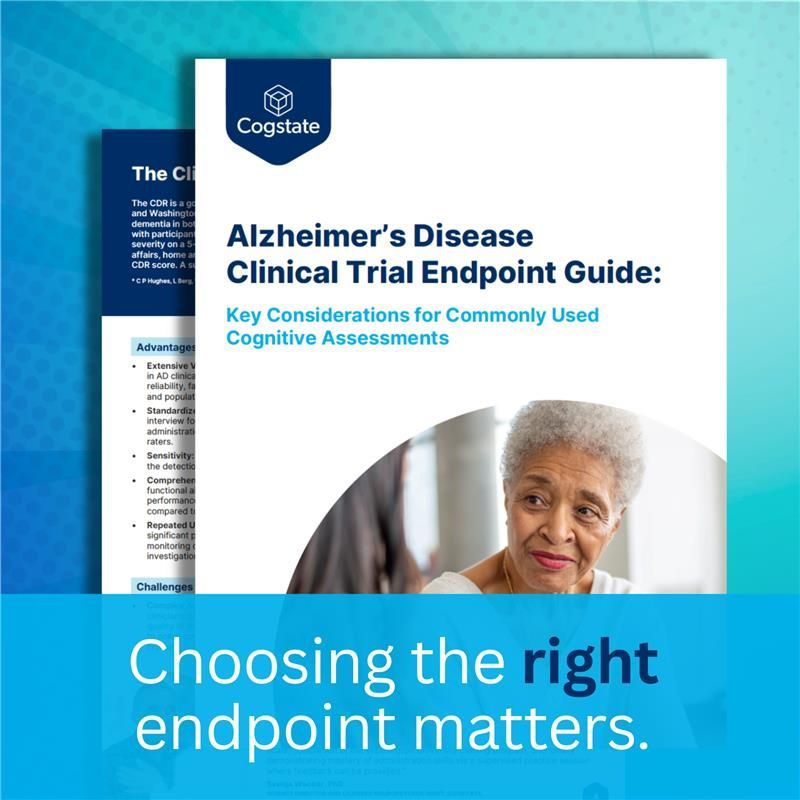
Based on decades of AD trial experience, Cogstate scientists have compiled rating scale insights to create the Alzheimer’s Disease Clinical Trial Endpoint Guide. Review considerations around the most widely used scales in AD drug development here: https://t.co/7OMTrIEAeW
Join us for a webinar with expert Pam Ventola, PhD, as she shares proven tactics and clinical trial case examples of how rare disease study teams are improving clinical response signaling using targeted approaches to endpoint data quality.
Register here: https://t.co/sN8GqlNVpl
At SLEEP 2025, a meta-analysis of 77 trials was presented, confirming the PVT’s sensitivity to cognitive impairment and change, and offering a strong foundation for its use in evaluating new treatments for sleep-wake disorders. View the poster 👉https://t.co/tylKXeIK6o