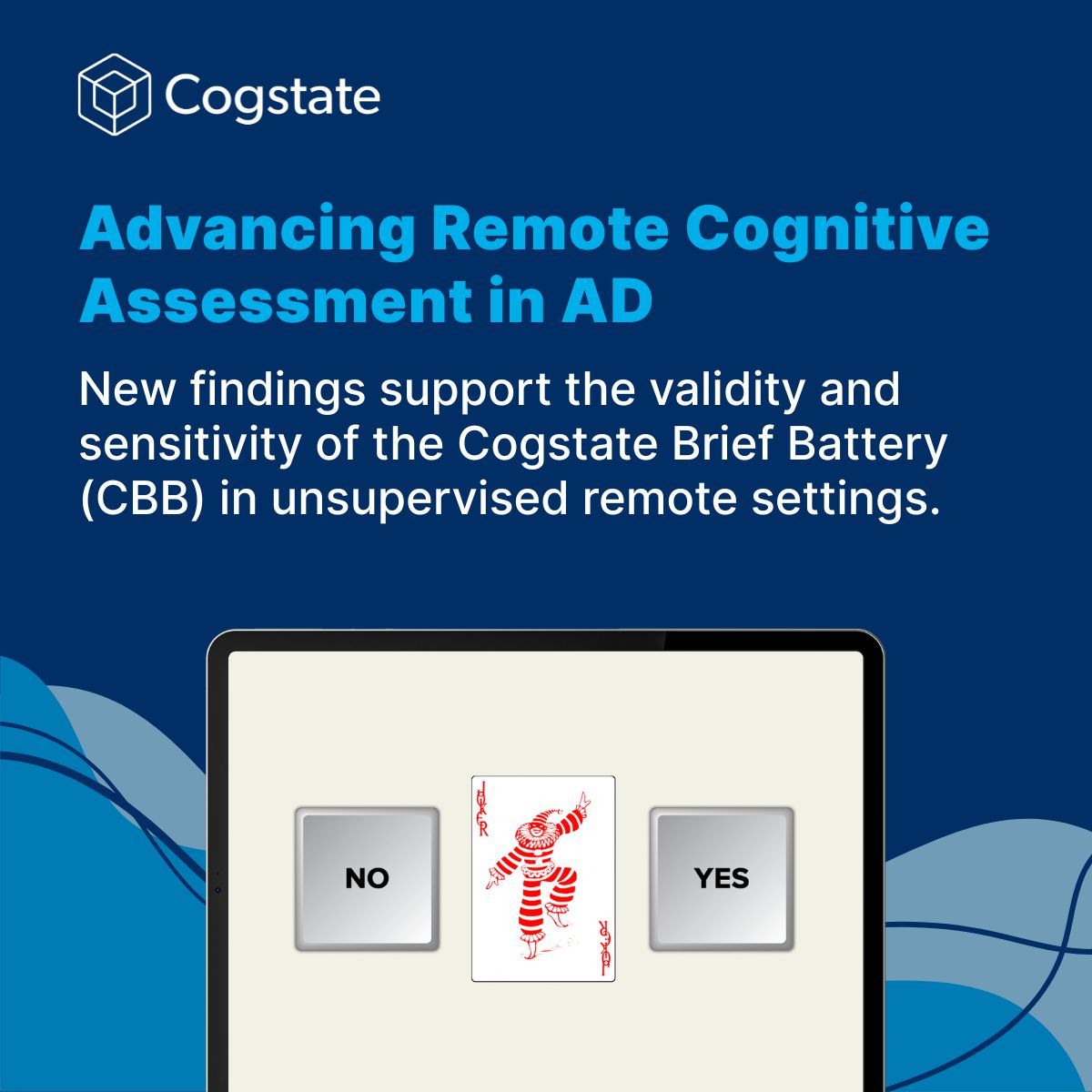
A new study by Prof. Paul Maruff and co-authors shows that remote, unsupervised cognitive testing using the Cogstate Brief Battery delivers results comparable to in-clinic assessments—and remains sensitive to early cognitive decline. Read the publication: https://t.co/0XsyGTpHCR
Recent work from Rachel Buckley and team examining p‑Tau217, tau aggregation, and cognitive decline in preclinical AD suggests that disease trajectories—and their cognitive expression—can differ by sex. Read the publication: https://t.co/gtIcjUpmHA
With strong sensitivity, specificity, and predictive value, the FCSRT can be a useful endpoint in preclinical and early AD trials. Read quick insights from Cogstate experts on how to ensure the FCSRT yields high quality data for accurate decision making: https://t.co/pFiLnnx6R5
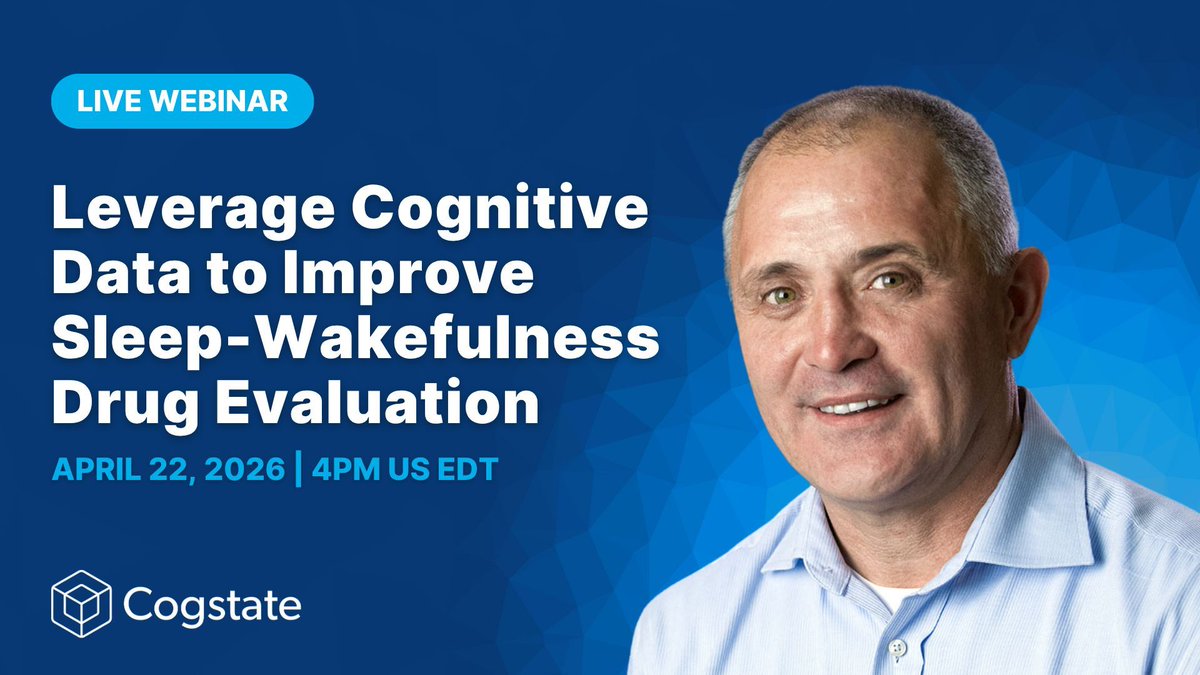
Are you developing a sleep disorder medicine? Join Prof. Paul Maruff for an upcoming webinar where he’ll review a data-driven framework for understanding the nature and magnitude of cognitive impairment in sleep disorder drug development. Register now: https://t.co/DLaIxVY3HQ
Placebo response rates in major depressive disorder (MDD) trials can reach as high as 30-40%, obscuring true treatment effects. Join us for a webinar on mitigating placebo response and enhancing signal detection in MDD clinical trials. Register here: https://t.co/vC9Va4WM36
This JAMA Neurology article co-authored by Prof Paul Maruff features a recent P2 trial for adults with NT1, where treatment with the oral OX2R-selective agonist oveporexton resulted in significant improvements in attention, executive function, and memory. https://t.co/9VcVm0Csct
Svenja Wacker, PhD (Neuropsychology Science Director) presented data at the 2025 ISCTM Spring Conference showcasing the strengths of the Cogstate Brief Battery as a valid option for remote, self-administered cognitive testing via smartphone. Learn more: https://t.co/jrqciXKL4I
The CDR scale's ability to detect meaningful change depends on rater expertise, rigorous training, and careful protocol planning. Our latest blog explores practical strategies to increase signal detection and ensure reliable outcomes in your AD studies. https://t.co/llgxD0aIbM
For decades, the ADAS-Cog has been considered a gold standard in Alzheimer’s disease clinical trials. However, this legacy tool has limitations; explore insights from our science team about advantages and challenges of the ADAS-Cog in our newest blog: https://t.co/7QqspTbibM
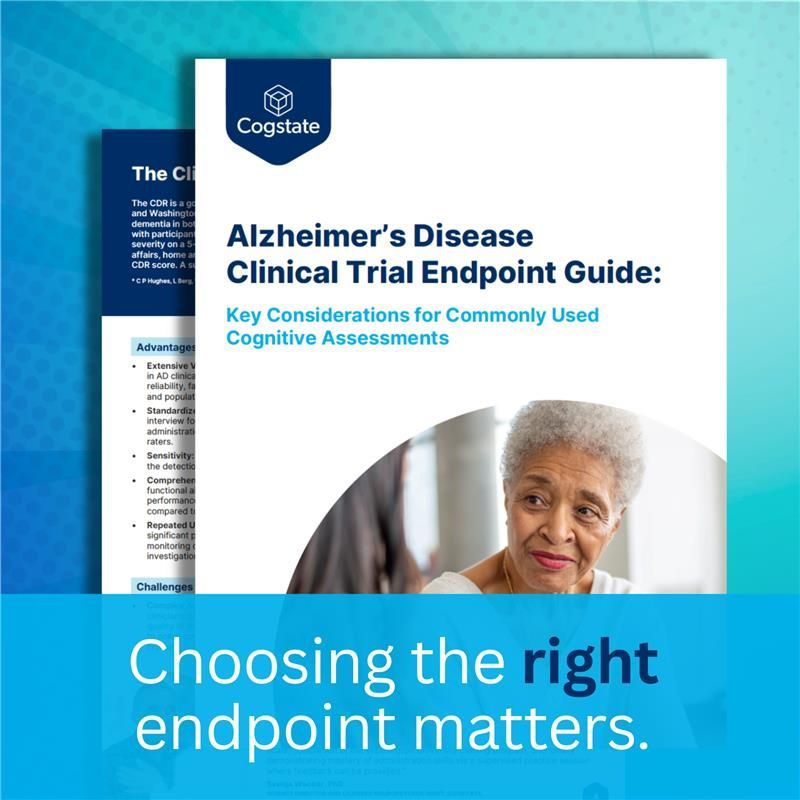
Based on decades of AD trial experience, Cogstate scientists have compiled rating scale insights to create the Alzheimer’s Disease Clinical Trial Endpoint Guide. Review considerations around the most widely used scales in AD drug development here: https://t.co/7OMTrIEAeW
Join us for a webinar with expert Pam Ventola, PhD, as she shares proven tactics and clinical trial case examples of how rare disease study teams are improving clinical response signaling using targeted approaches to endpoint data quality.
Register here: https://t.co/sN8GqlNVpl
At SLEEP 2025, a meta-analysis of 77 trials was presented, confirming the PVT’s sensitivity to cognitive impairment and change, and offering a strong foundation for its use in evaluating new treatments for sleep-wake disorders. View the poster 👉https://t.co/tylKXeIK6o
We’re delighted to announce the addition of the Objective Retention-based Cognitive Assessment (ORCA) suite of learning tests to our platform, allowing learning to be assessed and analyzed with rigor, precision, and accuracy. Experience the demo at booth #1610 during #AAIC25!
New findings presented at SLEEP 2025 underscore the importance of incorporating cognitive symptoms into both the clinical understanding of Narcolepsy Type 1 (NT1) and the development of targeted treatments (Harel, 2025). View the poster 👉 https://t.co/ryV4ZrehuF
25 Days to #AAIC25! Cogstate is back at the world’s leading Alzheimer’s conference and proud to present new science that supports better decision-making in Alzheimer’s drug development. See the full list of presentations: https://t.co/bsr12MCdls
At Cogstate, reconciliation is more than a conversation—it's part of our foundation. In 1999, our journey began while working alongside Indigenous communities in Central Australia. Now, we reaffirm our commitment to building a future rooted in respect, equity, and understanding.
Are you enrolling the right participants in Alzheimer’s trials?
Reliable screening is vital for identifying cognitive impairment. Using Cogstate digital tests can enhance outcomes. Read the literature summary here > https://t.co/oOGVjCU1wC
Kaycee Sink, MD, MAS, recently joined Cogstate as CMO, sharing her AD expertise in research, pharma dev, & patient care. Watch her chat w/ Brad O’Connor on trial design, biomarkers, recruitment & early AD intervention: https://t.co/npLJz3Bv1Q
Recent study results utilizing Cogstate digital tests provide a strong foundation for further development of M1 drugs and note the potential for cognitive enhancement in PD and other neurodegenerative disorders.
📕 Read the full paper here: https://t.co/lVp7jYTX9J
Working in rare epilepsy disorders? 🧬
Join us on Oct 3 to learn how to help your team:
▪️ Collect data across large geographic areas
▪️ Approach locations that don't have specialized raters
▪️ Select cognitive & behavioral endpoints
🗓️ Register here: https://t.co/YnDwzXjc7f