We are a team of developers and data scientists who are passionate about technology. Our mission is to help you build the skills you need to change the world.
Not every prediction works the same way.
Predicting a house price and predicting whether a customer will leave need different approaches. Choose the wrong model and your results can mislead you.
Start with one question: what are you predicting?
A number, like a price? Use linear regression.
A category, like yes or no? Use logistic regression.
Here are 3 regression models worth knowing:
1. Simple linear regression: one input, one numerical prediction. Example: predict a car’s price from its mileage.
2. Multiple linear regression: several inputs, one numerical prediction. Example: predict a house’s price from its size, location, and age.
3. Logistic regression: one or more inputs, the probability of belonging to a category. Example: predict whether a customer will cancel a subscription.
Want to go deeper? Explore Machine Learning with Python from IBM on Coursera: https://t.co/no5uu28ptn
#MachineLearning #Python #DataScience #Regression
Responsible governance is increasingly the difference between AI that scales and AI that stalls.
AI governance counts if it holds up when someone asks how a decision was made. Here are 4 checks worth running on any AI policy:
- Know whether you’re citing a voluntary framework, a certifiable standard, or binding law.
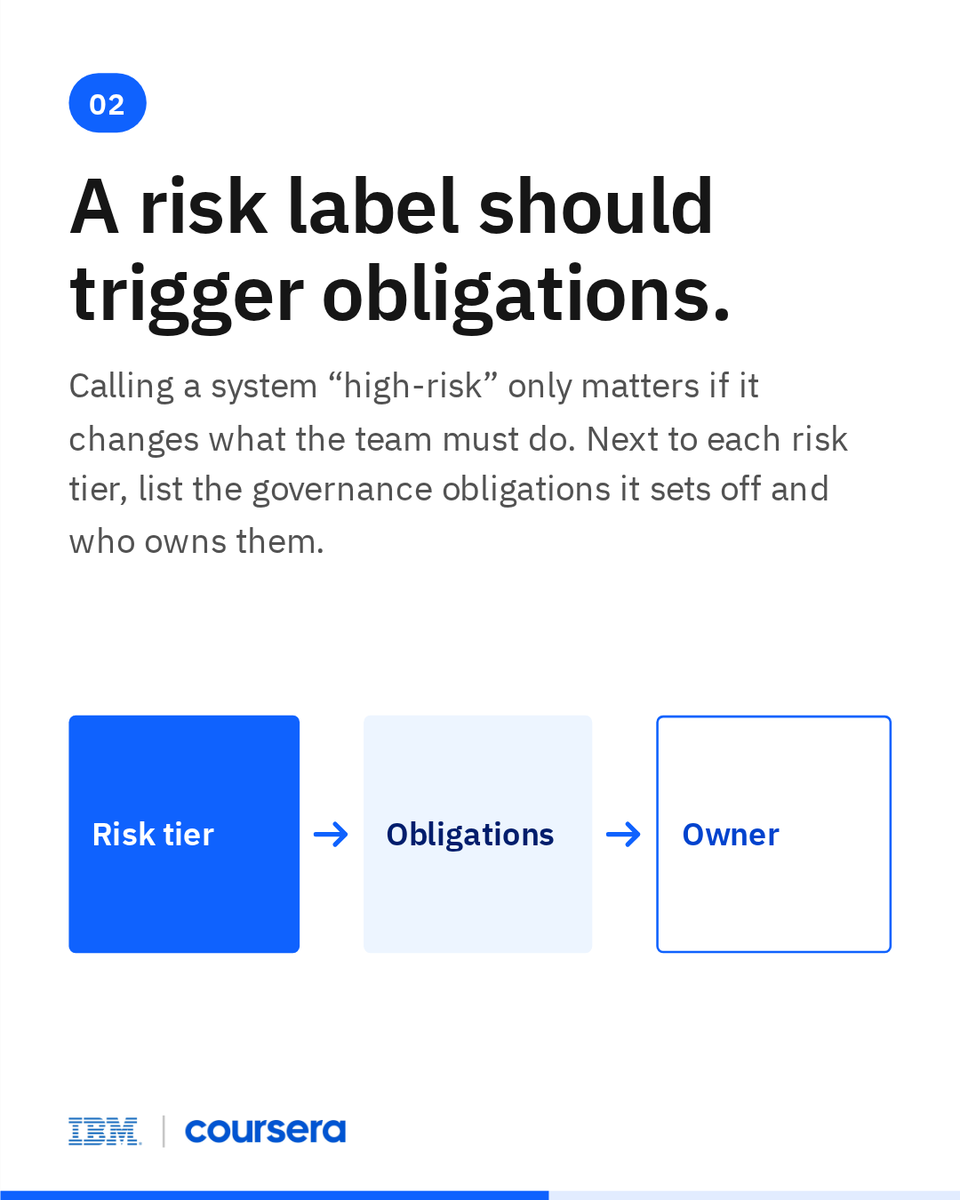
- Make every risk tier trigger real obligations with an owner.
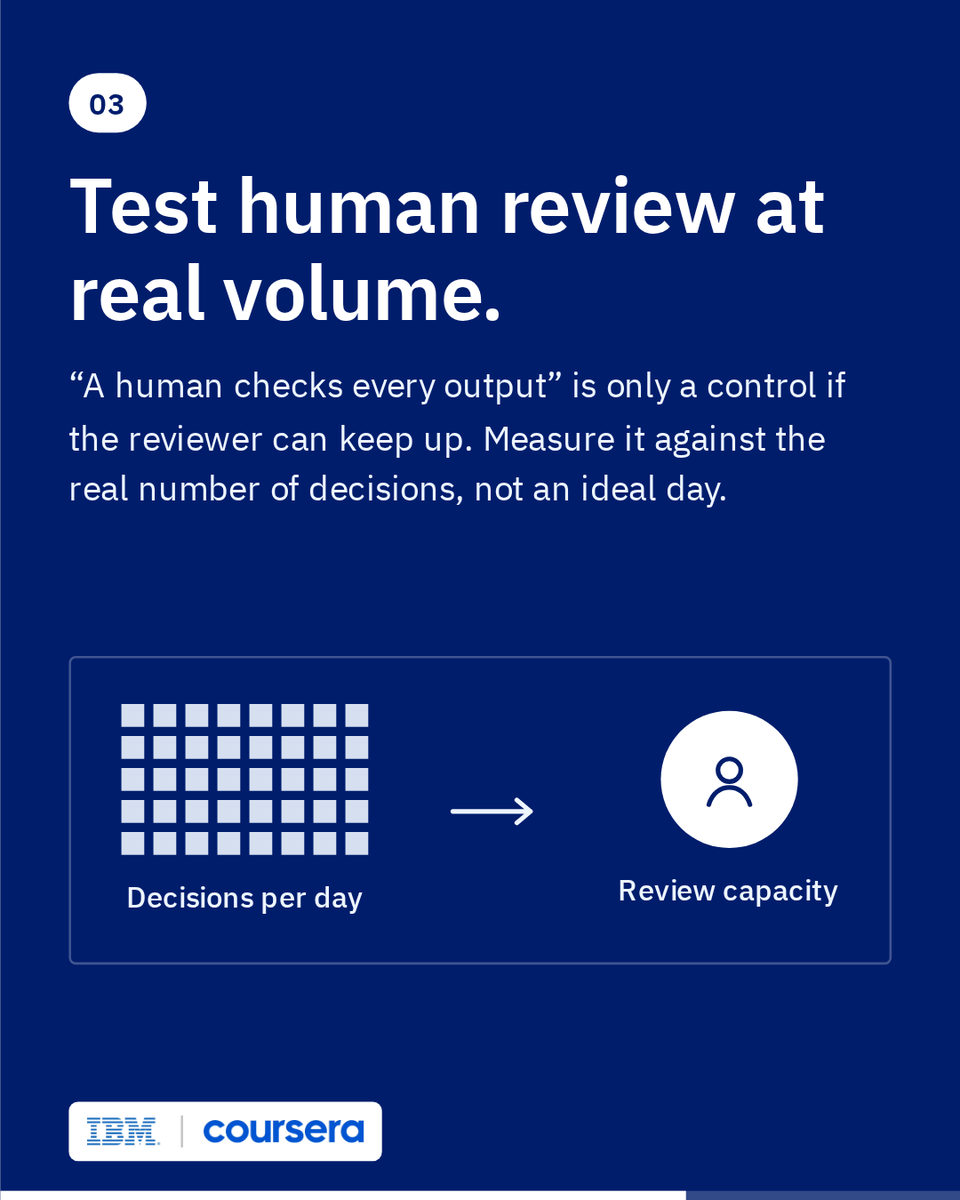
- Test whether human review can keep up at real volume.
- Document the reasoning behind each decision, including gaps.
IBM’s AI Governance, Risk, and Executive Communication Course teaches you to apply AI governance and ethics frameworks to an initiative so that responsibility is designed in rather than added after an incident.
Ready to start learning? Enrol here 👉 https://t.co/hnvowzuSuE
#IBM #Coursera #AIGovernance #ResponsibleAI #AIRisk #AIEthics
A device can have security gaps before anyone ever attacks it.
Outdated software, unused services, weak passwords, and loose firewall rules all leave openings. Closing them is everyday work for security professionals, and it’s a good place for beginners to start practicing.
Here are the four techniques in the graphic:
1️⃣ Patch. Security updates fix known weaknesses attackers could exploit. If you skip them, those weaknesses stay open.
2️⃣ Harden. Configure the device to have fewer weak points: disable services you don’t use and uninstall software you no longer need.
3️⃣ Filter traffic. A firewall uses rules to allow or block network traffic, such as unauthorized inbound connections.
4️⃣ Protect accounts. Password policies require strong, unique passwords and multi-factor authentication to reduce unauthorized access.
To try it yourself, pick one device you own and check all four: Are the latest updates installed? Is there software you can remove? Is the firewall on? Is MFA turned on for your main accounts?
These ideas come from IBM’s Introduction to Cybersecurity Essentials on Coursera.
Check it out now:
https://t.co/zcm1ia7Dmj
#Cybersecurity #InfoSec #CareerChange #LearningAndDevelopment
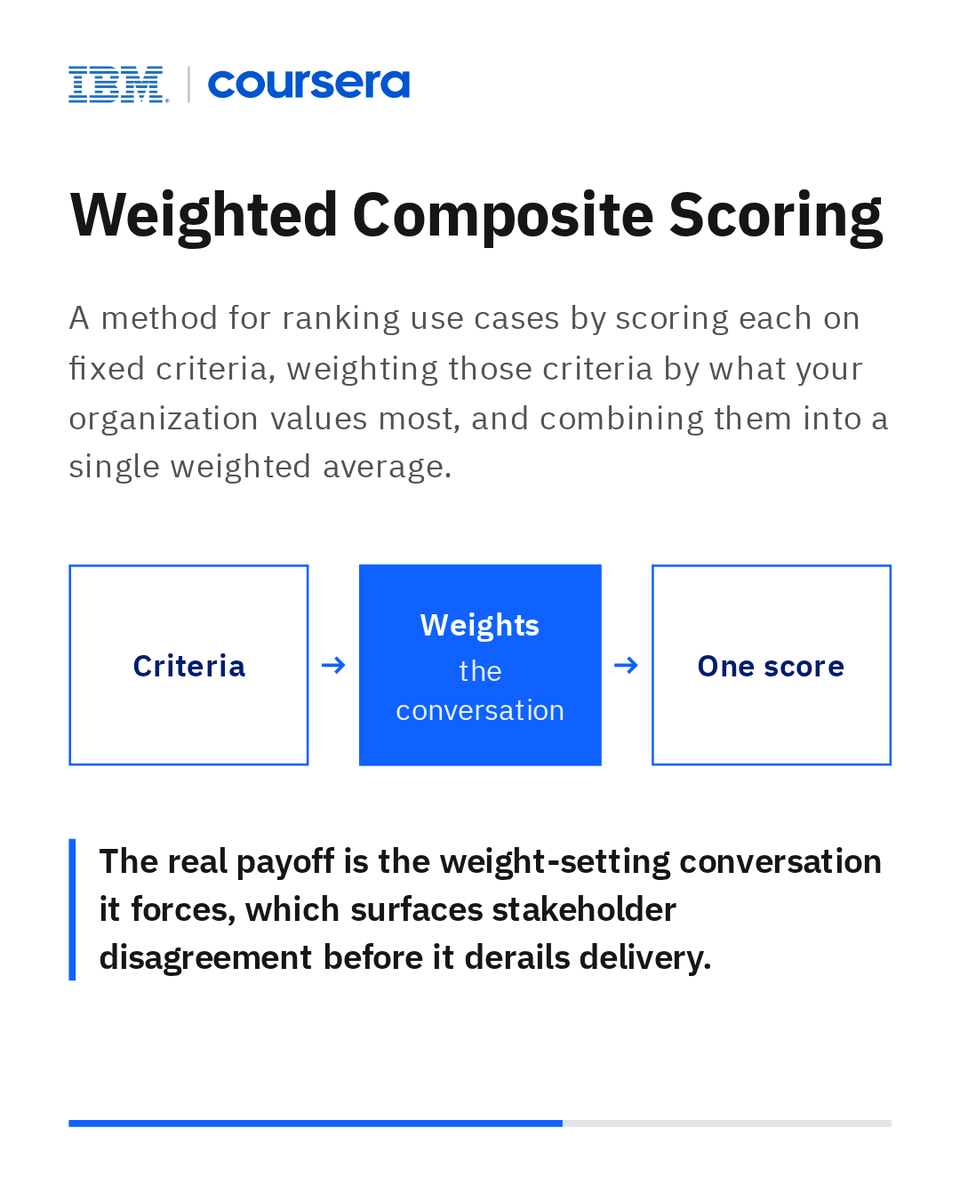
How do you build the skills at the core of AI leadership strategy?
By learning how to turn broad business goals into a focused, defensible AI strategy
Knowing how to prioritize the right use cases and prove their value is what sets great leaders apart. Here are a few key terms to know when connecting business goals to AI priorities:
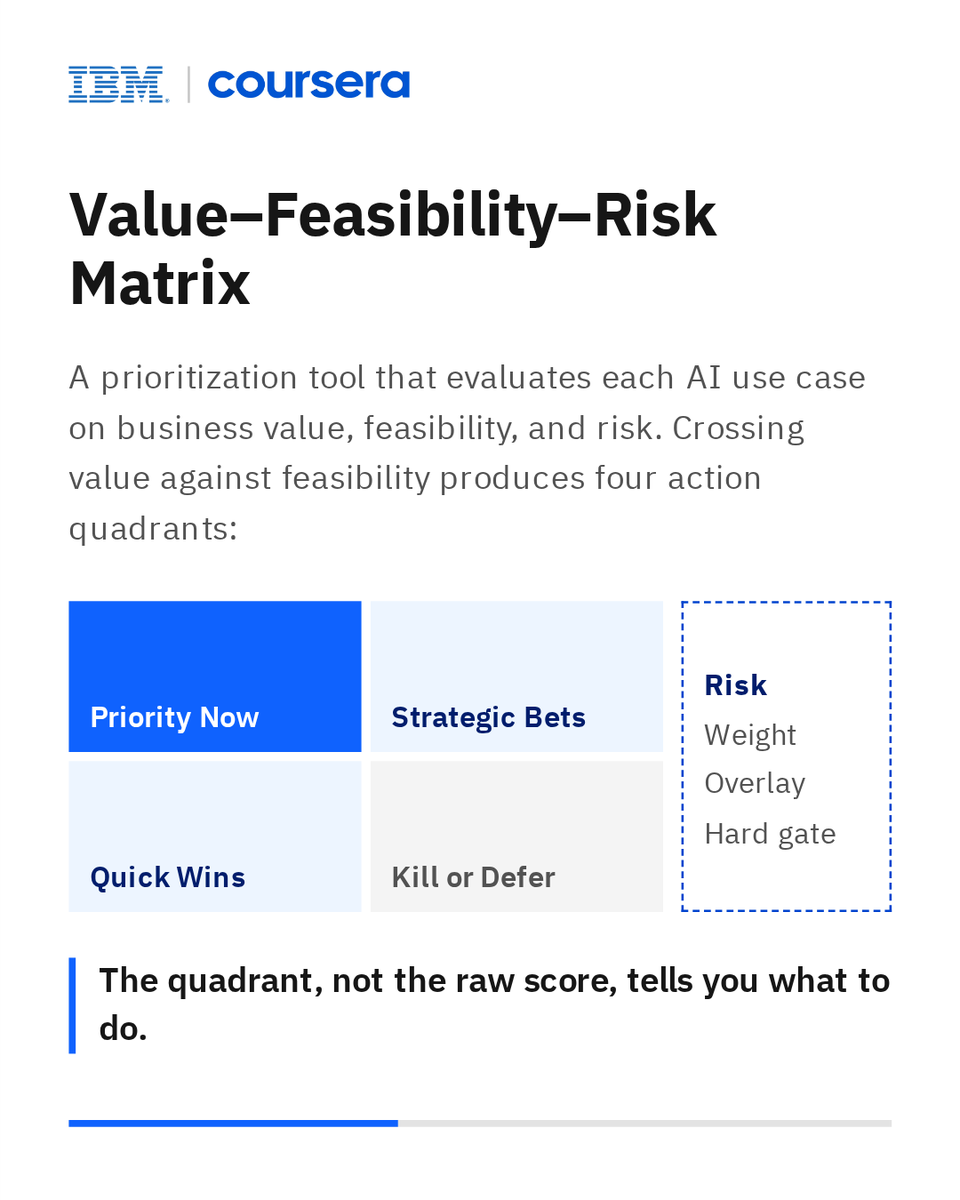
- Value-Feasiblity-Risk Matrix
- Weighted Composite Scoring
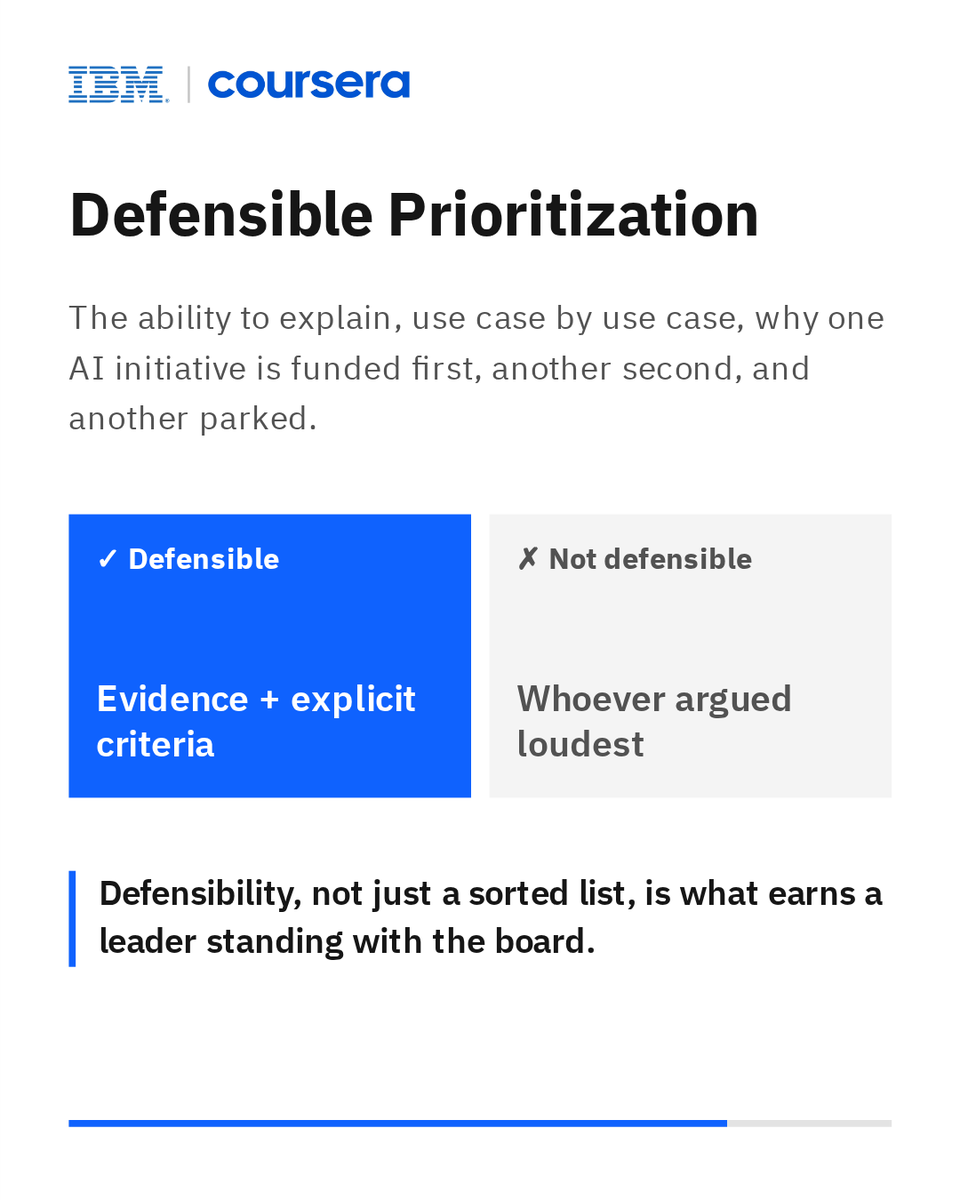
- Defensible Prioritization
Want to learn more about how to build your AI leadership strategy?
Enrol here 👉 https://t.co/KnFjz6FnA2
#ai #aileadership #coursera #ibm #ibmcourses
Not every machine learning model learns the same way, and knowing the difference is one of the first real steps toward understanding AI. Three approaches cover most of what you'll run into:
Supervised learning. The model trains on labeled data, meaning examples where the right answer is already known. Predicting house prices from past sales is the classic case.
Unsupervised learning. There are no right answers to learn from. The model looks for structure on its own, like grouping customers by how they buy.
Reinforcement learning. An agent tries things, gets rewarded or penalized, and gradually improves. Think of a program getting better at a game through thousands of rounds of trial and error.
Each one fits a different kind of problem, so picking the right approach starts with knowing what you're trying to solve.
If you want to go deeper, IBM's Machine Learning with Python course on Coursera walks through building and evaluating models in Python:
https://t.co/RIdCCJODjq
#MachineLearning #ArtificialIntelligence #Python #DataScience #IBM #Coursera
The rise of the AI Transformation Leader
Your AI pilot worked... Now comes the hard part.
Prioritizing opportunities. Managing risk. Gaining buy-in. Driving adoption. Measuring ROI. Scaling what works.
The challenge is no longer whether AI can deliver value.
It's who will lead the transformation.
Read our latest article exploring the rise of the AI Transformation Leader 👇
https://t.co/TucuxcxEHO
#AITransformation #AILeadership #ArtificialIntelligence #BusinessTransformation
#LeadershipDevelopment
Before you can lead AI, you need to understand it in business terms.
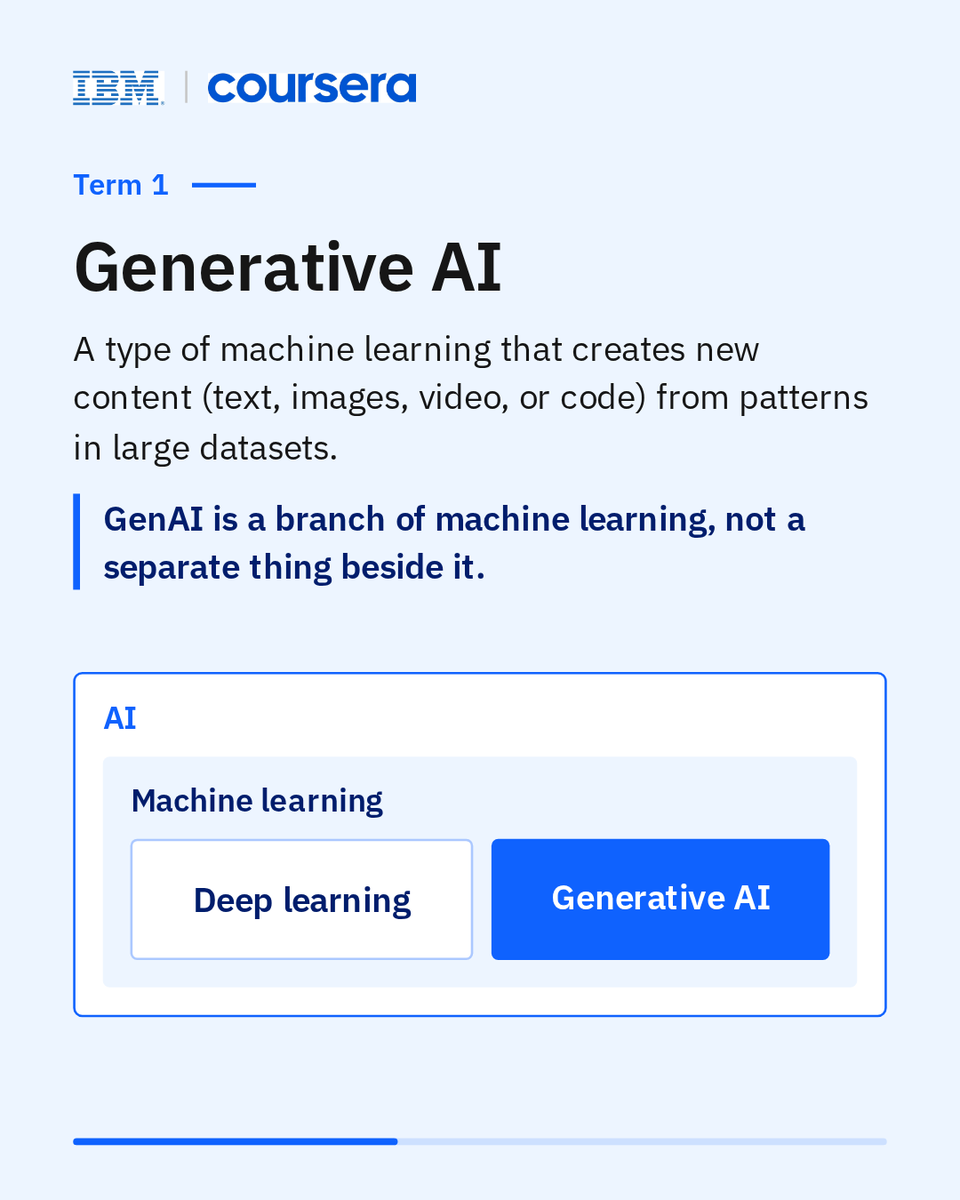
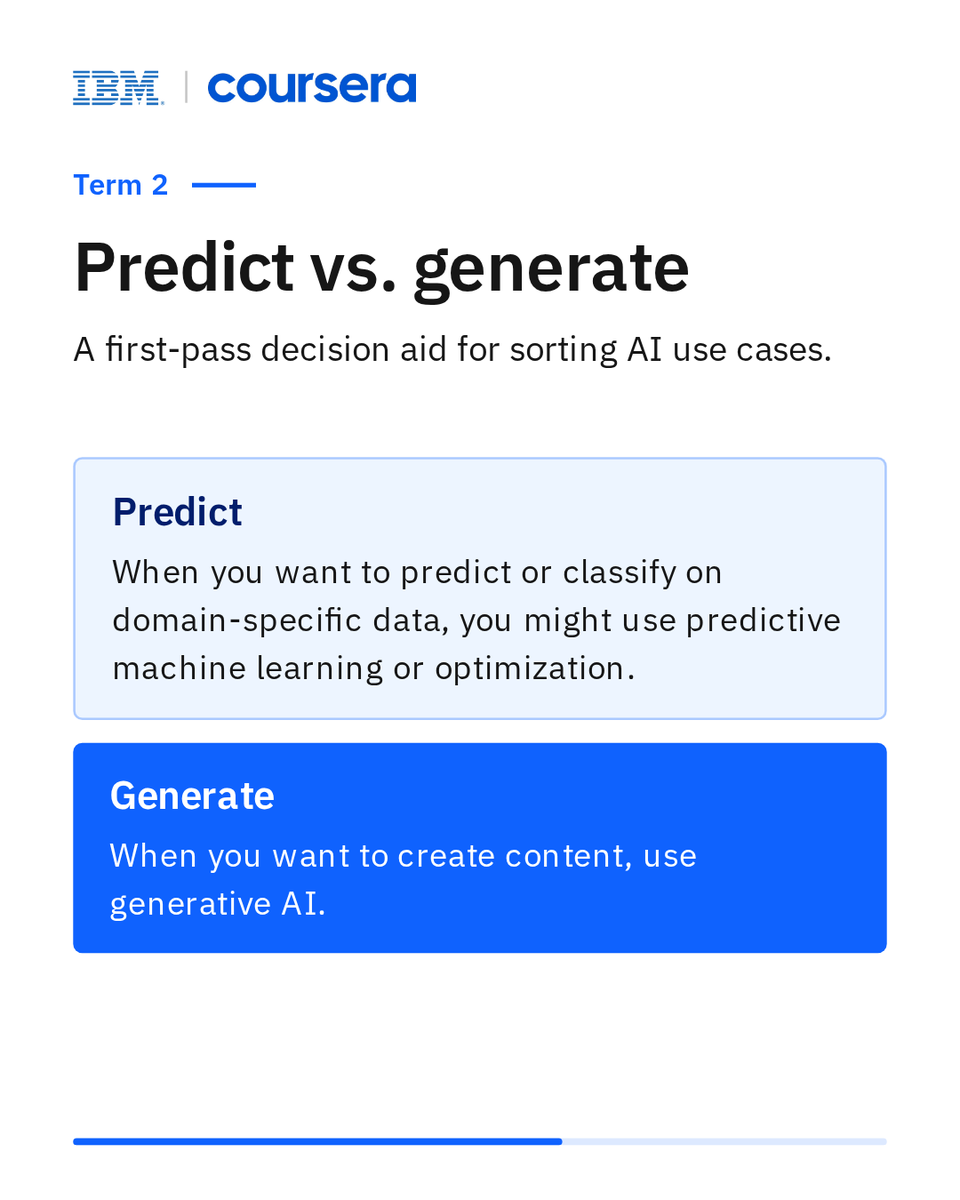
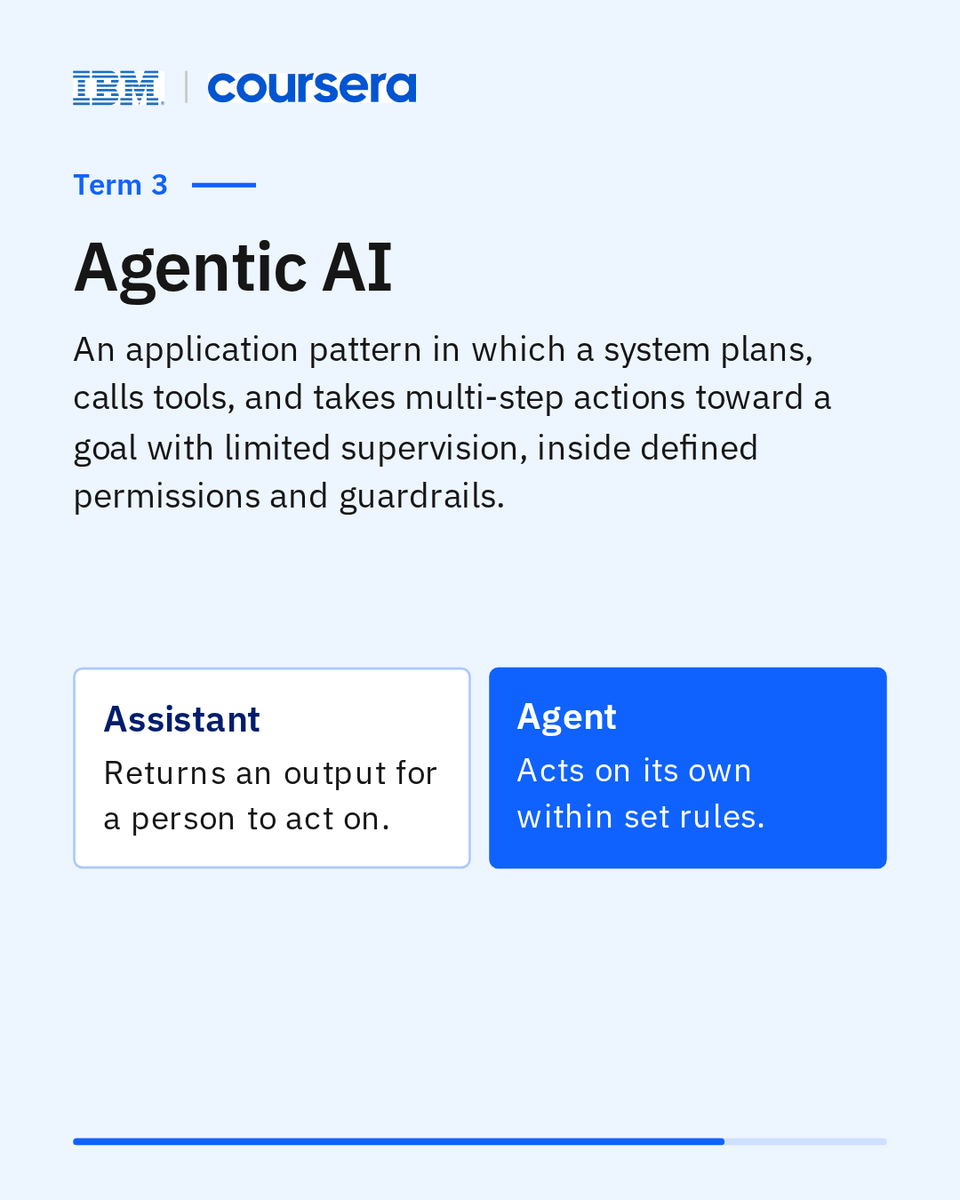
That means identifying real opportunities and evaluating where AI can create measurable value. IBM’s Lead AI Transformation Certificate Course will help you build the AI literacy every modern leader needs. You’ll learn what today’s AI can and cannot do, including generative AI and agentic systems that can plan and take action on their own.
Here are a few key terms to know as you build your core AI literacy:
- Generative AI
- Predict versus generate
- Agentic AI
Want to learn more about how to build your AI leadership strategy?
🔗 Enrol now: https://t.co/F0vF6TU9FH
#AI #AILeaders #IBMCourse #Coursera #AILiteracy #AICourse
The IBM AI Developer Professional Certificate was featured in TechTarget's Top 10 AI certifications and courses for 2026.
It's a beginner-level program on Coursera for anyone who wants to start building with AI, whether or not you come from a technical background.
What the program covers:
- 10 self-paced courses, about 6 months at 4 hours a week
- Generative AI and prompt engineering
- Python, Flask, and HTML, CSS and JavaScript
- Building AI chatbots and apps
- An introductory Python course for learners with no programming experience
Thanks to TechTarget for including us.
Enroll now: https://t.co/6hzTCcHmTt
#AI #GenerativeAI #Python #IBM #Coursera
Scaling AI is about organizational design just as much as technology.
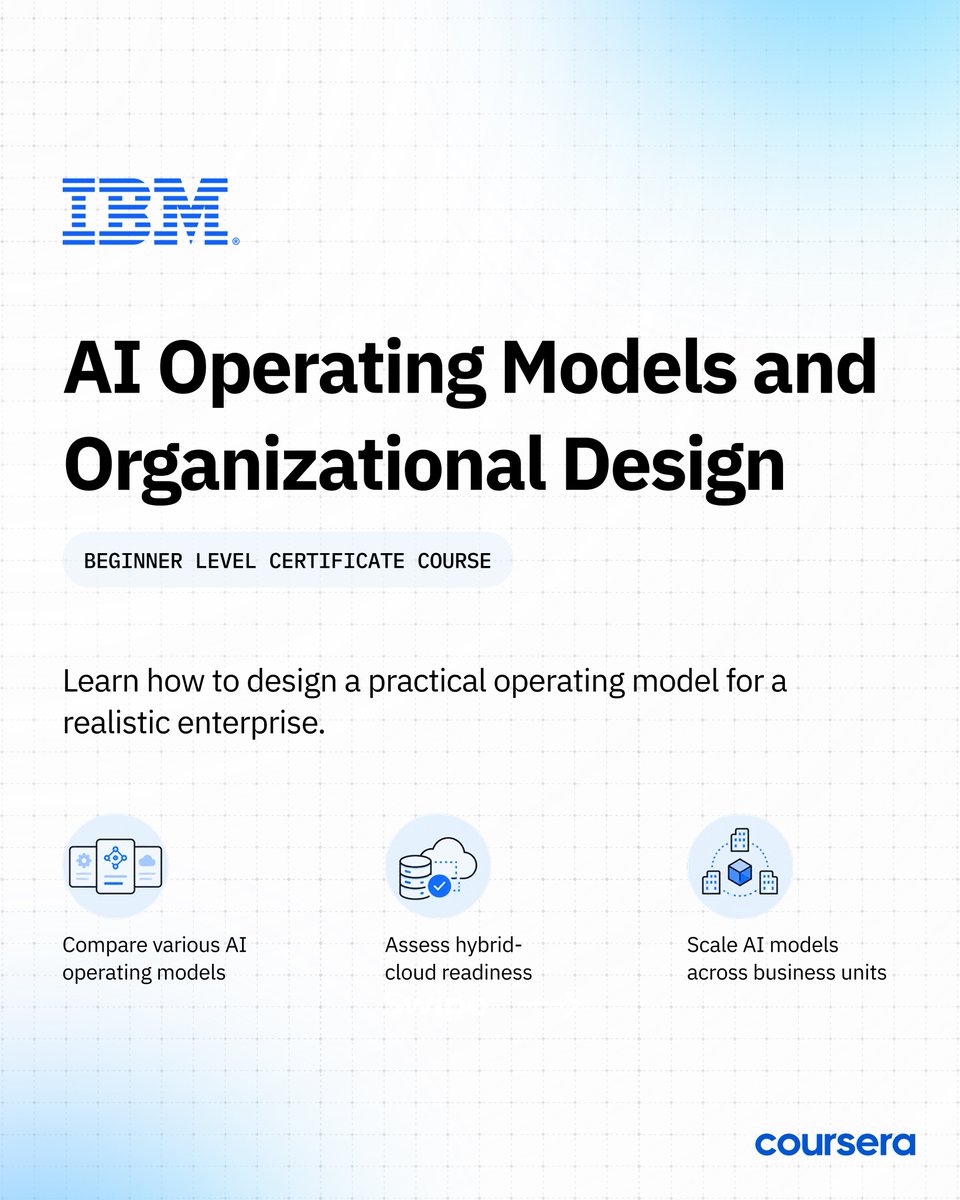
Learning how to design a practical operating model is essential, and extending that model across business units allows it to adapt and scale effectively. IBM’s AI Operating Models and Organizational Design course helps you learn to structure the teams, roles, decision rights, and foundations that let AI move quickly and responsibly.
Throughout this beginner-level course, you’ll learn how to:
- Compare AI operating models, including Center of Excellence, federated, and hub-and-spoke, and match one to your organization's context and maturity.
- Define the new roles AI creates and map decision rights so accountability doesn't fall through the gaps.
- Assess data, infrastructure, and hybrid-cloud readiness in leadership terms, and know which decisions to own or delegate.
- Extend an AI operating model across business units, adapting roles and oversight to local context.
Put your knowledge into practice and finish the course with a shareable career certificate from IBM!
Ready to learn more?
Enrol here: https://t.co/hypri7BYBH
A simple formula to remember:
Visual input + Clear instruction + Desired output
Don't just upload an image and hope the AI gets your goal. Tell it what to examine, what context matters, and what you want back.
How do you build the skills at the core of AI leadership strategy?
By learning how to turn broad business goals into a focused, defensible AI strategy.
Knowing how to prioritize the right use cases and prove their value is what sets great leaders apart. Here are a few key terms to know when connecting business goals to AI priorities:
- North-star principle (AI strategy alignment)
- AI bet vs AI experiment (deep-and-narrow)
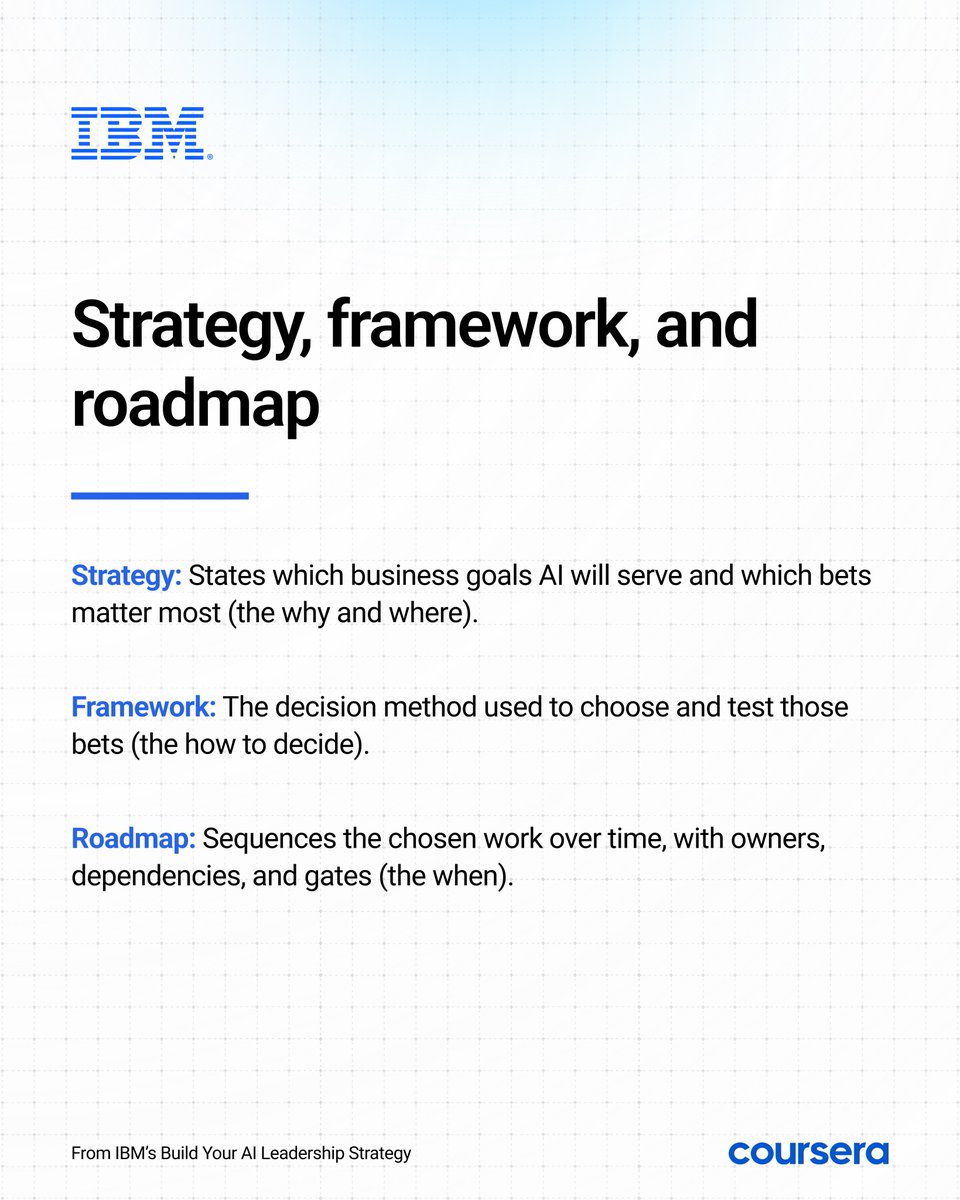
- Strategy, framework, and roadmap
Want to learn more about how to build your AI leadership strategy?
Enrol here: https://t.co/UOcBtS1Qp2
Or comment “AI” for the complete course link.
#AI #IBMCourse #AILeadership #AICourse #Coursera #IBM #CourseraCourse #Leadership