ACCESS IS NOT THE SAME AS CONTROL.
CoinBank pairs a banking-style interface with a non-custodial Web3 model, allowing users to retain wallet-based control. Digital finance shouldn’t force a choice between usability and ownership.
#CoinBank#SelfCustody#Web3Finance
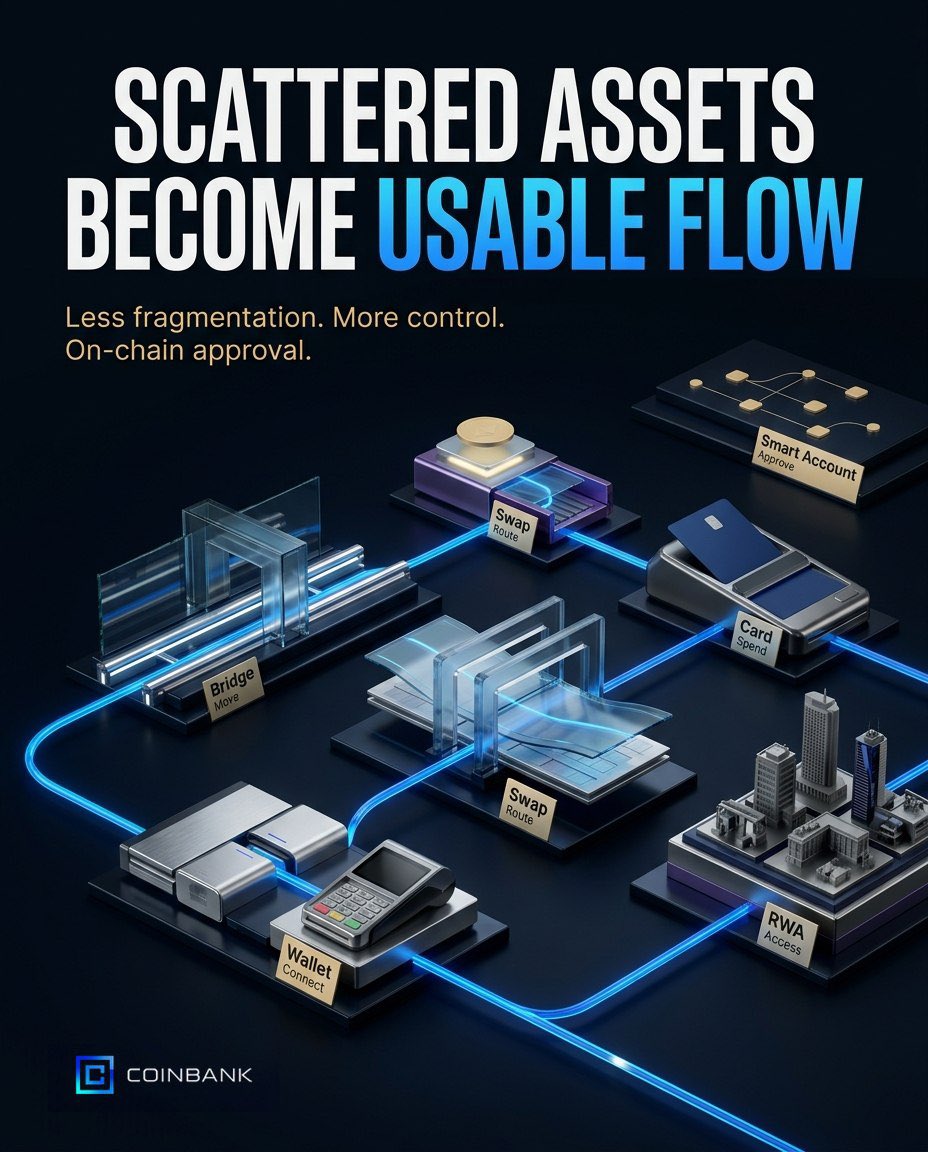
CoinBank is built as a non-custodial Web3 financial hub where users connect a wallet, view supported assets, choose bridge, swap, card, RWA, or smart account modules, then approve actions on-chain. Less fragmentation, more control, clearer practical use.#CrossChain#Web3Finance
COINBANK is the native token at the center of the CoinBank ecosystem.
Cross-chain access, digital assets, card utility, treasury infrastructure and tokenized markets-connected through one non-custodial financial hub.
#CoinBank#COINBANK#Web3Finance
Exodus is cutting 25% of its workforce to build a full-stack stablecoin payments and card platform.
It’s clear: the next battle in Web3 finance is payments and card rails built directly on-chain - wallet-based control meeting real-world spend.
#Stablecoins#CryptoPayments
CoinBank is not being built as a traditional bank.
It is being developed as a smart-contract financial layer for clearer asset access, capital movement, and structured participation across supported Web3 environments.
#CoinBank#Web3Finance
@coinbureau Sustainable ecosystems require strong economic models.
Protocol revenue, governance, and real utility will shape the future of Web3 finance.
Bitcoin proved the value of decentralized networks.
The next evolution will come from financial infrastructure that connects digital assets with real-world utility.
Crypto is moving beyond “which coin is next?”
The real shift is finance moving on-chain: assets, payments, treasury, RWAs, tokenized equities, and access.
CoinBank is built for that future.
Not just coins.
A broader financial layer.
#CoinBank#OnChainFinance
@SolanaFndn Open data is becoming a core UX feature. When users can compare network activity, apps, assets, and flows in one place, confidence improves.
@DefiLlama Great move. Crypto-native users increasingly want traditional market context in the same language they use for on-chain assets: price, volume, cap, earnings, and flow.
This is the direction users want: fewer fragmented experiences, more unified access. The winning layer will make assets, apps, and chains feel like one financial environment.
@pete_rizzo_ Energy, mining, and digital money are becoming more connected than many people expected.
Bitcoin keeps forcing the conversation beyond price and into infrastructure.
Even a small institutional allocation can be meaningful.
The bigger signal is that crypto is increasingly being discussed as part of portfolio construction, not only as a speculative trade.
🚨¥ 21.3 BILLION JAPANESE NATIONAL PENSION FUND TO ALLOCATE 1% TO CRYPTO
Japan's National Business Corporate Pension Fund is set to allocate 1% of assets to crypto by FY '26, citing a 6 year study on protection against fiat currency debasement.
@BankXRP RWA net inflows are becoming one of the most important metrics in crypto.
They show where real-world value is actually moving onchain, not just where attention is going.
$1B in weekly tokenized equities volume is not just a Solana milestone.
It points to a bigger shift: onchain finance is expanding beyond tokens into stocks, RWAs, and broader asset access.
@BitcoinMagazine Institutional allocation keeps becoming quieter, more structured, and more embedded. That may matter more long term than the loudest market reaction on any given day.
This is a smart direction: crypto exposure becoming easier to access without forcing users to leave familiar portfolio structures. The next step is making multi-asset digital ownership feel just as simple.
Franklin Templeton files for two ETFs that automatically invest dividends from stock holdings into bitcoin…
Targeting 95% stock & 5% btc allocation.
Extremely savvy way to introduce btc into portfolios w/ zero friction.
ETF innovation never ceases to amaze.
@standwithcrypto Regulatory clarity is especially important for real-world payment infrastructure. Businesses need transparent rules before they can move operational settlement on-chain at scale.
@Vivek4real_ AI agents as economic actors make one thing clear: financial infrastructure needs to be programmable, wallet-aware, and built for machine-speed decisions.