How it started: A decentralized Learn-and-Earn platform.
How it's going: Fusing Web3 education with real-life, high-stakes gameplay.
Together with #PIVX and Shuffles88, we are turning game nights into an interactive masterclasses on privacy and decentralization.
True crypto adoption happens where the community gathers. The board is set. Are you ready? 🛡️
#CryptoGaming #PrivacyMatters #Shuffles88
🇵🇰 PAKISTAN TAKES A MAJOR STEP TOWARDS REGULATED CRYPTO
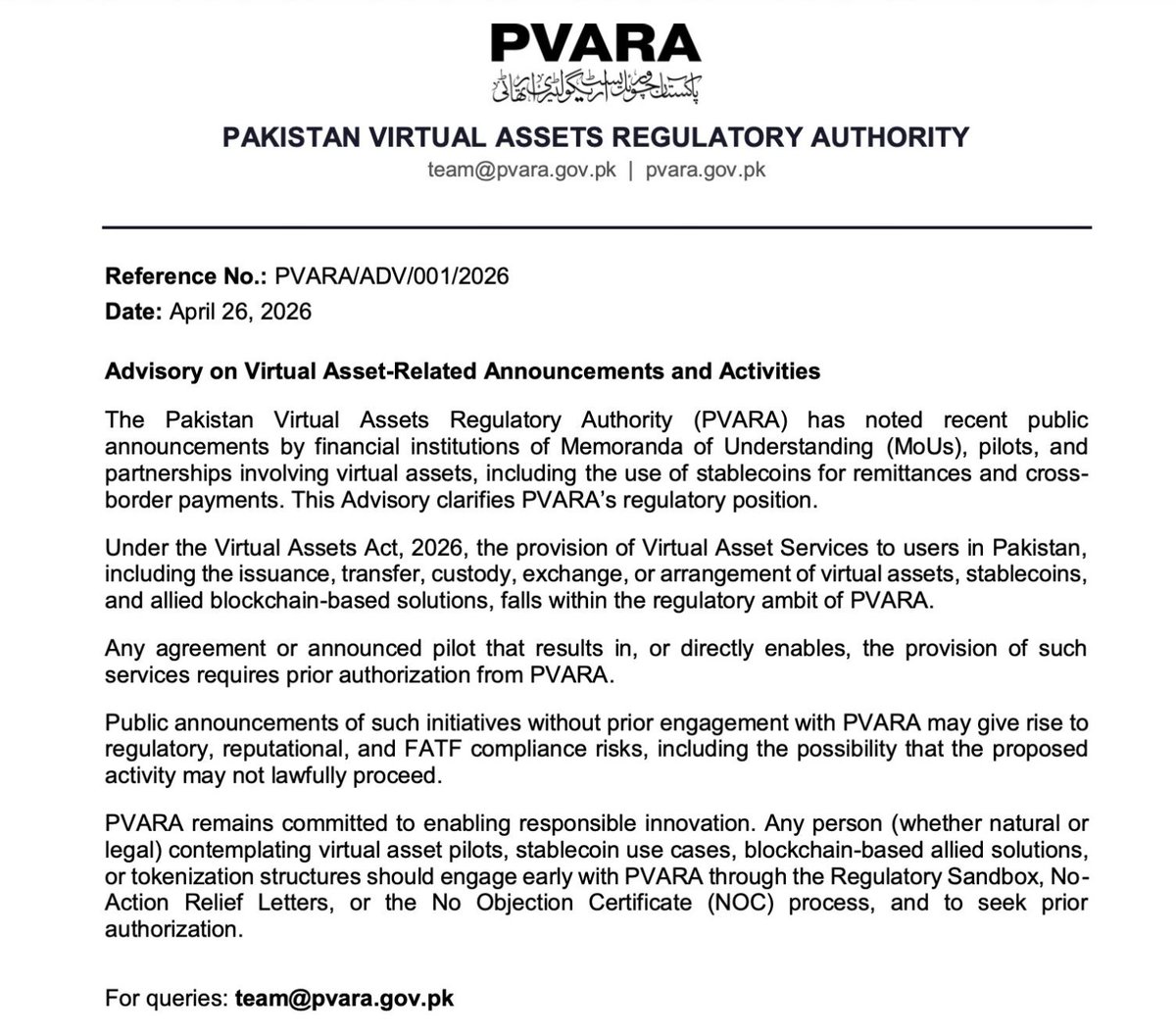
Pakistan’s Pakistan Virtual Assets Regulatory Authority (PVARA) has reportedly approved its first Virtual Asset Service Provider (VASP) license, marking one of the country’s biggest crypto regulatory milestones yet.
This is important because Pakistan has historically had:
unclear crypto regulation, banking restrictions on crypto firms, and uncertainty around legal status.
Now, the country is moving toward a structured framework instead of a grey market.
What Does This Actually Means?
Under Pakistan’s new Virtual Assets Act 2026, PVARA was created to:
license crypto businesses,
regulate exchanges and custodians,
oversee compliance,
and integrate digital asset firms into the formal financial system.
This first license approval signals:
Pakistan is transitioning from restriction to regulated participation.
Banking Access Is the Bigger Shift
One of the most significant changes is that:
Pakistani banks can now reportedly provide services to licensed VASPs, replacing earlier restrictions dating back to 2018.
That matters because crypto adoption struggles without:
banking rails,
compliance frameworks,
and legal operational clarity.
This move effectively opens the door for:
regulated exchanges,
custody providers,
stablecoin services,
and blockchain startups.
Pakistan is already one of the world’s largest crypto-user markets by population and adoption interest.
Several factors drive this:
a young digital-native population,
large freelance and remittance sectors,
growing stablecoin usage,
and increasing demand for alternative financial infrastructure.
The country has also recently:
established the Pakistan Crypto Council,
discussed blockchain infrastructure initiatives,
and explored broader crypto policy development.
So as regulation is gradually replacing uncertainty. The new framework appears focused on:
AML/KYC compliance,
cybersecurity standards,
licensing requirements,
consumer protection,
and FATF alignment.
This reflects a broader global trend:
Governments are no longer asking whether crypto exists but they are deciding how to regulate it.
Pakistan’s move mirrors what’s happening globally:
stablecoin frameworks in Canada,
tokenization pilots in Japan,
crypto banking access in Europe,
and institutional blockchain adoption in the US.
The industry is shifting from:
speculative experimentation
to:
regulated digital financial infrastructure.
The approval of Pakistan’s first VASP license is more than administrative progress.
It represents:
institutional acknowledgment,
regulatory normalization,
and the beginning of a more formal crypto economy inside Pakistan.
For years, crypto in many emerging markets operated despite regulation.
Now countries like Pakistan are beginning to build frameworks around it instead.
Brian Armstrong is right about one thing:
The agentic economy could surpass the human one.
But that future depends on a critical foundation:
Money that doesn’t require identity.
Money that doesn’t expose behavior.
Money that doesn’t ask permission.
That’s not just innovation.
That’s infrastructure.
And projects like PIVX are positioning for exactly that moment:
Where intelligence is autonomous and value can move just as freely without being watched.
“The Agentic Economy Could Be Bigger Than the Human Economy.”
That’s not sci-fi.
That’s @brian_armstrong and PIVX describing where we’re headed.
And if he’s right, then we’re asking the wrong question.
Not “Will AI agents participate in the economy?”
But:
What kind of money will they use?
The Bigger Shift we are looking at here is that we are entering a phase where:
AI becomes an economic actor
Money becomes programmable
Systems become autonomous
And the question is no longer:
“Can machines transact?”
It’s:
“Can they do so privately?”
ARBITRUM SECURITY COUNCIL RECLAIMS $70.9M IN ASSETS FROM KELPDAO EXPLOITER NEW YORK
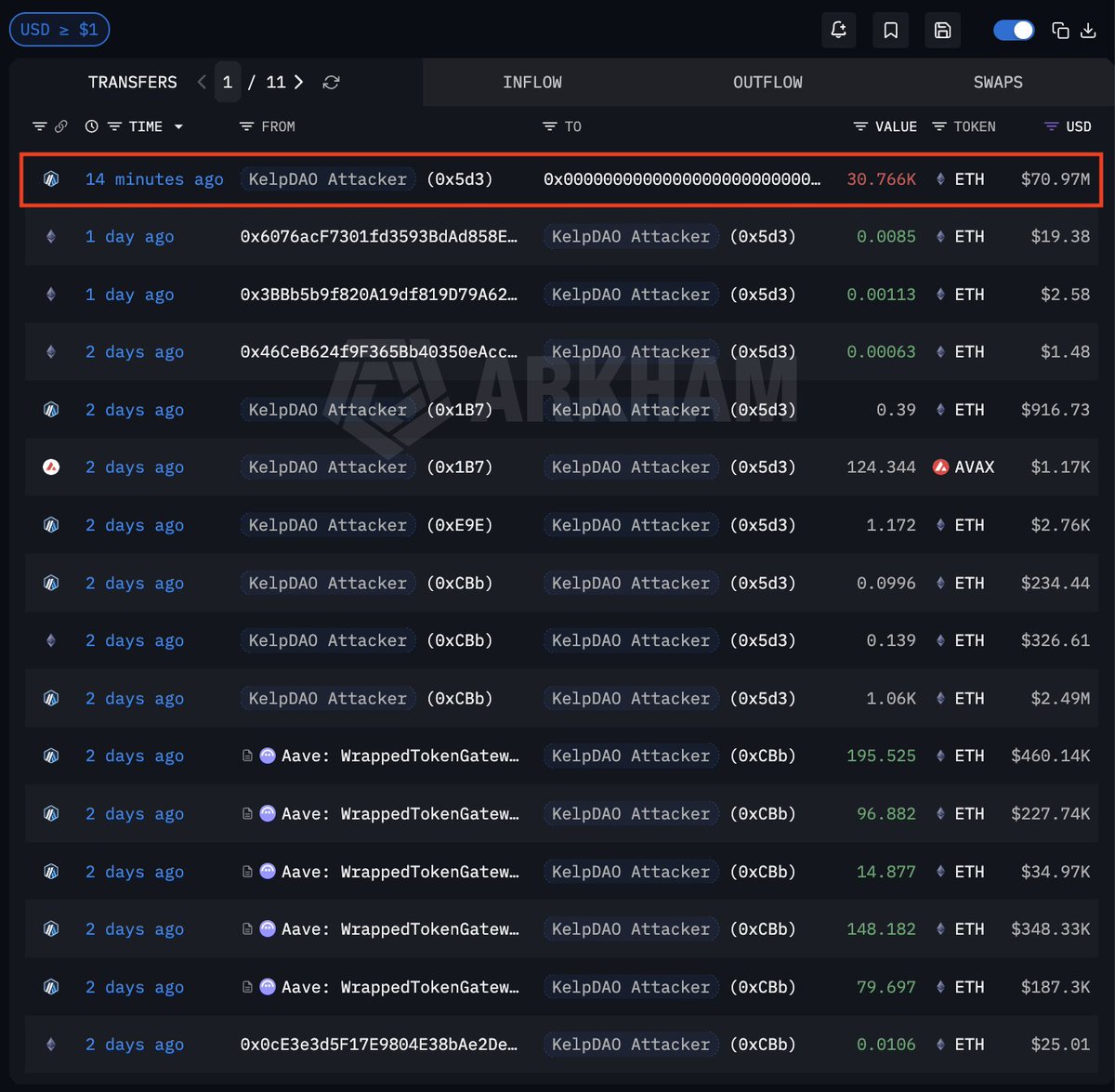
In a major win for ecosystem security, the @arbitrum Security Council has successfully recovered approximately $70.97 million in Ethereum (ETH) previously held by the KelpDAO exploiter.
The recovery was executed through a decisive intervention by the Council, which moved the funds directly from the exploiter’s known addresses to a secure system address: 0x0000000000000000000000000000000000000DA0.
The exploit had been closely monitored by on-chain analysts following the initial breach.
Industry experts noted that the Council’s ability to claw back such a significant sum marks a critical moment for Arbitrum’s governance and its commitment to user protection.
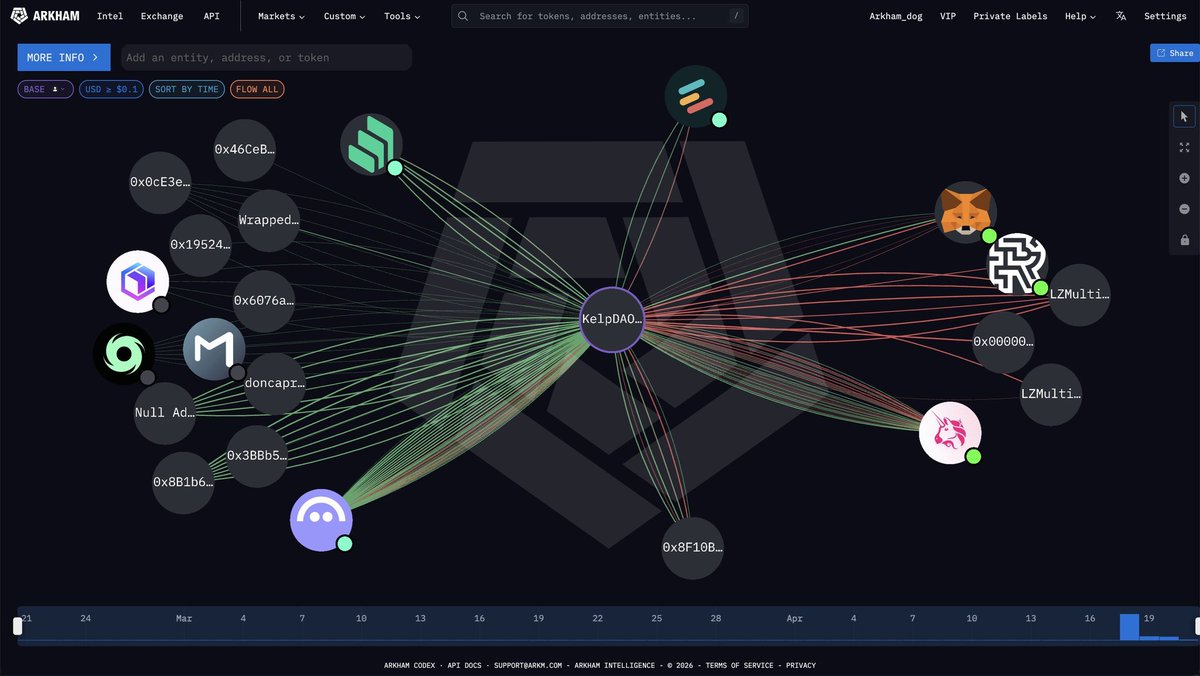
Blockchain intelligence firm Arkham has updated its tracking for the "KelpDAO Exploiter" entity, allowing the public to monitor the remaining movements associated with the breach in real-time via their Intel Exchange.
The Arbitrum foundation has not yet released a detailed "post-mortem" on the specific mechanism used for the recovery, but the move has already sent a strong signal to bad actors within the Layer 2 space.
The bigger picture here is that this situation highlights three realities about DeFi:
1. Speed Matters More Than Ever:
Both attackers and defenders operate in real time.
2. Partial Control Exists:
Decentralization doesn’t always mean zero intervention:
Some chains and protocols can act
Others cannot
3. Transparency Cuts Both Ways:
Every move is visible
But visibility doesn’t guarantee recovery
So in conclusion, the movement of $175M+ signals a critical phase:
The window between exploit and potential fund dispersion is now open.
What happens next won’t just determine recovery outcomes…
It will also test how effective:
- On-chain governance
-Security coordination
Real-time monitoring have become in handling large-scale crypto incidents.
🚨 KelpDAO Exploit Enters Critical Phase
The attacker behind the KelpDAO exploit is now actively moving funds.
$175.41M shifted to new wallets on Ethereum
30,766 ETH ( approximately $71M) already frozen by Arbitrum’s Security Council.
Total exploit size: Approximately $292M
This marks a transition from exploit to post-exploit maneuvering.
What Typically Happens Next?
At this stage, attackers often aim to:
- Break funds into smaller amounts
- Move across multiple wallets
- Shift between chains or protocols
- Use high-liquidity routes to obscure flow
This phase is often referred to as:
Post-exploit fund movement
Why Is This Moment so Important?
This is where outcomes are shaped:
- Early freezes can limit damage
- Rapid tracking can follow fund flows
- Delays can allow funds to disperse widely
Once funds are widely distributed:
Recovery becomes significantly harder