🚨 Beware of fraudsters impersonating CoinCover! 🚨
We will never cold-call you and ask for your personal information.
Email [email protected] if you ever have any concerns about communications from us.
An estimated 20% of Bitcoin could already be lost forever.
Not stolen. Not hacked. Just… gone.
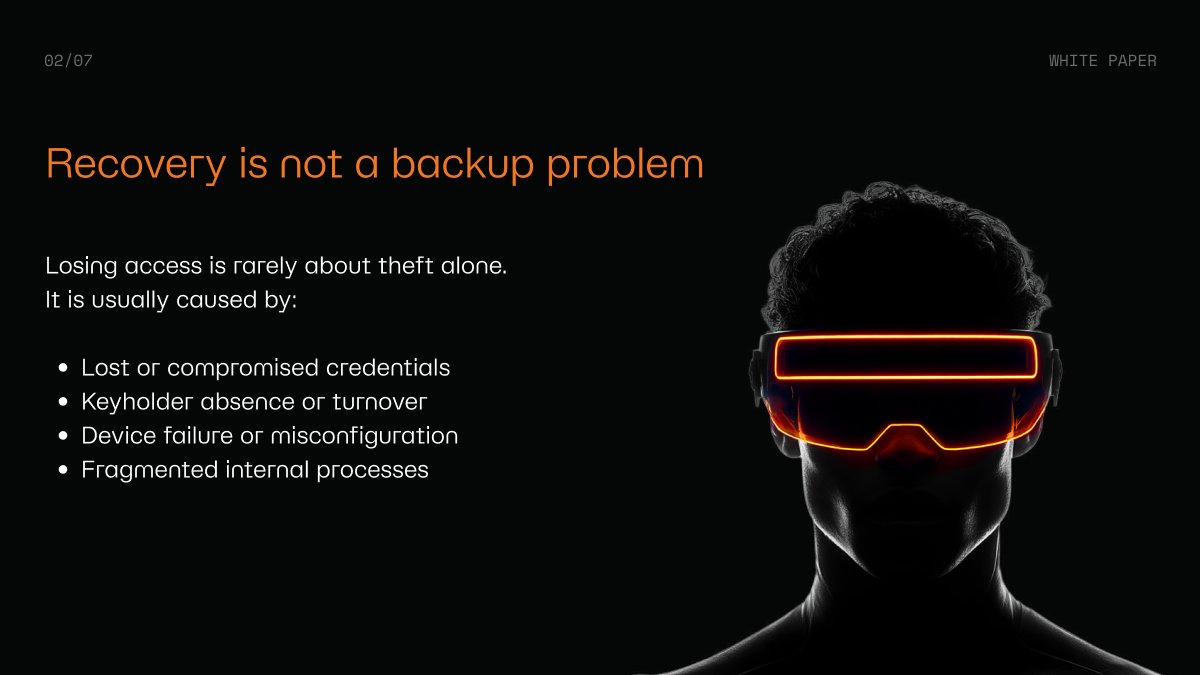
Lost seed phrases. Dead hard drives. Forgotten passwords. No recovery plan when it mattered most.
Crypto solved trustless transactions.
It solved borderless value transfer.
But recovery? That’s still one of the industry’s biggest blind spots.
Because ownership means very little if access can disappear overnight.
At CoinCover, we help protect against lost access with secure recovery solutions designed to build long-term trust in digital asset ownership.
Learn more in the link in our bio.
The Bank of England is now calling stablecoins a new form of money.
That changes the conversation.
When regulation tightens and scrutiny increases, recovery and resilience stop being “nice to have”.
CoinCover was built for this environment, with secure key management, disaster recovery and institutional-grade digital asset protection.
If you’re operating in the world the Bank of England just described, now’s the time to make sure your recovery foundation is ready.
https://t.co/cMp6qjzMo2
Most people still treat compliance in crypto like a constraint.
It’s not.
It’s the thing that decides whether this industry actually scales.
In our interview with TalkFintech, CoinCover CEO Jeremy Verba explains why trust remains crypto’s biggest challenge and why “good enough” compliance still leaves firms and customers exposed.
Security and compliance can’t be bolted on later. They need to be built in from day one.
Read the full interview: https://t.co/aVk3qqIlGp
Most institutions are covered on prevention. Far fewer are prepared for recovery.
If access to your digital assets disappeared today:
• Who can act immediately?
• How do you regain control without creating new risk?
• Where are the single points of failure in your key management setup?
This is where weak points surface fast.
The CoinCover Recovery Playbook is built for the moment access is lost and control needs to be re-established quickly and safely.
If you can’t answer these questions with certainty, you’re carrying a risk you can’t see.
Find out more in the link in our bio
Most crypto losses aren’t bad luck.
They’re process failures waiting to happen.
Access disappears. Safeguards fail under pressure. Assets get stranded when recovery was never properly planned for.
Security matters. But recovery-readiness matters too.
That’s where CoinCover focuses on helping institutions, exchanges and wallet providers ensure loss doesn’t have to be permanent when things go wrong.
We’re heading to Consensus 2026 🇺🇸
From May 5–7, CoinCover will be in Miami joining the global leaders shaping the future of digital assets.
As the industry continues to mature, resilience, security, and trust have never been more critical and that’s exactly where we’re focused.
If you’re attending, this is a great opportunity to connect on:
Protecting digital assets at scale
Building user trust in crypto products
Strengthening recovery and resilience strategies
Partnerships across the evolving web3 ecosystem
Our team will be on the ground and ready to meet.
📍Miami Beach Convention Center
📅 May 5–7, 2026
Let’s talk about how we can make digital asset ownership safer and more accessible.
Crypto still asks a lot.
Be your own bank. Manage your keys. Take the hit if it goes wrong.
That’s power, but it’s also why many stay out.
In a recent interview, CoinCover’s CCO @AnthonyCoinC breaks it down:
• Ownership comes with risk most aren’t ready for
• Regulation won’t fix UX alone
• Adoption needs trust built in, not bolted on
“The shift is treating key management + recovery as core infrastructure.”
That’s the gap CoinCover is solving.
Full interview:
https://t.co/U7vZvNqmok
Are you ready to absorb the cost of doing nothing?
A user upgrades their phone.
Opens your wallet.
Locked out.
No seed phrase. No backup. No way back.
That’s not a UX issue. That’s total product failure.
What follows:
Negative reviews.
Public complaints.
Silent churn.
Trust doesn’t erode slowly. It breaks instantly.
Since 2018, we’ve focused on this exact moment.
CoinCover Recover gives your users a secure, defined way back in.
So when access is lost, your product doesn’t fail.
👉 https://t.co/tpsQ3V7SzQ
You can secure billions in digital assets and still fail regulation.
That’s exactly what regulators are now targeting.
Dubai’s Virtual Assets Regulatory Authority has made it clear: “Irreversible loss” isn’t acceptable.
If your recovery plan isn’t provable, it doesn’t exist.
At CoinCover, we ensure failure doesn’t mean loss.
600+ organisations already get it.
Do you?
Your digital asset controls look solid.
Until they’re tested.
Keys lost.
Signers gone.
Processes fail.
Then what?
Regulators are asking one thing:
“What happens when access is gone?”
Protection isn’t enough anymore.
Recovery is the standard.
When something breaks, that’s when your system is judged.
Download the review:
https://t.co/FMuOhDfBwp
Crypto’s moved on.
If you’re still thinking like it’s 2024, you’re behind.
CBC Summit Europe:
• Banks moving fast
• Regulation enabling growth
• Compliance = access
• Stablecoins = money
• Wallets = interface
No compliance, no scale.
No trust, no survival.
The future is integration.
Winners = most trusted.
P.s Love the shot of our own Derrick Plahar from the CoinCover commercial team, who represented us at the event.
In the world of digital assets, having secure storage and recovery for your institutional wallet backup keys is critical.
Backup keys can be stored hot - securely online and instantly accessible - or cold - fully air gapped and offline.
So how does hot storage work?
- Backup keys are split into shards (2-of-3 recovery model)
- Each shard is encrypted twice (AES + RSA)
- Integrity is verified using SHA-256
Recovery is controlled through strict approval workflows
The result?
Secure, automated, and instantly accessible key recovery.
If you’re managing digital assets at scale, this is what modern key protection should look like.
▶️ Watch how it works below.
Too often in crypto, the answer is simple.
Access is lost and funds become permanently inaccessible.
Lost private keys and forgotten recovery phrases remain one of the biggest risks in digital assets.
In crypto, control equals responsibility.
If wallet access credentials are lost, the funds are inaccessible. There is no fallback. No reset button.
This is why recovery infrastructure matters.
At CoinCover, the focus is on protecting access when it matters most.
Providing secure recovery solutions that enable customers to regain access to their digital assets, even under pressure.
Because protecting digital assets should also include a secure path to recovery.
The biggest risks in crypto security aren’t always advanced attacks.
They’re human error.
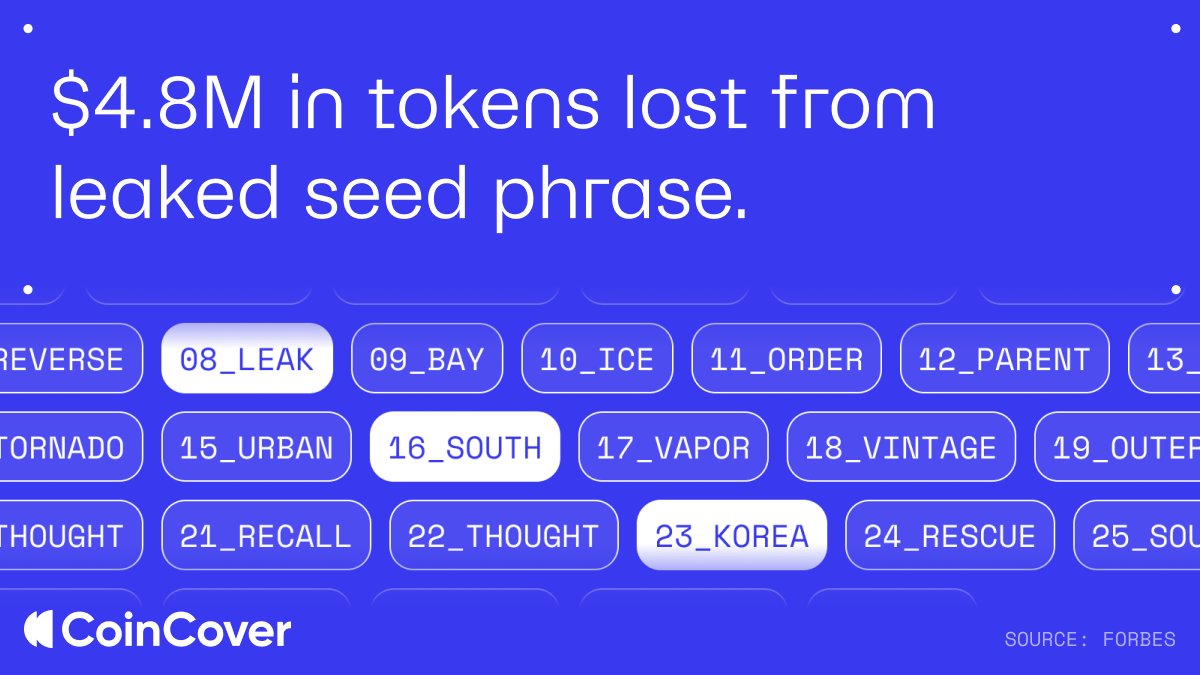
A recent incident highlighted this clearly. South Korea’s National Tax Service accidentally published the recovery phrase of a seized crypto wallet in a press release. Within hours, attackers used it to access the wallet and move roughly $4.8M in tokens.
No exploit. No breach. Just exposure.
The images included handwritten notes revealing the wallet’s recovery mnemonic, all it took to transfer full control.
In crypto, wallet access credentials are everything. And when they’re mishandled, the consequences are immediate and irreversible.
This highlights one of the core challenges in crypto. Keys must remain secure, but they must also be recoverable.
Without the right safeguards, a single operational error can compromise entire holdings.
Because in crypto, failure isn’t always technical.
More often, it’s human.
Traditional finance was never built to impress anyone.
It was built to keep the lights on when markets turn and systems strain.
Redundancy.
Resilience.
Clear governance.
Segregation of duties.
Recovery planning built for when things fail, not when they work.
Web3 moves faster.
But risk hasn’t disappeared.
It’s just changed shape.
So as digital assets scale, the debate isn’t “should web3 become TradFi?”
What are the few hard-earned lessons TradFi got right, and how do we bring them into a decentralised world without killing what makes it different?
At CoinCover, we apply institutional-grade risk principles to crypto, eliminating single points of failure, strengthening governance and enabling secure recovery.
Not to make web3 look like the past.
But to help it withstand the future.
We’re heading to Digital Asset Summit 2026 in New York
From 24–26 March, CoinCover will be at one of the industry’s leading gatherings for institutional digital asset leaders.
Our team will be there to discuss how stronger security and protection frameworks are helping the industry scale safely.
If you’re attending, we’d welcome the opportunity to discuss:
• Protecting digital assets at scale
• Security infrastructure for institutions entering crypto
• Building trust and resilience across the digital asset ecosystem
• Partnership opportunities across wallets, exchanges, and custodians
Connect with the team:
Derrick Plahar — Director of Business Development
Kevin Boyd — Global Partnerships & Growth Lead
See you in New York.
🔑"Not your keys, not your crypto", but what happens if you lose those keys? Moreover, what happens if an institution fumbles its keys?!
Enter the institutional-grade safety net, @Coincoverglobal. Today, @rkbaggs speaks with the new CEO, Jeremy Verba.
#CHAINREACTION
At CoinCover, we help strengthen backup and recovery frameworks so that one mistake doesn’t become permanent loss.
Because in crypto, the real risk isn’t holding your own keys. It’s not being prepared when something goes wrong.
Find out more about self-custody myths here: https://t.co/YsuSqtfTVm
Most self-custody failures aren't acts of carelessness.
They're the result of small assumptions quietly piling up.
We regularly see the same myths prevent users from setting up proper wallet backups:
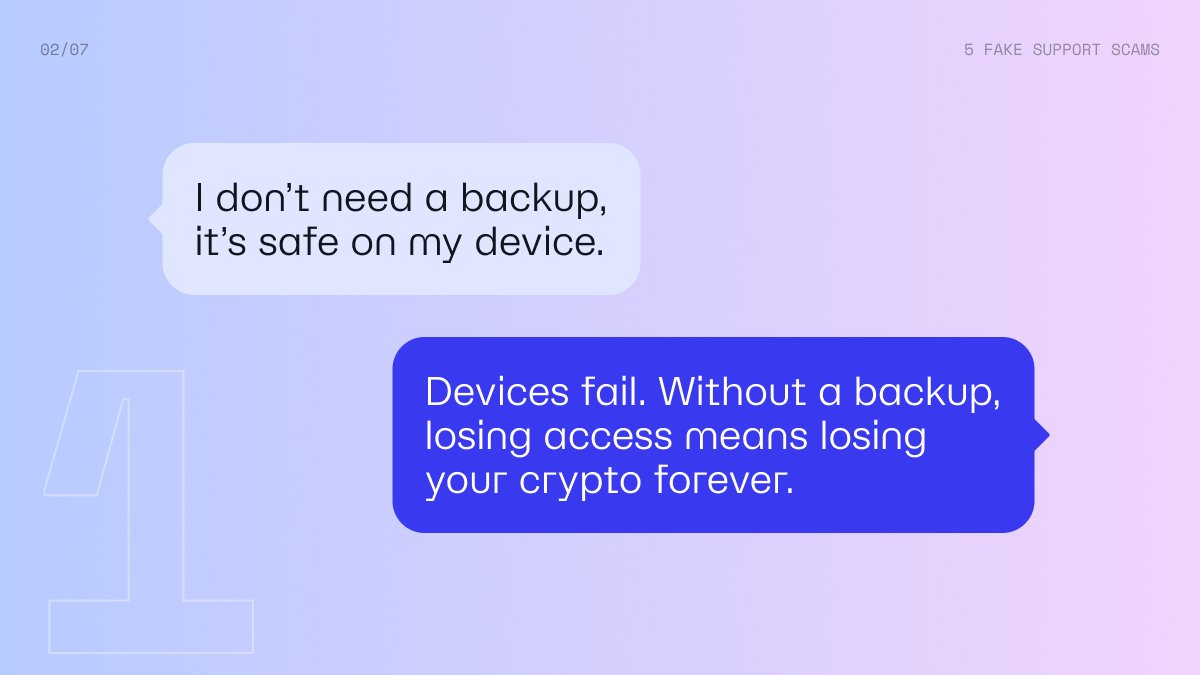
1. “It’s safe on my device.”
Devices fail. Without a backup, access can disappear permanently.
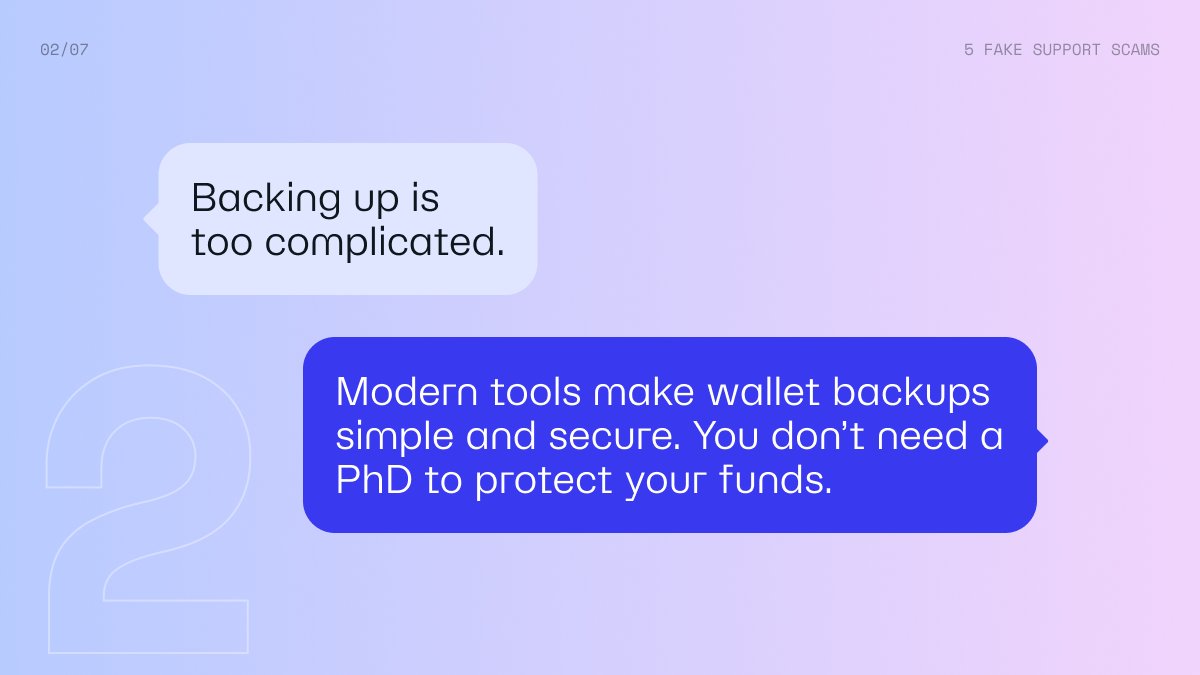
2. “Backing up is complicated.”
The process doesn’t have to be complex. Avoiding it is what creates risk.
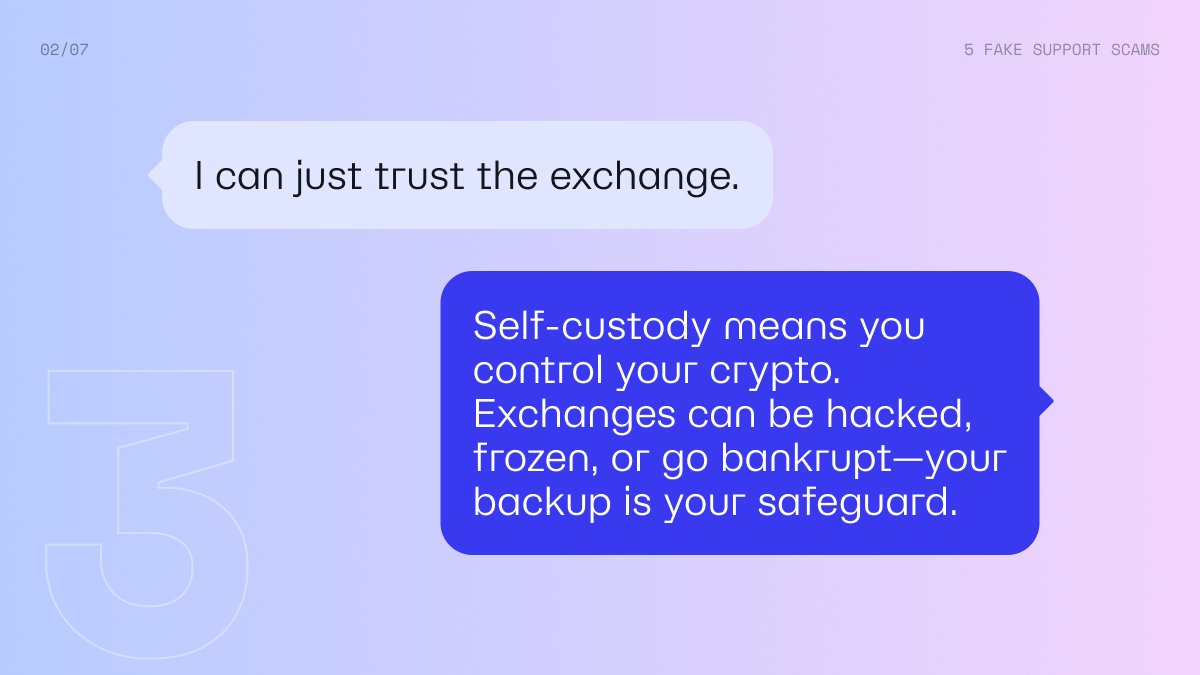
3. “The platform has me covered.”
Self-custody means responsibility sits with the user, not always the platform.
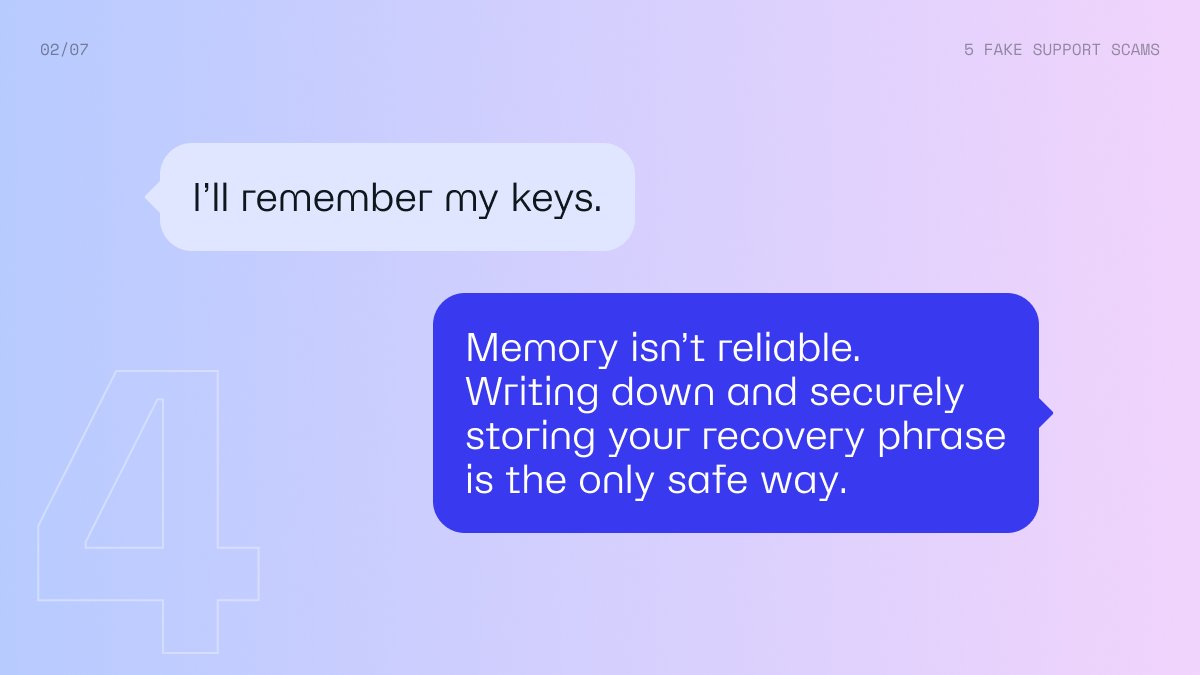
4. “I’ll remember my keys.” Memory fades. Recovery phrases shouldn’t rely on it.
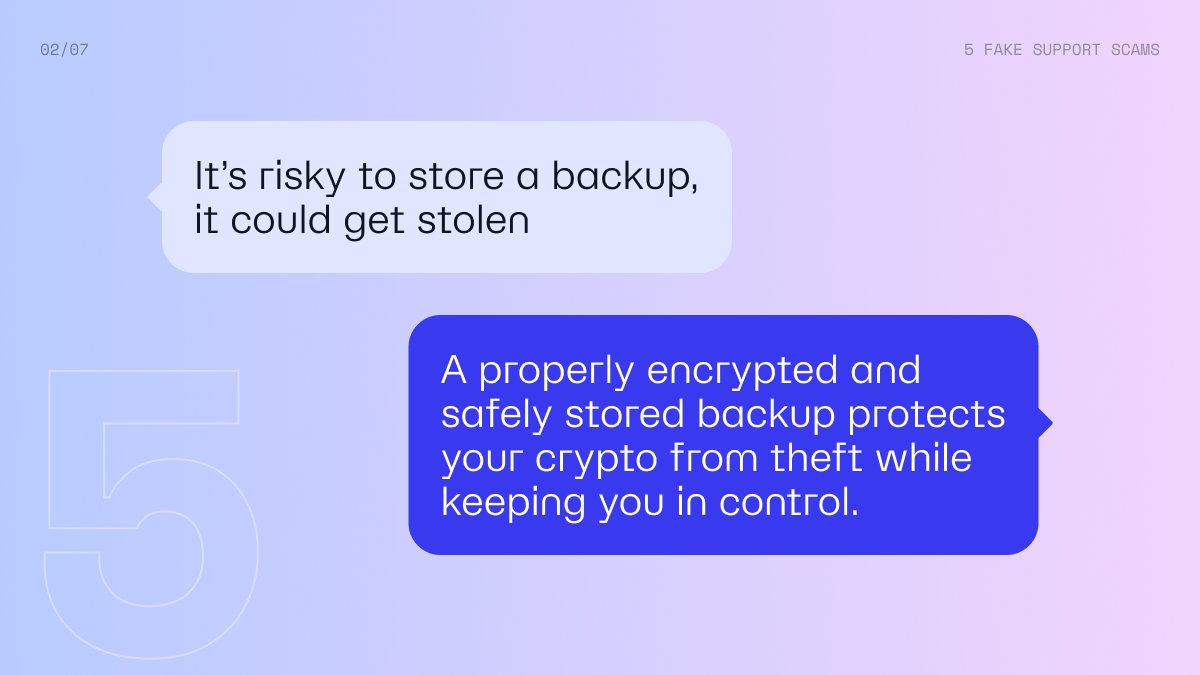
5. “A backup could get stolen.” Improper storage creates risk. Structured, encrypted protection reduces it.
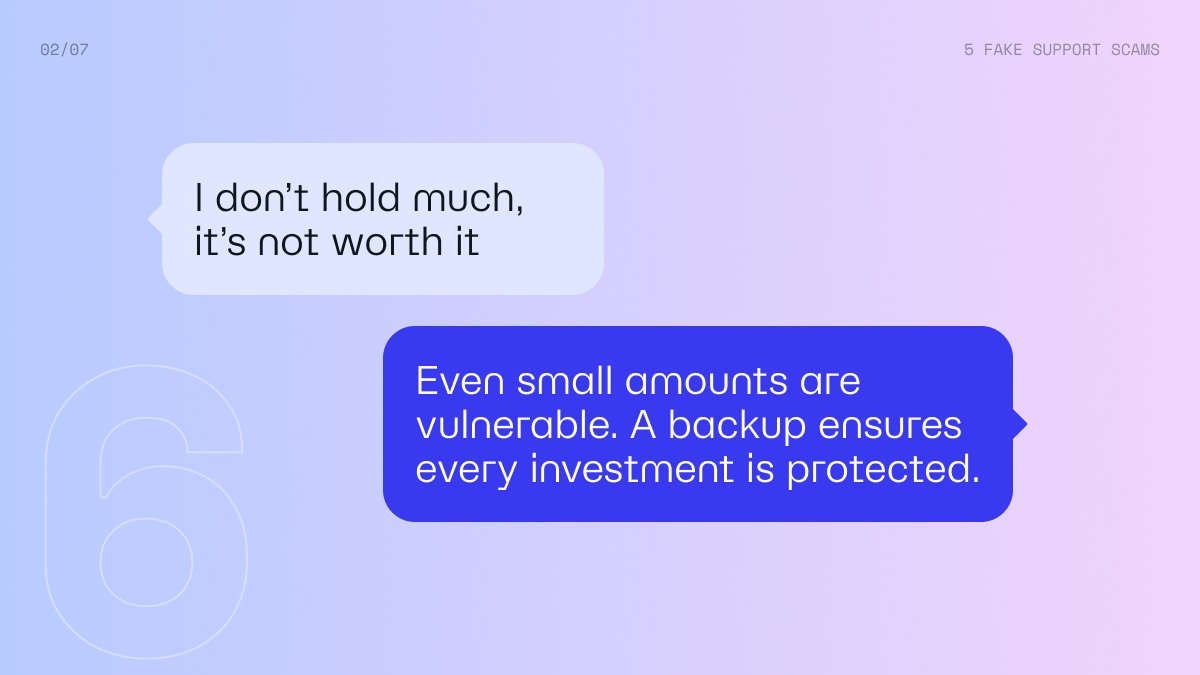
6. “It’s only a small amount.” Small balances become meaningful over time.
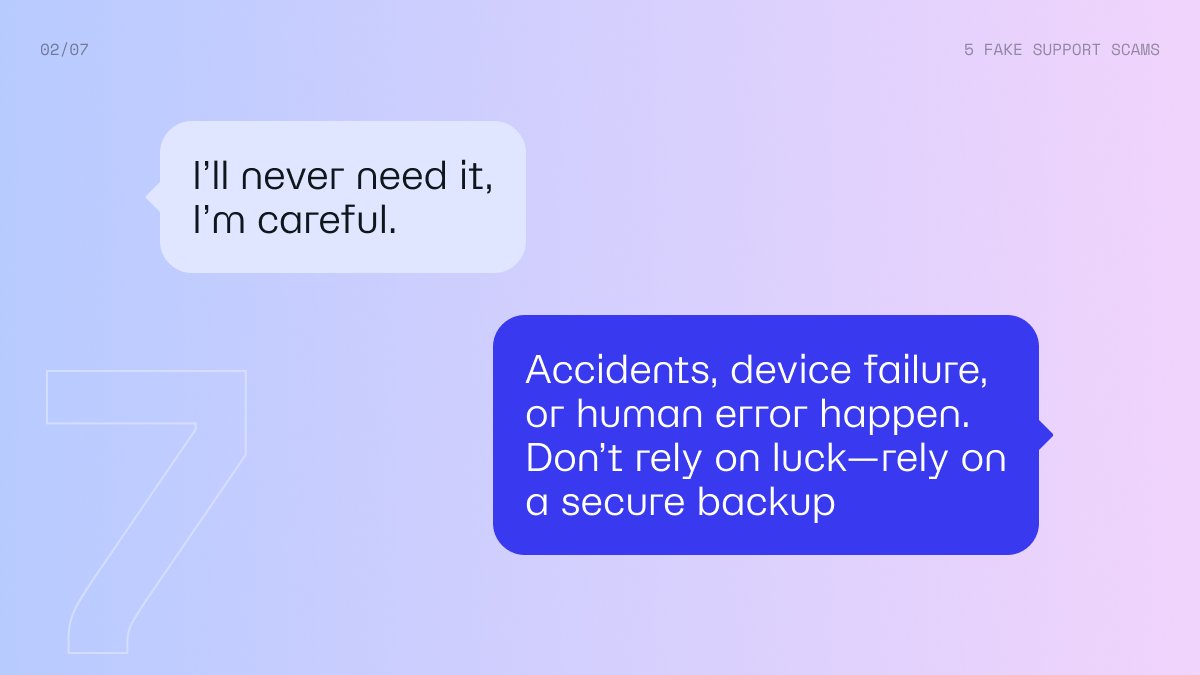
7. “I’m careful. I won’t need it.” Most recovery cases begin with someone who thought exactly that.
The reality? Self-custody gives control. But control without resilience creates fragility.