‼️Goed nieuws vanop ‘Eurosatory’ in Parijs, de grootste defensiebeurs van Europa. Onze eigen defensiebedrijven zijn hier sterk vertegenwoordigd. Zij slaan er hun vleugels uit en tekenden er deze belangrijke deals. 👇🏻
✅ 5000 geweren voor Frankrijk
U las het misschien al in krant: FN zal haar munitiefabriek in Zutendaal aanzienlijk uitbreiden. De orders stromen binnen en dat is niet toevallig. FN maakt nu eenmaal de beste geweren en kogels ter wereld. Dat is ook Frankrijk niet ontgaan. Ons buurland bestelde hier 5000 van de nieuwste EVOLYS-machinegeweren van FN voor hun ’Armée de Terre’, met bijhorende munitie. De reputatie van FN in Europa was al sterk. Nu wordt ze nog sterker. Tewerkstelling verzekerd, zowel in Wallonië als Zuid-Limburg.
✅ Onze simulatoren voor Turkije
Een andere troefkaart van onze defensie-industrie is het bedrijf Euramec uit Hamme. Dat bedrijf is onterecht onbekend, want het is wereldtop in vliegtuigsimulatoren. Het exporteert over de hele wereld en startte onlangs een dochteropneming op in de VS. Euramec was mee op handelsmissie naar Turkije. Daar vloeit nu een belangrijk militair contract uit voert. Het bedrijf slaat de handen in elkaar met het Turkse Havelsan om simulatoren te maken voor de Turkse luchtmacht.
✅ 70mm anti-drone-raketten
Het bedrijf Thales Belgium uit Herstal maakt goedkope infraroodgeleide 70mm-raketten. Op 30 april deed onze luchtmacht daar een geslaagde test mee. Voor de kust van Lombardsijde haalde een F-16 met zo’n raket een drone uit de lucht. Die combinatie wekt de interesse van veel landen. Vandaag ondertekent Thales Belgium op Eurosatory een overeenkomst met het Poolse Mesko, dat bijkomende aandrijvingssystemen voor de raketten kan aanleveren. Dat moet toelaten de productie flink op te drijven: tot 20.000 per jaar. Noodzakelijk, want deze raket wordt stilaan een echt Belgisch exportsucces.
Jobs, jobs, jobs!
Links haalde de afgelopen maanden alles uit de kast om te fulmineren tegen defensie-uitgaven. Maar defensie is ook economie. Onze industrie plukt vandaag mee de vruchten van de heropbouw van de Europese defensie. De sector is een motor aan het worden voor economische groei in ons land, en creëert zo veel kwalitatieve tewerkstelling aan beide kanten van de taalgrens.
Dat wil ik vandaag, vanuit Parijs, toch wel even benadrukken.
De oefening BEL EXTO vindt plaats gedurende vier weken in Leopoldsburg. Met tientallen Griffon-, CLV Falcon- en Buffalo-voertuigen test de Landmacht voor het eerst op grote schaal haar toekomstige manier van werken https://t.co/DwDrknN0sc
Excellent échange avec la ministre française de la Défense @CaVautrin à #Eurosatory2026.
Nous avons abordé le partenariat CAMO et ses retours industriels, ainsi qu’une possible participation belge au développement de capacités stratégiques européennes d'alerte avancée et de frappe dans la profondeur.
La France est un partenaire précieux pour la Belgique, tant pour notre Défense que pour notre industrie. 🤝🇫🇷
I think it is the very first time foreign soldiers are invited to be part of the show during #Eurosatory!
Strong strategic partnership between @armeedeTerre and @Belgian_Army 💪💪💪
Prima werk @BelgiumDefence ! En nu de volgende stap: operationele affectaties voor militairen in scholen en staven in de territoriale eenheden voor in geval van crisis. Lang geleden heette dat "oorlogsvoetaffectaties". Het houdt de organisatie beter klaar voor crisissen en geeft een bredere operationele focus voor elk (militair) lid van Defensie.
Voor eerst sinds Koude Oorlog heeft Belgisch leger opnieuw echt reservistenkorps: “Een van belangrijkste hervormingen” https://t.co/9jyX7vvK9j
Elke dag wordt ons leger sterker. Gisteren hebben we daarin opnieuw een belangrijke stap gezet, met de oprichting van het eerste van vijf bataljons binnen de nieuwe Territoriale Reserve: het 1ste Bataljon Fusiliers.
Onze eigen ‘Home Guard’
Het 1ste Bataljon Fusiliers gaat terug op een rijke traditie. Tijdens de bevrijding van België in 1944 speelden de Fusiliers een belangrijke rol aan de zijde van de geallieerden. Vandaag krijgt de naam een nieuwe betekenis. De eenheid zal bestaan uit beroepsmilitairen en reservisten die specifiek worden opgeleid voor de bescherming van onze bevolking, onze kritieke infrastructuur en onze nationale belangen. Denk aan ondersteuning bij crisissen, noodsituaties als overstromingen en verhoogde dreiging. Ze zal opereren binnen een moderne territoriale reserve, vergelijkbaar met de ‘Home Guard’-formaties in andere landen, en provinciaal ingebed worden.
Bewakers van het vaderland
De opdracht van de Fusiliers is drieledig: beschermen, ondersteunen en verdedigen. Op hun schouderpatches staat daarom “Protect. Enable. Defend”. Ze zijn er zowel voor het volk, onze soevereiniteit als voor onze democratische instellingen. Hun devies is dan ook veelzeggend: “Custodes Patriae”, bewakers van het vaderland. In een wereld waarin hybride dreigingen als sabotage en terrorisme reëel zijn, hebben we nood aan getrainde militaire eenheden die klaar staan om onze binnenlandse veiligheid te verdedigen, mocht het erop aankomen.
Misschien ook voor u?
Daarom doe ik vandaag een oproep aan onze jongeren. Aan al wie zin heeft in avontuur, wie zichzelf wil uitdagen, wie kameraadschap zoekt en een natuurlijke reflex heeft om anderen te beschermen. Defensie biedt vandaag meer mogelijkheden dan ooit. Als beroepsmilitair, via het vrijwillige dienstjaar, of als reservist. Ons land heeft nood aan geëngageerde vrouwen en mannen die willen bijdragen aan onze veiligheid en onze vrijheid.
Het 1ste Bataljon Fusiliers is misschien wel de plek voor u!
@FranckenTheo@Nico_VDBossche Punt 3 en het partnerschap met FRA (SCORPION-CaMo) niet vermelden… Ik vind dit jammer en zeker niet aanmoedigend voor de honderden mensen die daarop werken.
Nog geen 2 weken geleden (30 april) keurde de ministerraad het Strategic Level Report goed, het rapport dat NAVO én EU gebruiken om na te gaan hoe de defensieuitgaven van de lidstaten evolueren. In dat SLR geven we aan onze Europese partners mee dat we dit en volgend jaar 2% BBP aan Defensie zullen spenderen.
Er moet de voorbije 14 dagen dus iets gebeurd zijn ...
https://t.co/s4OHlC7aDz
https://t.co/Rw5WKYyidK
Because we get asked a lot.
The Technological Republic, in brief.
1. Silicon Valley owes a moral debt to the country that made its rise possible. The engineering elite of Silicon Valley has an affirmative obligation to participate in the defense of the nation.
2. We must rebel against the tyranny of the apps. Is the iPhone our greatest creative if not crowning achievement as a civilization? The object has changed our lives, but it may also now be limiting and constraining our sense of the possible.
3. Free email is not enough. The decadence of a culture or civilization, and indeed its ruling class, will be forgiven only if that culture is capable of delivering economic growth and security for the public.
4. The limits of soft power, of soaring rhetoric alone, have been exposed. The ability of free and democratic societies to prevail requires something more than moral appeal. It requires hard power, and hard power in this century will be built on software.
5. The question is not whether A.I. weapons will be built; it is who will build them and for what purpose. Our adversaries will not pause to indulge in theatrical debates about the merits of developing technologies with critical military and national security applications. They will proceed.
6. National service should be a universal duty. We should, as a society, seriously consider moving away from an all-volunteer force and only fight the next war if everyone shares in the risk and the cost.
7. If a U.S. Marine asks for a better rifle, we should build it; and the same goes for software. We should as a country be capable of continuing a debate about the appropriateness of military action abroad while remaining unflinching in our commitment to those we have asked to step into harm’s way.
8. Public servants need not be our priests. Any business that compensated its employees in the way that the federal government compensates public servants would struggle to survive.
9. We should show far more grace towards those who have subjected themselves to public life. The eradication of any space for forgiveness—a jettisoning of any tolerance for the complexities and contradictions of the human psyche—may leave us with a cast of characters at the helm we will grow to regret.
10. The psychologization of modern politics is leading us astray. Those who look to the political arena to nourish their soul and sense of self, who rely too heavily on their internal life finding expression in people they may never meet, will be left disappointed.
11. Our society has grown too eager to hasten, and is often gleeful at, the demise of its enemies. The vanquishing of an opponent is a moment to pause, not rejoice.
12. The atomic age is ending. One age of deterrence, the atomic age, is ending, and a new era of deterrence built on A.I. is set to begin.
13. No other country in the history of the world has advanced progressive values more than this one. The United States is far from perfect. But it is easy to forget how much more opportunity exists in this country for those who are not hereditary elites than in any other nation on the planet.
14. American power has made possible an extraordinarily long peace. Too many have forgotten or perhaps take for granted that nearly a century of some version of peace has prevailed in the world without a great power military conflict. At least three generations — billions of people and their children and now grandchildren — have never known a world war.
15. The postwar neutering of Germany and Japan must be undone. The defanging of Germany was an overcorrection for which Europe is now paying a heavy price. A similar and highly theatrical commitment to Japanese pacifism will, if maintained, also threaten to shift the balance of power in Asia.
16. We should applaud those who attempt to build where the market has failed to act. The culture almost snickers at Musk’s interest in grand narrative, as if billionaires ought to simply stay in their lane of enriching themselves . . . . Any curiosity or genuine interest in the value of what he has created is essentially dismissed, or perhaps lurks from beneath a thinly veiled scorn.
17. Silicon Valley must play a role in addressing violent crime. Many politicians across the United States have essentially shrugged when it comes to violent crime, abandoning any serious efforts to address the problem or take on any risk with their constituencies or donors in coming up with solutions and experiments in what should be a desperate bid to save lives.
18. The ruthless exposure of the private lives of public figures drives far too much talent away from government service. The public arena—and the shallow and petty assaults against those who dare to do something other than enrich themselves—has become so unforgiving that the republic is left with a significant roster of ineffectual, empty vessels whose ambition one would forgive if there were any genuine belief structure lurking within.
19. The caution in public life that we unwittingly encourage is corrosive. Those who say nothing wrong often say nothing much at all.
20. The pervasive intolerance of religious belief in certain circles must be resisted. The elite’s intolerance of religious belief is perhaps one of the most telling signs that its political project constitutes a less open intellectual movement than many within it would claim.
21. Some cultures have produced vital advances; others remain dysfunctional and regressive. All cultures are now equal. Criticism and value judgments are forbidden. Yet this new dogma glosses over the fact that certain cultures and indeed subcultures . . . have produced wonders. Others have proven middling, and worse, regressive and harmful.
22. We must resist the shallow temptation of a vacant and hollow pluralism. We, in America and more broadly the West, have for the past half century resisted defining national cultures in the name of inclusivity. But inclusion into what?
Excerpts from the #1 New York Times Bestseller The Technological Republic: Hard Power, Soft Belief, and the Future of the West, by Alexander C. Karp & Nicholas W. Zamiska
https://t.co/8igjazz1On
Nous accueillons favorablement la démarche du Président @EmmanuelMacron qui s'inscrit dans le renforcement de la sécurité et de la défense européenne. Nous répondrons positivement et coopérerons avec la France dans la mise en oeuvre de cette dissuasion renforcée.
——
Wij verwelkomen het initiatief van president @EmmanuelMacron als een belangrijke stap naar een sterker Europees defensiebeleid. We zijn bereid hier constructief op in te gaan en nauw met Frankrijk samen te werken aan een geloofwaardige en versterkte afschrikking.
Today's Joint GER-FRA declaration on deterrence cooperation is groundbreaking:
"...have established a high-ranking nuclear steering group that will act as a bilateral framework for doctrinal dialogue and the coordination of strategic cooperation"
Le discours prononcé par le président Emmanuel @EmmanuelMacron à la base stratégique de l’Île Longue ne peut être compris uniquement depuis Paris. Il constitue un acte de clarification doctrinale dans un moment de bascule stratégique, mais sa portée réelle ne se mesure qu’à l’aune des perceptions européennes, en particulier de celles situées sur la ligne de front orientale. À l’heure où la guerre en #Ukraine a réintroduit la guerre de haute intensité sur le continent et où les régimes de maîtrise des armements se délient, la #France réaffirme la centralité de sa dissuasion nucléaire. L’augmentation annoncée du nombre de têtes, explicitement maintenue dans le cadre de la stricte suffisance, ne traduit pas une course aux armements, mais une volonté d’ajuster le seuil de crédibilité face à un environnement plus dégradé. La modernisation des vecteurs et la préparation du SNLE de troisième génération L’Invincible relèvent d’une continuité stratégique: préserver l’autonomie décisionnelle, non entrer dans une logique de parité.
La nouveauté réside dans la 'dissuasion avancée'. En inscrivant les intérêts vitaux français dans une profondeur stratégique européenne, le président élargit le périmètre politique de la doctrine sans en altérer les fondements juridiques. La décision d’emploi demeure exclusivement nationale; aucune planification multilatérale contraignante n’est proposée; aucun partage du contrôle nucléaire n’est envisagé. La France ne se rapproche ni du modèle américain de garantie étendue au sein de l’#OTAN, ni du schéma britannique d’intégration étroite à l’Alliance. Elle propose une européanisation sans institutionnalisation, une responsabilité politique accrue sans dilution souveraine.
Or c’est précisément ici que la lecture diverge. Vue de #Varsovie, de #Tallinn ou même de #Berlin, l’ambiguïté stratégique n’est pas nécessairement un atout; elle peut apparaître comme une faille. Là où Paris voit une indétermination dissuasive, la ligne de front recherche la certitude du châtiment. La crédibilité américaine ne repose pas uniquement sur des mots, mais sur des troupes prépositionnées, des plans intégrés, une architecture institutionnelle éprouvée. Face à cela, la dissuasion avancée française peut sembler moins tangible. La critique est structurante: une dissuasion complémentaire ne peut être perçue comme substitutive. Si l’initiative française était interprétée comme une alternative au parapluie américain, elle perdrait immédiatement en crédibilité. Elle ne peut fonctionner que comme redondance stratégique, non comme remplacement.
La seconde tension concerne le leadership. L’européanisation sans partage décisionnel suscite une interrogation politique: s’agit-il d’une main tendue ou d’une centralisation sous habillage européen ? Le nucléaire est, par nature, indivisible; partager la décision reviendrait à en affaiblir la cohérence. Mais l’absence de mécanismes formalisés de consultation peut nourrir un sentiment d’asymétrie. La validité de la proposition française dépendra donc de la profondeur des dispositifs d’association stratégique en amont. Il ne s’agit pas de partager le déclencheur, mais de réduire l’écart entre souveraineté formelle et concertation réelle.
L’épaulement conventionnel constitue à cet égard un révélateur. En reliant explicitement dissuasion nucléaire et renforcement des capacités classiques, alerte avancée, défense aérienne, frappes dans la profondeur, Paris reconnaît que la crédibilité ultime dépend de la gestion des seuils intermédiaires. Toutefois, cette articulation expose la France à une interrogation sur la masse. Peut-elle soutenir un conflit prolongé de haute intensité ? La critique selon laquelle l’augmentation des têtes masquerait un déficit conventionnel ne peut être écartée d’un revers de main. La réponse implicite du discours est collective: la profondeur stratégique européenne ne peut être assumée par un seul État. La dissuasion avancée n’est viable que si l’effort conventionnel européen progresse réellement. Elle est un catalyseur potentiel, non un substitut capacitaire.
Le cas belge illustre cette complexité. Le Premier ministre @Bart_DeWever a accueilli favorablement la démarche française, signalant une disponibilité à coopérer. Ce geste traduit moins une conversion doctrinale qu’une gestion prudente de l’incertitude stratégique. L’ouverture belge ne signifie pas adhésion à une 'nationalisation' de la sécurité européenne par Paris; elle reflète la recherche d’une redondance face aux interrogations transatlantiques. Le débat national demeure sensible, et l’engagement éventuel s’inscrira dans un équilibre délicat entre solidarité atlantique et prudence nucléaire.
En définitive, la dissuasion avancée ne transforme pas la doctrine française; elle en redéploie l’horizon. Elle tente de concilier héritage gaullien et responsabilité continentale, autonomie décisionnelle et solidarité stratégique. Mais sa crédibilité ne sera ni rhétorique ni symbolique. Elle dépendra de trois conditions cumulatives: complémentarité assumée avec l’architecture atlantique, association politique substantielle des partenaires européens et renforcement effectif des capacités conventionnelles collectives. Sans ces conditions, la France risquerait d’apparaître comme une forteresse élargissant son ombre. Si elles sont réunies, elle pourrait devenir un pilier supplémentaire d’une architecture européenne de sécurité plus robuste et plus résiliente.
https://t.co/X5Mj6N6CR5
Belangrijke mijlpaal vandaag: onze Landmacht kan vanaf nu zelf militairen opleiden voor digitaal verbonden gevecht. De oorlog in Oekraïne toont ons dat snelle digitale samenwerking op het slagveld cruciaal is.
Belgische bedrijven spelen een sleutelrol: Luciad van @hexagonab levert geavanceerde visualisatietechnologie, @Evidenlive zorgt voor de technische uitrol en @Thalesgroup België rust de voertuigen uit.
Investeren in defensie is ook investeren in onze eigen economie, hoogwaardige jobs en technologische expertise.
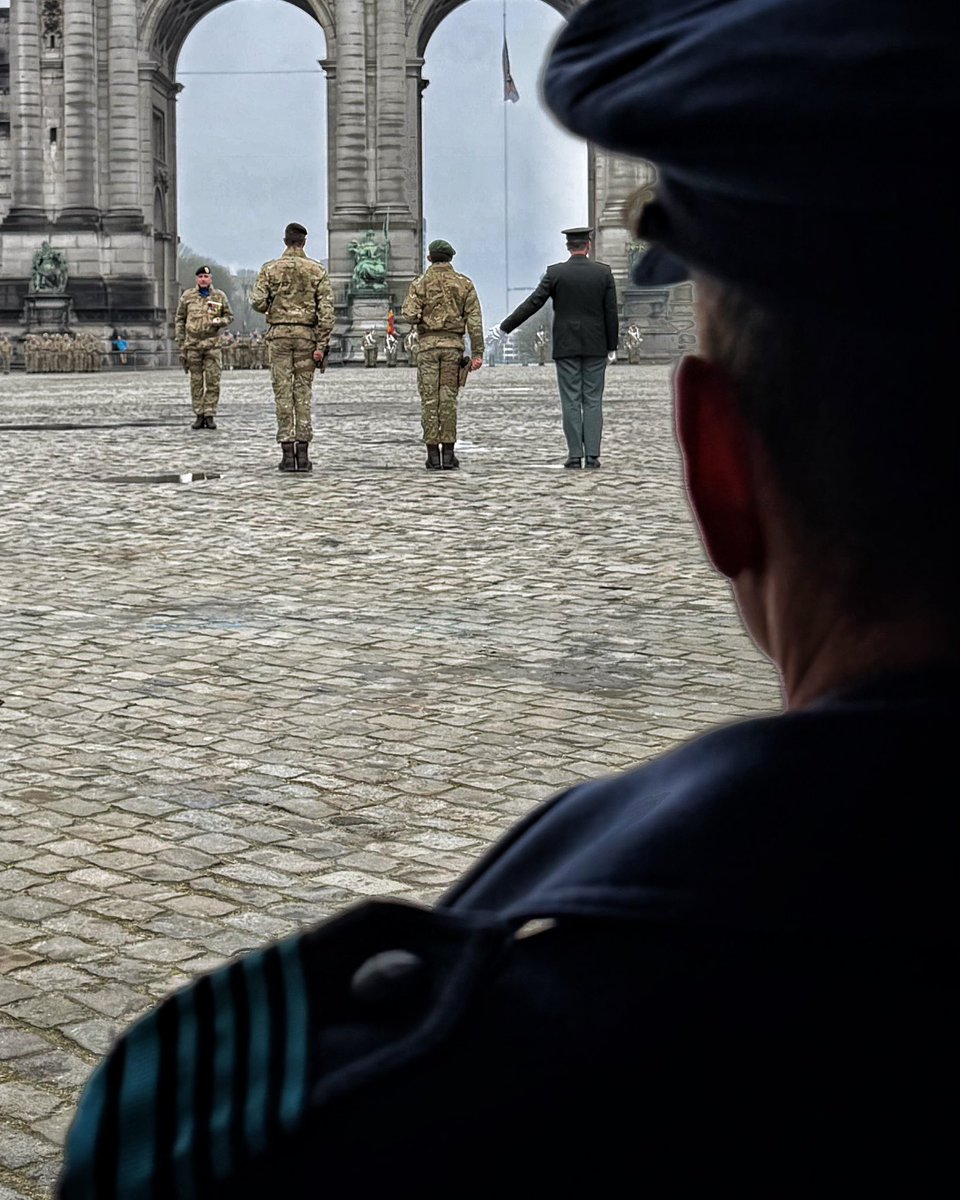
Vandaag woonde ik de militaire plechtigheid bij voor de heroprichting van de 1ste en 7de brigade van onze landmacht.
Ik heb zelf nog meegemaakt hoe onze landstrijdkrachten herleid werden tot een vrijblijvende ‘component’, alsof macht en afschrikking geen rol meer speelden. Die tijd ligt gelukkig achter ons.
Onze landmacht is opnieuw in opbouw om geloofwaardig en afschrikkend te kunnen optreden tegenover de dreigingen van vandaag.
De heroprichting van deze brigades is daarin een cruciale stap: sterk symbolisch, maar vooral noodzakelijk om onze slagkracht te vergroten en de aansturing efficiënter te maken.
@Jeff21461@Nico_VDBossche Nice contribution.
Contact me for further détails about the near future and to correct CCLand and Trg Camps but also the SE Regiment
@kaspergoossens I had the great opportunity to go there! Learned a lot!
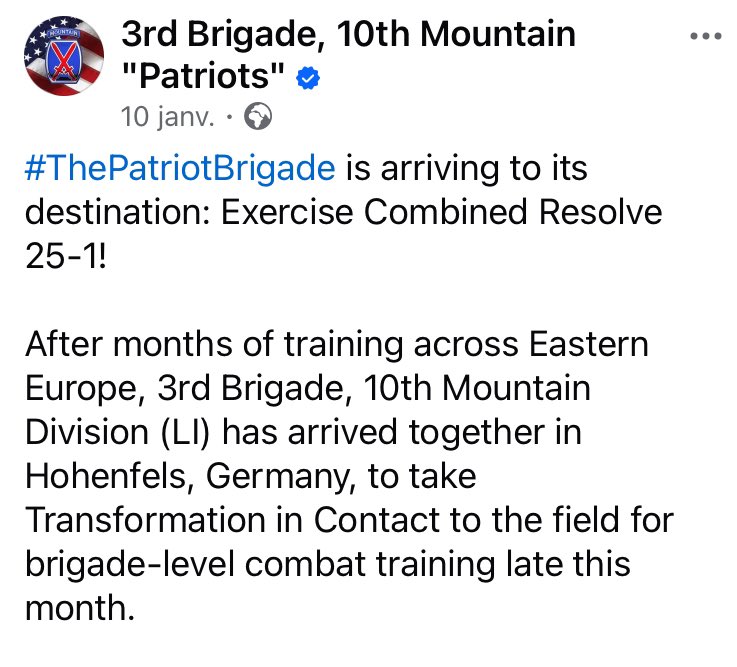
How to defeat wel organized “RUS-like” OPFOR with… light forces. It’s not about equipment, it’s about how to use it!